How to Clean and Seal Stone Veneer Cultured Stone Properly
Learn how to properly clean, seal, and maintain stone veneer cultured stone. Discover safe cleaners, PSI limits, and the best siloxane sealers.
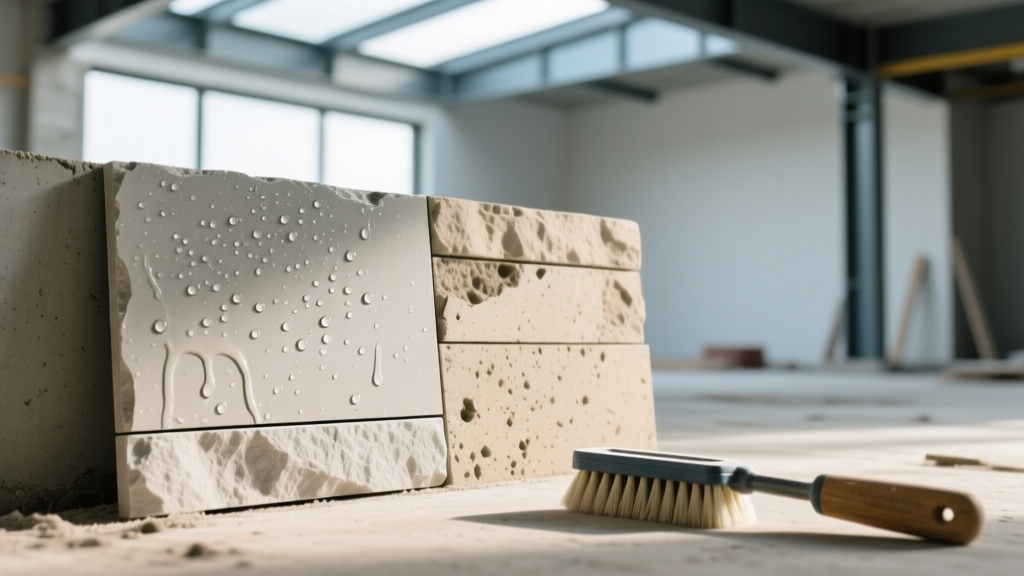
The Chemistry of Manufactured Stone: Why Standard Cleaners Fail
Stone veneer cultured stone is not natural rock; it is a highly engineered composite of Portland cement, lightweight aggregates (like pumice or expanded shale), and iron oxide pigments. Because its base is cementitious, the material is inherently alkaline, typically registering a pH between 11 and 13 when fully cured. This chemical makeup dictates strict maintenance parameters.
Applying acidic cleaners—such as muriatic acid, phosphoric acid, or even household white vinegar—triggers a violent chemical reaction that dissolves the cement paste binding the aggregates. Worse, acids strip the iron oxide pigments, resulting in permanent, irreversible fading and a chalky, pitted surface texture. According to guidelines published by the Masonry Veneer Manufacturers Association (MVMA), only neutral or mildly alkaline cleaners should ever contact manufactured stone veneer (MSV).
Approved vs. Prohibited Cleaning Agents
Selecting the right cleaning chemistry is the most common failure point in MSV maintenance. Below is a field-tested matrix of cleaning agents based on their chemical compatibility with cementitious veneers.
| Cleaner Type | Example Product | Use Case | MSV Safety |
|---|---|---|---|
| Mild Alkaline (pH 8-9) | Simple Green Concrete & Driveway | General dirt, pollen, mild organic mildew | Highly Safe |
| Neutral pH (pH 7) | PROSOCO SureKlean Limestone Afterwash | Post-construction rinsing, light grime | Highly Safe |
| Solvent | Mineral Spirits / Paint Thinner | Spot treatment for paint splatter or tar | Safe (Spot Only) |
| Acidic (pH < 6) | Muriatic Acid, Vinegar, CLR | Hard water stains, heavy mortar smears | NEVER USE |
| Chlorine Bleach | Sodium Hypochlorite (unbuffered) | Heavy mold remediation | AVOID (Causes fading) |
Step-by-Step Deep Cleaning Protocol
When tackling heavy environmental soiling, algae, or chimney soot, follow this precise sequence to prevent staining and water intrusion.
1. Pre-Wet the Substrate
Dry cultured stone acts like a sponge. If you apply cleaner to a dry wall, the stone will absorb the chemical deep into its pore structure before you can rinse it, leading to chemical burns and efflorescence. Use a garden hose to thoroughly saturate the wall from bottom to top until the stone stops absorbing water and begins to sheet.
2. Apply and Agitate
Apply your chosen mild alkaline cleaner using a low-pressure pump sprayer. Work in manageable 4x4 foot sections. Agitate the surface with a Tampico fiber brush using circular motions to lift dirt from the deep crevices of the stone profiles. Allow a dwell time of 3 to 5 minutes, but never let the cleaner dry on the surface.
3. Precision Rinsing
Rinse from top to bottom to prevent dirty water from streaking over clean sections. If using a pressure washer, strict limits apply:
- Maximum PSI: 1,200 to 1,500 PSI. Anything higher will erode the cement paste and expose the internal lightweight aggregates.
- Nozzle Tip: 40-degree (white) fan tip only. Zero-degree or 15-degree tips will gouge the stone.
- Distance: Maintain a strict 12 to 18-inch standoff distance from the nozzle to the stone face.
Managing Efflorescence Without Damaging Pigments
Efflorescence appears as a white, powdery salt deposit on the stone surface, caused by water migrating through the cement matrix and carrying soluble calcium hydroxide to the surface, where it reacts with atmospheric carbon dioxide to form calcium carbonate.
The Golden Rule of Efflorescence: Do not use water to clean it. Adding water to efflorescence drives the salts back into the stone, guaranteeing a worse recurrence when the wall dries again. Instead, wait for the wall to bone-dry, then use a stiff, dry natural-bristle brush to aggressively sweep the powder off the surface. For stubborn deposits, a specialized, non-acidic efflorescence remover (such as those formulated by PROSOCO) can be applied, but always test in an inconspicuous area first.
Sealing Strategies: Breathable Penetrants vs. Trap-Creating Films
Manufactured stone veneer does not strictly require sealing. However, in high-moisture environments, splash zones (near patios or pools), or regions with severe freeze-thaw cycles, sealing extends the lifespan of the installation by preventing water saturation. The chemistry of the sealer you choose will dictate the survival of your exterior.
The Danger of Film-Forming Sealers
Acrylic, urethane, and epoxy sealers create a plastic-like film on the surface of the stone. While they provide an artificial "wet look" that some homeowners desire, they trap moisture vapor inside the stone. When winter temperatures drop below freezing, the trapped moisture expands by 9%, causing the face of the cultured stone to spall, crack, and pop off the wall. Furthermore, UV radiation degrades exterior acrylics within 18 to 24 months, leaving a peeling, yellowed mess that requires chemical stripping to remove.
Repairing Chips and Mortar Joint Deterioration
Impact damage from landscaping equipment or settling cracks in mortar joints require specific repair techniques to maintain the structural integrity and aesthetic of the veneer.
Patching Chipped Stone
Do not use standard gray concrete patch for cultured stone repairs. Instead, purchase a veneer touch-up kit from the manufacturer (e.g., Boral Color Packs) or mix your own using Type N masonry cement, fine silica sand, and raw iron oxide pigments.
- Dampen the chipped area with a spray bottle.
- Pack the tinted mortar mixture into the void using a margin trowel, slightly overfilling it.
- While the patch is still plastic (thumbprint-hard), stipple it with a damp sea sponge to mimic the porous, manufactured texture of the surrounding stone.
- Use a dry, stiff brush to lightly drag across the surface, blending the patch edges into the original stone profile.
Repointing Mortar Joints
When mortar joints crack or recede, water gains direct access to the weather-resistive barrier (WRB) and metal lath behind the stone. Rake out the damaged mortar to a depth of 3/4 inch using a joint raker. Repoint using Type N or Type S mortar, ensuring you compress the mortar tightly against the edges of the cultured stone. Tool the joint with a concave jointer to create a slight indentation that sheds water away from the stone edges.
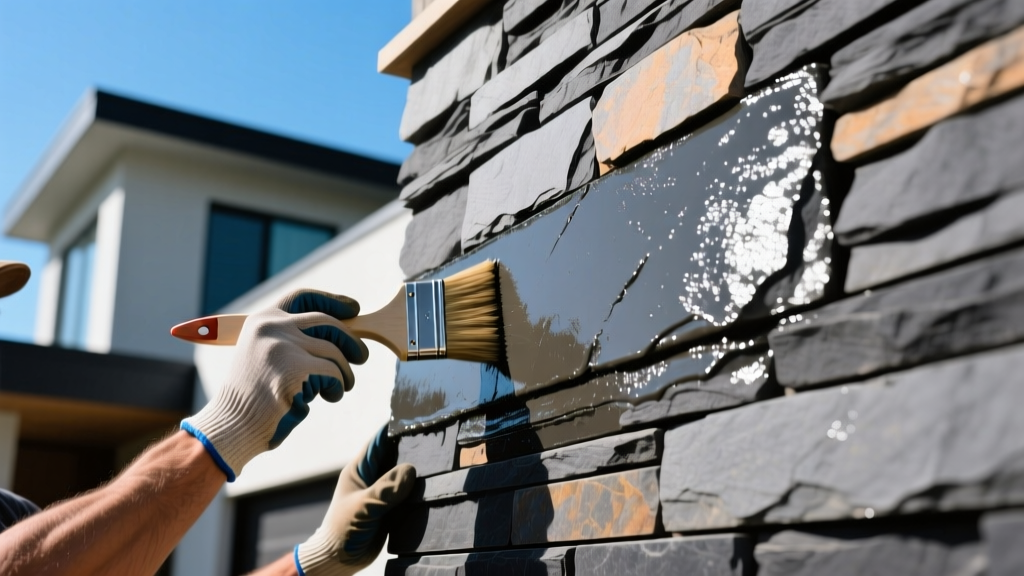
Maintenance Cost Analysis: DIY vs. Professional Service (2026 Estimates)
Deciding whether to maintain your stone veneer cultured stone yourself or hire a masonry restoration specialist depends on the scale of the project and the height of the installation.
| Maintenance Task | DIY Material Cost (per sq. ft.) | Professional Service Cost (per sq. ft.) | Recommended Frequency |
|---|---|---|---|
| Routine Wash (Mild Detergent) | $0.05 - $0.10 | $0.85 - $1.50 | Every 1-2 Years |
| Silane/Siloxane Sealing | $0.35 - $0.60 | $1.75 - $3.25 | Every 5-7 Years |
| Efflorescence Removal | $0.15 - $0.25 | $1.25 - $2.50 | As Needed |
| Mortar Repointing | $0.40 - $0.80 | $4.50 - $8.00 | As Needed (Usually 15+ yrs) |
For single-story applications, DIY maintenance using a pump sprayer and high-quality penetrating sealers like Boral's recommended exterior sealers yields excellent results and significant savings. However, for multi-story exteriors, chimney chases, or severe efflorescence issues, hiring a certified masonry restoration contractor equipped with scaffolding and hot-water pressure washing systems is the safer, more effective investment.
Written by
Marcus ChenMarcus Chen is a licensed structural engineer (PE) and building materials analyst with over 12 years of experience across residential, commercial, and industrial construction. He holds a Master of Science in Civil Engineering from UC Berkeley and spent six years at Thornton Tomasetti before transitioning to independent consulting and technical writing. Marcus specializes in material selection for seismic-prone regions, concrete reinforcement strategies, and lifecycle cost analysis. His work has been cited by the American Concrete Institute (ACI) and the Structural Engineers Association of California (SEAOC). When he is not on a job site or at his desk, you will find him hiking the Sierra Nevada or restoring a 1920s craftsman bungalow in Oakland, CA.
More from Marcus Chen
View all
Construction Cost
How Much Did the Eiffel Tower Cost to Build?
How much did the Eiffel Tower cost to build in 1889? We adjust for inflation and compare its budget to modern skyscraper construction.
Aug 4, 2026

Fire Resistance
What Is a Fire Resistant Material? Testing & Certification Guide
Discover what is a fire resistant material through ASTM and UL testing. Learn how fire ratings, certifications, and assemblies work in construction.
Aug 4, 2026

Construction Cost
How Much Did the Burj Khalifa Cost to Build?
How much did the Burj Khalifa cost to build? We break down the $1.5B project and extract 5 money-saving strategies for your next build.
Jul 30, 2026