Thin Stone Veneer Fireplace Review: Natural vs Manufactured
Compare natural and manufactured thin stone veneer for fireplaces. Review top brands, 2026 costs, heat clearances, and installation specs.
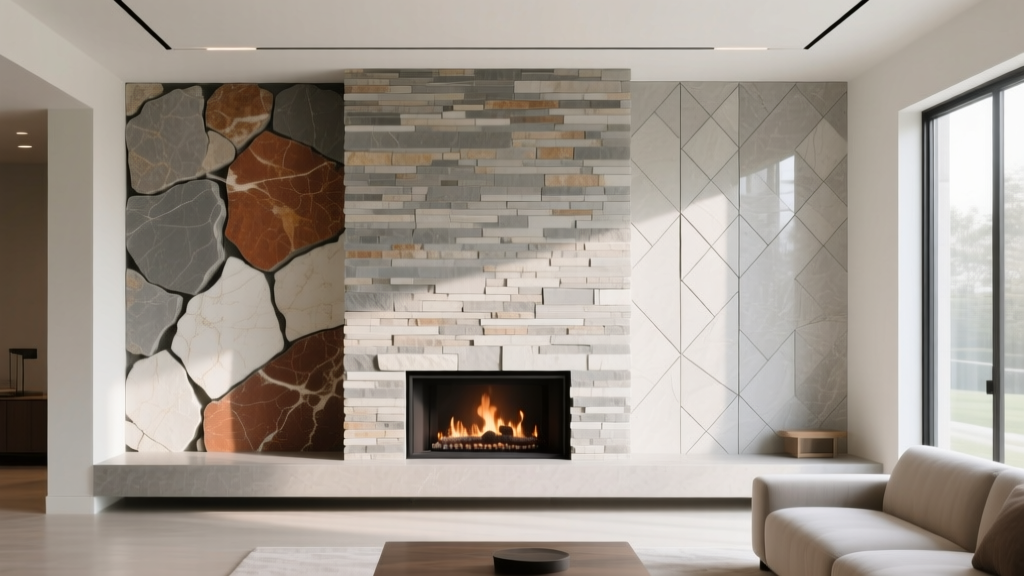
The Core Dilemma: Natural vs. Manufactured Thin Veneer
Upgrading a fireplace surround with stone traditionally required full-bed masonry, adding up to 40 pounds per square foot and demanding heavy structural reinforcement. Thin stone veneer has revolutionized this process, slicing the weight down to 10-15 pounds per square foot while maintaining the exact visual depth of full-bed stone. For fireplace applications, the primary decision hinges on choosing between natural thin veneer (sliced from real quarried stone) and manufactured thin veneer (cast from Portland cement and iron oxide pigments). Both materials are non-combustible, but they differ significantly in cost, installation methodology, and thermal behavior near the firebox.
| Feature | Natural Thin Veneer | Manufactured Thin Veneer |
|---|---|---|
| Weight | 12 - 15 lbs / sq ft | 8 - 11 lbs / sq ft |
| Thickness | 0.75 to 1.5 inches | 1.0 to 2.5 inches |
| Material Cost (2026) | $9.00 - $18.00 / sq ft | $5.50 - $11.00 / sq ft |
| Color Consistency | High natural variation | Controlled via pigment batches |
| Heat Tolerance | Exceptional (solid rock) | High (requires proper mortar) |
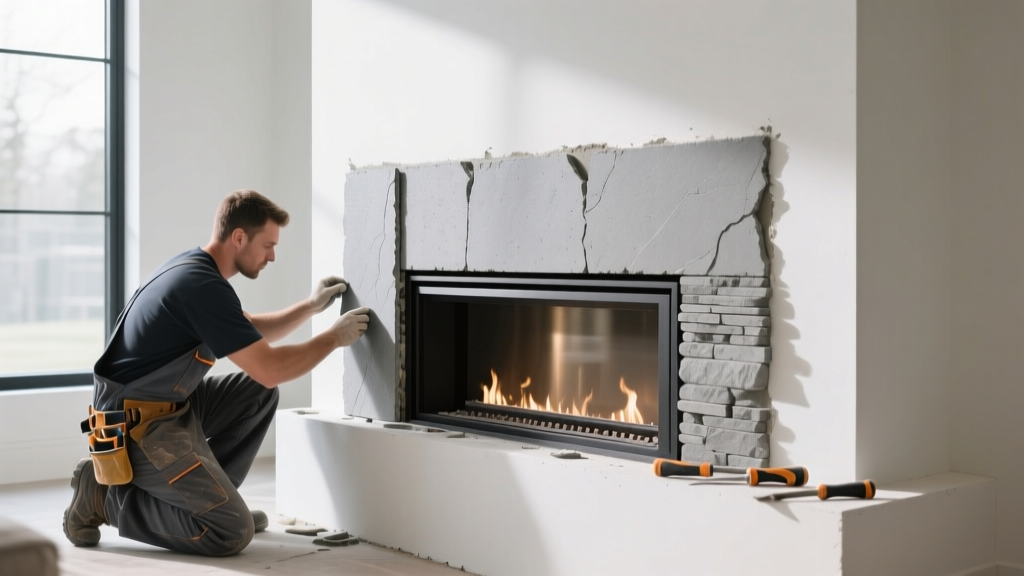
Top Manufactured Thin Veneer Brands Reviewed
Manufactured veneer is engineered for consistency and ease of installation. The molds are taken directly from real stone, and the color is baked throughout the mix using iron oxide pigments, ensuring that chips or scratches do not reveal a gray concrete core.
Eldorado Stone: Cliffstone & Fieldstone Profiles
Eldorado Stone (a Boral Building Products brand) remains the industry benchmark for manufactured veneer. For fireplaces, their Cliffstone profile is highly sought after due to its rugged, elongated ledges that cast dramatic shadows when illuminated by firelight. In 2026, Cliffstone retails for approximately $8.50 to $9.50 per square foot. Eldorado's manufacturing process yields a highly porous back surface, which creates a superior mechanical bond with Type S mortar. According to the official Eldorado Stone installation guidelines, their products require a standard scratch coat over 2.5 lb self-furring galvanized metal lath, but they explicitly warn against using mastic or organic adhesives, which will fail under the thermal cycling of a fireplace.
Cultured Stone: Country Ledgestone
Cultured Stone, also under the Boral umbrella, offers the Country Ledgestone profile, which features smaller, tighter stones ideal for craftsman-style or traditional fireplace surrounds. Priced slightly lower at $7.00 to $8.00 per square foot, it is a favorite among contractors for its fast coverage rate. The interlocking nature of the ledgestone profile reduces the need for extensive cutting around the firebox opening, saving roughly 15% on labor time compared to larger fieldstone profiles.
Premier Natural Thin Stone Veneer Options
Natural thin veneer is quarried in massive blocks and sliced using diamond-tipped gang saws. It offers an authenticity that manufactured products can only mimic, featuring natural fissures, mineral streaks, and geological variations.
Pangaea Natural Stone: The Mortarless Advantage
Pangaea has disrupted the natural veneer market with its mortarless thin stone system. The stones are precision-cut with interlocking edges and installed using a proprietary high-strength polymer adhesive rather than traditional mortar. For fireplace surrounds, this is a massive advantage: it eliminates the mess of wet mortar in finished living rooms and cuts installation time by up to 40%. The Pangaea Quartzite line handles extreme heat effortlessly. However, the material cost is premium, averaging $14.00 to $17.00 per square foot, and the polymer adhesive requires a perfectly flat, primed cement board substrate.
Real Stone Thin Veneer: Authentic Texture
Real Stone Thin Veneer offers traditional mortared natural stone sliced to a strict 1-inch thickness. Their Sunset Ledge limestone profile provides warm, earthy tones that pair beautifully with dark wood mantels. Because it is real limestone, it is slightly softer than granite or quartzite, making it easier for masons to cut with a standard wet saw when fitting pieces tightly against the steel firebox frame. Expect to pay $11.00 to $13.00 per square foot for the material.
Critical Warning: Heat Clearances & Mortar Selection
Fireplaces generate extreme thermal cycling. Standard Type N mortar can spall or crack when subjected to rapid temperature changes near the firebox opening. For the first 12 inches surrounding a wood-burning or high-BTU gas firebox, you must use a polymer-modified thinset rated for high heat or a specialized refractory mortar. Furthermore, always consult NFPA 211 (Standard for Chimneys, Fireplaces, Vents, and Solid Fuel-Burning Appliances) and your specific fireplace insert manual for exact combustible clearance requirements. Never install thin veneer directly over drywall; a non-combustible substrate like 1/2-inch HardieBacker or Durock cement board is mandatory.
2026 Cost Breakdown: Material, Labor, and Prep
Budgeting for a thin stone veneer fireplace requires looking beyond the per-square-foot cost of the stone itself. A standard fireplace surround (including the hearth extension and a chimney breast up to the ceiling) typically covers 40 to 60 square feet. Here is a realistic 2026 cost breakdown for a 50-square-foot project:
- Substrate Prep & Lath: $250 - $400 (Cement board, 2.5 lb galvanized lath, roofing nails, and building paper).
- Mortar & Scratch Coat: $150 - $250 (Type S mortar, bonding agent, and mixing supplies).
- Stone Material: $350 - $850 (Depending on manufactured vs. natural selection).
- Professional Masonry Labor: $800 - $1,500 (Typically $16 to $30 per square foot for skilled veneer installation, including cutting and pointing).
- Total Project Cost: $1,550 to $3,000 for a complete, professional-grade 50 sq ft surround.
DIY installation can eliminate the labor cost, but manufactured ledgestone profiles are vastly more forgiving for beginners than natural fieldstone, which requires an artistic eye to avoid repetitive patterns and 'stacking' lines.
Decision Framework: Matching Veneer to Your Fireplace Type
Choosing the right thin stone veneer depends heavily on the type of fireplace you are cladding:
Wood-Burning Fireplaces
Wood-burning units produce intense, radiant heat and occasional popping embers. Natural thin veneer (specifically quartzite or granite) is the superior choice here due to its inherent geological heat resistance. If using manufactured stone, ensure the firebox has a robust metal surround frame that the stone can butt against, leaving a 1/4-inch expansion gap filled with high-heat silicone.
Linear Gas Fireplaces
Modern linear gas fireplaces (like the Heat & Glo SL-Series) vent heat directly upward or through a glass front, keeping the surrounding wall relatively cool. Manufactured thin veneer is ideal for these applications. The uniform depth of manufactured ledgestone makes it incredibly easy to maintain a perfectly flush, modern plane across a wide, 60-inch horizontal opening.
Electric Fireplace Inserts
Electric inserts generate minimal ambient heat. This opens the door for mortarless natural systems like Pangaea, as the lack of extreme thermal cycling removes the risk of adhesive degradation. It also allows for the use of lighter, more delicate natural stones like slate, which might otherwise delaminate under the intense heat of a wood fire.
Frequently Asked Questions
Do I need a brick ledge to support thin stone veneer on a fireplace?
No. Unlike full-bed stone, thin veneer weighs less than 15 lbs per square foot. When properly installed over metal lath and a structural substrate, the wall's shear strength supports the weight entirely. A brick ledge or footer is not required.
Can I install thin stone veneer over an existing brick fireplace?
Yes, but preparation is critical. The existing brick must be cleaned of soot and sealed. You must still attach 2.5 lb metal lath directly into the brick using masonry tapcon screws before applying the scratch coat and veneer. Never mortar directly onto painted or sealed brick without lath.
How do I clean soot off thin stone veneer?
Use a soft-bristle brush and a mild detergent solution. Avoid acid-based masonry cleaners or wire brushes, especially on manufactured veneer, as they can strip the iron oxide pigments and expose the concrete aggregate beneath.
Written by
Sarah WhitfieldSarah Whitfield is a chartered quantity surveyor (MRICS) and construction cost analyst with 15 years of experience in material pricing, procurement strategy, and project budgeting. She earned her degree in Construction Management from the University of Reading (UK) and has worked on projects ranging from $2M custom homes to $180M mixed-use developments across North America and Europe. Sarah currently leads cost estimating for BuildMat Insight, maintaining a proprietary database of 4,000+ material price points updated quarterly. She is a frequent contributor to RSMeans cost data panels and has presented at the International Cost Engineering Council (ICEC) congress. Based in Denver, CO, Sarah is an avid trail runner and volunteer mentor for Women in Construction.
More from Sarah Whitfield
View all
Wood & Lumber
What Are the Different Types of Wood? A Builder's Guide
Compare structural softwoods, finish hardwoods, and engineered lumber. Analyze Janka ratings, MOE values, and 2026 pricing for construction.
Aug 4, 2026

Walls & Panels
Steel Framing vs Wood Framing: Corrosion and Moisture Defense
Compare steel framing vs wood framing for moisture resistance. Learn about galvanized coatings, condensation risks, and corrosion protection strategies.
Jul 21, 2026

Stone & Masonry
How to Cut Stone Veneer: Wet Saw vs Grinder Comparison
Compare the best tools for cutting stone veneer. We review wet saws, angle grinders, and chop saws to help you achieve clean, chip-free cuts.
Jul 21, 2026