Composite Stone Veneer vs Natural Stone: 2026 Comparison
Compare composite stone veneer to natural stone in 2026. Analyze material costs, weight limits, ASTM durability standards, and installation requirements.
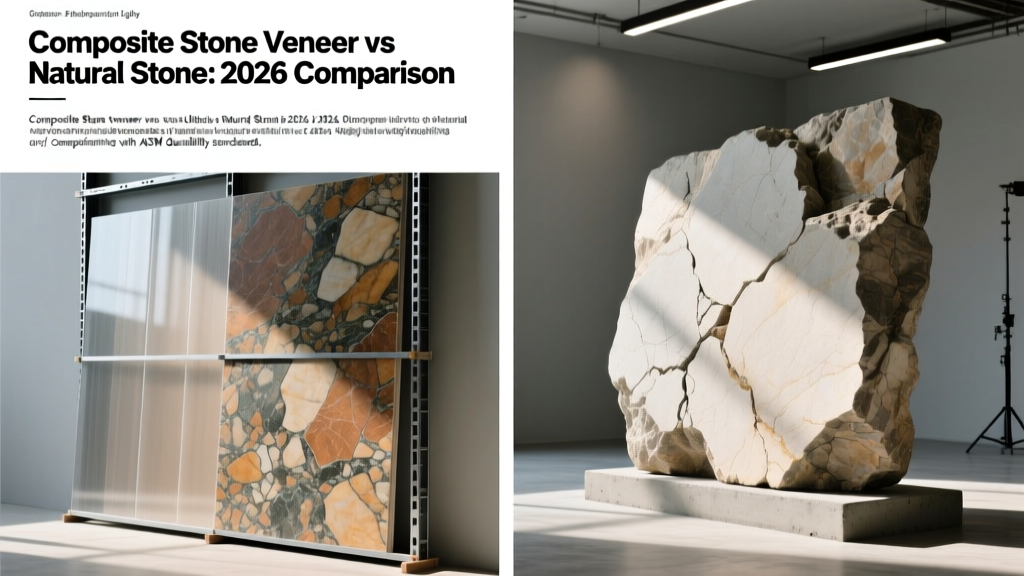
Defining the Contenders: Cementitious MSV vs. Polyurethane vs. Natural
When architects and builders evaluate exterior and interior cladding options, the debate frequently narrows down to natural stone versus composite stone veneer. However, treating "composite stone" as a single category is a critical error. In 2026, the composite market is distinctly bifurcated into two primary material families: Manufactured Stone Veneer (MSV) and High-Density Polyurethane (HDPU) panels.
Manufactured Stone Veneer (MSV) is a cementitious product. Brands like Cultured Stone and Eldorado Stone mix Portland cement, lightweight natural aggregates (like expanded shale or pumice), and iron oxide pigments into molds cast from real stone. It is governed by ASTM C1670, which dictates strict requirements for flexural strength, water absorption, and freeze-thaw durability.
High-Density Polyurethane (HDPU) panels, popularized by brands like GenStone and NextStone, are cast from closed-cell polyurethane foam. They weigh a fraction of cementitious options and interlock via tongue-and-groove edges, allowing for direct-to-substrate mechanical fastening without mortar.
Natural Stone Veneer is quarried, cut, and occasionally tumbled. It offers unmatched geological authenticity and structural permanence but carries significant dead-load penalties and higher extraction costs.
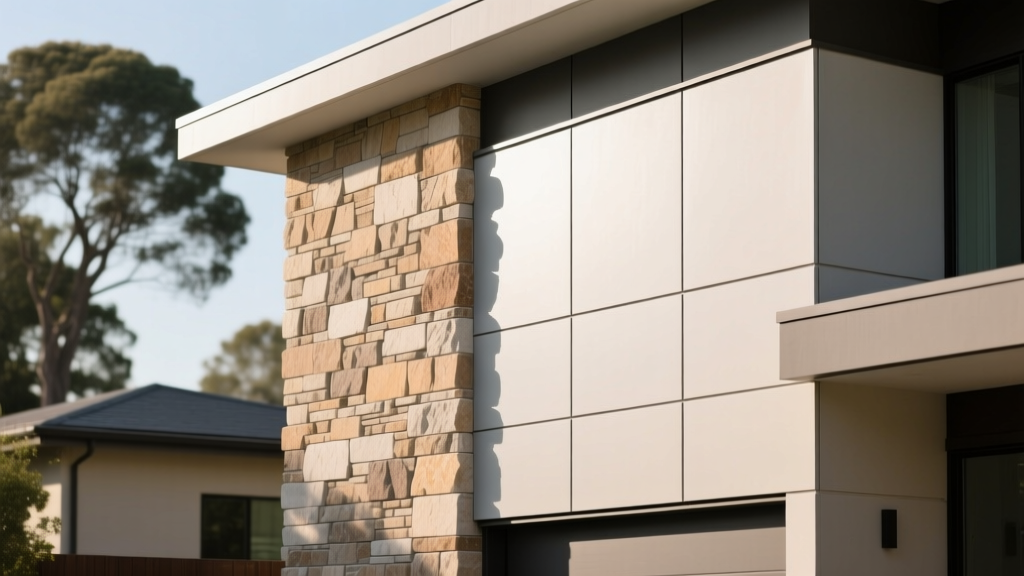
Physical Properties and Structural Load Matrix
The most immediate differentiator between these materials is dead load. Structural engineers must account for the total weight of the cladding, especially in seismic zones or multi-story wood-frame construction where shear wall capacities are strictly limited.
| Material Type | Weight (lbs/sq ft) | Average Thickness | Structural Footing Required? |
|---|---|---|---|
| Natural Stone (Full Veneer) | 35.0 - 45.0 | 3" - 5" | Yes (Continuous concrete/steel ledge) |
| Natural Stone (Thin Veneer) | 12.0 - 15.0 | 0.75" - 1.5" | Rarely (Adhered to reinforced substrate) |
| Composite MSV (Cementitious) | 10.0 - 12.5 | 1.0" - 2.5" | No (Adhered via lath and mortar) |
| Composite HDPU (Polyurethane) | 1.0 - 2.5 | 1.0" - 2.0" | No (Mechanically fastened to OSB/Plywood) |
For retrofit projects or interior accent walls built on standard 2x4 wood framing, natural full veneer is almost always structurally prohibitive without adding expensive steel angle-iron supports bolted to the foundation. Composite MSV and HDPU bypass this requirement entirely, transferring minimal shear load to the wall assembly.
2026 Installed Cost Breakdown
Material cost is only a fraction of the total project expenditure. Labor rates for specialized masons have continued to climb in 2026, making the installation methodology a primary cost driver. According to data aggregated by the National Association of Home Builders (NAHB), masonry labor can account for up to 60% of the total cladding budget.
| Cost Category (Per Sq Ft) | Natural Thin Stone | Composite MSV | Composite HDPU |
|---|---|---|---|
| Material Cost | $12.00 - $18.00 | $6.50 - $11.00 | $8.00 - $13.00 |
| Substrate Prep (Lath, WRB, Mortar) | $3.50 - $5.00 | $3.50 - $5.00 | $0.50 - $1.00 (Screws/Adhesive) |
| Professional Installation Labor | $14.00 - $22.00 | $10.00 - $16.00 | $4.00 - $7.00 (or DIY) |
| Total Estimated Installed Cost | $29.50 - $45.00 | $20.00 - $32.00 | $12.50 - $21.00 |
Note: HDPU panels are uniquely suited for DIY installation, potentially reducing the total cost to just the material and fastener expenses. MSV and Natural Stone require skilled masons to manage mortar consistency, joint tooling, and corner transitions.
Moisture Management: The Reservoir Cladding Effect
The most common failure mode for composite stone veneer is not material degradation, but moisture entrapment. Both natural stone and cementitious MSV act as "reservoir claddings." They are highly porous and will absorb significant amounts of wind-driven rain. If the wall assembly lacks a proper drainage plane, this trapped moisture migrates inward, causing wood rot, mold, and interior drywall damage.
Never adhere composite MSV directly to a flat weather-resistive barrier (WRB) like Tyvek. The Building Science Corporation mandates a dimpled drainage mat (such as Mortairvent) or a minimum 1/4-inch air gap created by a corrugated WRB between the sheathing and the metal lath. This allows hydrostatic pressure to equalize and water to drain down to the weep screed, which must be installed a minimum of 4 inches above finished grade or 2 inches above paved surfaces.
Polyurethane (HDPU) panels, conversely, are closed-cell and entirely impervious to water absorption. However, because they are installed flush against the sheathing, they require meticulous sealing at the panel joints and perimeter using high-quality polyurethane caulking to prevent water from bypassing the cladding and entering the wall cavity.
Durability, Fade Resistance, and Impact Tolerance
When evaluating long-term durability, the core composition dictates how the material ages, chips, and reacts to environmental stressors.
Color Fastness and UV Stability
Natural stone derives its color from deep mineral veins, meaning the color extends through the entire thickness of the rock. If a natural stone is chipped, the interior matches the exterior. Cementitious MSV relies on a surface application of iron oxide pigments over a gray concrete core. While modern MSV manufacturers use advanced UV-stable pigments that resist fading for 50+ years, a deep impact that chips the face will expose the uncolored concrete aggregate beneath, requiring touch-up kits to disguise the damage. HDPU panels are cast with solid-color polyurethane, meaning scratches and chips reveal the exact same color, though lower-tier HDPU brands may experience slight UV chalkiness after a decade of direct southern exposure.
Freeze-Thaw Cycling
In northern climates, water absorption is the enemy. ASTM C666 tests the freeze-thaw durability of masonry. Natural stone and high-quality MSV are engineered to withstand hundreds of freeze-thaw cycles without spalling. However, if MSV is installed with a mortar mix that is too hard (e.g., using Type M instead of the recommended Type N or Type S mortar), the rigid mortar joints will not accommodate thermal expansion, leading to micro-cracking, water infiltration, and eventual delamination of the veneer from the scratch coat.
Thermal and Fire Limitations
While cementitious MSV and natural stone are entirely non-combustible and rated for direct contact with fireboxes and high-heat BBQ islands, HDPU polyurethane panels are not. HDPU will melt and off-gas toxic fumes when exposed to open flames or sustained temperatures above 350°F. For fireplaces and exterior kitchens, composite MSV or natural stone are the only code-compliant choices.
Decision Framework: Specifying the Right Veneer
Selecting between composite stone veneer and natural stone requires aligning the material properties with the specific constraints of your project. Use the following matrix to guide your specification:
- Choose Natural Thin Stone If: You are building a high-end custom residence where geological authenticity is paramount, the budget exceeds $35/sq ft, and the design features heavy architectural elements that require the tactile mass and thermal retention of real quarried rock.
- Choose Composite MSV If: You need the exact aesthetic of natural stone but are constrained by structural weight limits (e.g., second-story exterior walls, interior feature walls without foundation support), require non-combustible materials for a fireplace surround, or want to reduce material costs by 40% without sacrificing the traditional masonry installation profile.
- Choose Composite HDPU If: You are executing a DIY renovation, working on a tight timeline where mortar curing is a bottleneck, or cladding a structure with minimal shear capacity (like a mobile home skirting or a lightweight timber-frame pavilion) where even a 10 lb/sq ft dead load is structurally unfeasible.
Ultimately, composite stone veneer has evolved from a budget alternative into a highly engineered cladding system. By strictly adhering to modern drainage plane requirements and selecting the appropriate composite matrix (cementitious for heat resistance, polyurethane for weight savings), builders can achieve the timeless aesthetic of stone masonry while optimizing 2026 construction budgets and structural engineering parameters.
Written by
David NakamuraDavid Nakamura is a licensed architect (AIA) and construction technology writer focused on sustainable building methods, mass timber engineering, and high-performance building envelopes. He holds a Master of Architecture from the University of Washington and is a certified Passive House Consultant (CPHC). David spent eight years at the Seattle firm Mithun, where he led the design of three LEED Platinum projects, before founding his own practice specializing in net-zero residential design. He serves on the editorial advisory board of GreenBuilder Magazine and has authored peer-reviewed papers on cross-laminated timber (CLT) connections for the Journal of Structural Engineering. In his spare time, David teaches woodworking at Pratt Fine Arts Center and kayaks the Puget Sound.
More from David Nakamura
View all
Construction Cost
Labor Cost to Build a Deck Per Sq Ft: 2026 Installation Guide
Discover the exact labor cost to build a deck per sq ft in 2026. This installation guide breaks down contractor rates, complexity factors, and hidden fees.
Aug 4, 2026

Construction Cost
How Much Does It Cost to Build a 3 Bedroom House? Financing Guide
Learn exactly how much it costs to build a 3 bedroom house and explore 2026 financing options, construction loan types, and budget frameworks for your build.
Aug 4, 2026

Construction Cost
Cost to Build a Tennis Court: 2026 Guide
How much does it cost to build a tennis court in 2026? Breakdowns for asphalt, concrete, and synthetic surfaces plus fencing and lighting.
Jul 30, 2026