How to Clean and Seal Coral Stone Veneer Without Etching
Learn the exact chemistry, cleaning protocols, and sealing strategies to maintain coral stone veneer. Prevent etching, efflorescence, and spalling.
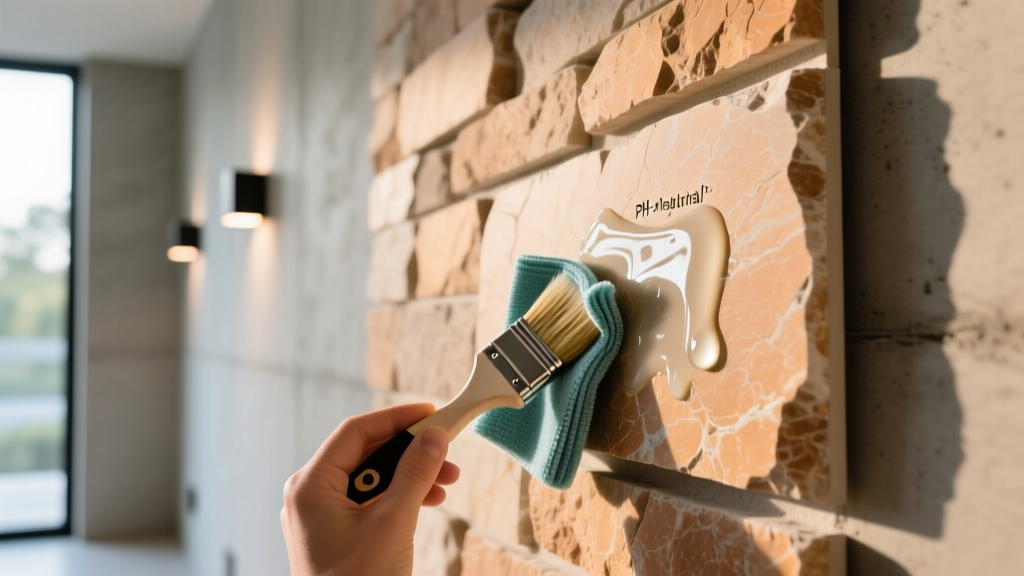
The Chemistry of Coral Stone Veneer: Why Standard Care Fails
Coral stone (often referred to regionally as coquina or keystone) is a highly porous, calcareous sedimentary rock composed primarily of calcium carbonate (CaCO3). When cut into thin veneer profiles for exterior and interior cladding, its high surface-area-to-volume ratio makes it exceptionally vulnerable to moisture ingress, biological colonization, and chemical etching. Unlike dense siliceous stones like granite or quartzite, coral stone veneer reacts violently to acidic environments.
The most common catastrophic failure in coral stone maintenance is the use of standard masonry cleaners. Products containing muriatic, phosphoric, or hydrofluoric acids will instantly dissolve the calcium carbonate matrix. This etching exposes the softer, uncompacted fossil structures beneath the surface, accelerating weathering and creating a pitted, degraded facade. According to the Natural Stone Institute, calcareous stones require strictly pH-neutral or mildly alkaline cleaning agents to preserve their structural integrity.
Routine Cleaning Protocols for Coral Stone Veneer
Maintaining the aesthetic and structural performance of coral stone veneer requires a low-impact, high-dwell cleaning methodology. Because the stone acts like a rigid sponge, rapid washing forces dirt deeper into the pores. Follow this precise sequence for safe removal of atmospheric soiling and light biological growth.
Step-by-Step Washing Flow
- Pre-Wetting (Crucial): Saturate the veneer with clean water for 10-15 minutes before applying any chemicals. This fills the capillary pores, preventing the cleaning solution from being absorbed too deeply and leaving behind salt residues.
- Chemical Application: Apply a neutral-pH (7.0 to 8.5) stone cleaner. Products like Prosoco SureKlean Limestone & Masonry Afterwash or a dedicated neutral stone soap are ideal. Apply using a low-pressure pump sprayer.
- Dwell and Agitate: Allow the solution to dwell for 3 to 5 minutes. Do not let it dry on the surface. Agitate stubborn areas with a soft-to-medium nylon bristle brush. Never use wire brushes or abrasive pads, which will leave embedded iron particles that rapidly rust and stain the calcium carbonate.
- Low-Pressure Rinse: Rinse thoroughly using a pressure washer capped at 800 PSI with a 40-degree fan tip. Maintain a minimum 12-inch standoff distance to avoid delaminating the soft veneer face from its backing substrate.
Sealing Strategies: Penetrating vs. Film-Forming
Sealing coral stone veneer is highly debated among preservationists. The National Park Service Preservation Briefs explicitly warn against trapping moisture inside historic masonry. While modern veneer systems include drainage planes, the extreme porosity of coral stone means moisture management is critical. Choosing the wrong sealer will cause severe spalling.
| Sealer Type | Chemistry | Breathability | Verdict for Coral Stone |
|---|---|---|---|
| Silane/Siloxane | Penetrating (Reacts with silica/lime) | High (Vapor permeable) | Recommended. Repels liquid water while allowing water vapor to escape. Does not alter natural matte appearance. |
| Acrylic / Urethane | Film-Forming (Surface coating) | Low to None | Avoid. Traps moisture behind the film. Causes severe spalling and flaking in freeze-thaw or high-humidity coastal climates. |
| Fluoropolymer | Penetrating (Oleophobic & Hydrophobic) | Moderate | Situational. Best for interior coral stone veneer in kitchens where oil and grease resistance is required. |
For exterior applications, a high-quality silane/siloxane blend (such as Tenax Akeem or Prosoco Siloxane PD) applied to a bone-dry substrate provides 5 to 7 years of protection without creating a vapor barrier.
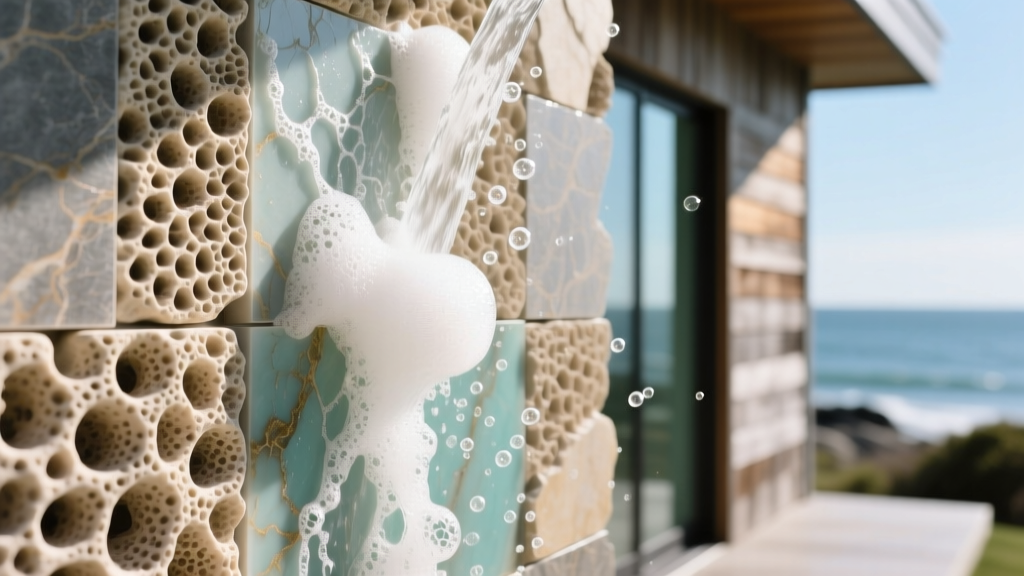
Troubleshooting Common Coral Stone Veneer Failures
When coral stone veneer degrades, it usually presents one of three distinct symptoms. Accurate diagnosis is required to prevent recurring damage.
- Symptom: White, powdery crystalline deposits (Efflorescence).
Cause: Water moving through the veneer dissolves soluble salts from the mortar bed or backing substrate, depositing them on the surface as it evaporates.
Fix: Allow the stone to dry completely. Remove deposits with a stiff, dry nylon brush. Do not use water, which will simply redissolve the salts and push them back into the pores. For severe cases, use a specialized, calcium-carbonate-safe efflorescence remover. - Symptom: Black, green, or pink biological staining.
Cause: Algae, lichen, or cyanobacteria colonizing the porous surface in shaded, humid environments.
Fix: Avoid household bleach (sodium hypochlorite). Bleach leaves behind sodium chloride (salt) residues that cause subflorescence and micro-spalling. Instead, apply a quaternary ammonium-based biocide (like Prosoco BioKleen). These leave no salt residue and provide residual protection against regrowth. - Symptom: Face of the stone popping off or flaking (Spalling/Delamination).
Cause: Moisture trapped behind the veneer freezing and expanding, or hydrostatic pressure building behind a non-breathable film-forming sealer.
Fix: Strip any existing acrylic sealers using a heavy-duty alkaline stripper. Inspect the wall assembly to ensure weep holes at the base of the veneer are clear of mortar droppings and debris, allowing the drainage plane to function.
2026 Maintenance Cost Breakdown
Budgeting for coral stone veneer maintenance requires understanding the labor intensity of low-pressure, high-dwell cleaning methods. Because aggressive power washing is prohibited, manual agitation and extended dwell times increase labor hours.
| Service | DIY Material Cost (per sq. ft.) | Professional Service Cost (per sq. ft.) | Frequency |
|---|---|---|---|
| Routine Neutral Cleaning | $0.15 - $0.25 | $2.50 - $4.00 | Every 1-2 Years |
| Biocide Treatment (Algae/Mold) | $0.30 - $0.45 | $3.50 - $5.50 | As Needed |
| Silane/Siloxane Sealing | $0.60 - $1.10 | $3.00 - $5.00 | Every 5-7 Years |
| Sealer Stripping & Restoration | $1.50 - $2.50 | $6.00 - $9.00 | Corrective Only |
Expert FAQ
Can I use a muriatic acid wash to remove mortar smears from newly installed coral stone veneer?
No. Muriatic acid will aggressively etch the calcium carbonate, permanently scarring the veneer. For new construction mortar smears, allow the mortar to cure fully, then carefully remove bulk smears with a wooden or plastic scraper. Follow up with a specialized, non-acidic masonry cleaner formulated specifically for calcareous stone, testing on an inconspicuous area first.
Does sealing coral stone veneer change its color?
A true penetrating silane/siloxane sealer is designed to be invisible and will not alter the natural color or texture of the stone. However, solvent-based sealers can sometimes leave a temporary dark 'wet' look that dissipates as the carrier solvents evaporate over 48 hours. Always avoid 'color-enhancing' sealers on exterior coral stone, as they typically contain film-forming resins that trap moisture.
How do I know if my coral stone veneer needs to be resealed?
Perform a simple water droplet test. Splash a few drops of clean water onto the stone surface in multiple locations. If the water beads up and remains on the surface for at least 5 minutes, the sealer is still effective. If the water immediately darkens the stone and absorbs into the pores, the hydrophobic barrier has degraded, and it is time to apply a fresh coat of penetrating sealer.
Written by
James ThorntonJames Thornton is a construction industry veteran with 25 years of hands-on experience in wood framing, lumber grading, and residential building codes. He started as a framing carpenter in rural Oregon, earned his ICC Residential Building Inspector certification, and eventually became a senior plan reviewer for the City of Portland Bureau of Development Services. James holds a B.S. in Wood Science & Technology from Oregon State University and is a certified lumber grader through the West Coast Lumber Inspection Bureau (WCLIB). He has inspected over 3,000 residential construction sites and authored the city's internal guide on advanced framing techniques (2x6 at 24" O.C.). James lives in Bend, OR, where he builds custom timber-frame cabins and competes in lumberjack sports.
More from James Thornton
View all
Insulation
Best Home Insulation Materials: Complete 2026 Guide
Compare top home insulation materials for 2026. Find R-values, installed costs per square foot, and best uses for fiberglass, spray foam, and mineral wool.
Aug 4, 2026

Sustainable Building
Certify Your Green Building Material for LEED and WELL
Step-by-step guide to certifying a green building material for LEED v5 and WELL v2. Master EPDs, HPDs, and VOC limits for 2026 project specifications.
Aug 4, 2026

Stone & Masonry
Veneer Stacked Stone Panels: Interior Design & Style Showcase
Discover how veneer stacked stone panels transform interiors. Explore modern design profiles, material pairings, and technical installation specs.
Aug 4, 2026