Exterior Faux Stone Veneer Cost: Complete Pricing & ROI Breakdown
Analyze exterior faux stone veneer costs. Compare polyurethane and cement-based pricing, labor rates, hidden fees, and ROI data for your project.
Material Cost Breakdown by Composition
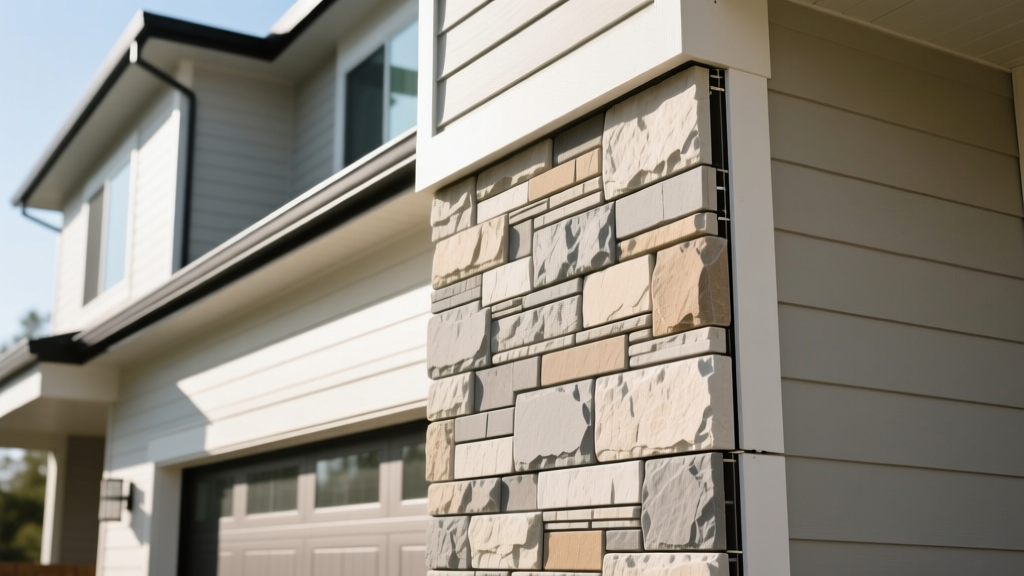
Exterior faux stone veneer delivers the architectural weight and visual texture of natural masonry without the structural load or extreme material costs. Total installed costs typically range from $14 to $32 per square foot, but this spread is driven primarily by the core composition of the veneer. The market is currently dominated by two distinct material categories: high-density polyurethane and cement-based manufactured stone. Understanding the baseline material costs for each is the first step in accurate budget forecasting.
| Material Type | Brand Examples | Material Cost (Per Sq Ft) | Weight (Per Sq Ft) | Fastening Method |
|---|---|---|---|---|
| High-Density Polyurethane | GenStone, Texture Plus | $8.50 - $14.00 | 1.0 - 1.5 lbs | Corrosion-resistant screws via shiplap flange |
| Cement-Based Manufactured | Eldorado Stone, Cultured Stone | $6.00 - $11.50 | 10.0 - 15.0 lbs | Type S or N mortar over metal lath |
| High-Density EPS / Composite | Novik, Stone Panels | $7.00 - $12.00 | 2.0 - 4.0 lbs | Adhesive and mechanical brad nails |
While cement-based options often present a lower upfront material cost per square foot, they require extensive substrate preparation. Polyurethane panels, conversely, carry a higher material premium but feature interlocking shiplap edges that eliminate the need for mortar, scratch coats, and specialized masonry tools. When evaluating exterior faux stone veneer, the material price is only one variable in the total financial equation.
The Hidden Costs: Prep, Trim, and Moisture Management
Budget overruns on exterior veneer projects rarely stem from the field stone itself; they originate from the ancillary components required for a code-compliant, weather-tight installation. Failing to account for these hidden costs will skew your initial estimates by 20% to 35%.
Manufacturers price field panels by the square foot, but corner pieces and trims are priced by the linear foot. A standard 400-square-foot accent wall with two outside corners and one window return might require 60 linear feet of corner pieces. At an average cost of $18 to $35 per linear foot, corners alone can add $1,080 to $2,100 to your material bill. Always measure your linear corner footage before finalizing a budget.
Substrate Preparation and Weather-Resistive Barriers (WRB)
According to building science guidelines and the National Association of Home Builders (NAHB), moisture management behind exterior cladding is non-negotiable. For cement-based veneers, you must install a weather-resistive barrier (such as Tyvek HomeWrap or Henry Blueskin), followed by a weep screed at the base, and a layer of 2.5 lb galvanized metal lath attached with corrosion-resistant fasteners.
- WRB and Flashing: $1.25 - $2.50 per sq ft
- Metal Lath and Fasteners: $1.00 - $1.75 per sq ft
- Scratch Coat (Portland Cement): $0.80 - $1.50 per sq ft
- Weep Screeds and Drip Edges: $3.00 - $6.00 per linear ft
Polyurethane panels can often be installed directly over existing, structurally sound siding or a basic WRB, bypassing the lath and scratch coat expenses entirely. However, if the existing substrate is uneven by more than 1/4 inch over a 10-foot span, furring strips must be installed to create a plumb surface, adding $1.50 to $3.00 per square foot in lumber and labor.
Polyurethane vs. Cement-Based: Decision Matrix
Choosing between polyurethane and cement-based exterior faux stone veneer requires balancing climate conditions, labor availability, and structural constraints. The following matrix outlines the practical trade-offs for residential and light commercial applications.
| Decision Factor | Polyurethane Panels | Cement-Based Manufactured Stone |
|---|---|---|
| Climate Suitability | Excellent for extreme freeze-thaw cycles; non-porous and immune to water absorption. | Good, but requires strict adherence to ASTM C1670 standards for water absorption to prevent spalling. |
| Labor Skill Required | Low to Medium. Carpenters, siding installers, or advanced DIYers can manage the interlocking cuts. | High. Requires skilled masons familiar with mortar mixing ratios, joint tooling, and lath application. |
| Impact Resistance | High. High-density foam rebounds from minor impacts (hail, debris) without cracking. | Medium. Hard surface can chip or crack under sharp, high-velocity impacts. |
| Total Installed Cost | $14.00 - $22.00 per sq ft | $18.00 - $32.00 per sq ft |
| Structural Load | Negligible. No additional foundation or framing reinforcement required. | Heavy (10-15 lbs/sq ft). May require structural review for multi-story applications or cantilevered walls. |
Labor Rates and Regional Pricing Variables
Labor constitutes 40% to 60% of the total installed cost for exterior faux stone veneer. The divergence in labor costs is directly tied to the material chosen and the prevailing wage rates in your specific region.
Cement-Based Masonry Labor
Installing cement-based veneer is a specialized masonry trade. Masons typically charge between $65 and $95 per hour, or bid the project at $10 to $18 per square foot for the veneer application alone (excluding prep). The process involves mixing mortar to a specific consistency, buttering the back of each individual stone, pressing it to the scratch coat, and tooling the joints. A two-person masonry crew can typically install 80 to 120 square feet per day, depending on the complexity of the stone profile (e.g., dry-stack vs. traditional mortar joint).
Polyurethane Carpentry Labor
Polyurethane systems are installed by carpenters or siding professionals, whose hourly rates generally range from $45 to $75. Because the panels cover larger areas (often 42" x 12" per panel) and require no mixing or curing time, installation speed is significantly faster. A skilled two-person crew can install 300 to 400 square feet in a single day, driving the labor cost down to $5 to $9 per square foot.
ROI and Long-Term Market Value
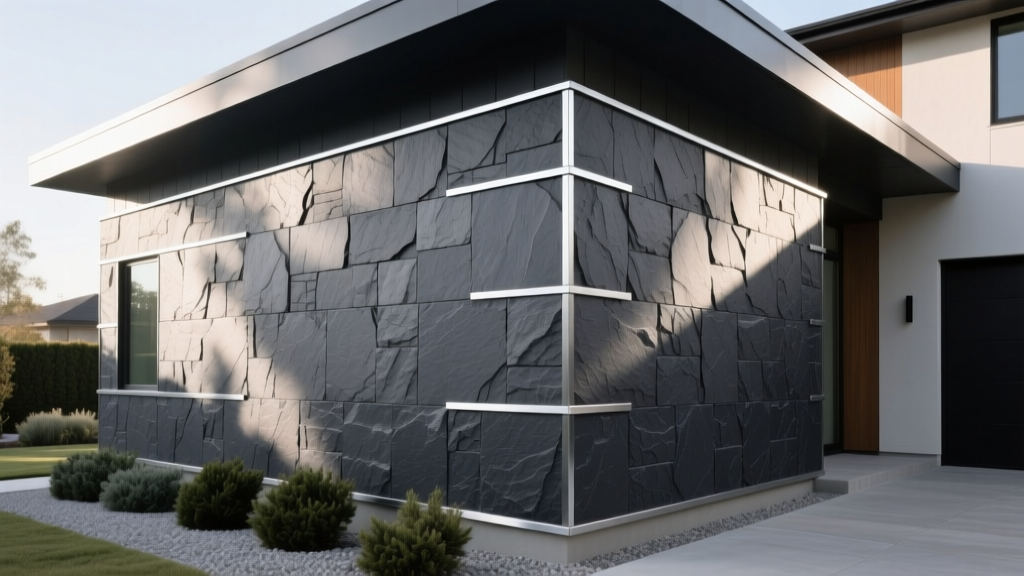
Exterior faux stone veneer is consistently ranked as one of the highest-performing exterior upgrades regarding return on investment. According to Remodeling Magazine's Cost vs. Value Report, manufactured stone veneer projects routinely recoup between 90% and 102% of their initial costs at resale, depending on the regional housing market.
The high ROI is driven by curb appeal and the perception of premium construction. Homes featuring stone accents on the front facade or wainscoting typically sell faster and command a premium over identical homes with standard vinyl or fiber-cement siding. Furthermore, polyurethane and high-quality cement veneers require virtually zero maintenance—no painting, sealing, or power washing—preserving the net profit when the property is eventually sold.
Expert Checklist for Budget Optimization
To maximize your budget without compromising the integrity of the building envelope, implement the following strategies during the planning and procurement phases:
- Consolidate Corner Footage: Design your elevation to minimize outside corners. Use flat panels with mitered cuts for inside corners where possible, as mitering polyurethane or cement panels costs only the price of a saw blade, whereas manufactured inside corner pieces carry the same high linear-foot premium as outside corners.
- Blend with High-End Siding: Instead of wrapping the entire exterior in faux stone, use it as a wainscot (bottom 36 to 48 inches) or to frame specific architectural features like entryways and garage doors. Pair it with premium fiber-cement lap siding to achieve a high-end custom look at a 40% lower overall material cost.
- Specify Type S Mortar for Exteriors: If using cement-based veneer, ensure your mason uses Type S mortar rather than Type N for the scratch coat and setting bed. Type S offers higher flexural bond strength, which is critical for exterior walls subjected to wind loads and thermal expansion.
- Order 10-12% Overage: Faux stone panels and manufactured stones have dye-lot variations. Order all required materials from a single production batch with a 10% to 12% waste factor for cuts and breakage. Returning to the supplier later for a few missing square feet will result in noticeable color mismatches and expensive freight charges for small pallets.
- Verify UV Stabilizers: When purchasing polyurethane panels, explicitly verify with the manufacturer that the panels are injected with UV inhibitors. Budget panels lacking adequate UV stabilization will chalk, fade, or become brittle within three to five years of direct sun exposure, negating any initial cost savings.
Written by
James ThorntonJames Thornton is a construction industry veteran with 25 years of hands-on experience in wood framing, lumber grading, and residential building codes. He started as a framing carpenter in rural Oregon, earned his ICC Residential Building Inspector certification, and eventually became a senior plan reviewer for the City of Portland Bureau of Development Services. James holds a B.S. in Wood Science & Technology from Oregon State University and is a certified lumber grader through the West Coast Lumber Inspection Bureau (WCLIB). He has inspected over 3,000 residential construction sites and authored the city's internal guide on advanced framing techniques (2x6 at 24" O.C.). James lives in Bend, OR, where he builds custom timber-frame cabins and competes in lumberjack sports.
More from James Thornton
View all
Insulation
Best Home Insulation Materials: Complete 2026 Guide
Compare top home insulation materials for 2026. Find R-values, installed costs per square foot, and best uses for fiberglass, spray foam, and mineral wool.
Aug 4, 2026

Sustainable Building
Certify Your Green Building Material for LEED and WELL
Step-by-step guide to certifying a green building material for LEED v5 and WELL v2. Master EPDs, HPDs, and VOC limits for 2026 project specifications.
Aug 4, 2026

Stone & Masonry
Veneer Stacked Stone Panels: Interior Design & Style Showcase
Discover how veneer stacked stone panels transform interiors. Explore modern design profiles, material pairings, and technical installation specs.
Aug 4, 2026