Exterior Natural Stone Veneer: The Complete Buyer's Guide
Discover how to select the best exterior natural stone veneer for your project. Compare costs, stone profiles, and installation specs for lasting durability.
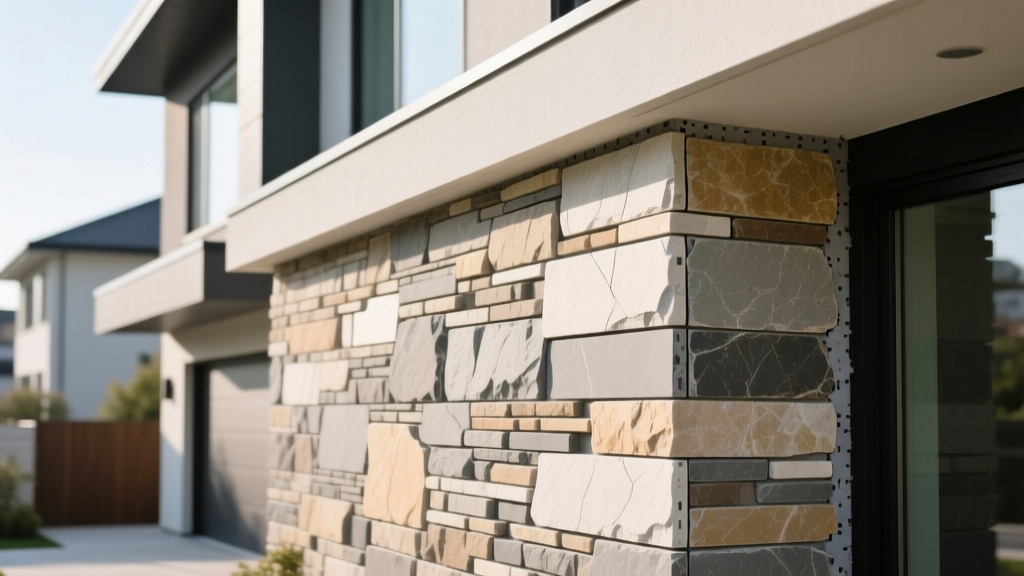
Natural vs. Manufactured: The Veneer Matrix
When specifying exterior cladding, the choice between quarried natural stone and Manufactured Stone Veneer (MSV) dictates your budget, structural requirements, and long-term maintenance. While MSV is cast from concrete and iron oxide pigments, exterior natural stone veneer is sliced or tumbled from actual quarried rock, typically ranging from 3/4-inch to 1-1/2-inches in thickness. Natural stone offers a non-repeating, geologically authentic aesthetic that MSV struggles to replicate, but it demands stricter installation tolerances.
| Specification | Natural Stone Veneer | Manufactured Stone Veneer (MSV) |
|---|---|---|
| Weight (lbs/sq ft) | 12 - 18 lbs | 8 - 12 lbs |
| Material Cost (2026) | $9.00 - $18.00 / sq ft | $5.50 - $10.00 / sq ft |
| Color Consistency | Varies by quarry batch; UV stable | Uniform; pigments may fade after 15-20 yrs |
| Thickness Profile | 0.75" - 1.5" | 0.5" - 2.5" (varies by mold) |
| Lifespan | 75 - 100+ years | 50 years |
Top Stone Profiles for Exterior Cladding
The profile you select dramatically alters the architectural style and the mason's installation speed. Here are the three most specified profiles for exterior applications:
1. Ledgestone (Linear / Stack)
Cut into long, narrow horizontal strips, ledgestone provides a modern, linear aesthetic. Because the stones are pre-cut to uniform heights (typically 1.5" to 4" high), masons can install it faster than random patterns. Best for: Contemporary homes, modern farmhouse exteriors, and horizontal accent bands.
2. Fieldstone (Round / Glacial)
Fieldstone consists of rounded, irregular stones that mimic naturally weathered river rock or glacial deposits. This profile is labor-intensive, as the mason must fit irregular puzzle pieces together, requiring wider mortar joints. Best for: Craftsman homes, rustic cabins, and landscape retaining wall caps.
3. Ashlar (Squared / Mosaic)
Ashlar patterns feature rectangular and square stones of varying sizes, creating a classic, tailored masonry look. It requires a skilled mason to maintain level coursing while accommodating the varied dimensions. Best for: Colonial, Tudor, and traditional estate homes.
Climate Matching: Selecting Stone for Your Region
Not all natural stone is suitable for every climate. The primary enemy of exterior stone is moisture intrusion combined with temperature fluctuations. According to the Natural Stone Institute, specifying stone without reviewing its absorption rates is the leading cause of premature cladding failure.
- Freeze-Thaw Regions (Northeast, Midwest, Mountain West): You must specify stone with a water absorption rate of less than 3% (tested via ASTM C97). High-porosity sandstones will absorb winter melt, which expands upon freezing, causing the face of the stone to spall and delaminate. Opt for dense quartzites, slates, or low-porosity granites.
- Coastal & Salt-Spray Zones (Florida, Pacific Coast): Avoid high-calcium limestones and soft marbles. Salt crystallization within the stone's pores will cause severe surface pitting. Dense limestone or bluestone performs significantly better in marine environments.
- High-UV / Desert Climates (Southwest): Natural stone excels here. Unlike manufactured concrete veneers, which can suffer from efflorescence and pigment fading under intense UV and alkaline conditions, natural stone remains entirely colorfast.
2026 Cost Breakdown: Material vs. Labor
Budgeting for exterior natural stone veneer requires looking beyond the pallet price. Site preparation, substrate reinforcement, and specialized masonry labor make up the bulk of the expense. Below is the average national cost breakdown for a standard 500 sq. ft. exterior elevation in 2026.
| Cost Component | Low-End (Fieldstone/Ledge) | High-End (Ashlar/Custom Cut) |
|---|---|---|
| Stone Material | $9.00 / sq ft | $18.50 / sq ft |
| Mortar, Lath & WRB Prep | $2.50 / sq ft | $4.00 / sq ft |
| Masonry Labor | $14.00 / sq ft | $24.00 / sq ft |
| Scaffolding & Equipment | $1.50 / sq ft | $2.50 / sq ft |
| Total Installed Cost | $27.00 / sq ft | $49.00 / sq ft |
Critical Installation Pitfalls to Avoid
Natural stone veneer is an adhered system, not a structural one. It relies entirely on the bond between the stone, the mortar, the metal lath, and the weather-resistive barrier (WRB). If your contractor deviates from best practices, the cladding will fail. Monitor your site for these specific failure modes:
- Omitting the Weep Screed: The most catastrophic installation error is failing to install a corrosion-resistant weep screed at the base of the wall. The weep screed must sit a minimum of 4 inches above soil grade (or 2 inches above paved surfaces) to allow trapped moisture to escape. Without it, hydrostatic pressure will push water behind the veneer, rotting the wood framing.
- Using the Wrong Mortar Type: Exterior stone requires Type S mortar, which offers high tensile bond strength and flexibility to withstand wind loads and thermal expansion. Using Type N mortar (common for interior brickwork) will result in joint cracking and stone detachment during freeze-thaw cycles.
- Back-Buttering Neglect: For any stone larger than 36 square inches, the mason must "back-butter" (apply a 1/8-inch layer of mortar directly to the back of the stone) before pressing it into the wall scratch coat. Relying solely on the wall mortar creates air pockets that lead to hollow spots and eventual delamination.
- Improper Lath Overlap: Self-furring, 2.5 lb/sq yd galvanized metal lath must be applied horizontally with a minimum 1-inch side lap and a 2-inch end lap. Staples or nails must penetrate directly into the wall studs, not just the OSB sheathing.
'The longevity of natural stone veneer is rarely determined by the stone itself, but almost entirely by the water management system hidden directly behind it. A flawless WRB and weep system will keep a mediocre stone looking great for decades; a poor water system will destroy premium stone in five years.'
— Technical Bulletin, Masonry Advisory Council
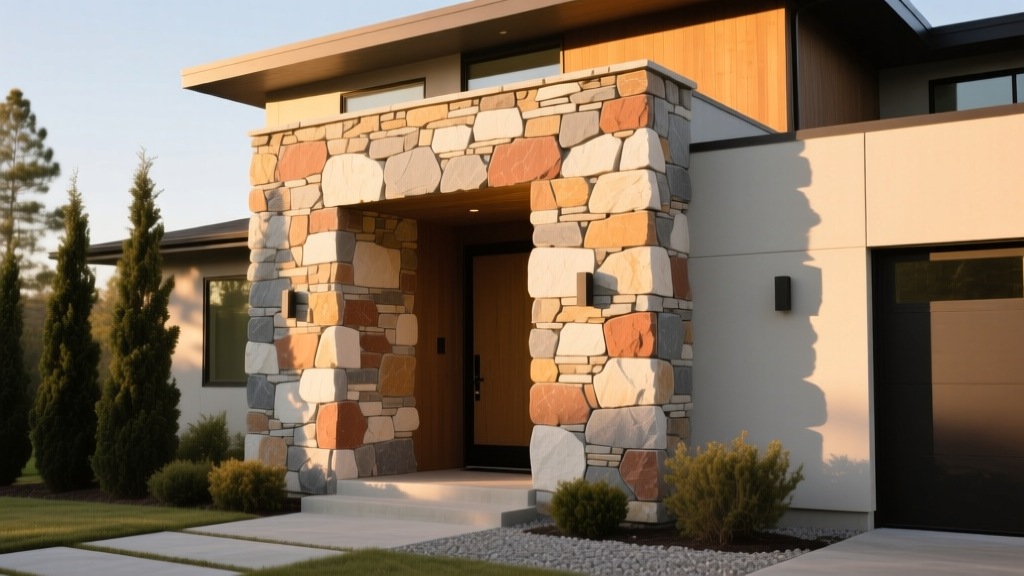
The Buyer's Sourcing & Quality Inspection Checklist
When your natural stone pallets arrive on-site, do not allow the mason to begin installation until you have verified the following quality control metrics:
- Thickness Tolerance: Measure 10 random stones. Adhered veneer should not exceed 1.5 inches in thickness. Stones thicker than this add unnecessary weight and require excessive mortar buildup.
- Dust & Slurry Check: Run your thumb across the back of a stone. If it leaves a thick layer of dusty slurry (from the quarry sawing process), the stones must be washed with a stiff brush and water before installation. Mortar will not bond to stone dust.
- Color Blending: Open at least three different pallets and dry-lay a 10 sq. ft. test patch on the ground. Quarried stone varies wildly by vein; blending from multiple pallets prevents distinct 'color block' patches on your exterior.
- Corner Piece Availability: Verify that your order includes at least 15% linear feet of manufactured corner returns. Attempting to wrap exterior corners with flat veneer pieces results in an obvious, unsightly seam that compromises the illusion of solid masonry.
Selecting exterior natural stone veneer is a significant capital investment that permanently alters the architectural character of your property. By prioritizing low-absorption stone for your specific climate, enforcing strict weep-screed and mortar protocols, and blending pallets during installation, you ensure the cladding performs flawlessly for the lifetime of the structure.
Written by
James ThorntonJames Thornton is a construction industry veteran with 25 years of hands-on experience in wood framing, lumber grading, and residential building codes. He started as a framing carpenter in rural Oregon, earned his ICC Residential Building Inspector certification, and eventually became a senior plan reviewer for the City of Portland Bureau of Development Services. James holds a B.S. in Wood Science & Technology from Oregon State University and is a certified lumber grader through the West Coast Lumber Inspection Bureau (WCLIB). He has inspected over 3,000 residential construction sites and authored the city's internal guide on advanced framing techniques (2x6 at 24" O.C.). James lives in Bend, OR, where he builds custom timber-frame cabins and competes in lumberjack sports.
More from James Thornton
View all
Insulation
Best Home Insulation Materials: Complete 2026 Guide
Compare top home insulation materials for 2026. Find R-values, installed costs per square foot, and best uses for fiberglass, spray foam, and mineral wool.
Aug 4, 2026

Sustainable Building
Certify Your Green Building Material for LEED and WELL
Step-by-step guide to certifying a green building material for LEED v5 and WELL v2. Master EPDs, HPDs, and VOC limits for 2026 project specifications.
Aug 4, 2026

Stone & Masonry
Veneer Stacked Stone Panels: Interior Design & Style Showcase
Discover how veneer stacked stone panels transform interiors. Explore modern design profiles, material pairings, and technical installation specs.
Aug 4, 2026