Fake Slate Roofing Material Cost Analysis & 2026 Pricing Guide
Analyze 2026 fake slate roofing material costs. Compare synthetic brands, hidden installation fees, and lifecycle ROI against natural slate.
2026 Cost Baseline: What You Will Actually Pay
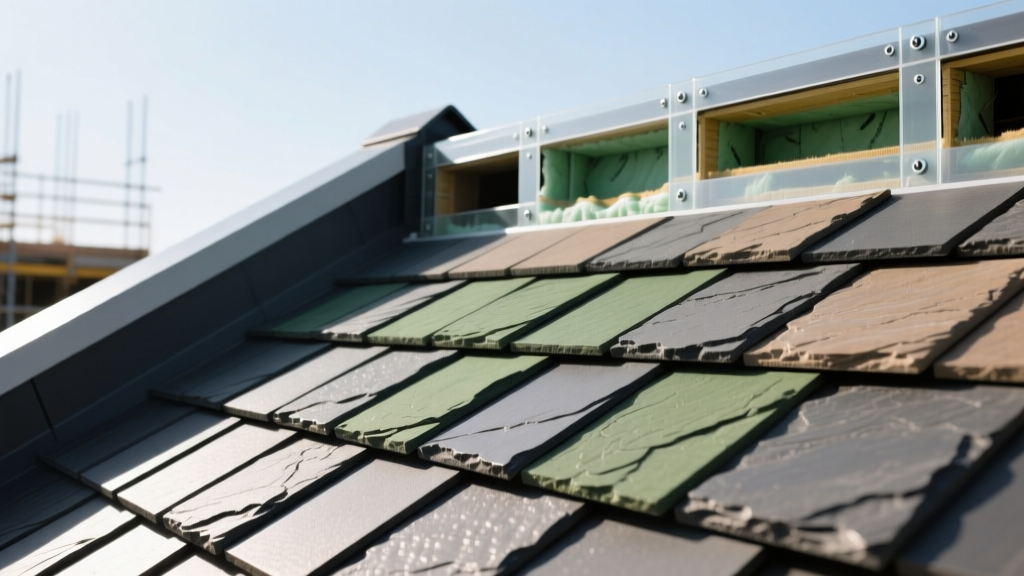
Fake slate roofing material—technically classified as synthetic or composite slate—has fundamentally disrupted the premium roofing market. Engineered from virgin polymers, recycled rubber, and advanced resins, these products replicate the shadow lines and texture of quarried slate without the extreme weight or structural demands. For homeowners and contractors evaluating this material in 2026, understanding the true installed cost requires looking beyond the per-square material price.
2026 National Average Cost Snapshot
- Total Installed Cost: $9.50 to $16.50 per square foot
- Material Cost (Per Square / 100 sq. ft.): $400 to $750
- Labor Cost (Per Square): $550 to $900
- Average Roof Size (2,500 sq. ft.): $23,750 to $41,250 total project cost
While the initial outlay is significantly higher than architectural asphalt shingles ($4.50–$8.00 per sq. ft. installed), fake slate roofing material occupies a strategic middle ground. It delivers the aesthetic prestige of natural slate at roughly 40% to 60% of the cost, while eliminating the need for expensive structural framing upgrades.
Material Pricing Matrix: Top Composite Brands
Not all synthetic slate is manufactured equally. The market is segmented by composition (recycled vs. virgin polymer), exposure warranties, and profile authenticity. Below is a comparative analysis of the leading manufacturers dominating the 2026 market.
| Brand & Model | Material Cost (Per Sq.) | Weight (Per Sq.) | Composition & Warranty |
|---|---|---|---|
| DaVinci Bellaforte | $450 - $550 | 230 lbs | Virgin polymer / 50-Year Limited |
| EcoStar Majestic Niagara | $520 - $650 | 310 lbs | Recycled rubber/plastic / 50-Year Gold |
| Inspire Roofing | $420 - $500 | 215 lbs | Engineered composite / Lifetime Limited |
| DaVinci Multi-Width | $650 - $750 | 250 lbs | Virgin polymer / 50-Year Limited |
According to product specifications from DaVinci Roofscapes, their virgin polymer formulations are engineered to resist UV degradation and thermal expansion, which is critical for maintaining the tight interlocking joints over decades of sun exposure. Conversely, manufacturers like EcoStar utilize recycled rubber and plastics, offering a more sustainable profile with slightly higher weight and superior impact absorption.
The Hidden Variables: Where Synthetic Slate Budgets Fail
Contractor bids for fake slate roofing material often vary wildly. This discrepancy rarely stems from the synthetic tiles themselves, but rather from the ancillary materials and site-specific labor requirements. If your quote seems suspiciously low, verify that the following cost drivers are included.
1. Premium Underlayment Requirements
Unlike asphalt shingles that self-seal around nails via heat activation, synthetic slate relies entirely on mechanical fastening and the underlayment beneath it. Standard 15-lb felt is unacceptable. Installations require high-temp synthetic underlayment or fully adhered ice and water shields (e.g., Grace Ice & Water Shield) across the entire roof deck. Budget Adder: $1.50 to $2.50 per square foot.
2. Flashing Material Parity
Pairing a 50-year synthetic slate roof with cheap galvanized steel flashing is a catastrophic failure point. Galvanized steel will rust through in 20 years, requiring the slate to be carefully removed and reinstalled to replace the flashing. Copper or heavy-gauge aluminum is mandatory. With copper prices remaining elevated in 2026, expect flashing costs to add $2,000 to $4,500 to an average-sized project.
3. Roof Pitch and Complexity Multipliers
Labor rates assume a standard 6/12 to 8/12 pitch on a simple gable roof. If your roof features multiple valleys, dormers, turrets, or a pitch exceeding 12/12, contractors will apply a complexity multiplier. Expect labor costs to increase by 30% to 50% for steep or highly articulated rooflines due to the required scaffolding, safety harnesses, and precise cutting of composite tiles.
Structural Savings: The Unseen Financial Advantage
The most significant financial benefit of fake slate roofing material is what you do not have to pay for. Natural quarried slate weighs between 800 and 1,500 pounds per square. Most modern residential roof trusses are engineered for a dead load of 200 to 300 pounds per square.
If you choose natural slate, you must often hire a structural engineer ($500–$1,500) and pay a framing crew to sister trusses, add load-bearing supports, or reinforce the roof deck ($5,000–$15,000+). Because synthetic slate weighs between 200 and 310 pounds per square, it installs directly over standard 5/8-inch or 3/4-inch CDX plywood or OSB decking without any structural reinforcement. This makes synthetic slate the only viable slate option for most existing homes and standard new builds.
Synthetic vs. Natural Slate: 50-Year Lifecycle Cost Analysis
To evaluate true ROI, we must compare the 50-year lifecycle costs of both materials on a standard 2,500 sq. ft. roof.
| Cost Factor (50 Years) | Natural Quarried Slate | Fake Slate (Synthetic) |
|---|---|---|
| Initial Material & Labor | $75,000 - $110,000 | $23,750 - $41,250 |
| Structural Reinforcement | $8,000 - $15,000 | $0 |
| Maintenance & Tile Replacement | $4,000 - $8,000 (broken tiles) | $0 (Class 4 impact rated) |
| Flashing Replacement (Year 25) | $6,000 - $9,000 | $0 (if copper is used initially) |
| Total 50-Year Cost | $93,000 - $142,000 | $23,750 - $41,250 |
While natural slate can technically last over 100 years, the flashings, fasteners, and surrounding materials will fail long before the stone does, necessitating expensive tear-offs and re-flashing. Synthetic slate offers a maintenance-free lifespan that aligns perfectly with modern copper flashing and synthetic underlayment lifecycles.
Insurance Premiums and Thermal Performance
A frequently overlooked financial benefit of high-end fake slate roofing material is its impact on home insurance and energy efficiency. Premium synthetic slates carry a Class A fire rating and a Class 4 impact resistance rating (UL 2218), the highest standard available.
Many insurance carriers in hail-prone regions (such as Texas, Colorado, and the Midwest) offer premium discounts of 15% to 30% for roofs certified with a UL 2218 Class 4 impact rating. Over a 50-year lifespan, these annual savings can effectively offset 20% to 30% of the initial material cost. Always request the manufacturer's impact certification document to provide to your insurance underwriter.
Furthermore, the thermal emittance of synthetic roofing is an area of active innovation. According to the U.S. Department of Energy, roofing materials that reflect solar energy and emit heat can significantly reduce cooling loads. While traditional dark synthetic slate absorbs heat, several manufacturers now offer specialized cool-roof pigmentations in their gray and weathered-green color palettes that reflect near-infrared radiation, helping homes meet modern energy codes without sacrificing the classic slate aesthetic.
Frequently Asked Questions
Can fake slate roofing material be installed over existing shingles?
No. Synthetic slate requires a perfectly flat, solid deck to prevent the tiles from cracking or telegraphing unevenness. A complete tear-off down to the wood decking is mandatory. Attempting to install over existing architectural shingles will void the manufacturer's warranty and result in a wavy, unprofessional appearance.
Do synthetic slate tiles fade over time?
Lower-tier composite tiles can experience UV fading, but premium brands utilize co-extruded color technology where the UV inhibitors and pigments are embedded throughout the entire thickness of the polymer, not just surface-painted. This ensures that even if the tile is scratched or scored during installation, the color remains consistent.
How does synthetic slate perform in extreme cold and snow?
Unlike natural slate, which can spall or delaminate when water freezes in its microscopic pores, synthetic slate is completely non-porous. It absorbs zero water, making it entirely immune to freeze-thaw cycling damage. However, snow guards are highly recommended, as the smooth polymer surface allows heavy snow loads to slide off suddenly, which can damage gutters or landscaping.
Written by
Elena RodriguezElena Rodriguez is a civil engineer and technical writer specializing in concrete technology, masonry systems, and ASTM/ACI compliance. She earned her B.S. in Civil Engineering from Texas A&M University and spent a decade at a materials testing laboratory, performing over 2,000 concrete compressive strength tests and masonry prism evaluations. Elena is an ACI-certified Field Testing Technician (Grade I) and a member of ASTM Committee C12 on Natural Building Stone. She currently consults on forensic engineering cases involving concrete failures and moisture intrusion. Based in San Antonio, TX, Elena is a proud member of the Society of Women Engineers (SWE) and coaches her daughter's FIRST Robotics team.
More from Elena Rodriguez
View all
Walls & Panels
Cost Analysis: Light Gauge Steel Framing Advantages and Disadvantages
Evaluate light gauge steel framing advantages and disadvantages through a strict cost analysis lens, comparing material, labor, and lifecycle expenses.
Aug 4, 2026

Walls & Panels
Gypsum Board Types: Exact Specifications, Thickness & Dimensions
Compare standard, Type X, and moisture-resistant gypsum board types. Get exact specifications, thicknesses, dimensions, and ASTM standards for your project.
Aug 4, 2026

Fire Resistance
Best Fire-Resistant Outdoor Decking Materials: 2026 Buyer Guide
Discover the best fire-resistant outdoor decking materials for 2026. Compare Class A PVC, aluminum, and hardwood options for WUI compliance and safety.
Aug 4, 2026