Green Marble Durability: Lifespan Analysis and Wear Resistance
Analyze green marble durability, lifespan, and wear resistance. Learn about serpentinite variants, etching risks, and sealing costs for long-term use.
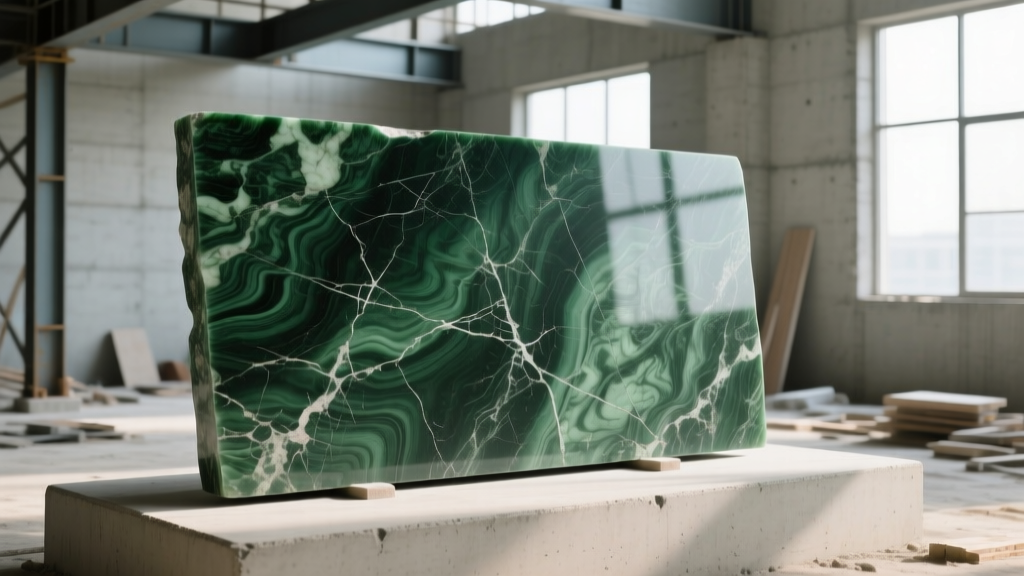
The Geological Reality: True Marble vs. Serpentinite
When evaluating green marble durability, the most critical factor is often misunderstood: most commercial 'green marbles' are not geologically true marbles. True marble is metamorphosed limestone composed primarily of calcium carbonate (calcite). However, the most popular green stones on the market—such as Verde Alpi, Rain Forest Green, and Guatemala Green—are actually serpentinites or serpentine-marble breccias.
Serpentinite is formed from the hydrous metamorphism of peridotite and consists primarily of magnesium silicate minerals. This geological distinction is the foundation of green marble's unique durability profile. Because magnesium silicate does not react with weak acids the way calcium carbonate does, high-quality serpentinite green marbles are inherently resistant to the acidic etching that plagues white marbles like Carrara or Calacatta. Understanding whether your specific slab is a true calcite marble or a silicate serpentinite dictates your entire maintenance and lifespan strategy.
Physical Properties: Hardness, Porosity, and Scratch Resistance
While green serpentinite marbles excel in chemical resistance, their physical hardness remains a vulnerability. On the Mohs scale of mineral hardness, most green marbles range between 3.0 and 4.0. For context, a copper penny is a 3.5, and a steel kitchen knife is a 5.5. This means green marble is highly susceptible to micro-scratching and abrasion in high-traffic floors or heavy-use countertops.
| Stone Variant | Geological Class | Mohs Hardness | Water Absorption (ASTM C97) |
|---|---|---|---|
| Verde Alpi | Serpentinite | 3.5 - 4.0 | 0.12% - 0.18% |
| Rain Forest Green | Serpentinite Breccia | 2.5 - 3.5 | 0.20% - 0.35% |
| Guatemala Green | Serpentine-Marble | 3.0 - 3.5 | 0.25% - 0.40% |
| Verde Guatemala (Calcite) | True Marble | 3.0 | 0.40% - 0.60% |
Despite the low Mohs rating, the water absorption rates for these stones are remarkably low (often under 0.5%), classifying them as dense and relatively stain-resistant compared to porous limestones. However, the micro-fissures common in brecciated varieties like Rain Forest Green can trap moisture and debris if not properly filled and sealed during fabrication.
The Etching and Staining Vulnerability Matrix
Designing a maintenance protocol requires separating chemical etching from physical staining. The Natural Stone Institute emphasizes that treating these two failure modes as identical is the most common mistake contractors make.
Chemical Etching (Surface Corrosion)
- Serpentinite Greens (Verde Alpi): Virtually immune to etching from household acids (citrus, vinegar, wine). You can use slightly acidic cleaners without dulling the polish.
- Calcite Greens (Some Asian/Chinese Greens): Highly vulnerable. Acids will dissolve the calcium carbonate matrix, leaving dull, matte spots that require mechanical re-polishing to fix.
Physical Staining (Subsurface Penetration)
- Oils and Grease: The primary threat to all green marbles. Cooking oils can penetrate the micro-fissures, causing dark, stubborn stains.
- Iron Oxidation (Rust): Many green marbles contain trace iron minerals (limonite/pyrite). If exposed to constant moisture, these internal minerals can oxidize, causing brown rust spots to bloom from within the stone itself.
Sealing Protocols and Lifespan Extension
To achieve a 50-to-100-year lifespan, green marble requires a precise sealing strategy. Because of the stone's density and low absorption rate, thick topical sealers (like acrylics or polyurethanes) will fail to penetrate and will instead sit on the surface, creating a hazy, artificial film that peels over time.
The Correct Protocol: Use a penetrating, siloxane-based or fluoropolymer impregnating sealer. Products like Tenax Aton or Miracle Sealants 511 Impregnator are industry standards. These sealers do not alter the natural look or slip resistance of the stone; they simply line the microscopic pores to repel water and oil.
Application Specifics:
- Clean the stone with a pH-neutral cleaner and allow it to dry completely (minimum 24 hours).
- Apply the impregnating sealer generously using a microfiber pad.
- Allow a 10-to-15-minute dwell time for penetration.
- Buff off all excess sealer with a clean, dry cloth. Leaving excess on the surface will result in a sticky, permanent residue.
- Reapply every 3 to 5 years for countertops, and every 5 to 7 years for vertical cladding.
Expected Lifespan and Long-Term ROI
When installed correctly and maintained with the protocols above, green marble boasts an exceptional lifespan. Interior wall cladding and low-traffic flooring can easily last 100+ years without requiring major restoration. Countertops and high-traffic floors, however, will experience mechanical wear.
Expect to budget for professional honing and re-polishing every 12 to 15 years in a residential kitchen environment. The cost for professional diamond-abrasive restoration ranges from $4.00 to $8.00 per square foot. Compared to engineered quartz, which cannot be refinished and must be entirely replaced if deeply scratched or burned, green marble's ability to be mechanically restored makes its 75-year lifecycle cost significantly lower.
Troubleshooting Common Green Marble Failures
Even with proper care, specific environmental factors can cause unique failures in green marble. Use this diagnostic guide to address issues before they compromise the stone's structural integrity.
Symptom: Brown or Yellow Spotting Appearing Months After Installation
Cause: Internal iron oxidation. This is often triggered by the use of water-based adhesives or grouts during installation, which introduce prolonged moisture to the stone's iron-bearing minerals.
Fix: Apply a specialized iron-removing poultice (such as Tenax Rust Stain Remover). For severe cases, the stone may need to be honed down by 1mm to remove the oxidized layer, followed by the application of a breathable, solvent-based sealer to block future moisture ingress.
Symptom: Micro-Scratching and Loss of Gloss on Floors
Cause: Abrasive silicate dust (sand) being tracked over the surface. Because green marble is a Mohs 3.5, quartz dust (Mohs 7) acts like sandpaper.
Fix: Implement a strict walk-off mat system at all entries. For existing scratches, do not use chemical 'scratch removers.' Hire a professional to perform a multi-step diamond honing process (starting at 400 grit and finishing at 3000 grit or with a crystallization powder) to restore the factory polish.
Symptom: White, Chalky Efflorescence on Exterior Cladding
Cause: Water migrating through the substrate, dissolving soluble salts, and depositing them on the stone surface as it evaporates.
Fix: Dry-brush the efflorescence. Do not use water to clean it, as this reintroduces the moisture cycle. Identify and repair the source of water intrusion behind the cladding, ensure weep holes are clear, and apply a breathable silane water repellent to the exterior face.