Interior Stone Veneer Wall: Natural vs. Manufactured Compared
Compare natural and manufactured interior stone veneer wall options. Explore costs, weight, installation, and top brands for your next project.
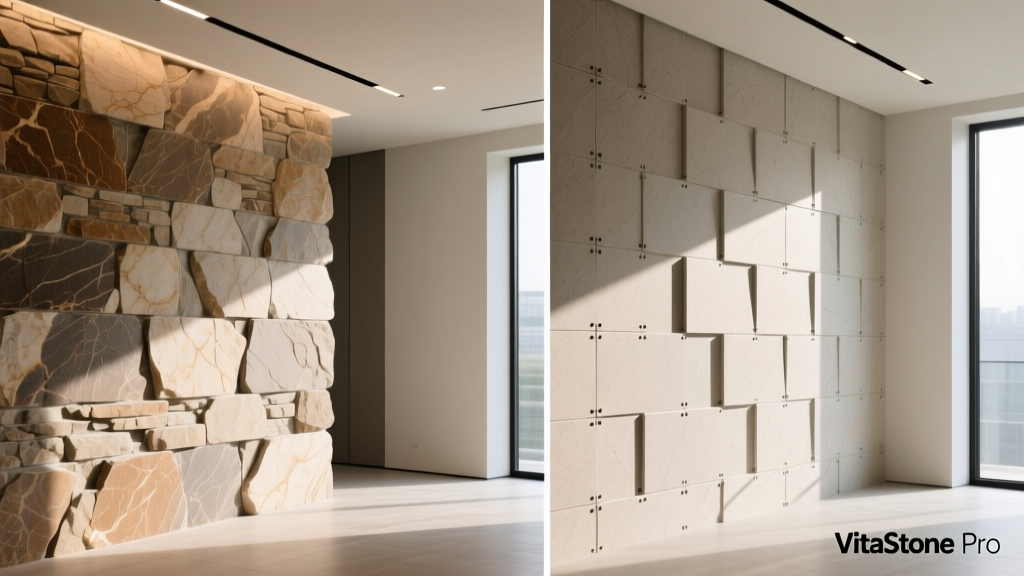
The Core Dilemma: Natural vs. Manufactured Stone Veneer
When designing an interior stone veneer wall, architects and homeowners face a critical material decision: Natural Thin Stone Veneer (NTSV) or Manufactured Stone Veneer (MSV). Both deliver the high-end aesthetic of full-bed masonry without the extreme structural loads, but their composition, installation requirements, and long-term performance differ significantly. NTSV is quarried and sliced from real geological formations (limestone, slate, quartzite), while MSV is a Portland cement-based composite cast in molds taken from natural stone. Understanding the technical distinctions between these two materials is essential for budgeting, structural planning, and achieving the desired architectural finish.
- Choose NTSV if: You require 100% geological authenticity, unique cleft textures, and are willing to pay a 20-30% premium for natural material variations.
- Choose MSV if: You need strict color consistency, lighter weight for upper-floor metal stud framing, and a wider variety of stylized profiles (e.g., specific European castle stone looks).
Weight and Structural Requirements for Interior Framing
The primary advantage of thin veneer over full-bed stone is weight reduction, which dictates how the interior wall must be framed. Standard interior partitions built with 2x4 wood studs at 16 inches on center (OC) and covered with 1/2-inch gypsum drywall can generally support up to 15 pounds per square foot (PSF) without additional structural blocking. However, when designing for commercial spaces or multi-story residential builds utilizing 25-gauge or 20-gauge steel studs, deflection limits become a critical factor.
Weight Specifications by Material
- Manufactured Stone Veneer (MSV): Typically weighs between 8 and 12 PSF. Products conforming to ASTM C1670 are rigorously tested for freeze-thaw and shear bond strength, ensuring they remain well within standard interior load limits.
- Natural Thin Stone Veneer (NTSV): Generally weighs between 10 and 15 PSF, depending on the stone density. Quartzite and granite veneers will push the upper limit of 15 PSF, while porous limestones and sandstones hover around 11 PSF.
For walls exceeding 10 feet in height, or when applying stone to curved interior radii, MSV offers superior flexibility. Manufactured products can be scored and bent around radii as tight as 12 inches, whereas natural stone requires meticulous masonry cutting and wedging to achieve curves.
Cost Breakdown: Material, Labor, and Hidden Fees
Budgeting an interior stone veneer wall requires looking beyond the per-square-foot material cost. The preparation of the substrate, the type of mortar required, and the mason's hourly rate heavily influence the final price. Below is a comparative cost matrix based on current 2026 market rates for professional installation in North America.
| Cost Factor | Manufactured Stone (MSV) | Natural Thin Stone (NTSV) | Mortarless DIY Systems |
|---|---|---|---|
| Material Cost | $6.50 - $12.00 / sq ft | $9.00 - $18.00 / sq ft | $8.00 - $14.00 / sq ft |
| Substrate Prep (Lath/Scratch) | $2.50 - $4.00 / sq ft | $2.50 - $4.00 / sq ft | $0 (Direct to drywall) |
| Professional Masonry Labor | $12.00 - $18.00 / sq ft | $15.00 - $24.00 / sq ft | $0 (DIY Installation) |
| Total Installed Cost | $21.00 - $34.00 / sq ft | $26.50 - $46.00 / sq ft | $8.00 - $14.00 / sq ft |
Note: Natural stone installation commands a higher labor rate because masons must spend additional time sorting, trimming, and fitting irregular natural edges to maintain consistent joint widths, whereas MSV is designed with interlocking edges and uniform heights that accelerate installation.
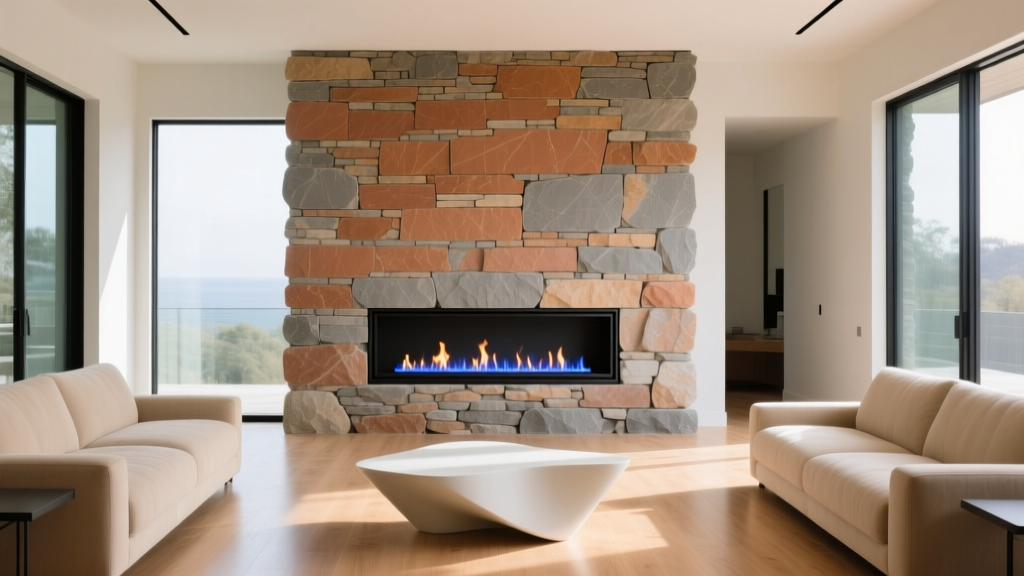
Aesthetic Authenticity and Top 2026 Brands
The visual success of an interior stone veneer wall hinges on avoiding the "repeating pattern" flaw—a common giveaway of low-quality manufactured stone where identical rock shapes appear multiple times across a small wall section.
Manufactured Leaders: Eldorado Stone and Cultured Stone
Premium MSV manufacturers like Eldorado Stone (a Boral brand) and Cultured Stone (Westlake Royal) utilize high-resolution 3D scanning of rare, quarried stone formations to create molds. Eldorado's "Vintage" and "Rustic" series feature built-in color variation using iron oxide pigments baked into the concrete matrix. To ensure authenticity, these brands provide installation guides that mandate masons blend stones from at least three different pallets simultaneously, preventing color banding on the finished wall.
Natural Leaders: Pangaea and ThinStone
For uncompromising authenticity, Pangaea Natural Stone offers precision-cut NTSV that retains the natural cleft and weathered faces of the original quarry block. Because natural stone is subject to geological variations, buyers must request "range samples" rather than relying on a single showroom chip. According to design trend reports tracked by the Architectural Record, interior designers are increasingly favoring the raw, unpolished textures of natural slate and quartzite for modern biophilic design schemes, driving up demand for premium NTSV.
Installation Realities: Substrate Preparation and Moisture
The most common cause of interior stone veneer failure is improper substrate preparation. While some DIY mortarless systems (like GenStone or AirStone) allow direct adhesion to painted drywall using construction adhesive, traditional mortared veneer requires a rigid, moisture-resistant base.
Industry Standard Warning: Never apply mortared stone veneer directly over standard paper-faced gypsum drywall. The moisture from the scratch coat and setting bed will degrade the drywall paper, leading to catastrophic delamination. Always install a cement backer board (e.g., USG Durock or James Hardie HardieBacker) or a properly rated fiber-cement substrate before applying wire lath.
The Traditional Mortar Bed Process
- Substrate & Lath: Secure 18-gauge self-furring galvanized wire lath over the cement board using corrosion-resistant staples or screws every 6 inches.
- Scratch Coat: Apply a 1/2-inch layer of Type S masonry mortar. Score the surface horizontally with a raking tool to create a mechanical key.
- Curing: Allow the scratch coat to cure for a minimum of 24 to 48 hours, misting lightly to prevent rapid drying and shrinkage cracks.
- Setting Bed: Apply a 1/2-inch layer of fresh mortar to the wall and "butter" the back of each stone veneer piece before pressing it firmly into place, ensuring a minimum 85% mortar coverage on the back of the stone.
Common Interior Failure Modes and Prevention
Even in climate-controlled interiors, stone veneer walls can experience specific failure modes if installation best practices are ignored. Industry guidelines published by The Masonry Society highlight several critical vulnerabilities:
- Efflorescence: A white, powdery salt deposit that migrates to the stone surface. In interiors, this usually occurs if the natural stone was stored outside on damp soil prior to installation, or if unbuffered masonry cement with high soluble salt content was used. Fix: Use low-alkali Portland cement and ensure stone pallets are stored indoors on raised dunnage.
- Delamination at the Lath: Occurs when the wire lath is not properly overlapped (minimum 1-inch overlap at seams) or when fasteners fail to penetrate the underlying wall studs. The sheer weight of the stone pulls the lath away from the drywall. Fix: Verify fastener depth and stud engagement during the lath inspection phase.
- Thermal Shock Cracking: When installing an interior stone veneer wall around a high-output fireplace insert or a direct-vent gas stove, the extreme localized heat can cause rapid expansion. Fix: Maintain the manufacturer's required clearance to combustibles and use high-temperature refractory mortar in the immediate heat zone.
Final Comparison Matrix: Which Should You Choose?
| Feature | Natural Thin Stone Veneer (NTSV) | Manufactured Stone Veneer (MSV) |
|---|---|---|
| Material Origin | Quarried natural rock (Limestone, Slate, Quartzite) | Portland cement, aggregates, iron oxide pigments |
| Color Consistency | High variation; subject to natural geological shifts | Highly consistent; controlled via pigment batching |
| Edge Profiles | Requires masonry saw cutting for exposed edges | Factory-cast return edges available for clean corners |
| Weight (Average) | 10 - 15 PSF | 8 - 12 PSF |
| UV Fade Resistance | 100% fade-proof (mineral pigments) | Excellent, but extreme direct sunlight may cause slight fading over decades |
| Best Interior Application | High-end feature walls, biophilic designs, luxury hearths | Large-scale commercial lobbies, budget-conscious renovations, curved walls |
Ultimately, the choice between natural and manufactured stone for your interior wall depends on the intersection of your structural constraints, budget, and design intent. By prioritizing proper substrate preparation and adhering to ASTM material standards, both options will deliver a durable, high-impact architectural finish that withstands the test of time.
Written by
Priya KapoorPriya Kapoor is a real estate market analyst and construction economics researcher with expertise in housing affordability, development feasibility, and infrastructure investment. She holds a Master of Regional Planning from Cornell University and previously worked as a senior analyst at CBRE's Investment Properties group, where she modeled returns for $4B in mixed-use development pipelines. Priya now runs an independent research practice advising developers, municipalities, and REITs on construction cost forecasting and market timing. She publishes the quarterly "BuildMat Market Pulse" report tracking material price indices across 12 commodity categories. Based in Austin, TX, Priya serves on the board of Habitat for Humanity Austin and is a marathon runner.
More from Priya Kapoor
View all
Construction Cost
Cost to Build a 1600 Sq Ft Home in 2026: Full Breakdown
Accurate 2026 cost to build a 1600 sq ft home—material, labor, and regional pricing breakdowns included. Plan your budget with real-time estimates.
Aug 11, 2026

Wood & Lumber
Name the Types of Wood for Pressure Treatment and Preservation
Learn how to name the types of wood best suited for pressure treatment. Compare species treatability, chemical retention levels, and 2026 preservation costs.
Aug 4, 2026

Stone & Masonry
Stone Veneer Suppliers Lindenhurst: 2026 Cost Analysis
Analyze 2026 stone veneer costs in Lindenhurst, NY. Compare local supplier pricing, delivery fees, and Suffolk County installation labor rates.
Aug 4, 2026