Stone Veneer Cost Breakdown: 2026 Material & Labor Pricing Guide
Discover the true stone veneer cost for 2026. Compare natural vs. manufactured stone pricing, labor rates, and hidden installation expenses.
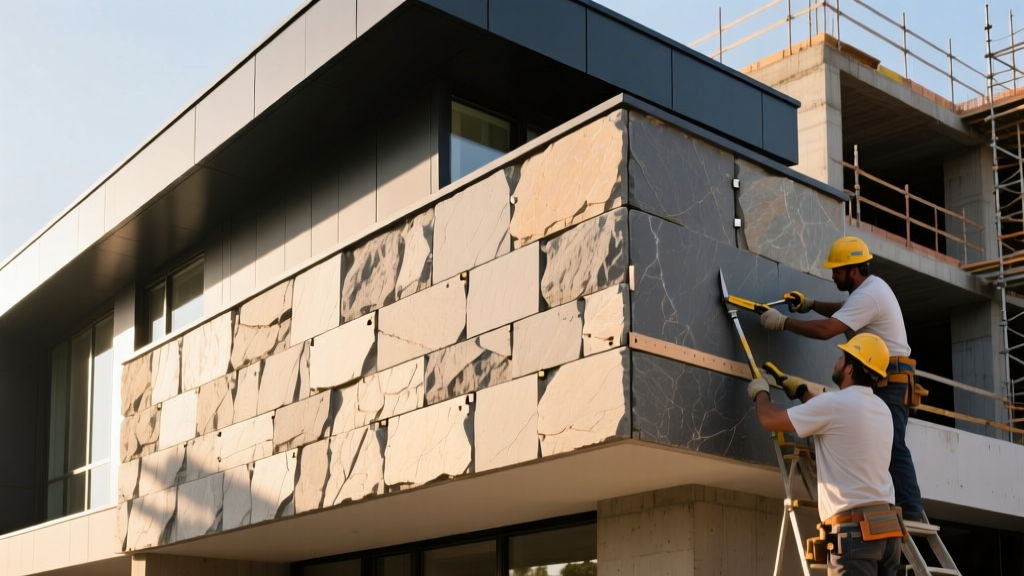
2026 Stone Veneer Cost Baselines
Budgeting for stone veneer requires moving beyond basic square-footage estimates. In 2026, the national average for professionally installed stone veneer ranges from $11.50 to $24.00 per square foot. However, this baseline obscures the structural, logistical, and material variables that dictate your final invoice. Manufactured stone veneer (MSV) and natural thin stone veneer (NTSV) operate on entirely different pricing tiers, and the prep work required for each can shift your budget by 30% or more. According to HomeGuide's 2026 construction cost data, material costs alone account for only 40% to 50% of the total project expense, with specialized masonry labor and substrate preparation consuming the remainder.
Material Cost Matrix: Manufactured vs. Natural
The choice between manufactured and natural stone is the primary cost driver. Manufactured stone is a Portland cement-based aggregate cast in molds, while natural thin veneer is quarried stone sliced to a 1-inch to 1.5-inch thickness. Both must meet specific ASTM standards for exterior durability—ASTM C1670 for manufactured stone and ASTM C616 or C568 for natural sandstone and limestone, respectively.
| Material Type | Material Cost (per sq. ft.) | Weight (per sq. ft.) | Structural Footing Required? | Best Application |
|---|---|---|---|---|
| Manufactured Stone Veneer (MSV) | $4.50 - $9.00 | 10 - 12 lbs | No (if under 15 lbs/sq ft) | Full exterior wraps, interior accents |
| Natural Thin Stone Veneer (NTSV) | $8.00 - $16.00 | 12 - 15 lbs | No (if under 15 lbs/sq ft) | High-end exteriors, landscape walls |
| Natural Full-Bed Stone | $14.00 - $28.00+ | 35 - 50+ lbs | Yes (Mandatory) | Custom estates, retaining walls |
| DIY Interlocking Panels (e.g., GenStone) | $9.00 - $12.50 | 1 - 2 lbs | No | Quick interior/covered exterior DIY |
The Linear Foot Trap: Pricing Corner Pieces
Stone veneer flats are sold by the square foot, but corner pieces are sold by the linear foot (LF). Corners typically cost between $10.00 and $18.00 per LF. A standard 1,500 sq. ft. exterior wrap with multiple architectural bumps, window returns, and external corners can easily require 150+ linear feet of corner pieces. This single variable can add $1,500 to $2,700 to your material budget. When calculating your stone veneer cost, always measure the linear footage of all external corners and multiply by the specific brand's LF corner rate before finalizing your estimate.
Substrate, Prep, and Hidden Installation Costs
Stone veneer cannot be applied directly to raw wood framing or standard drywall. The substrate preparation phase is where unexpected costs frequently emerge. According to Cultured Stone's official installation guidelines, a proper exterior wall assembly requires a weather-resistive barrier (WRB), corrosion-resistant metal lath, and a mortar scratch coat.
- Weather-Resistive Barrier (WRB): Two layers of Grade D building paper or a high-performance house wrap (like Tyvek) are required behind the lath. Cost: $0.75 - $1.25 per sq. ft.
- Metal Lath: 2.5 lb self-furring galvanized steel lath is the industry standard. Plastic lath is emerging but is not universally accepted by local building codes for masonry applications. Cost: $1.10 - $1.80 per sq. ft.
- Scratch Coat & Mortar: A 1/2-inch Portland cement scratch coat must be applied to the lath and scored horizontally. Type N mortar is standard for general veneer work, while Type S is required for high-stress or below-grade applications. Cost: $0.80 - $1.50 per sq. ft.
- Scaffolding: For two-story exteriors, scaffolding rental and erection will add $800 to $2,500 to the project, depending on the home's footprint and local rental rates.
Labor Rates and Crew Productivity
Masonry labor is highly specialized, and the 2026 market reflects a continued shortage of skilled masons. Expect to pay between $85 and $140 per hour for a licensed mason, with labor accounting for 50% to 60% of your total stone veneer cost. A standard two-person crew (one mason, one tender) can typically lay 40 to 60 square feet of flat veneer per day, dropping to 20 to 30 square feet when navigating complex corners, window trim, and archways.
Pro Tip: If your design features a 'dry-stack' profile (no visible mortar joints), labor costs will increase by 15% to 25%. Dry-stack installations require meticulous stone selection, grinding, and fitting to ensure tight, uniform seams without the forgiving buffer of a mortar joint.
Brand Tier Breakdown
Not all manufactured stone is created equal. Premium brands invest heavily in proprietary color-fastness technologies and varied mold libraries to prevent the 'repeating pattern' effect common in cheaper alternatives. Masonry Magazine frequently highlights the performance deltas between top-tier and value-tier MSV products.
Tier 1: Premium Architectural ($7.00 - $12.00 / sq. ft. material)
Brands: Cultured Stone (Boral), Eldorado Stone, Dutch Quality Stone.
Characteristics: Deep, multi-dimensional color oxidation, lightweight aggregates, extensive corner piece profiles, and 50-year limited warranties against fading and spalling.
Tier 2: Mid-Range Residential ($4.50 - $7.50 / sq. ft. material)
Brands: Coronado Stone, Century Stone, regional quarry castings.
Characteristics: Solid color consistency, slightly heavier weight profiles, standard mold variations. Excellent for large, continuous wall planes where pattern repetition is less noticeable.
Tier 3: DIY & Interlocking Systems ($9.00 - $13.00 / sq. ft. material)
Brands: GenStone, AirStone, SmartStone.
Characteristics: High-density polyurethane or lightweight cement panels designed to screw or adhere directly to existing substrates without lath or mortar. While the material cost per square foot is higher than traditional MSV, the elimination of masonry labor makes this the most cost-effective route for homeowner-executed projects.
Structural Load and Footing Requirements
Before purchasing natural full-bed stone or heavy manufactured profiles, verify your foundation's load-bearing capacity. The International Building Code (IBC) dictates that adhered veneers weighing more than 15 pounds per square foot (psf) must be supported by a non-combustible foundation footing. If you are retrofitting an existing home that was not engineered for a 40+ psf masonry load, you must either downgrade to a thin veneer (under 15 psf) or pay $3,000 to $8,000 for a structural engineer to design and pour supplemental concrete footings.
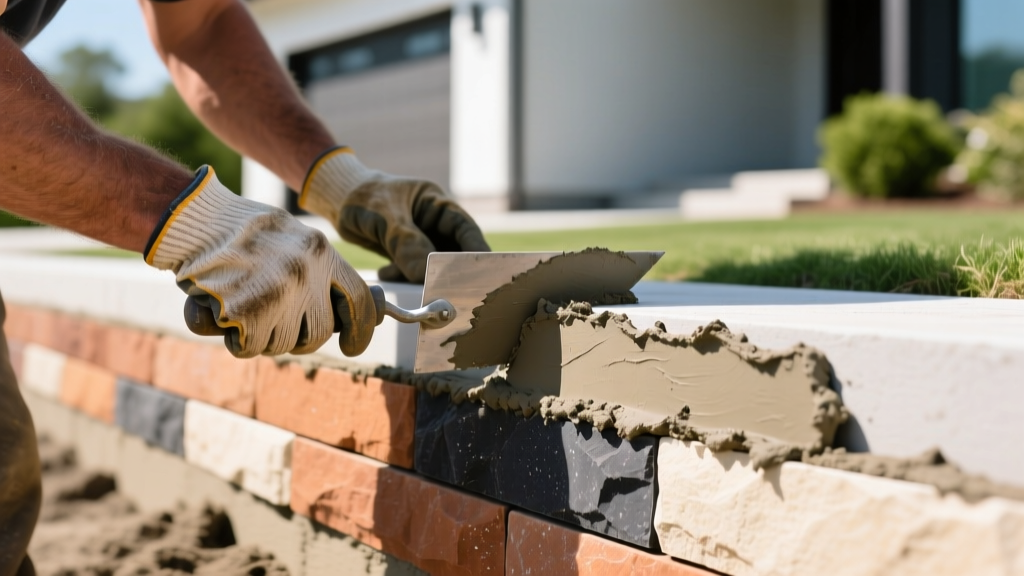
Decision Framework: Choosing Your Veneer Strategy
To finalize your stone veneer cost estimate and material selection, apply this decision matrix based on your project parameters:
- If budget is the primary constraint and you are hiring a pro: Select a Tier 2 manufactured stone in a 'fieldstone' or 'ledgestone' profile with visible mortar joints. This minimizes both material costs and the high labor rates associated with dry-stack fitting.
- If you are executing a DIY interior fireplace surround: Utilize Tier 3 polyurethane interlocking panels (GenStone). You will bypass the need for cement backer board, metal lath, and wet mortar, completing a 40 sq. ft. fireplace in a single afternoon with basic carpentry tools.
- If you are building a custom luxury exterior: Specify Natural Thin Stone Veneer (NTSV) in a regional quarry profile (e.g., Ozark mountain stone or Pennsylvania fieldstone). Pair it with a premium WRB and stainless-steel lath to ensure the assembly outlasts the 50-year lifespan of the stone itself.
Accurately forecasting your stone veneer cost requires separating the flat square footage from the linear corner footage, accounting for the 3-layer substrate prep, and matching the material weight to your existing foundation's engineering limits. By securing detailed quotes that itemize the scratch coat, lath, and scaffolding separately from the finish masonry, you protect your budget from the industry's most common change orders.
Written by
Marcus ChenMarcus Chen is a licensed structural engineer (PE) and building materials analyst with over 12 years of experience across residential, commercial, and industrial construction. He holds a Master of Science in Civil Engineering from UC Berkeley and spent six years at Thornton Tomasetti before transitioning to independent consulting and technical writing. Marcus specializes in material selection for seismic-prone regions, concrete reinforcement strategies, and lifecycle cost analysis. His work has been cited by the American Concrete Institute (ACI) and the Structural Engineers Association of California (SEAOC). When he is not on a job site or at his desk, you will find him hiking the Sierra Nevada or restoring a 1920s craftsman bungalow in Oakland, CA.
More from Marcus Chen
View all
Construction Cost
How Much Did the Eiffel Tower Cost to Build?
How much did the Eiffel Tower cost to build in 1889? We adjust for inflation and compare its budget to modern skyscraper construction.
Aug 4, 2026

Fire Resistance
What Is a Fire Resistant Material? Testing & Certification Guide
Discover what is a fire resistant material through ASTM and UL testing. Learn how fire ratings, certifications, and assemblies work in construction.
Aug 4, 2026

Construction Cost
How Much Did the Burj Khalifa Cost to Build?
How much did the Burj Khalifa cost to build? We break down the $1.5B project and extract 5 money-saving strategies for your next build.
Jul 30, 2026