How to Clean and Seal Interior Stone Wall Veneer Properly
Learn how to clean, seal, and maintain interior stone wall veneer. Discover pH-neutral cleaners, sealing techniques, and stain removal tips.
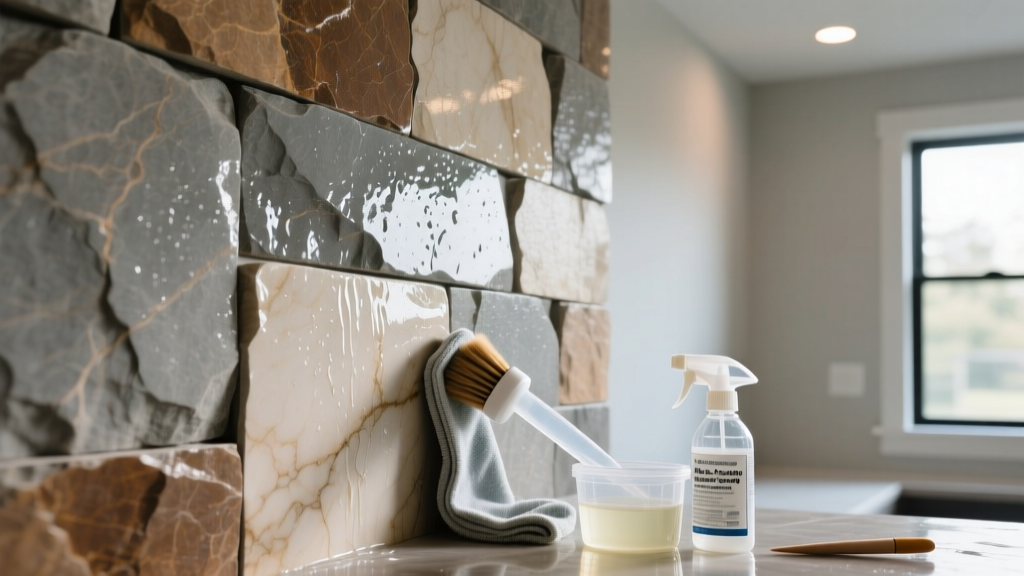
Identifying Your Veneer Material
Before applying any cleaning solution or sealer to your interior stone wall veneer, you must identify whether the material is natural stone or manufactured (cast) stone. Natural stone veneers—such as slate, fieldstone, limestone, and travertine—are quarried and sliced, meaning their porosity and mineral composition vary wildly. Manufactured stone veneer (MSV) is a Portland cement-based product poured into molds and colored with iron oxide pigments. While MSV is highly durable, its cementitious nature makes it vulnerable to acidic cleaners, which can strip the pigment and degrade the surface binder. Natural calcium-based stones (limestone, marble, travertine) will etch immediately upon contact with acids. Understanding this distinction dictates your entire maintenance protocol.
The Routine Dusting Protocol
Interior stone wall veneer features deep grout lines, clefts, and textured faces that act as magnets for household dust, pet dander, and airborne cooking oils. Feather dusters and standard cotton rags are ineffective and will snag on rough stone edges, leaving behind lint fibers.
- Soft Brush Vacuum Attachment: Use a canister vacuum with a soft-bristle brush attachment on low suction. This pulls dust out of deep crevices without scratching softer stones like sandstone.
- Electrostatic Microfiber: For flat-cut veneers or stacked stone with minimal protrusion, use a dry electrostatic microfiber cloth. The static charge lifts and traps fine particulates rather than pushing them into the grout lines.
- Compressed Air: For highly irregular, mortarless stacked stone installations, a can of compressed air or an electric leaf blower on its lowest setting can dislodge dust trapped in deep shadow gaps. Follow up immediately with a vacuum.
Deep Cleaning Interior Stone Wall Veneer
When routine dusting is no longer sufficient—typically required every 6 to 12 months depending on the room's environment—a wet cleaning process is necessary. Never use standard household all-purpose cleaners, bleach, or ammonia on stone veneer.
- Pre-Wet the Surface: Lightly mist the veneer with distilled water. Using distilled water prevents hard water minerals (calcium and magnesium) from depositing onto the stone as the wall dries.
- Apply pH-Neutral Cleaner: Use a dedicated, pH-neutral (7.0) stone cleaner. Products like StoneTech Daily Stone & Tile Cleaner or Simple Green Stone are formulated to lift dirt without altering the stone's chemical structure. Dilute exactly according to the manufacturer's instructions; overly concentrated solutions leave a sticky, streaky residue.
- Agitate Gently: Use a soft nylon-bristle scrub brush or a non-scratch melamine sponge to work the solution into the stone's pores and grout lines. Never use wire brushes or steel wool, which will leave behind microscopic metal particles that rust and stain the stone over time.
- Rinse and Extract: Wipe the wall with a clean microfiber towel dampened with fresh distilled water. For heavily soiled areas near fireplaces or kitchens, you may need to repeat the application.
Never use vinegar, lemon juice, or bathroom tile cleaners containing hydrochloric or muriatic acid on interior stone wall veneer. According to the Natural Stone Institute, acidic solutions will permanently etch calcium-based stones, leaving dull, irreversible burn marks, and will degrade the topical pigments on manufactured stone veneer.
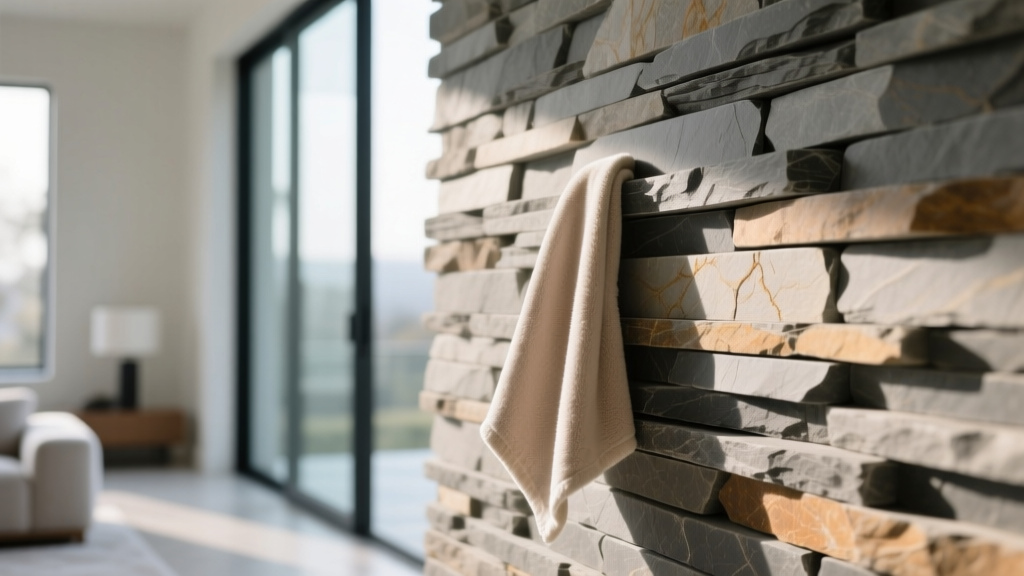
To Seal or Not to Seal?
A common misconception is that all interior stone requires sealing. In low-traffic, dry areas like a bedroom accent wall, sealing is often unnecessary. However, if your interior stone wall veneer is installed behind a kitchen island, surrounding a wood-burning fireplace, or in a high-humidity bathroom, a penetrating sealer is mandatory to prevent grease, soot, and moisture intrusion.
Perform the Water Drop Test to determine if your veneer needs sealing: Place three drops of water on different areas of the stone and wait 3 to 5 minutes. If the stone darkens beneath the water, it is absorbing moisture and requires an impregnating sealer. If the water beads up or the stone remains unchanged, the current seal is intact.
| Sealer Type | Best Application | Product Examples | Visual Effect |
|---|---|---|---|
| Penetrating / Impregnating | Kitchens, bathrooms, high-touch areas | Miracle Sealants 511, Aqua Mix Sealer's Choice Gold | Natural / Matte (No color change) |
| Enhancing Sealer | Dull slate, tumbled stone, faded MSV | StoneTech Enhancer Pro, Aqua Mix Enrich 'N Seal | Wet-look, deepens color and contrast |
| Topical / Film-Forming | Not recommended for interior vertical veneer | Acrylic urethanes, waxes | High gloss, artificial plastic appearance |
When applying a penetrating sealer, ensure the room is well-ventilated. The Environmental Protection Agency (EPA) notes that many solvent-based sealers emit volatile organic compounds (VOCs) that can degrade indoor air quality. Opt for water-based impregnators when possible, or use solvent-based products only with active cross-ventilation and respiratory protection.
Troubleshooting Common Interior Veneer Issues
Efflorescence (White Powdery Residue)
Efflorescence occurs when water-soluble salts from the mortar bed or the stone itself migrate to the surface and crystallize upon evaporation. It appears as a white, powdery crust. Do not use acid to remove it indoors. Instead, use a stiff, dry nylon brush to aggressively scrub the crystals off the surface. Vacuum the dust immediately. If the efflorescence persists, it indicates an active moisture issue behind the veneer (such as a plumbing leak or exterior wall penetration) that must be resolved before treating the surface.
Cooking Grease and Oil Splatter
For stone veneer installed near a cooktop, grease can penetrate the pores and oxidize, leaving dark, stubborn spots. To extract oil stains, create a poultice using baking soda and acetone (or mineral spirits for manufactured stone). Mix it into a thick paste, apply it over the stain at a thickness of 1/4 inch, and cover with plastic wrap taped at the edges. Leave it for 24 to 48 hours. As the solvent evaporates, it draws the oil out of the stone and into the poultice powder.
Fireplace Soot and Smoke Staining
Soot is carbon-based and highly staining. Avoid wiping soot with a wet cloth, as this drives the carbon deeper into the stone's pores. First, use a dry chemical sponge (vulcanized rubber) to lift the surface soot. Once the dry particulate is removed, follow up with a heavy-duty alkaline stone degreaser to break down the remaining tarry residue.
Frequently Asked Questions
Can I use a steam cleaner on interior stone wall veneer?
No. Steam cleaners introduce extreme heat and forced moisture into the stone and grout. The thermal shock can cause micro-fissures in natural stone, particularly slate and marble, leading to spalling or delamination. The forced moisture can also compromise the mortar bond behind the veneer.
How often should I reseal my interior stone veneer?
Interior vertical surfaces experience significantly less wear than horizontal floors. A high-quality penetrating sealer applied to an interior wall typically lasts 3 to 5 years. Rely on the water drop test annually rather than a strict calendar schedule to avoid over-sealing, which can cause hazy surface buildup.
Is it safe to use a Magic Eraser on stone veneer?
Melamine sponges (Magic Erasers) are micro-abrasive. While they are safe for occasional spot-cleaning on hard manufactured stone or polished granite, frequent use on softer natural stones like limestone, sandstone, or honed marble will slowly sand away the finish, leaving a permanently dull, uneven patch.
Written by
Elena RodriguezElena Rodriguez is a civil engineer and technical writer specializing in concrete technology, masonry systems, and ASTM/ACI compliance. She earned her B.S. in Civil Engineering from Texas A&M University and spent a decade at a materials testing laboratory, performing over 2,000 concrete compressive strength tests and masonry prism evaluations. Elena is an ACI-certified Field Testing Technician (Grade I) and a member of ASTM Committee C12 on Natural Building Stone. She currently consults on forensic engineering cases involving concrete failures and moisture intrusion. Based in San Antonio, TX, Elena is a proud member of the Society of Women Engineers (SWE) and coaches her daughter's FIRST Robotics team.
More from Elena Rodriguez
View all
Walls & Panels
Cost Analysis: Light Gauge Steel Framing Advantages and Disadvantages
Evaluate light gauge steel framing advantages and disadvantages through a strict cost analysis lens, comparing material, labor, and lifecycle expenses.
Aug 4, 2026

Walls & Panels
Gypsum Board Types: Exact Specifications, Thickness & Dimensions
Compare standard, Type X, and moisture-resistant gypsum board types. Get exact specifications, thicknesses, dimensions, and ASTM standards for your project.
Aug 4, 2026

Fire Resistance
Best Fire-Resistant Outdoor Decking Materials: 2026 Buyer Guide
Discover the best fire-resistant outdoor decking materials for 2026. Compare Class A PVC, aluminum, and hardwood options for WUI compliance and safety.
Aug 4, 2026