Best Stone Veneer Pieces Compared: Ledger vs Fieldstone
Compare ledger and fieldstone stone veneer pieces for 2026 projects. Discover costs, installation tips, and the best brands for interior and exterior walls.
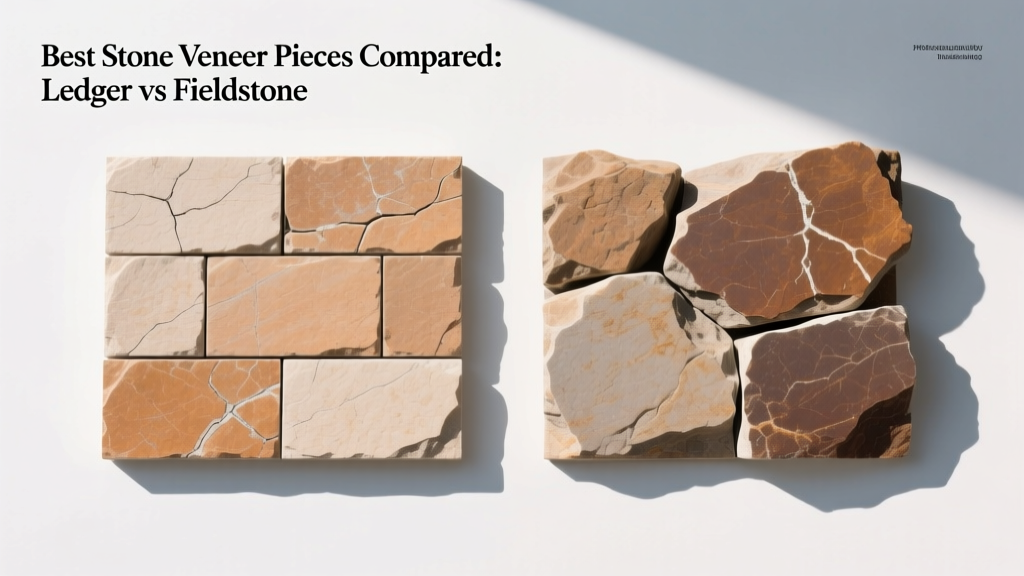
The Geometry of Adhered Masonry: Profile Showdown
Selecting the right stone veneer pieces requires moving beyond basic color palettes and understanding how profile geometry dictates structural load, installation speed, and long-term moisture management. In the manufactured and natural stone market, two dominant profiles dictate modern architectural trends: linear ledger and organic fieldstone. While both must comply with ASTM C1780 (Standard Specification for Adhered Manufactured Stone Masonry Veneer) for exterior applications, their physical characteristics create vastly different installation realities and aesthetic outcomes.
Linear stone veneer pieces, commonly referred to as ledger stone, feature uniform heights (typically 2 to 6 inches) and elongated lengths. This geometry allows for tight, dry-stacked joints that minimize mortar visibility. Conversely, fieldstone veneer pieces mimic naturally tumbled river rock or quarried rubble, featuring irregular, rounded edges that require wide, heavily tooled mortar joints (often 0.5 to 1 inch) to bridge the gaps between uneven shapes.
Choose Linear/Ledger pieces for modern facades, tight interior spaces, and faster dry-stack installation. Choose Fieldstone pieces for traditional, rustic, or craftsman aesthetics where wide mortar joints and high textural variation are desired.
Brand Specifications: Eldorado vs. Cultured Stone
When sourcing stone veneer pieces for high-performance building envelopes, manufacturers like Eldorado Stone and Cultured Stone (both under the Boral/CVC capital umbrella) set the industry baseline. Below is a direct comparison of their flagship profiles in these two categories.
| Specification | Eldorado Ledgerstone (Linear) | Cultured Stone Dressed Fieldstone (Organic) |
|---|---|---|
| Average Weight | 10.5 lbs / sq. ft. | 13.8 lbs / sq. ft. |
| Joint Treatment | Dry-stacked (no mortar joint) | Standard 0.5' to 1' mortar joint |
| Installation Speed | 12-15 sq. ft. per hour | 6-8 sq. ft. per hour |
| Material Cost (2026 Avg) | $9.50 - $12.00 / sq. ft. | $8.00 - $10.50 / sq. ft. |
| Best Substrate | Cement board, concrete masonry | Lath and scratch coat over OSB/Plywood |
The weight differential is critical for structural engineering. While both fall well below the 15 lbs/sq. ft. threshold that typically triggers the need for supplemental structural ties in residential wood-frame construction, the heavier fieldstone pieces demand a more robust scratch coat and strict adherence to metal lath fastening schedules (maximum 6 inches on center vertically into studs).
Installation Realities: Mortar Chemistry and Substrate Prep
The most common point of failure when installing stone veneer pieces is not the stone itself, but the mortar chemistry and substrate preparation. According to guidelines published by The Masonry Society, the mortar used for exterior adhered veneer must balance compressive strength with flexibility and vapor permeability.
Type S vs. Type N Mortar Selection
- Type S Mortar: Mandatory for exterior applications and below-grade foundations. It features a higher Portland cement content (1 part Portland, 0.5 part lime, 4.5 parts sand), yielding a compressive strength of 1,800 PSI. This is necessary to resist freeze-thaw cycling and wind-driven rain.
- Type N Mortar: Acceptable for interior, climate-controlled applications. With a compressive strength of 750 PSI, it is easier to tool and offers better workability for intricate fieldstone joints, but lacks the weather resistance required for exterior facades.
When installing dry-stacked linear stone veneer pieces, installers often use a polymer-modified thin-set mortar (ANSI A118.4) applied via a notched trowel directly to the back of the stone (back-buttering), bypassing traditional masonry cement entirely. This method drastically reduces curing time and prevents mortar squeeze-out that can stain the stone face.
Moisture Management and Edge Cases
Adhered masonry veneer is a reservoir cladding system. It absorbs water and must be allowed to dry. The integration of stone veneer pieces into a wall assembly requires a rigorous drainage plane. Eldorado Stone's technical installation instructions explicitly require two layers of Grade D water-resistive barrier (WRB) paper or a code-approved house wrap, followed by a corrosion-resistant weep screed.
Failure to maintain a minimum 2-inch clearance between the bottom of the stone veneer pieces and the finished soil grade, or a 4-inch clearance above paved surfaces, will result in capillary action drawing ground moisture into the masonry. This is the primary cause of efflorescence (white salt deposits) and catastrophic winter spalling.
Troubleshooting Common Failure Modes
If you are specifying or installing stone veneer pieces, anticipate these specific edge cases:
- Thermal Bridging on Metal Lath: When installing over rigid exterior foam insulation, standard 1-inch lath fasteners will not penetrate to the structural studs. You must use specialized structural screws that penetrate a minimum of 1 inch into the framing, which often requires furring strips to maintain the drainage plane.
- Mortar Haze on Dry-Stack Profiles: Even when dry-stacking linear stone veneer pieces, mortar used to adhere the stone to the scratch coat can squeeze out the back. Installers must use a 'butter and press' technique, keeping mortar strictly to the center 80% of the stone's back surface, leaving the perimeter clean to ensure tight, shadow-line joints.
- Color Blending: Fieldstone pieces naturally feature high color variance. If installers pull pieces sequentially from a single box, the wall will exhibit distinct 'blocks' of color. You must blend from a minimum of three different pallets simultaneously during installation.
2026 Cost Breakdown: Material vs. Labor
The total installed cost of stone veneer pieces has shifted in 2026 due to stabilized freight rates but increased skilled masonry labor shortages. While the raw materials might seem comparable, the labor variance between profiles is massive.
| Cost Component | Linear Ledger (Dry-Stack) | Organic Fieldstone (Mortared) |
|---|---|---|
| Stone Material | $10.75 / sq. ft. | $9.25 / sq. ft. |
| Lath, WRB, & Mortar | $2.50 / sq. ft. | $3.10 / sq. ft. |
| Professional Labor | $14.00 / sq. ft. | $26.00 / sq. ft. |
| Total Installed Cost | $27.25 / sq. ft. | $38.35 / sq. ft. |
The labor premium for fieldstone is driven by the time-consuming process of 'raking' and 'tooling' the mortar joints. Every joint must be struck with a convex jointer to compress the mortar against the stone edges, ensuring a watertight seal. Linear ledger pieces bypass this step entirely, allowing masons to cover square footage at nearly double the rate.
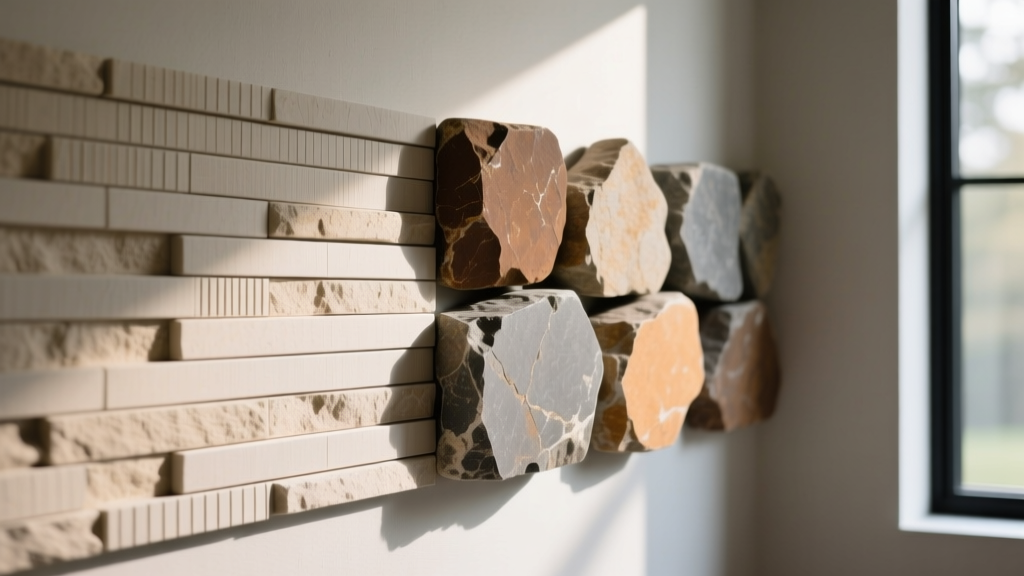
Final Verdict: Aligning Profile with Project Scope
The choice between these stone veneer pieces ultimately hinges on the architectural intent and the project's labor budget. If you are cladding a large-scale commercial exterior or a modern residential fireplace where clean lines and rapid installation are paramount, linear ledger pieces offer superior ROI and a contemporary aesthetic. However, if the project demands a heritage, craftsman, or rustic aesthetic—such as a wine cellar, a traditional exterior wainscot, or a heavy timber cabin—organic fieldstone pieces provide an unmatched textural depth that justifies the higher labor investment and stricter moisture management protocols.
Written by
Sarah WhitfieldSarah Whitfield is a chartered quantity surveyor (MRICS) and construction cost analyst with 15 years of experience in material pricing, procurement strategy, and project budgeting. She earned her degree in Construction Management from the University of Reading (UK) and has worked on projects ranging from $2M custom homes to $180M mixed-use developments across North America and Europe. Sarah currently leads cost estimating for BuildMat Insight, maintaining a proprietary database of 4,000+ material price points updated quarterly. She is a frequent contributor to RSMeans cost data panels and has presented at the International Cost Engineering Council (ICEC) congress. Based in Denver, CO, Sarah is an avid trail runner and volunteer mentor for Women in Construction.
More from Sarah Whitfield
View all
Wood & Lumber
What Are the Different Types of Wood? A Builder's Guide
Compare structural softwoods, finish hardwoods, and engineered lumber. Analyze Janka ratings, MOE values, and 2026 pricing for construction.
Aug 4, 2026

Walls & Panels
Steel Framing vs Wood Framing: Corrosion and Moisture Defense
Compare steel framing vs wood framing for moisture resistance. Learn about galvanized coatings, condensation risks, and corrosion protection strategies.
Jul 21, 2026

Stone & Masonry
How to Cut Stone Veneer: Wet Saw vs Grinder Comparison
Compare the best tools for cutting stone veneer. We review wet saws, angle grinders, and chop saws to help you achieve clean, chip-free cuts.
Jul 21, 2026