Ruggable Lennox Sandstone Plush Rug Durability on Natural Stone Floors
Analyze the Ruggable Lennox Sandstone plush rug's durability, backing safety for natural stone floors, and expected lifespan in high-traffic interiors.
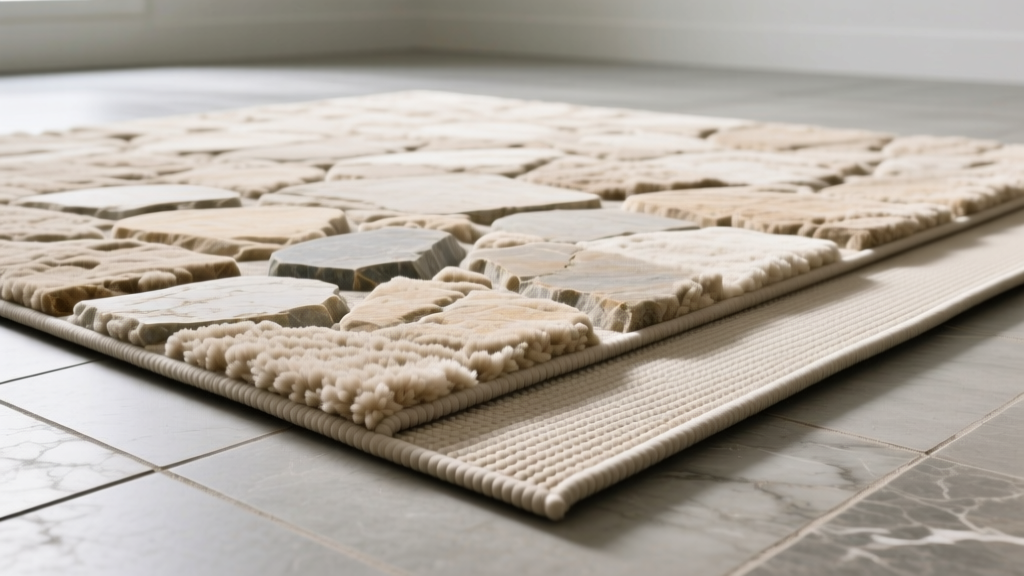
Material Anatomy: Beyond the Sandstone Aesthetic
When integrating textile floor coverings into interiors dominated by natural stone and masonry veneers, the structural and chemical compatibility of the rug is just as critical as its visual design. The Ruggable Lennox Sandstone plush rug features a three-layer construction that dictates its lifespan and interaction with hard substrates. The primary wear layer is a dense, machine-woven polyester pile designed to mimic the tonal variations of natural sandstone. Beneath this sits a proprietary polyurethane moisture barrier, which prevents liquid spills from migrating through the rug and reaching the porous stone substrate below.
The foundational layer is the non-slip rug pad, typically constructed from a thermoplastic elastomer (TPE) or latex-blend composite. While this pad provides essential grip on polished surfaces like honed marble or sealed slate, its chemical composition and thermal limits are the primary factors governing the rug's long-term durability and its safety over sensitive natural stone floors.
Natural stone floors (particularly thick-cut limestone and travertine) are frequently paired with hydronic or electric radiant heating systems. The TPE backing on the Ruggable pad has a continuous thermal tolerance limit of approximately 85°F (29°C). If the stone substrate regularly exceeds this surface temperature, the elastomer backing will undergo accelerated plasticizer migration, leading to permanent embrittlement, edge curling, and potential chemical etching on the stone's sealant.
Backing Compatibility with Natural Stone & Veneer Substrates
A common failure mode in high-end interior design is the degradation of natural stone caused by incompatible rug backings. According to guidelines from the Natural Stone Institute, prolonged contact with certain synthetic rubber compounds can trap ambient moisture against the stone surface or leach plasticizers that stain calcium-based stones. The Lennox Sandstone plush rug's polyurethane barrier mitigates top-down spills, but the bottom pad requires specific environmental conditions to prevent substrate damage.
| Stone Substrate Type | Mohs Hardness | Rug Pad Interaction & Risk Profile | Lifespan Impact |
|---|---|---|---|
| Polished Marble / Limestone | 3 - 4 | High Risk. Calcium carbonate is highly reactive. Trapped moisture beneath the TPE pad can cause localized alkaline efflorescence or yellowing of the stone. | Requires bi-weekly pad lifting and substrate airing to prevent permanent etching. |
| Honed Travertine (Filled) | 3 - 4 | Moderate Risk. The textured surface provides excellent mechanical grip for the rug pad, reducing slip-induced abrasion, but filler resins may soften if radiant heat is trapped. | Optimal lifespan if ambient floor temperature remains below 80°F. |
| Cleft Slate / Quartzite | 6 - 7 | Low Risk. High hardness and natural cleft texture resist chemical staining and mechanical abrasion. The rug pad will experience accelerated wear, not the stone. | Rug pad lifespan reduced by 15-20% due to abrasive micro-friction against the cleft stone. |
| Sealed Natural Sandstone | 6 - 7 | Low Risk. Highly compatible. The penetrating sealant prevents moisture vapor transmission issues, allowing the rug pad to rest safely without chemical exchange. | Maximum durability for both the rug backing and the stone substrate. |
Lifespan & Traffic Degradation Matrix
The expected lifespan of the Ruggable Lennox Sandstone plush rug is intrinsically tied to the foot traffic volume and the abrasiveness of the underlying stone veneer or flooring. Unlike wall-mounted stone veneers which remain untouched, floor-level stone acts as a secondary abrasive agent if the rug shifts under load.
High-Traffic Entryways (Over Slate or Granite)
In commercial or high-residential entryways, the polyester pile of the Lennox Sandstone rug will exhibit moderate crushing and matting within 18 to 24 months. The polyurethane barrier remains structurally intact through an estimated 40 to 50 machine wash cycles (using cold water and low-heat tumble drying). However, the TPE rug pad will degrade faster on high-friction surfaces like flamed granite or cleft slate. Expect the pad's non-slip nodes to shear or flatten within 3 years, necessitating a pad replacement to maintain safety on the hard stone substrate.
Climate-Controlled Interiors (Over Marble or Limestone)
In formal dining rooms or low-traffic living spaces, the pile's aesthetic lifespan extends to 5–7 years. The primary degradation vector here is not physical abrasion, but UV exposure and plasticizer migration. The Carpet and Rug Institute notes that prolonged static loading of synthetic pads on sensitive floor finishes can lead to irreversible chemical bonding. To preserve both the rug and the polished marble beneath it, the rug must be rotated 90 degrees every six months to redistribute static pressure and allow the stone's surface sealant to breathe.
Maintenance Cycles: Washability vs. Stone Sealing
A major advantage of the Ruggable system in stone-heavy interiors is the decoupling of rug maintenance from stone maintenance. Natural stone requires periodic stripping and reapplication of penetrating sealers (typically every 1–3 years depending on porosity). Traditional glued or heavy rubber-backed rugs complicate this process by requiring professional movers and risking substrate scratching.
- Rug Cover Removal: The lightweight polyester cover is peeled from the pad, eliminating the need to drag heavy furniture or risk dropping the rug onto fragile stone edges.
- Machine Washing: Wash the cover in a standard residential washer on a delicate cycle with cold water. Avoid bleach or harsh oxidizers, which can degrade the polyurethane moisture barrier and strip the 'sandstone' tonal dyes.
- Substrate Inspection: With the pad exposed, inspect the stone floor for trapped grit or moisture. Vacuum the stone using a hard-floor setting (no beater bar) to prevent micro-scratching the stone's polish.
- Pad Cleaning: Wipe the TPE rug pad with a damp microfiber cloth and a pH-neutral stone cleaner. Do not use ammonia-based cleaners on the pad, as they will accelerate the breakdown of the elastomer grip nodes.
Known Failure Modes & Edge Cases
- Edge Curling on Uneven Veneer: If the rug is placed over a transitional threshold featuring stacked stone veneer or an uneven slate border, the rigid polyurethane barrier may resist laying flat. Over time, foot traffic on these curled edges will cause the barrier to delaminate from the polyester pile.
- Pet Urine Crystallization: While the moisture barrier prevents liquid from reaching the stone floor, pet urine trapped between the pile and the barrier can crystallize. If not washed promptly, the alkaline salts will degrade the polyurethane layer, eventually allowing moisture to penetrate and etch the underlying limestone or marble.
- Slip Hazards on Polished Quartzite: On highly polished, low-porosity stones like quartzite, dust accumulation beneath the TPE pad acts as a ball-bearing layer. If the rug is not vacuumed underneath monthly, the entire assembly can become a severe slip hazard, negating the non-slip properties of the pad.
Frequently Asked Questions
Can the Ruggable Lennox Sandstone plush rug be used over unsealed exterior stone veneer?
No. The rug is engineered for interior, climate-controlled environments. Exterior stone veneers experience moisture vapor transmission and thermal expansion that will rapidly degrade the TPE pad and promote mold growth beneath the polyurethane barrier.
Will the rug's backing scratch a high-gloss marble finish?
The TPE pad itself is softer than marble (which ranks 3-4 on the Mohs scale). However, if microscopic silica grit (Mohs 7) becomes trapped between the pad and the marble, foot traffic will grind the silica into the stone, causing severe micro-scratching. Frequent vacuuming beneath the rug is mandatory.
How does the rug's lifespan compare to the stone floor it covers?
While a properly maintained natural stone floor possesses a functional lifespan exceeding 100 years, the Ruggable Lennox Sandstone plush rug is a consumable interior textile. Expect a functional lifespan of 3 to 5 years for the rug pad, and 5 to 7 years for the woven cover, depending on traffic and adherence to the washing protocols.