Finding a Stone Veneer Supply Near Me for Seamless Repairs and Care
Learn how to find a local stone veneer supply near me for batch-matched repairs, tuckpointing mortar, and breathable sealants to maintain your exterior.
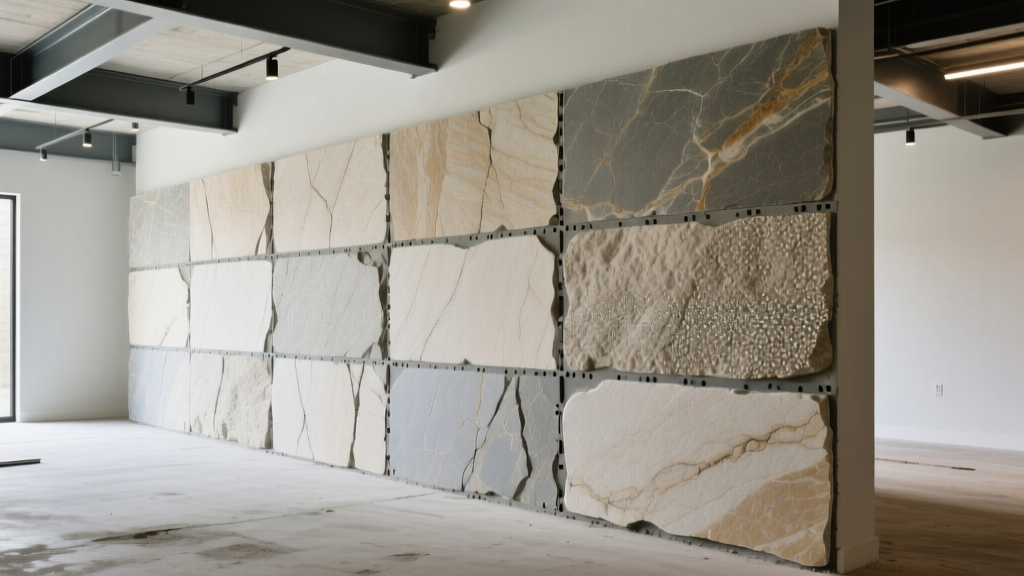
The Hidden Complexities of Stone Veneer Maintenance
Maintaining stone veneer—whether natural or manufactured—requires more than an occasional rinse with a garden hose. Over time, freeze-thaw cycles, substrate settling, and moisture intrusion can degrade mortar joints, cause efflorescence, or lead to localized spalling. When these issues arise, homeowners and contractors instinctively search for a stone veneer supply near me to source replacement materials. However, sourcing repair materials locally is not just a matter of convenience; it is a critical technical requirement for ensuring color consistency, structural compatibility, and long-term durability.
Ordering small batches of veneer or specialized masonry chemicals online often results in lot mismatches, exorbitant freight surcharges, and transit damage. By leveraging local masonry yards, you gain access to regional inventory, physical batch matching, and expert technical support that big-box stores simply cannot provide.
Diagnosing Veneer Damage Before You Source Supplies
Before visiting a supplier, accurately diagnose the failure mode to ensure you purchase the correct remediation materials. Misdiagnosing the issue leads to repeated failures and wasted capital.
- Mortar Joint Degradation (Cracking/Crumbling): Usually caused by thermal expansion, substrate deflection, or the use of overly rigid mortar (Type S or M) that lacks the flexibility required for non-load-bearing veneer.
- Efflorescence (White Powdery Deposits): Indicates water is migrating through the masonry, dissolving soluble salts, and depositing them on the surface as it evaporates. Requires specialized non-acidic cleaners and improved drainage, not just sealing.
- Spalling (Flaking or Popping Faces): The most severe issue, typically caused by trapped moisture freezing and expanding behind a non-breathable, film-forming sealer. Requires careful chiseling, replacement, and the application of a breathable penetrating sealer.
Why Local Sourcing Beats E-Commerce for Masonry Care
When maintaining a veneer facade, you are rarely buying full pallets. You need 3 to 10 replacement pieces, a few bags of specialized mortar, and high-grade chemical cleaners. E-commerce platforms fail in this micro-sourcing environment for three reasons:
- Freight Minimums: LTL (Less Than Truckload) shipping for heavy masonry products often exceeds the cost of the materials themselves.
- Liquid Restrictions: High-quality masonry cleaners and silane/siloxane sealers are often classified as hazardous materials for air transit, restricting your online options to inferior, watered-down consumer grades.
- Lack of Technical Triage: A local masonry supply yard employs specialists who can look at a photo of your efflorescence and recommend the exact alkaline cleaner required, rather than a generic acid wash that could etch your manufactured stone.
Essential Maintenance Supplies to Pick Up Locally
When you locate a reputable supplier, ensure they stock professional-grade maintenance materials. Avoid consumer-grade 'patch and seal' kits. Use the following specifications as your purchasing checklist.
| Material | Technical Specification | Estimated Local Cost |
|---|---|---|
| Type N Mortar Mix | 750-1500 PSI compressive strength; 1:1:6 ratio (Portland:Lime:Sand) | $12 - $18 per 80lb bag |
| Silane/Siloxane Sealer | Penetrating, breathable, water-based or solvent-based | $85 - $130 per gallon |
| Efflorescence Remover | Non-acidic, safe for manufactured concrete veneer | $30 - $45 per gallon |
| Concave Jointer Tool | 3/8" or 1/2" V-jointer or S-jointer for weather-tight compaction | $8 - $15 |
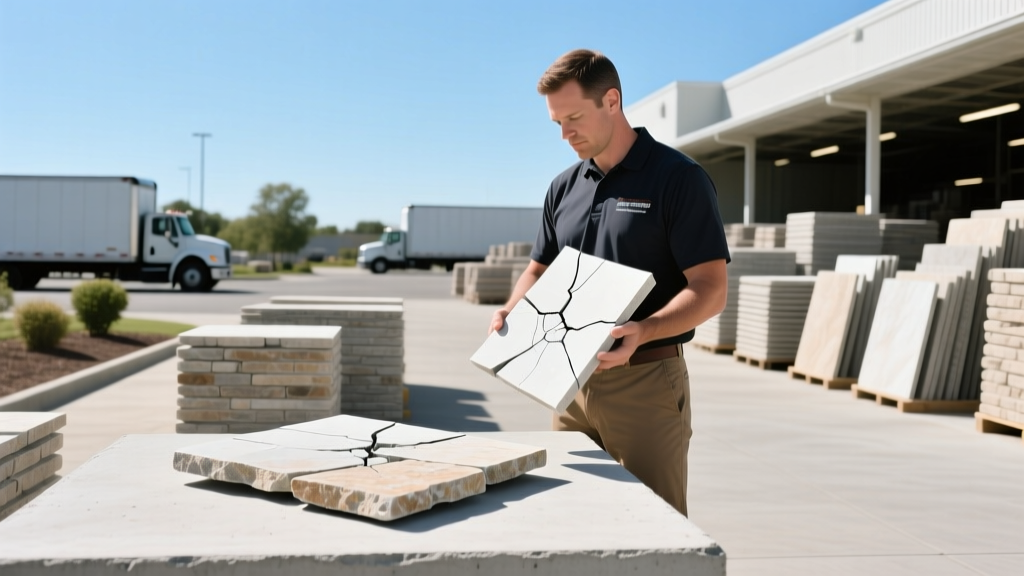
Step-by-Step Mortar Joint Repair (Tuckpointing Veneer)
Mortar joints on stone veneer should be inspected annually. According to guidelines published by the National Park Service on repointing masonry, failing joints allow water behind the veneer, compromising the weather-resistant barrier (WRB) and metal lath. Follow these steps for a lasting repair:
1. Rake and Clean the Joint
Use a mortar rake or a 4-inch angle grinder with a diamond tuckpointing blade to remove deteriorated mortar to a depth equal to twice the width of the joint (typically 1 to 1.5 inches deep). Vacuum the dust thoroughly; never use a wire brush on manufactured stone, as it will leave metallic rust stains.
2. Dampen the Substrate
Manufactured stone and existing mortar are highly porous. If you apply new mortar to a dry joint, the old masonry will suck the moisture out of the new mix, causing it to cure too quickly and crumble. Mist the joints with water until they are damp, but not pooling.
3. Mix and Apply Type N Mortar
Mix Type N mortar to a 'peanut butter' consistency. Load it into a mortar hawk and use a pointing trowel to push the mortar deeply into the joint, eliminating air pockets. Overfill the joint slightly.
4. Tool the Joint
Wait until the mortar is 'thumbprint hard' (usually 20 to 40 minutes, depending on humidity). Run a concave jointer along the seam to compress the mortar against the stone edges. This compression creates a dense, weather-resistant seal that sheds water away from the facade.
Sealing and Waterproofing: The Chemistry of Breathability
The most common maintenance mistake is applying a film-forming acrylic sealer to stone veneer. While it provides an initial high-gloss 'wet look', it traps moisture inside the masonry. When winter arrives, that trapped water freezes, expands, and pops the faces off the stones.
When you visit your local supply yard, specifically request a Silane/Siloxane penetrating sealer. As detailed in NPS preservation guidelines on cleaning and waterproofing, breathable sealers are mandatory for historic and modern masonry alike.
- Silane molecules are extremely small and penetrate deeply into dense, natural stones like granite or slate.
- Siloxane molecules are larger and remain closer to the surface, making them ideal for the porous concrete matrix of manufactured stone veneer.
- The Ideal Product: Ask your supplier for a blended Silane/Siloxane formulation (such as Prosoco Siloxane PD or Euclid Chemical Eucosil). These react chemically with the silica in the stone and mortar to form a hydrophobic resin barrier beneath the surface, allowing water vapor to escape while blocking liquid water intrusion.
Vetting Your Local Supplier for Technical Support
Not all building material yards specialize in masonry. When searching for a stone veneer supply near me, filter your results for dedicated masonry suppliers rather than general lumber yards. Call ahead and ask the following questions to gauge their expertise:
- "Do you carry Type N mortar specifically formulated for veneer, or just standard brick mortar?" (Shows understanding of compressive strength requirements).
- "Can you order a physical sample board of [Brand Name] veneer so I can match my existing lot?" (Demonstrates willingness to facilitate color matching).
- "Do you stock non-acidic efflorescence cleaners safe for manufactured concrete?" (Confirms they understand the chemical sensitivity of Portland cement-based veneers).
Frequently Asked Maintenance Questions
How often should I reseal my stone veneer exterior?
A high-quality Silane/Siloxane sealer typically lasts 5 to 7 years. You can test its efficacy by splashing water on the wall. If the water beads up and rolls off, the sealer is active. If the stone absorbs the water and darkens, it is time to reapply.
Can I use a pressure washer to clean my stone veneer?
Never use a high-pressure nozzle. Manufactured stone veneer faces are relatively thin (often 1 to 2 inches). Pressures exceeding 1,500 PSI, or using a zero-degree tip, can easily fracture the aggregate or blast the mortar out of the joints. Use a garden hose with a stiff natural-bristle brush and a dedicated masonry detergent instead.
What causes rust stains on my stone veneer, and how do I remove them?
Rust stains usually originate from exposed metal lath, weep screeds, or nearby uncoated steel fixtures. If the stain is on the surface, a localized application of a commercial rust remover containing oxalic acid will lift it. However, if the rust is bleeding from behind the stone, the metal lath is corroding, and the affected stones must be removed to treat the substrate and replace the compromised weather barrier.
Written by
Sarah WhitfieldSarah Whitfield is a chartered quantity surveyor (MRICS) and construction cost analyst with 15 years of experience in material pricing, procurement strategy, and project budgeting. She earned her degree in Construction Management from the University of Reading (UK) and has worked on projects ranging from $2M custom homes to $180M mixed-use developments across North America and Europe. Sarah currently leads cost estimating for BuildMat Insight, maintaining a proprietary database of 4,000+ material price points updated quarterly. She is a frequent contributor to RSMeans cost data panels and has presented at the International Cost Engineering Council (ICEC) congress. Based in Denver, CO, Sarah is an avid trail runner and volunteer mentor for Women in Construction.
More from Sarah Whitfield
View all
Wood & Lumber
What Are the Different Types of Wood? A Builder's Guide
Compare structural softwoods, finish hardwoods, and engineered lumber. Analyze Janka ratings, MOE values, and 2026 pricing for construction.
Aug 4, 2026

Walls & Panels
Steel Framing vs Wood Framing: Corrosion and Moisture Defense
Compare steel framing vs wood framing for moisture resistance. Learn about galvanized coatings, condensation risks, and corrosion protection strategies.
Jul 21, 2026

Stone & Masonry
How to Cut Stone Veneer: Wet Saw vs Grinder Comparison
Compare the best tools for cutting stone veneer. We review wet saws, angle grinders, and chop saws to help you achieve clean, chip-free cuts.
Jul 21, 2026