Luxury Stone Veneer: The Complete Material & Installation Guide
Discover the complete guide to luxury stone veneer. Compare top brands, analyze costs, and learn expert installation techniques for high-end interiors.
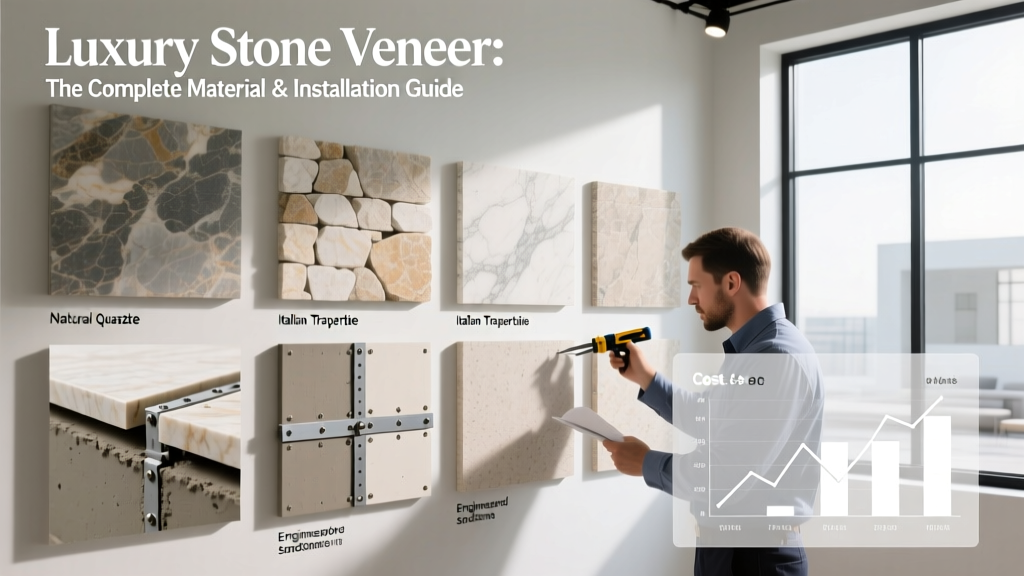
What Defines Luxury in Manufactured Stone Veneer?
The term luxury stone veneer separates architectural-grade manufactured stone masonry veneer (MSMV) from standard big-box alternatives. The distinction lies in three manufacturing pillars: mold fidelity, pigment integration, and aggregate density. Entry-level veneers rely on generic rubber molds that produce repetitive, rounded edges and surface-painted colors that chip to reveal gray concrete. Luxury stone veneer utilizes high-durometer polyurethane molds cast directly from rare, hand-selected natural stone outcroppings. This captures microscopic fissures, tooling marks, and natural weathering patterns.
Furthermore, premium manufacturers employ integral iron-oxide pigments baked into the concrete matrix, ensuring the color extends through the entire 1.5 to 2.5-inch thickness of the stone. The concrete mix itself is engineered with lightweight aggregates and Portland cement to achieve a high compressive strength (typically exceeding 2,800 psi) while maintaining a manageable dead load of 10 to 14 pounds per square foot.
The ASTM C1670 Benchmark
True luxury stone veneer must comply with ASTM C1670 standards for adhered manufactured stone masonry veneer. This specification mandates rigorous testing for freeze-thaw durability, water absorption (capped at 22%), and shear bond strength. When specifying materials for high-end residential or commercial projects, always request the manufacturer's ASTM C1670 compliance certificate.
Top Architectural Brands and Signature Product Lines
The luxury segment is dominated by a few heritage manufacturers that invest heavily in proprietary coloring techniques and proprietary mold libraries. Selecting the right brand dictates both the aesthetic outcome and the long-term durability of the installation.
| Brand | Flagship Luxury Line | Weight (lbs/sq ft) | Mold & Color Tech | Material Cost (2026) |
|---|---|---|---|---|
| Eldorado Stone | Corte Vista / Cliffstone | 10 - 12 lbs | Polyurethane, integral color | $11.50 - $15.00 |
| Coronado Stone | Vintage Series | 11 - 13 lbs | Hand-cast, multi-layer oxide | $10.00 - $14.50 |
| Dutch Quality Stone | Weathered Ledge | 12 - 14 lbs | High-density, deep-texture | $12.00 - $16.50 |
Cost Analysis: Budgeting for High-End Veneer
Installing luxury stone veneer is a significant capital investment. As of 2026, supply chain normalization has stabilized material costs, but skilled masonry labor remains at a premium. A complete turnkey installation typically ranges from $26.00 to $44.00 per square foot.
- Material Costs: $10.00 to $16.50 per sq. ft. (Includes field stone, corner pieces, and 10% overage for cuts).
- Substrate & Lath Prep: $3.50 to $6.00 per sq. ft. (Cement board, 2.5 lb metal lath, corrosion-resistant fasteners, and mortar scratch coat).
- Masonry Labor: $12.50 to $21.50 per sq. ft. (Varies heavily by region and complexity of dry-stack vs. grouted profiles).
Pro Tip: Never budget for stone veneer without factoring in corner pieces. Corners are sold by the linear foot, not the square foot, and typically cost 20% to 30% more per unit than flat field stones. Failing to account for this creates severe budget overruns on projects with multiple external corners or window returns.
Substrate Preparation: Preventing Catastrophic Delamination
The most common failure mode in luxury stone veneer installation is delamination caused by inadequate substrate support. Standard 1/2-inch gypsum drywall cannot support the 12+ lbs per square foot dead load of architectural stone, especially when factoring in the weight of the mortar bed and metal lath. According to Eldorado Stone technical specifications, interior applications over wood or steel framing require a rigid, water-resistant backing.
The Structural Substrate Protocol
- Strip to Studs: Remove drywall or plaster down to the bare framing.
- Install Cement Board: Apply 1/2-inch cementitious backer board (e.g., Durock or HardieBacker) using alkali-resistant mesh tape and thin-set mortar on all seams.
- Weather-Resistive Barrier (WRB): For exterior walls or high-moisture interiors (steam showers), apply two layers of Grade D building paper or a fluid-applied membrane over the sheathing, behind the cement board. Building Science Corporation emphasizes that managing bulk water behind the veneer is critical to preventing freeze-thaw spalling and interior mold.
- Metal Lath Application: Staple or screw 2.5 lb self-furring galvanized metal lath directly into the studs (not just the cement board) using 1.5-inch corrosion-resistant fasteners every 6 inches. The self-furring dimples ensure the scratch coat mortar fully encapsulates the lath.
Grouted vs. Dry-Stack: Aesthetic and Structural Trade-offs
Luxury stone profiles generally dictate the installation method, but understanding the structural implications of each is vital for the architect or lead mason.
Grouted (Mortar Joints)
Best for: Fieldstone, river rock, and traditional ledge profiles.
Technique: Stones are applied with a 1/2-inch mortar bed and pointed with a grout bag. The mortar acts as a secondary structural bond and seals the cavity against moisture intrusion.
Tolerance: Forgiving. Mortar joints hide minor sizing discrepancies and uneven cuts.
Dry-Stack (Mortarless)
Best for: Modern ledgestone, ashlar, and tight-fit contemporary profiles.
Technique: Stones are back-buttered with a polymer-modified thin-set and pressed tightly together. No visible mortar joints.
Tolerance: Unforgiving. Requires precise cutting, extensive grinding, and perfectly plumb substrates. Any deviation creates visible shadow lines.
Expert Troubleshooting: Efflorescence and Spalling
Even premium luxury stone veneer can suffer from chemical and physical degradation if exposed to improper moisture dynamics.
Combating Efflorescence
Efflorescence appears as a white, powdery residue on the stone surface. It occurs when water-soluble salts from the Portland cement mortar migrate to the surface and crystallize upon evaporation. Do not use muriatic acid on manufactured stone; it can etch the iron-oxide pigments and permanently alter the color. Instead, use a specialized, non-acidic efflorescence cleaner formulated for MSMV, applied with a soft nylon brush. To prevent recurrence, ensure the weep screed at the base of the exterior wall is clear of soil and landscaping debris, allowing the wall cavity to drain and dry.
Preventing Spalling in Freeze-Thaw Climates
Spalling (the flaking or chipping of the stone face) occurs when moisture penetrates the veneer, freezes, and expands. Luxury stone veneer rated for exterior use is engineered to withstand this, but only if installed correctly. The critical defense is the air gap. When installing over solid masonry or concrete block, furring strips must be used to create a minimum 1-inch drainage plane between the WRB and the metal lath. This capillary break ensures that bulk water drains downward and out through the weep screed, rather than being trapped against the back of the stone where it can freeze and fracture the concrete matrix.
Written by
David NakamuraDavid Nakamura is a licensed architect (AIA) and construction technology writer focused on sustainable building methods, mass timber engineering, and high-performance building envelopes. He holds a Master of Architecture from the University of Washington and is a certified Passive House Consultant (CPHC). David spent eight years at the Seattle firm Mithun, where he led the design of three LEED Platinum projects, before founding his own practice specializing in net-zero residential design. He serves on the editorial advisory board of GreenBuilder Magazine and has authored peer-reviewed papers on cross-laminated timber (CLT) connections for the Journal of Structural Engineering. In his spare time, David teaches woodworking at Pratt Fine Arts Center and kayaks the Puget Sound.
More from David Nakamura
View all
Construction Cost
Labor Cost to Build a Deck Per Sq Ft: 2026 Installation Guide
Discover the exact labor cost to build a deck per sq ft in 2026. This installation guide breaks down contractor rates, complexity factors, and hidden fees.
Aug 4, 2026

Construction Cost
How Much Does It Cost to Build a 3 Bedroom House? Financing Guide
Learn exactly how much it costs to build a 3 bedroom house and explore 2026 financing options, construction loan types, and budget frameworks for your build.
Aug 4, 2026

Construction Cost
Cost to Build a Tennis Court: 2026 Guide
How much does it cost to build a tennis court in 2026? Breakdowns for asphalt, concrete, and synthetic surfaces plus fencing and lighting.
Jul 30, 2026