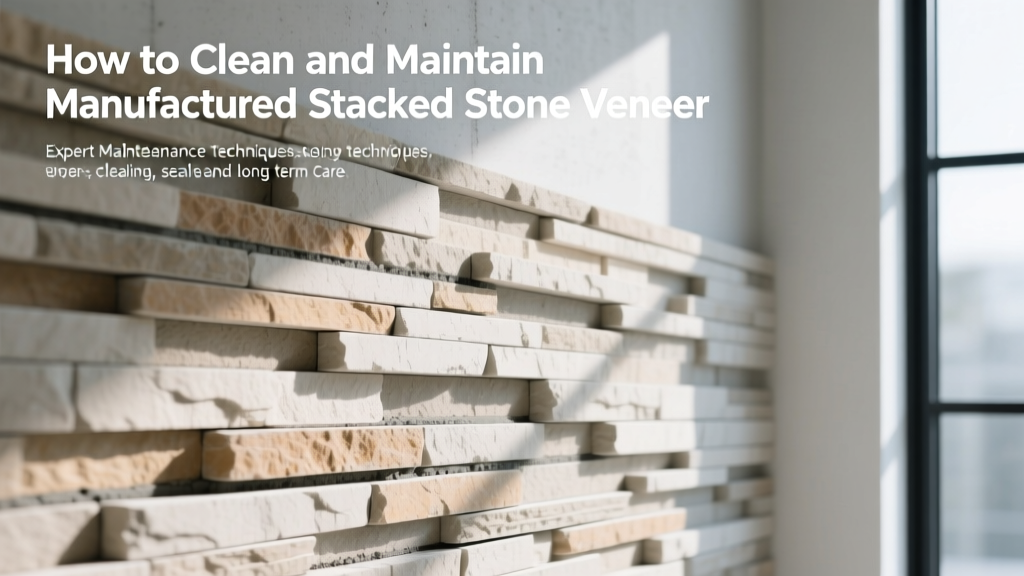
How to Clean and Maintain Manufactured Stacked Stone Veneer
Learn expert techniques to clean, seal, and maintain manufactured stacked stone veneer. Protect your investment from efflorescence, stains, and moisture.
The Chemistry of Manufactured Stone: Why Standard Cleaners Fail
Manufactured stacked stone veneer (MSV) is not quarried from the earth; it is a meticulously engineered composite of Portland cement, lightweight aggregates, and iron oxide pigments. Because its core matrix is cementitious, it shares the chemical vulnerabilities of concrete. The most common mistake homeowners and novice contractors make is treating MSV like natural granite or limestone.
Using acidic cleaners—such as muriatic acid, vinegar, or standard brick washes—on manufactured stone triggers a destructive chemical reaction. The acid dissolves the calcium hydroxide in the cement paste, permanently etching the surface and bleaching the iron oxide pigments. Once the pigment is chemically altered, the color loss is irreversible. According to the National Park Service Preservation Brief on Masonry Cleaning, inappropriate chemical cleaners are the leading cause of accelerated masonry degradation.
Never use a high-pressure power washer (above 500 PSI) on manufactured stacked stone. The concentrated force will erode the top layer of cement, expose the lightweight aggregate underneath, and blast out the mortar joints. If power washing is absolutely necessary for heavy biological growth, use a soft-wash system with a wide 40-degree fan tip and keep the pressure below 400 PSI.
Routine Cleaning: The 3-Step Safe Wash Protocol
For annual maintenance and general dirt removal, rely on mechanical agitation and pH-neutral surfactants rather than harsh chemicals.
- Pre-Wet the Surface: Use a standard garden hose to thoroughly saturate the stone and mortar joints. This prevents the porous masonry from absorbing the cleaning solution too quickly, which can leave streak marks.
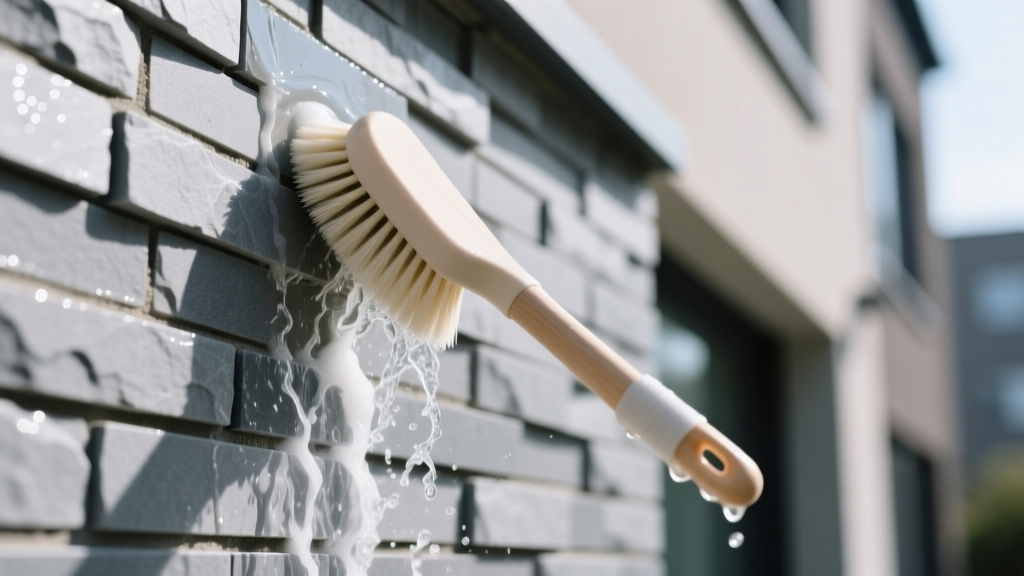
- Apply the Cleaning Solution: Mix 1/4 cup of pH-neutral dish detergent (such as Dawn or Ivory) with one gallon of warm water. Apply using a pump garden sprayer. Let it dwell for 5 to 10 minutes, but do not let it dry on the surface.
- Agitate and Rinse: Scrub the surface using a soft-bristled nylon brush. Never use wire brushes or steel wool, as they will leave behind microscopic metal fibers that will rust and stain the stone within weeks. Rinse thoroughly from top to bottom with clean water.
Troubleshooting Common Afflictions
When routine cleaning isn't enough, you must identify the specific stain type to apply the correct targeted treatment.
| Stain Type | Root Cause | Recommended Treatment |
|---|---|---|
| Efflorescence (White powder) | Water migrating through the masonry carries soluble salts to the surface, which crystallize upon evaporation. | Dry-brush aggressively. If persistent, apply a specialized non-acidic efflorescence remover (e.g., PROSOCO Sure Klean® Safeguard). |
| Organic Growth (Green/Black) | Algae, moss, or mildew thriving in shaded, damp areas with poor airflow. | Apply a 50/50 mix of water and oxygen bleach. Let dwell for 15 minutes, scrub, and rinse. Avoid chlorine bleach, which can discolor pigments. |
| Hard Water Stains | Calcium and magnesium deposits left behind by sprinkler systems hitting the wall. | Use a dedicated masonry calcium remover. Adjust sprinkler heads to prevent direct contact with the veneer. |
| Rust Stains | Oxidation from nearby metal fixtures, ungalvanized nails, or wire brush bristles. | Apply a commercial rust stain remover formulated for masonry (containing sodium hydrosulfite). Rinse immediately after the stain lifts. |
The Efflorescence Deep Dive
Efflorescence is particularly common in newly installed manufactured stacked stone veneer, usually appearing within the first 6 to 12 months. The Portland Cement Association notes that this 'new building bloom' is a natural part of the cement hydration and curing process. As the masonry dries out over its first year, the migration of salts will naturally cease. Do not attempt to seal the stone while active efflorescence is occurring; you will trap the salts beneath the sealer, creating permanent white blotches.
Sealing: Breathable vs. Film-Forming (A Critical Choice)
Applying a water repellent to your manufactured stone is highly recommended for exterior applications, especially in freeze-thaw climates. However, selecting the wrong chemistry will destroy your veneer.
✓ Penetrating Silane/Siloxane
How it works: These molecules are small enough to penetrate deep into the concrete pores. They chemically bond to the pore walls, creating a hydrophobic (water-repelling) barrier.
The Benefit: They are 100% breathable. Liquid water cannot enter, but water vapor (gas) can escape. This prevents hydrostatic pressure buildup and freeze-thaw spalling.
Top Picks: Eagle Armor Sealer, PROSOCO Siloxane PD.
✗ Film-Forming Acrylics
How it works: These sealers sit on the surface, creating a physical plastic-like film over the stone and mortar.
The Danger: They trap moisture vapor inside the masonry. When temperatures drop below freezing, the trapped water expands, causing the face of the manufactured stone to pop off (spalling). They also create an unnatural, glossy 'wet look' that peels and yellows under UV exposure.
Verdict: Never use on MSV.
Proper Application Technique for Siloxane Sealers
To achieve maximum penetration and coverage, apply the sealer using a low-pressure pump sprayer. Always spray from the bottom up. Spraying top-down causes the sealer to run down the dry stone below, creating permanent, dark 'lap marks' where the stone has absorbed a double dose of the chemical. Apply a heavy, saturating first coat, wait 3 to 5 minutes, and apply a second 'wet-on-wet' coat before the first one dries. Wipe away any puddles immediately with a clean microfiber cloth.
Seasonal Maintenance Checklist
Proactive maintenance prevents minor issues from requiring costly masonry restoration.
- Spring: Inspect mortar joints for hairline cracks caused by winter frost heave. Repoint any compromised joints with a Type N or Type S mortar mix, ensuring you match the existing joint profile (usually a concave or V-joint).
- Summer: Trim back foliage and ivy. Plants hold moisture against the veneer and their root systems can penetrate and crack the mortar joints. Maintain a minimum 12-inch clearance between soil/mulch and the bottom course of the stone to prevent wicking.
- Fall: Clean gutters and ensure downspouts divert water at least 5 feet away from the stone-clad foundation. Check sprinkler systems to ensure no heads are misting directly onto the veneer.
- Winter: Never use chemical de-icers (like rock salt or calcium chloride) near the base of the stone. The salt-laden slush will wick into the bottom courses, causing severe spalling and aggressive efflorescence. Use sand or kitty litter for traction instead.
"The longevity of manufactured stone veneer relies entirely on moisture management. If you keep bulk water out of the wall assembly and allow the masonry to breathe, a high-quality MSV installation will easily outlast the 50-year structural lifespan of the home itself."
Written by
James ThorntonJames Thornton is a construction industry veteran with 25 years of hands-on experience in wood framing, lumber grading, and residential building codes. He started as a framing carpenter in rural Oregon, earned his ICC Residential Building Inspector certification, and eventually became a senior plan reviewer for the City of Portland Bureau of Development Services. James holds a B.S. in Wood Science & Technology from Oregon State University and is a certified lumber grader through the West Coast Lumber Inspection Bureau (WCLIB). He has inspected over 3,000 residential construction sites and authored the city's internal guide on advanced framing techniques (2x6 at 24" O.C.). James lives in Bend, OR, where he builds custom timber-frame cabins and competes in lumberjack sports.
More from James Thornton
View all
Insulation
Best Home Insulation Materials: Complete 2026 Guide
Compare top home insulation materials for 2026. Find R-values, installed costs per square foot, and best uses for fiberglass, spray foam, and mineral wool.
Aug 4, 2026

Sustainable Building
Certify Your Green Building Material for LEED and WELL
Step-by-step guide to certifying a green building material for LEED v5 and WELL v2. Master EPDs, HPDs, and VOC limits for 2026 project specifications.
Aug 4, 2026

Stone & Masonry
Veneer Stacked Stone Panels: Interior Design & Style Showcase
Discover how veneer stacked stone panels transform interiors. Explore modern design profiles, material pairings, and technical installation specs.
Aug 4, 2026