Manufactured Stone Veneer vs Natural: 2026 Cost Comparison
Compare manufactured stone veneer vs natural stone. Analyze 2026 costs, weight loads, ASTM standards, and top brands to choose the right exterior cladding.
The Core Debate: Manufactured Stone Veneer vs. Natural Stone
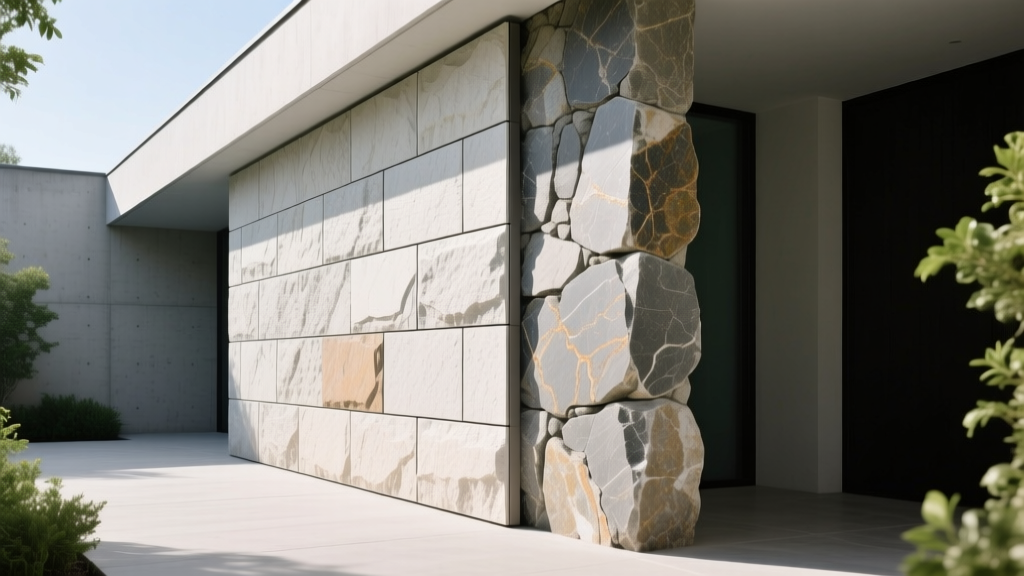
When specifying exterior or interior cladding, architects and builders constantly weigh the aesthetic authenticity of natural stone against the logistical advantages of manufactured alternatives. Manufactured stone veneer (MSV) is a Portland cement-based architectural product cast in molds taken from real stone, colored with iron oxide pigments, and reinforced with lightweight aggregates. While natural stone is quarried, cut, and sometimes tumbled, the quality of stone veneer manufactured in modern facilities has advanced to the point where visual differentiation from five feet away is nearly impossible.
However, the decision extends far beyond aesthetics. Structural load limits, regional climate constraints, labor availability, and material costs dictate which product will perform best on your specific project. This comparison breaks down the exact specifications, pricing matrices, and installation variables you need to make an informed material selection.
- Manufactured Stone Veneer (MSV): 10-12 lbs/sq ft | Portland cement base | Adhered application
- Natural Stone Veneer: 15-30+ lbs/sq ft | Quarried geologic formations | Adhered or anchored
- Thickness: MSV averages 1.5 to 2.5 inches; Natural varies wildly from 2 to 6+ inches
Weight and Structural Load: The Hidden Cost Factor
The most immediate engineering advantage of MSV is its weight profile. Natural stone veneer, particularly dense varieties like granite or thick fieldstone, can easily exceed 25 pounds per square foot. This requires substantial structural support. For wood-framed residential or light commercial construction, natural stone often necessitates the addition of steel angle irons, masonry ledges, or reinforced concrete foundations to bear the dead load.
Framing and Lath Requirements
Manufactured stone veneer typically weighs between 10 and 12 pounds per square foot. Because it falls under the 15 lbs/sq ft threshold for adhered veneers, it can be applied directly to standard wood or steel stud framing using a weather-resistive barrier (WRB), corrosion-resistant metal lath, and a scratch coat. According to the Masonry Veneer Manufacturers Association (MVMA), this weight reduction eliminates the need for expensive structural reinforcements on upper stories, effectively lowering the total project cost even before factoring in material savings.
Cost Breakdown: Material, Labor, and Long-Term Maintenance
Pricing for stone cladding fluctuates based on regional quarry access and freight logistics. Natural stone is heavy, making shipping costs a massive variable; a project in Florida using Pennsylvania fieldstone will pay a premium in freight. MSV is produced regionally across North America, stabilizing delivery costs.
| Material Profile | Material Cost (per sq ft) | Labor Cost (per sq ft) | Total Installed |
|---|---|---|---|
| Manufactured Ledge/Stack Stone | $7.50 - $11.00 | $12.00 - $16.00 | $19.50 - $27.00 |
| Manufactured Fieldstone/Ashlar | $8.00 - $13.00 | $14.00 - $18.00 | $22.00 - $31.00 |
| Natural Limestone/Sandstone Veneer | $14.00 - $22.00 | $18.00 - $25.00 | $32.00 - $47.00 |
| Natural Granite/Basalt Veneer | $18.00 - $30.00+ | $22.00 - $30.00 | $40.00 - $60.00+ |
Note: Labor costs for natural stone are higher due to the physical toll on masons, the need for sorting and trimming irregular shapes on-site, and the heavier mortar beds required to support the weight during curing.
Top Manufactured Stone Veneer Brands Reviewed
Not all MSV is created equal. The market is dominated by a few major manufacturers, each utilizing proprietary casting and pigment technologies to prevent the 'repeating pattern' effect that plagues lower-tier products.
Cultured Stone (Boral/CSR)
As the original inventors of the category in 1962, Cultured Stone remains the benchmark. Their proprietary DuraLight technology reduces the weight of specific profiles by up to 30% compared to standard MSV, bringing the load down to roughly 8.5 lbs/sq ft. Their Country Ledgestone and Pro-Fit lines are highly favored by commercial architects for their tight, dry-stack aesthetic and modular sizing, which speeds up installation by up to 40%.
Eldorado Stone (CRH)
Eldorado competes directly on color fidelity and mold variation. Their PerfectScale molding process captures micro-textures from actual geologic samples. The Cliffstone and Shadowrock profiles offer deep, dramatic shadow lines ideal for modern farmhouse and transitional architecture. Eldorado's technical support and comprehensive installation manuals make them a preferred choice for contractors navigating complex code compliance and flashing details.
Coronado Stone
Coronado leans heavily into the high-end architectural and luxury residential market. Their EPIC Stone collection features larger, bolder profiles that mimic massive quarried blocks without the associated weight. Coronado's color layering technique incorporates multiple pigment washes during the casting process, resulting in a highly variegated, natural look that avoids the flat, monochromatic appearance of budget manufactured stones.
ASTM Standards and Freeze-Thaw Durability
Durability in exterior applications is governed by strict testing protocols. Reputable manufacturers test their products to ASTM C1670 (Standard Specification for Adhered Manufactured Stone Masonry Veneer). This standard mandates rigorous freeze-thaw cycling, water absorption limits, and flexural strength tests.
In climates with severe freeze-thaw cycles (like the US Midwest or Northeast), water absorption is the critical failure point. If a stone absorbs too much water and freezes, the expanding ice will cause spalling (chipping and flaking). ASTM C1670 requires MSV to demonstrate minimal degradation after 50 freeze-thaw cycles. Natural stones like dense granite easily pass this, but porous natural sandstones or limestones can fail if not properly sealed. High-quality MSV is engineered with low water-to-cement ratios and air-entrainment, often outperforming mid-grade natural sandstone in freeze-thaw resistance.
Installation Pitfalls: Where Manufactured Veneer Fails
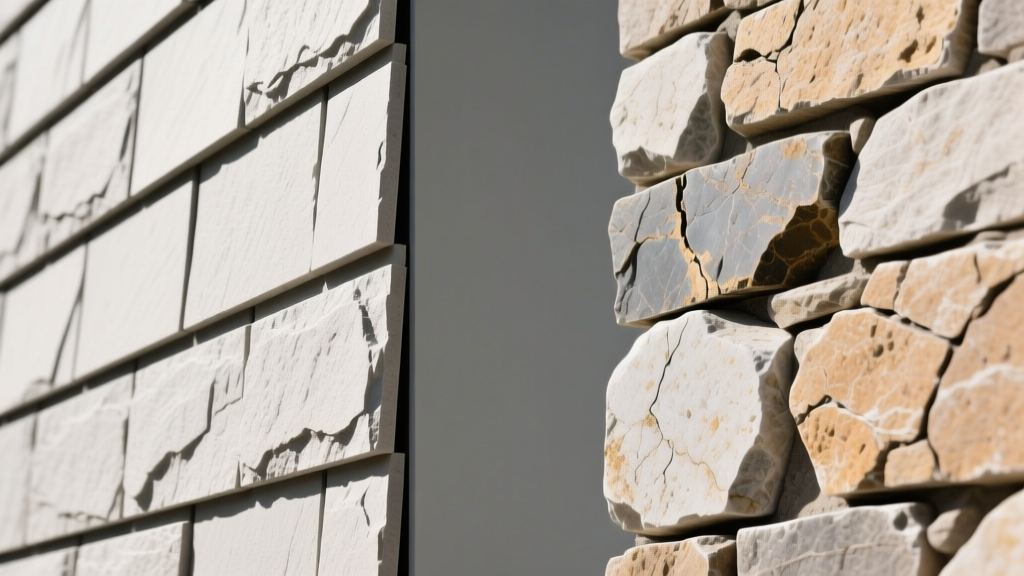
MSV is a cladding, not a structural element, and it is not waterproof. The most common cause of MSV failure is not the stone itself, but moisture management behind the veneer. Avoid these critical installation errors:
- Omitting the Weep Screed: A corrosion-resistant weep screed must be installed at the base of the wall, minimum 4 inches above grade or 2 inches above paved surfaces. This allows trapped moisture to drain out from behind the lath and scratch coat.
- Skipping the Mortar Bed: While some DIYers attempt to 'stick and butter' MSV directly to the lath, industry standards require a 3/8-inch minimum scratch coat of Type S mortar over the metal lath, fully cured before applying the stone. This provides a continuous, water-resistant base layer.
- Using the Wrong Mortar: Do not use standard brick mortar. MSV requires a polymer-modified, high-adhesion mortar specifically designed for vertical veneer applications to prevent slump and ensure long-term bond strength.
- Sealing the Stone: Never apply a non-breathable film-forming sealer to exterior MSV. Trapped moisture will vaporize in the sun, causing the pigment and cementitious face to spall. If sealing is required for stain resistance, use only a breathable, silane/siloxane penetrating water repellent.
Decision Framework: Which Should You Choose?
Select the optimal material based on your specific project constraints:
Choose Manufactured Stone Veneer If:
- You are cladding upper stories of a wood-framed building and want to avoid structural steel supports.
- Your budget caps at $30/sq ft fully installed.
- You require a specific, highly controlled color palette to match existing architectural elements.
- Freight costs to your region make heavy natural stone prohibitively expensive.
Choose Natural Stone Veneer If:
- You are building a masonry or concrete structure that can easily support heavy dead loads.
- The project is a high-end historical restoration where authentic geologic materials are mandated by local zoning boards.
- You prefer the unique, unrepeatable mineral inclusions and fossil records found only in quarried limestone or slate.
- The stone will be subject to extreme physical abrasion (e.g., retaining walls, heavy commercial baseboards) where natural stone's solid-through density is advantageous.
By evaluating the structural capacity of your framing, the realities of your regional labor market, and the specific ASTM testing data of the products you specify, you can confidently select the cladding that offers the best lifecycle value for your build.
Written by
James ThorntonJames Thornton is a construction industry veteran with 25 years of hands-on experience in wood framing, lumber grading, and residential building codes. He started as a framing carpenter in rural Oregon, earned his ICC Residential Building Inspector certification, and eventually became a senior plan reviewer for the City of Portland Bureau of Development Services. James holds a B.S. in Wood Science & Technology from Oregon State University and is a certified lumber grader through the West Coast Lumber Inspection Bureau (WCLIB). He has inspected over 3,000 residential construction sites and authored the city's internal guide on advanced framing techniques (2x6 at 24" O.C.). James lives in Bend, OR, where he builds custom timber-frame cabins and competes in lumberjack sports.
More from James Thornton
View all
Insulation
Best Home Insulation Materials: Complete 2026 Guide
Compare top home insulation materials for 2026. Find R-values, installed costs per square foot, and best uses for fiberglass, spray foam, and mineral wool.
Aug 4, 2026

Sustainable Building
Certify Your Green Building Material for LEED and WELL
Step-by-step guide to certifying a green building material for LEED v5 and WELL v2. Master EPDs, HPDs, and VOC limits for 2026 project specifications.
Aug 4, 2026

Stone & Masonry
Veneer Stacked Stone Panels: Interior Design & Style Showcase
Discover how veneer stacked stone panels transform interiors. Explore modern design profiles, material pairings, and technical installation specs.
Aug 4, 2026