Best Stone Veneer Porch Materials: 2026 Comparison
Compare manufactured and natural stone veneer for porch skirting and pillars. Explore 2026 costs, weight limits, and freeze-thaw durability.
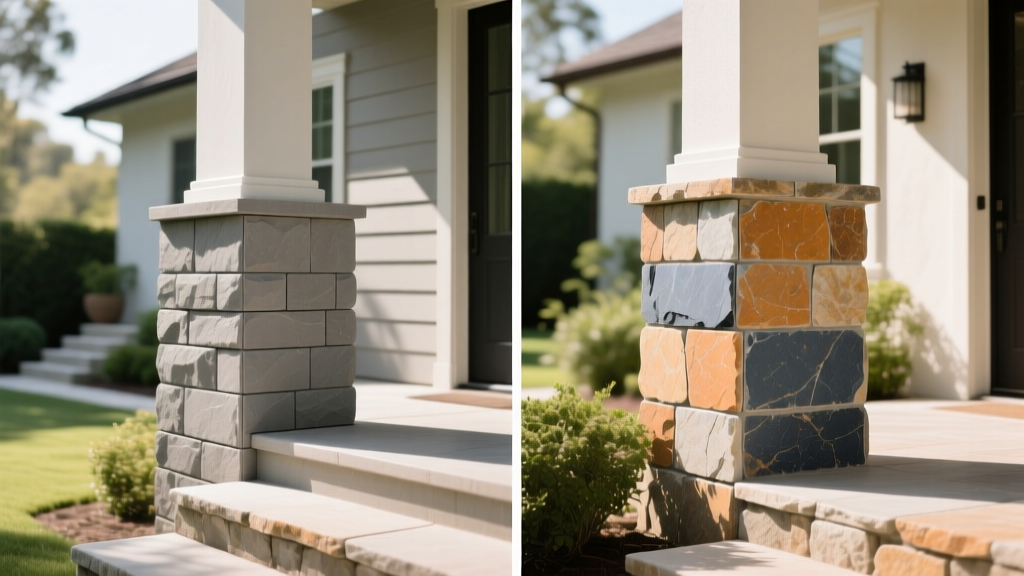
The Core Dilemma: Architectural vs. Quarried Veneer
Applying stone veneer to a porch transforms a basic structural element into a high-end architectural feature. Whether you are cladding porch skirting, wrapping structural pillars, or facing a knee wall, the material must endure severe microclimates. Porch veneers face constant splashback, UV degradation, and aggressive freeze-thaw cycling. In 2026, the market is dominated by two distinct categories: Manufactured Stone Veneer (MSV) and Natural Thin Stone Veneer (NTSV). Choosing between them requires looking past aesthetics to evaluate structural load, moisture management, and long-term maintenance.
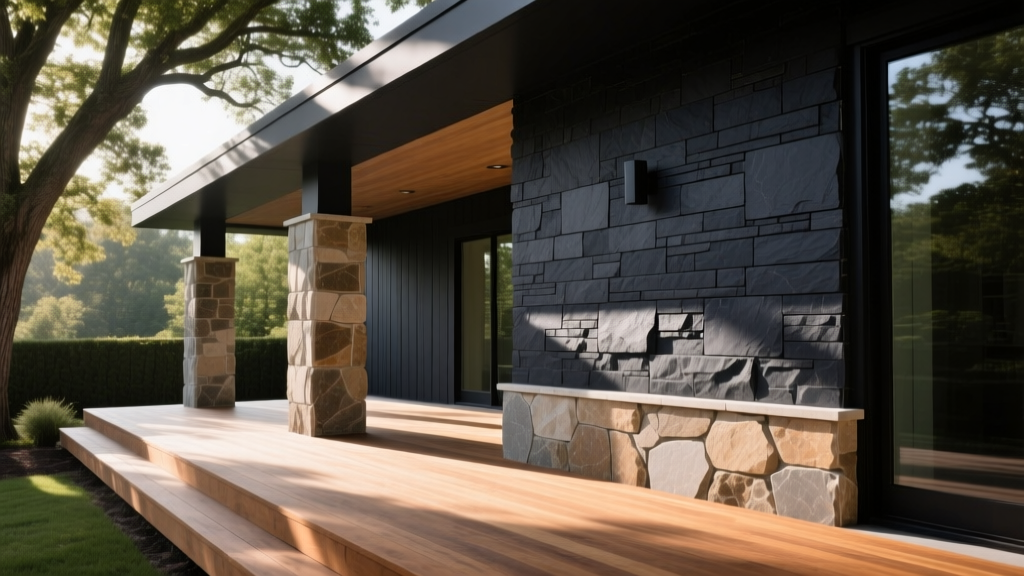
Head-to-Head Specification Matrix
| Feature | Manufactured Stone Veneer (MSV) | Natural Thin Stone Veneer (NTSV) |
|---|---|---|
| Average Weight | 10 – 12 lbs per sq. ft. | 13 – 15 lbs per sq. ft. |
| Thickness Profile | 1.5 to 2.5 inches | 1 to 1.5 inches |
| Material Cost (2026) | $8.50 – $14.00 / sq. ft. | $13.00 – $24.00 / sq. ft. |
| Color Consistency | High (Batch-dyed oxides) | Low (Natural geological variance) |
| Freeze-Thaw Rating | ASTM C1670 Compliant | Varies by quarry and stone type |
| Installation Speed | Fast (Panelized options available) | Moderate (Requires individual shaping) |
Manufactured Stone Veneer (MSV) for Porches
MSV is a portland cement-based product cast in molds taken from real stone. For porch applications, MSV offers a distinct advantage in weight and installation speed. Leading manufacturers like Eldorado Stone and Cultured Stone have refined their aggregate mixes to reduce efflorescence and improve freeze-thaw resilience.
Top 2026 MSV Profiles for Exterior Skirting
- Panelized Mortarless Systems: Products like Versetta Stone feature a rigid foam backing and integrated metal flange. They screw directly into the porch framing or structural sheathing, bypassing the need for a mortar scratch coat. This is the premier choice for DIY porch skirting where masonry skills are limited.
- Cast Ledge Stone: Traditional individual pieces that mimic stacked sedimentary rock. Ideal for wrapping porch pillars where corner wraps are needed to hide the seams.
- Dressed Fieldstone: Larger, rounded profiles that replicate river rock. Requires wider mortar joints, which increases the overall square footage coverage of the mortar mix.
Natural Thin Stone Veneer (NTSV) for Porches
NTSV is real, quarried stone sliced to a thin profile. The Natural Stone Institute notes that thinning natural stone reduces the structural load requirements while retaining the exact geological properties of the original rock. For porches, granite and dense limestone are the top performers due to their low porosity.
Quarried Stone Selection for High-Moisture Zones
Not all natural stone survives porch environments. Sandstone and soft shale are highly porous and will spall (flake apart) after just a few winters of freeze-thaw expansion. When specifying NTSV for porch skirting, demand stones with a water absorption rate of less than 3%. Dense limestone, slate, and quartzite are the only reliable choices for ground-adjacent porch applications.
Neither MSV nor NTSV should ever make direct contact with soil or mulch. Capillary action will draw ground moisture into the veneer and the underlying weather-resistive barrier (WRB), causing catastrophic rot and severe efflorescence. The Masonry Veneer Manufacturers Association (MVMA) strictly mandates a minimum 4-inch clearance above soil grade, and a 2-inch clearance above paved surfaces like concrete porch slabs. Always install a weep screed at the base of the veneer to allow trapped moisture to escape.
2026 Cost Analysis: Material and Labor Breakdown
Pricing for stone veneer has stabilized in 2026 following the supply chain adjustments of previous years. However, labor rates for skilled masons continue to climb. Below is a realistic cost breakdown for a standard 200-square-foot porch skirting and pillar wrap project.
| Cost Component | Manufactured Veneer (MSV) | Natural Thin Veneer (NTSV) |
|---|---|---|
| Stone Material | $1,700 – $2,800 | $2,600 – $4,800 |
| Lath, WRB & Screeds | $350 – $450 | $350 – $450 |
| Mortar & Grout Mix | $200 – $300 | $200 – $300 |
| Professional Mason Labor | $3,000 – $4,500 | $4,000 – $6,000 |
| Total Project Estimate | $5,250 – $8,050 | $7,150 – $11,550 |
Mortar and Lath Specifications for Porch Environments
The most common point of failure in porch veneer is not the stone itself, but the mortar matrix holding it to the wall. Porch skirting is exposed to lateral wind-driven rain and snow drifts.
- Mortar Type: Use a Type N or Type S mortar mix. Type N offers higher flexibility and is less prone to cracking under minor porch settling. For high freeze-thaw regions, integrate a liquid polymer admixture (like an acrylic fortifier) into the mix to increase tensile strength and reduce water permeability.
- Corrosion-Resistant Lath: Standard galvanized wire lath will rust when exposed to the alkaline environment of portland cement and exterior moisture. Specify PVC-coated galvanized lath or stainless steel woven wire mesh for all porch applications.
- Scratch Coat Curing: Do not rush the scratch coat. In dry or windy conditions, mist the scratch coat with water for 48 hours to ensure proper hydration. A weak scratch coat will delaminate from the sheathing, pulling the entire stone facade down with it.
Porch-Specific Failure Modes and Prevention
Understanding how porch veneers fail allows you to engineer them correctly from the start.
1. Efflorescence Staining
The Cause: Water-soluble salts within the cement or natural stone are dissolved by moisture and pushed to the surface, leaving a white, powdery residue.
The Fix: Ensure proper flashing above the porch skirting to prevent bulk water intrusion from the deck above. Use low-alkali cement and wash the stone with a specialized masonry efflorescence cleaner (never use muriatic acid, which will etch MSV and degrade natural limestone).
2. Spalling and Delamination
The Cause: Water gets trapped behind the veneer, freezes, and expands, popping the stones off the wall.
The Fix: Maintain a continuous 1-inch air gap or drainage plane behind the lath if using a dimpled drainage mat. Install weep holes at the base of the skirting every 16 inches to allow hydrostatic pressure to vent.
The Final Verdict: Which Should You Install?
For budget-conscious projects or DIY porch skirting where structural load and masonry expertise are limiting factors, Manufactured Stone Veneer (MSV)—specifically mortarless panelized systems—is the undisputed winner. It provides 90% of the aesthetic value at 60% of the total installed cost.
For luxury custom homes, historical restorations, or regions with extreme temperature swings where the proven geological durability of dense quarried rock is required, Natural Thin Stone Veneer (NTSV) is the superior investment. Opt for dense limestone or slate, enforce strict 4-inch ground clearances, and hire a certified mason to ensure the mortar matrix outlasts the stone itself.
Written by
David NakamuraDavid Nakamura is a licensed architect (AIA) and construction technology writer focused on sustainable building methods, mass timber engineering, and high-performance building envelopes. He holds a Master of Architecture from the University of Washington and is a certified Passive House Consultant (CPHC). David spent eight years at the Seattle firm Mithun, where he led the design of three LEED Platinum projects, before founding his own practice specializing in net-zero residential design. He serves on the editorial advisory board of GreenBuilder Magazine and has authored peer-reviewed papers on cross-laminated timber (CLT) connections for the Journal of Structural Engineering. In his spare time, David teaches woodworking at Pratt Fine Arts Center and kayaks the Puget Sound.
More from David Nakamura
View all
Construction Cost
Labor Cost to Build a Deck Per Sq Ft: 2026 Installation Guide
Discover the exact labor cost to build a deck per sq ft in 2026. This installation guide breaks down contractor rates, complexity factors, and hidden fees.
Aug 4, 2026

Construction Cost
How Much Does It Cost to Build a 3 Bedroom House? Financing Guide
Learn exactly how much it costs to build a 3 bedroom house and explore 2026 financing options, construction loan types, and budget frameworks for your build.
Aug 4, 2026

Construction Cost
Cost to Build a Tennis Court: 2026 Guide
How much does it cost to build a tennis court in 2026? Breakdowns for asphalt, concrete, and synthetic surfaces plus fencing and lighting.
Jul 30, 2026