Marble Floors Taxonomy: Grades, Finishes & Selection Guide
Master marble floors selection with our taxonomy guide. Compare calcite vs. dolomitic, NSI grades A-D, finishes, and 2026 installation costs.
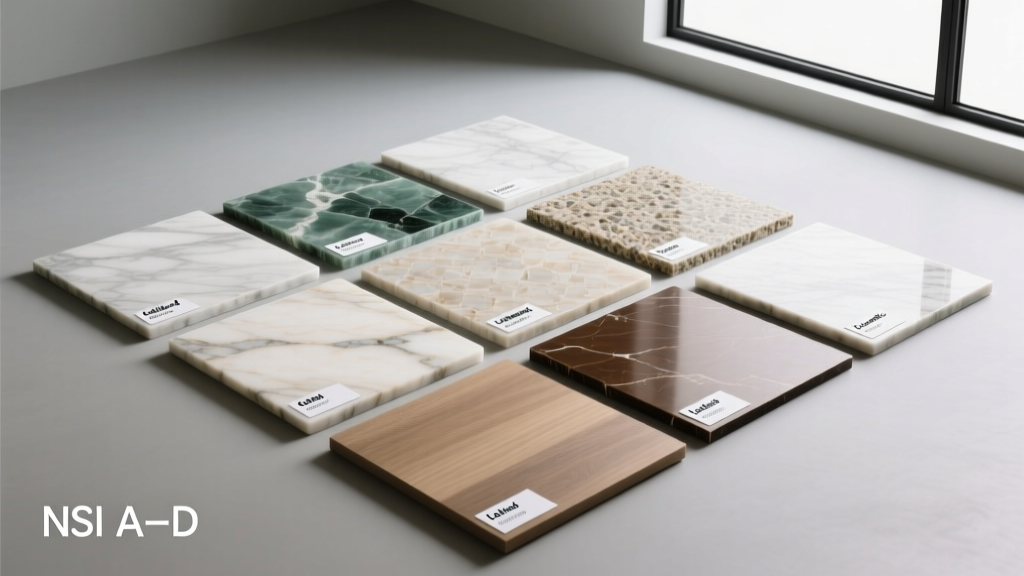
The Geological & Commercial Taxonomy of Marble
When sourcing marble floors, understanding the distinction between geological definitions and commercial trade names is critical for predicting long-term performance. Geologically, true marble is metamorphosed limestone composed primarily of calcite. However, the commercial stone industry groups several distinct metamorphic rocks under the 'marble' umbrella. Selecting the wrong mineral composition for a specific traffic or moisture environment is the leading cause of premature floor degradation.
Calcite vs. Dolomitic vs. Serpentine
- True Calcite Marble (e.g., Carrara, Calacatta): Composed of calcium carbonate. It is relatively soft (Mohs 3-4) and highly susceptible to etching from acidic substances (citrus, vinegar, wine). Best reserved for low-traffic, dry interior spaces like formal foyers or primary bedroom suites.
- Dolomitic Marble (e.g., Super White, Fantasy Brown): Contains significant magnesium carbonate. While often marketed as quartzite due to its hardness, it is technically a dolomitic marble. It offers superior resistance to etching and scratching compared to calcite marble, making it a viable option for high-traffic corridors and kitchen-adjacent flooring.
- Serpentine (e.g., Verde Antico): Commercially sold as green marble, serpentine is a magnesium silicate. It is completely impervious to acidic etching and much harder than calcite. However, it is highly sensitive to moisture and can warp or spall if installed with standard water-based thinset mortars.
The Four Fabrication Grades (NSI Standard)
The Natural Stone Institute (NSI) classifies marble into four distinct fabrication grades based on geological soundness and processing requirements. Specifying the correct grade directly impacts both your material budget and installation methodology.
| Grade | Geological Characteristics | Fabrication Requirements | Best Flooring Application |
|---|---|---|---|
| Group A | Sound, uniform, minimal natural flaws. | Standard factory polishing; no reinforcement needed. | High-traffic commercial and residential floors. |
| Group B | Minor geological flaws, slight veining weaknesses. | May require minor edge pillowing or localized epoxy filling. | Residential living areas, master baths. |
| Group C | Visible fissures, voids, and structural weaknesses. | Requires factory-applied epoxy coating and fiberglass mesh backing. | Low-traffic residential; requires specialized setting materials. |
| Group D | Extensive natural flaws, severe veining fractures. | Heavy epoxy impregnation, multi-layer mesh backing, and sound-dampening. | Decorative wall cladding only; not recommended for floors. |
Surface Finishes & Performance Matrix
The finish applied to marble floors dictates both the aesthetic and the functional slip resistance, measured by the Dynamic Coefficient of Friction (DCOF). ANSI A326.3 requires a minimum DCOF of 0.42 for level interior wet areas.
Finish Comparison
- Polished: Achieved through progressive diamond abrasive pads (up to 3000 grit). Closes the stone's pores, enhancing color and veining. DCOF: 0.35 - 0.45. Highly slippery when wet; not recommended for bathrooms or entryways.
- Honed: Stopped at a lower grit (usually 200-400), leaving a smooth, matte surface. DCOF: 0.50 - 0.65. Provides excellent slip resistance. Note that honing opens the stone's micro-pores, making it slightly more prone to staining than polished marble, requiring a high-quality impregnating sealer.
- Leathered/Brushed: Created using diamond-tipped brushes that texture the surface without making it abrasive. DCOF: 0.60 - 0.75. Excellent for hiding scratches and etch marks while providing superior grip. Ideal for rustic or transitional designs.
Structural Subfloor Requirements: The L/720 Mandate
The most catastrophic failure mode for marble floors is micro-cracking due to subfloor deflection. While standard ceramic and porcelain tiles require a subfloor deflection rating of L/360, natural stone is vastly more brittle and rigid.
According to the Tile Council of North America (TCNA) Handbook, all natural stone floor installations mandate a maximum deflection of L/720 under a 300 lb concentrated load. If your floor joists only meet L/360, installing marble directly over cement backer board will result in hairline fractures along the veining.
Achieving L/720 Stiffness
- Sistering Joists: Doubling up the existing floor joists to reduce the span and increase rigidity.
- Mortar Bed (Mud Bed) Installation: Installing a wire-reinforced, 1.25-inch thick Portland cement mortar bed over a cleavage membrane. This decouples the stone from minor substrate movements and is the gold standard for premium marble floors.
- Uncoupling Membranes: Using products like Schluter-DITRA, provided the underlying plywood subfloor meets the manufacturer's strict thickness and fastening schedules for natural stone.
2026 Cost Breakdown & Selection Framework
Pricing for marble floors varies wildly based on quarry origin, block yield, and slab dimensions. The following estimates reflect current 2026 market averages for material and professional installation in North America.
| Material Variant | Material Cost (per sq. ft.) | Installation Cost (per sq. ft.) | Total Estimated Project Cost |
|---|---|---|---|
| Carrara (Standard White/Gray) | $12 - $18 | $18 - $25 | $30 - $43 / sq. ft. |
| Calacatta Gold (Premium Veined) | $45 - $85 | $25 - $35 | $70 - $120 / sq. ft. |
| Emperador Dark (Spanish/Brown) | $15 - $22 | $18 - $25 | $33 - $47 / sq. ft. |
| Dolomitic 'Super White' | $25 - $35 | $20 - $28 | $45 - $63 / sq. ft. |
Troubleshooting Common Failure Modes
Even with perfect installation, marble requires specific maintenance protocols. Understanding the difference between the three primary failure modes will dictate your sealing and cleaning strategy.
1. Etching vs. Staining
Homeowners frequently confuse etching with staining. Etching is a chemical burn; when an acidic liquid (lemon juice, coffee) contacts calcite marble, it dissolves the calcium carbonate, leaving a dull, matte spot. No sealer can prevent etching; sealers only prevent staining. Staining occurs when a pigment or oil penetrates the stone's pores. To prevent staining, apply a penetrating siloxane or silane-based impregnating sealer annually. To mitigate etching in high-risk areas, specify honed or leathered finishes, which mask etch marks far better than polished surfaces.
2. Alkali Efflorescence
If white, powdery deposits appear on the surface of newly installed marble floors, this is efflorescence. It occurs when water-soluble salts from the Portland cement setting bed migrate to the surface and crystallize. Do not use acid-based cleaners to remove it, as this will severely etch the marble. Instead, use a specialized alkaline efflorescence remover and ensure the floor is allowed to fully cure and dry before applying any topical sealers.
3. Picture Framing (Edge Darkening)
When moisture from thinset mortar migrates into the unsealed edges of the marble tile, it creates a dark halo around the perimeter of the stone, known as picture framing. This is particularly common with Group A and B white marbles. To prevent this, ensure the installer uses a white, rapid-setting, low-moisture thinset mortar, and pre-seal the edges of the tiles before setting.