Cost of a Metal Building with Stone Veneer: 2026 Price Guide
Analyze the 2026 costs of adding stone veneer to a metal building. Includes material pricing, steel-framing labor rates, and moisture management details.
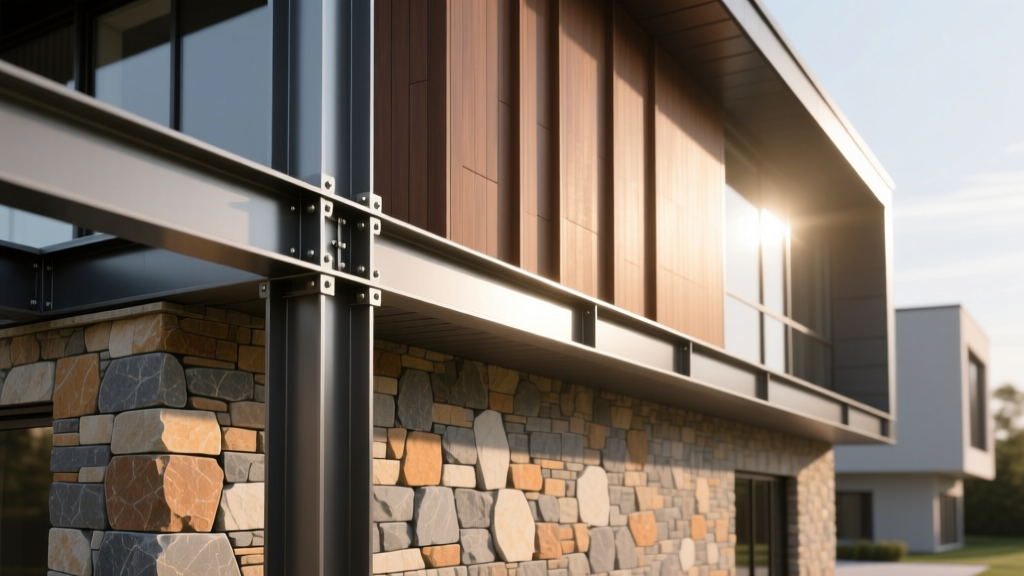
The Structural Reality of Steel-to-Stone Transitions
Cladding a steel-framed structure—whether a residential barndominium, agricultural facility, or commercial warehouse—with stone veneer introduces unique structural and moisture-management challenges. Unlike traditional wood framing, metal buildings experience significant thermal expansion and contraction. According to the Metal Building Manufacturers Association (MBMA), steel frames can drift and deflect under wind and thermal loads, meaning rigid masonry attachments will crack if not properly isolated. In 2026, the national average cost to install stone veneer on a metal building ranges from $24 to $42 per square foot, heavily dependent on the substrate preparation required to bridge the gap between corrugated steel panels and mortar-based masonry.
2026 Cost Breakdown: Metal Building with Stone Veneer
The cost to build a metal building with stone veneer wainscoting or full-height cladding is divided into four primary phases: substrate prep, moisture management, material procurement, and masonry labor. Below is the 2026 pricing matrix for a standard 1,000-square-foot exterior elevation.
| Cost Component | Low Estimate (Per Sq Ft) | Average (Per Sq Ft) | High Estimate (Per Sq Ft) |
|---|---|---|---|
| Furring & Substrate (Hat channels / Wood) | $2.50 | $3.75 | $5.50 |
| Moisture Management (WRB & Flashing) | $1.75 | $2.80 | $4.25 |
| Stone Veneer Materials | $8.00 | $14.50 | $28.00 |
| Masonry Labor & Mortar | $12.00 | $16.50 | $24.00 |
| Total Installed Cost | $24.25 | $37.55 | $61.75 |
Material Selection Matrix for Steel Structures
Not all stone veneers perform equally on metal buildings. The weight of the cladding and the installation method must align with the building's structural load capacity and the metal panel's rib profile.
- Manufactured Stone Veneer (MSV): Brands like Cultured Stone or Eldorado Stone weigh 10-12 lbs per square foot. Requires traditional lath, scratch coat, and Type S polymer-modified mortar. Best for custom, high-end barndominiums.
- Panelized Stone Systems: Systems like Boral Versetta Stone integrate the stone, mortar, and metal lath into a single 2' x 4' panel with a built-in air gap. Weighs roughly 11 lbs per square foot but installs 40% faster on steel hat channels using self-tapping screws. Ideal for commercial metal buildings.
- Natural Stone Veneer: Weighs 13-15+ lbs per square foot. Requires heavy-duty 2.5 lb self-furring metal lath and structural verification to ensure the metal building's secondary framing (girts) can handle the dead load without bowing.
Hidden Cost Drivers in Steel Substrates
When budgeting for a metal building with stone veneer, contractors often underestimate the substrate preparation. You cannot attach metal lath directly to 26-gauge or 24-gauge corrugated steel wall panels. The ribs create an uneven surface that will telegraph through the mortar and cause structural failure.
1. Furring and Hat Channels ($2.50 - $5.50 / sq ft)
To create a flat, load-bearing plane, you must install 20-gauge steel hat channels or 1x4 pressure-treated wood furring strips horizontally across the steel ribs. These are secured using #10 x 1-1/2 inch self-drilling TEK screws with neoprene washers, driven directly into the building's primary structural girts. Steel hat channels are preferred in 2026 over wood furring to prevent rot and match the thermal expansion rate of the primary steel frame.
2. Fluid-Applied Moisture Barriers ($1.75 - $4.25 / sq ft)
Traditional sheet housewraps (like Tyvek) fail on metal buildings because they cannot seal tightly against the corrugated ribs, allowing wind-driven rain to bypass the barrier. The U.S. Department of Energy Building Envelope Guidelines recommend fluid-applied water-resistive barriers (WRB) for complex substrates. Products like Prosoco R-Guard FastFlash or Henry Blueskin are rolled or sprayed directly over the furring and sheathing, creating a seamless, monolithic seal that costs roughly $1.50 more per square foot than traditional wrap but eliminates moisture intrusion callbacks.
Step-by-Step Assembly & Labor Rates
Masonry labor on steel structures commands a 10% to 15% premium over wood-framed residential projects due to the specialized fastening and layout requirements. Expect to pay $12 to $24 per square foot for labor, depending on regional rates and pattern complexity.
- Layout and Furring (Day 1): Crews snap chalk lines aligning with the interior structural girts (typically spaced 4 to 6 feet apart). Horizontal hat channels are screwed into the girts at 16-inch on-center intervals.
- WRB and Weep Screed Application (Day 2): Fluid-applied WRB is rolled over the channels. A PVC or G90 galvanized weep screed is installed at the base of the wall, maintaining a minimum 4-inch clearance from the soil or 2-inch clearance from concrete hardscaping, per The Masonry Society standards.
- Lath and Scratch Coat (Days 3-4): 2.5 lb self-furring galvanized metal lath is stapled or screwed to the furring. A 3/8-inch scratch coat of Type S mortar is applied and scored horizontally. This requires a 24-to-48-hour curing period, which extends the project timeline compared to wood framing.
- Stone Setting and Grouting (Days 5-8): Stones are applied using a polymer-modified mortar bed. Joints are grouted and tooled. Panelized systems skip the lath and scratch coat entirely, reducing labor time by up to 40%.
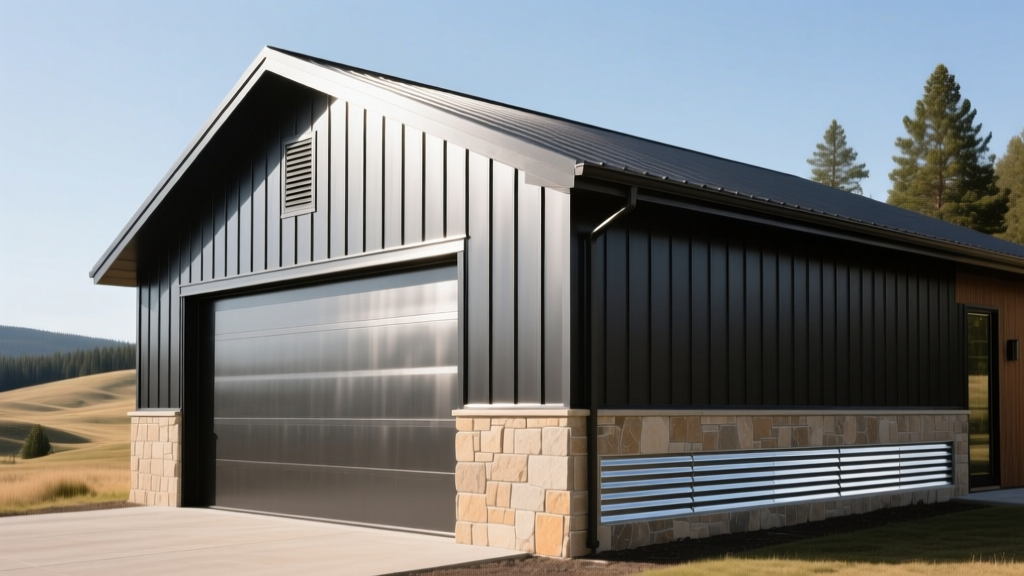
Common Failure Modes & Prevention Budgeting
Budgeting for prevention is significantly cheaper than remediating a failed stone veneer installation on a metal building. Allocate an extra 5% to your total budget for these critical preventative details:
Troubleshooting Steel-to-Stone Failures
Symptom: Horizontal cracking along the mortar joints every 5 to 6 feet.
Cause: Thermal deflection of the steel frame. The metal building expands in the summer heat, but the rigid masonry does not.
Fix: Install soft horizontal expansion joints (compressible foam backer rod with polyurethane sealant) aligned with the building's primary structural frame lines to absorb lateral drift.
Symptom: White, powdery residue (efflorescence) staining the stone face.
Cause: Moisture trapped behind the veneer dissolving alkaline salts in the mortar, which are then pushed to the surface.
Fix: Ensure the weep screed is not buried by landscaping and that the fluid-applied WRB is fully continuous. Never use a vapor-impermeable sealant on the exterior face of the stone.
Long-Term Maintenance and Lifecycle Costs
When evaluating the total cost of ownership for a metal building with stone veneer, factor in the lifecycle maintenance. Manufactured and natural stone veneers require virtually zero structural maintenance once installed correctly. However, the transition flashings where the stone meets the upper metal siding require inspection every 3 to 5 years. The Z-flashing at this horizontal transition must accommodate the differential movement between the heavy masonry wainscoting and the lightweight, thermally active steel siding above it. Budgeting $0.15 to $0.30 per square foot annually for caulking and flashing maintenance ensures the building envelope remains watertight for the 50+ year lifespan of the steel structure.
Written by
Priya KapoorPriya Kapoor is a real estate market analyst and construction economics researcher with expertise in housing affordability, development feasibility, and infrastructure investment. She holds a Master of Regional Planning from Cornell University and previously worked as a senior analyst at CBRE's Investment Properties group, where she modeled returns for $4B in mixed-use development pipelines. Priya now runs an independent research practice advising developers, municipalities, and REITs on construction cost forecasting and market timing. She publishes the quarterly "BuildMat Market Pulse" report tracking material price indices across 12 commodity categories. Based in Austin, TX, Priya serves on the board of Habitat for Humanity Austin and is a marathon runner.
More from Priya Kapoor
View all
Construction Cost
Cost to Build a 1600 Sq Ft Home in 2026: Full Breakdown
Accurate 2026 cost to build a 1600 sq ft home—material, labor, and regional pricing breakdowns included. Plan your budget with real-time estimates.
Aug 11, 2026

Wood & Lumber
Name the Types of Wood for Pressure Treatment and Preservation
Learn how to name the types of wood best suited for pressure treatment. Compare species treatability, chemical retention levels, and 2026 preservation costs.
Aug 4, 2026

Stone & Masonry
Stone Veneer Suppliers Lindenhurst: 2026 Cost Analysis
Analyze 2026 stone veneer costs in Lindenhurst, NY. Compare local supplier pricing, delivery fees, and Suffolk County installation labor rates.
Aug 4, 2026