Michigan Thin Stone Veneer: Natural vs Manufactured Comparison
Compare natural and manufactured Michigan thin stone veneer. Explore 2026 costs, freeze-thaw durability, and installation best practices.
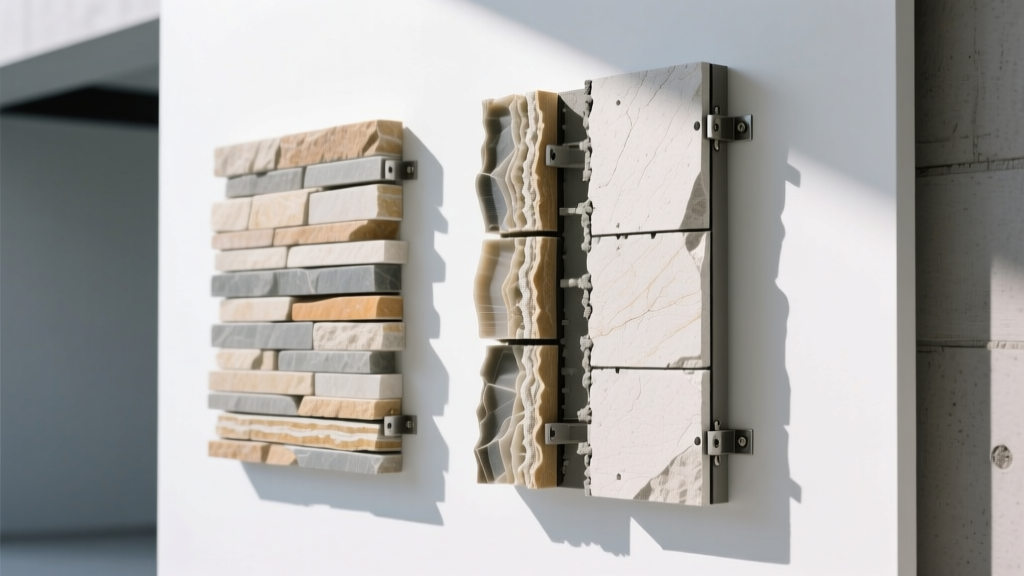
The Michigan Climate Challenge: Freeze-Thaw and Moisture
When architects and builders specify Michigan thin stone veneer for residential or commercial projects, aesthetics are only half the battle. The Great Lakes region subjects exterior building materials to some of the most aggressive freeze-thaw cycles in North America. A stone veneer system in Traverse City or Grand Rapids must withstand rapid temperature drops, lake-effect snow accumulation, and the corrosive effects of winter de-icing salts.
The primary failure mode for stone veneer in Michigan is spalling. When microscopic pores in the stone or mortar absorb moisture and the temperature drops below freezing, the water expands by approximately 9%. Over 50 to 100 freeze-thaw cycles per winter, this hydrostatic pressure causes the face of the stone to pop off or the mortar joints to crumble. Therefore, choosing between natural stone and manufactured architectural stone veneer (AMSV) requires a strict evaluation of water absorption rates and compressive strength.
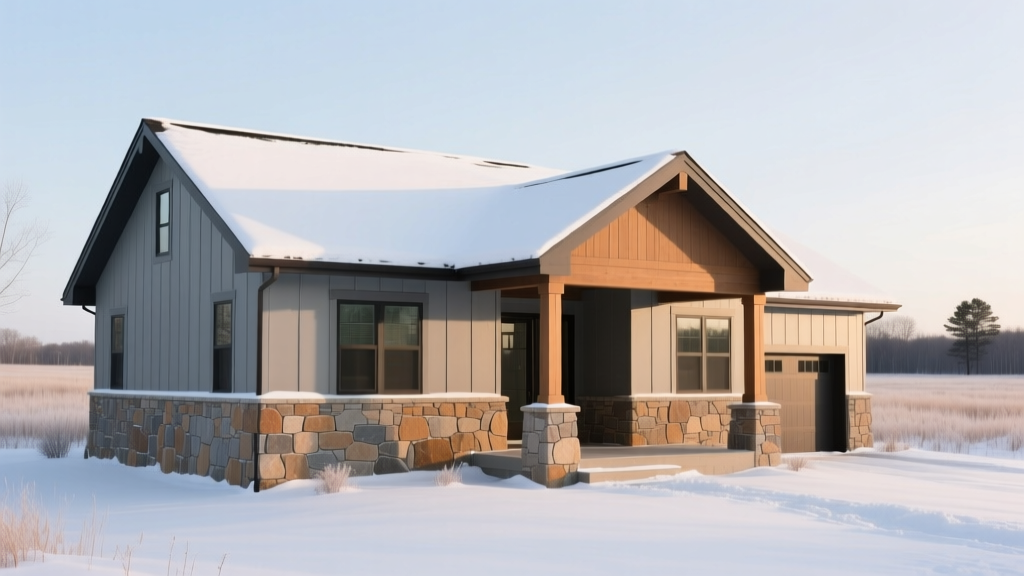
Head-to-Head Comparison Matrix
Before diving into specific costs and installation nuances, review the core physical differences between natural regional stone and high-end manufactured alternatives.
| Feature | Natural Thin Veneer (MI Fieldstone/Limestone) | Manufactured Architectural Stone (AMSV) |
|---|---|---|
| Weight | 12 - 15 lbs per sq. ft. | 8 - 11 lbs per sq. ft. |
| Water Absorption | Varies (1% to 8% depending on quarry depth) | Strictly < 6% per ASTM C140 standards |
| UV & Color Stability | 100% UV stable; will never fade | Iron-oxide pigments may fade slightly on south-facing walls over 15+ years |
| Thickness Profile | 3/4" to 1.5" (requires deeper ledgers) | 1" to 2.5" (varies by profile) |
| Pattern Repetition | Zero repetition; every piece is geologically unique | High risk of repeating molds if mason lacks skill |
Deep Dive: Natural Thin Stone Veneer
Natural thin stone veneer sourced from the Great Lakes region—particularly glacial fieldstone and Michigan limestone—offers an authenticity that manufactured products struggle to replicate. Because these stones were formed and exposed to glacial movement and centuries of natural weathering, their dense mineral structure is inherently adapted to cold climates.
Geological Advantages and Limitations
Michigan fieldstone is primarily composed of granite and basalt erratics left behind by retreating glaciers. These igneous rocks boast incredibly low water absorption rates (often below 2%), making them virtually immune to freeze-thaw spalling. However, regional limestone, while beautiful and historically accurate for Midwestern architecture, is a sedimentary rock. According to technical bulletins from the Natural Stone Institute, limestone must be properly sealed and detailed to prevent moisture ingress, as its absorption rate can exceed 5% in softer veins.
The primary drawback of natural thin veneer is the labor required for preparation. Because the thickness varies wildly from piece to piece, masons must spend significantly more time buttering the back of each stone and adjusting the mortar bed to maintain a plumb surface.
Deep Dive: Manufactured Architectural Stone Veneer (AMSV)
Manufactured stone veneer is a concrete-based product cast in molds taken from real stone. Premium brands popular in Michigan, such as Cultured Stone and Eldorado, use lightweight aggregates and integral iron-oxide pigments to achieve remarkable realism.
Engineering for the Cold
High-quality AMSV is engineered specifically to combat freeze-thaw damage. The National Veneer Manufacturers Association (NVMA) mandates that compliant manufactured stone must pass rigorous ASTM C666 freeze-thaw testing. The concrete matrix is formulated to be highly cohesive, and the lightweight aggregates (like expanded shale or pumice) create a micro-structure that allows for slight moisture expansion without cracking the face of the stone.
2026 Cost Breakdown for Michigan Projects
Pricing for stone veneer fluctuates based on quarry output, freight costs, and local masonry labor rates. Below is a realistic 2026 cost matrix for a standard 500-square-foot exterior accent wall in the Greater Detroit or Grand Rapids metro areas.
| Cost Component | Natural Fieldstone/Limestone | Premium Manufactured Stone |
|---|---|---|
| Material Cost (per sq. ft.) | $14.00 - $22.00 | $9.00 - $15.00 |
| Mortar, Lath & WRB Prep | $4.50 - $6.00 | $4.50 - $6.00 |
| Masonry Labor (per sq. ft.) | $24.00 - $32.00 | $18.00 - $25.00 |
| Total Installed Cost (per sq. ft.) | $42.50 - $60.00 | $31.50 - $46.00 |
Critical Installation Requirements for Michigan Codes
The best stone material will fail catastrophically if the moisture management system is flawed. The Michigan LARA Building Codes adopt stringent moisture control standards for adhered masonry veneer. Builders must adhere to the following non-negotiable specifications:
- Weather-Resistive Barrier (WRB): A dual-layer WRB (such as Grade D building paper or a high-performance house wrap) is mandatory. The first layer acts as the primary drainage plane, while the second protects the sheathing from mortar squeeze-out during installation.
- Corrosion-Resistant Lath: Use minimum 2.5 lb self-furring galvanized steel lath. In areas within 5 miles of the Great Lakes shorelines, specify stainless steel lath to prevent rust-jacking caused by high humidity and airborne chlorides.
- Weep Screeds: A code-compliant weep screed (ASTM C1063) must be installed at the base of the wall. It must sit a minimum of 4 inches above final soil grade and 2 inches above paved surfaces like concrete driveways or patios to prevent capillary wicking and snow-melt saturation.
- Mortar Selection: For exterior Michigan applications, always use Type S mortar. Type S offers higher compressive strength (minimum 1,800 psi) and superior bond strength compared to Type N, which is too soft and permeable for severe freeze-thaw environments. Never use mastic or organic adhesives for exterior thin veneer.
The Final Verdict: Decision Framework
Choosing the right Michigan thin stone veneer comes down to balancing budget, architectural intent, and long-term maintenance expectations.
Choose Natural Thin Stone Veneer If:
- You are restoring a historic Midwestern property or building a high-end custom home where geological authenticity is paramount.
- The stone will be installed on south-facing or west-facing elevations where UV degradation of manufactured pigments is a concern.
- You prefer a material that requires zero sealing and actually develops a more beautiful patina as it ages and weathers.
Choose Manufactured Architectural Stone If:
- You are working with a strict budget and need to reduce both material and specialized masonry labor costs.
- The project involves complex architectural details, arches, or tight corners where manufactured corner pieces and customized cuts are easier to integrate.
- Structural load limits on cantilevered walls or upper-story bump-outs require the lightest possible cladding material.
Ultimately, both materials perform exceptionally well in the Michigan climate, provided the installation strictly follows modern moisture-management protocols and utilizes high-bond, freeze-thaw resistant Type S mortar systems.
Written by
James ThorntonJames Thornton is a construction industry veteran with 25 years of hands-on experience in wood framing, lumber grading, and residential building codes. He started as a framing carpenter in rural Oregon, earned his ICC Residential Building Inspector certification, and eventually became a senior plan reviewer for the City of Portland Bureau of Development Services. James holds a B.S. in Wood Science & Technology from Oregon State University and is a certified lumber grader through the West Coast Lumber Inspection Bureau (WCLIB). He has inspected over 3,000 residential construction sites and authored the city's internal guide on advanced framing techniques (2x6 at 24" O.C.). James lives in Bend, OR, where he builds custom timber-frame cabins and competes in lumberjack sports.
More from James Thornton
View all
Insulation
Best Home Insulation Materials: Complete 2026 Guide
Compare top home insulation materials for 2026. Find R-values, installed costs per square foot, and best uses for fiberglass, spray foam, and mineral wool.
Aug 4, 2026

Sustainable Building
Certify Your Green Building Material for LEED and WELL
Step-by-step guide to certifying a green building material for LEED v5 and WELL v2. Master EPDs, HPDs, and VOC limits for 2026 project specifications.
Aug 4, 2026

Stone & Masonry
Veneer Stacked Stone Panels: Interior Design & Style Showcase
Discover how veneer stacked stone panels transform interiors. Explore modern design profiles, material pairings, and technical installation specs.
Aug 4, 2026