Sandstone Rock Maintenance: The Complete Cleaning Playbook
Master sandstone rock maintenance with our cleaning playbook. Learn pH-neutral protocols, stain removal matrices, and sealing strategies to prevent weathering.
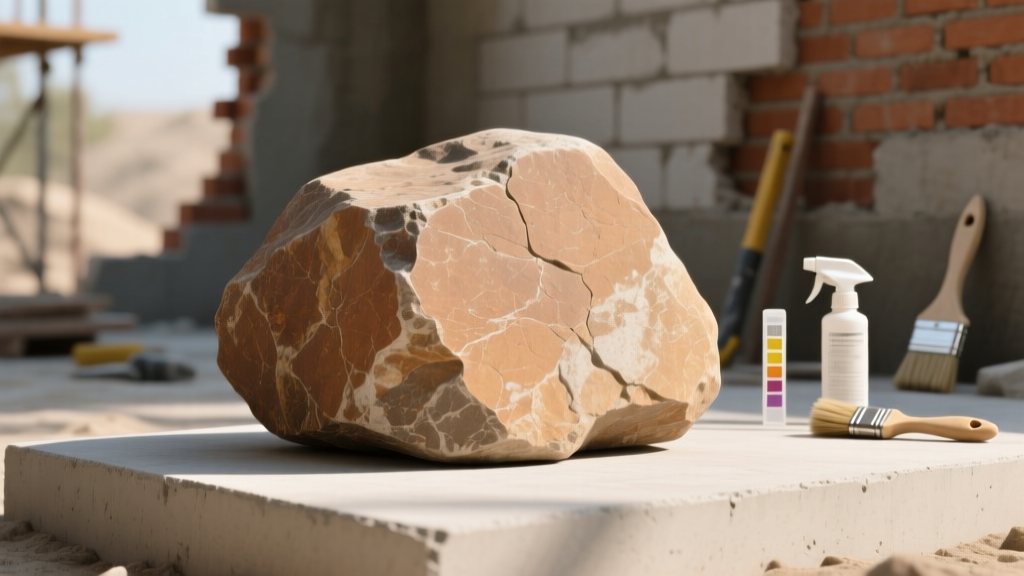
The Mineralogy of Sandstone Rock and Its Vulnerabilities
Sandstone rock comprises compressed quartz and feldspar grains bound by silica, calcite, or iron oxide. This sedimentary composition creates a highly porous network—often featuring 10% to 30% void space—that acts as a sponge for moisture, atmospheric pollutants, and organic stains. While the quartz grains themselves are incredibly hard and chemically inert, the binding matrix is the critical vulnerability.
According to the Natural Stone Institute, siliceous stones like sandstone require vastly different maintenance protocols than calcareous stones like marble, primarily because of these variable binding agents and their distinct absorption rates. Effective maintenance hinges on managing moisture ingress without compromising the stone's structural integrity.
The 4-Step Routine Cleaning Protocol
Routine maintenance for exterior and interior sandstone rock surfaces should follow a strict, low-impact methodology. Aggressive cleaning accelerates surface erosion and opens the pore structure to deeper staining.
Step 1: Dry Particulate Removal
Before introducing moisture, remove all loose dirt, pollen, and biological debris. Use a soft-bristle nylon brush or a leaf blower. Wire brushes or stiff metallic scrapers will score the surface and embed metallic particles that will later oxidize into rust stains.
Step 2: Pre-Wetting the Substrate
Sandstone rock will rapidly absorb the first liquid it contacts. If you apply a cleaning solution to dry stone, the chemical will be pulled deep into the pore structure, potentially leaving a secondary chemical stain. Pre-wet the surface with a gentle garden hose stream for 5 to 10 minutes until the stone darkens, indicating the pores are saturated with clean water.
Step 3: pH-Neutral Chemical Application
Apply a dedicated, pH-neutral (6.5 to 7.5) stone cleaner. Prosoco Sure Klean® Natural Stone Cleaner or StoneTech® Daily Cleaner are industry standards. Dilute the product exactly to the manufacturer's specifications (typically 1:10 for routine cleaning). Agitate gently with a nylon brush and allow a dwell time of 3 to 5 minutes. Do not let the solution dry on the surface.
Step 4: Low-Pressure Rinsing
Rinse thoroughly with clean water. If using a pressure washer, the National Park Service Preservation Brief 1 strictly advises keeping pressure below 800 PSI with a wide 12-inch fan tip held at least 12 inches from the surface. Pressures exceeding 1,000 PSI will mechanically erode the sandstone rock face, creating micro-fissures that accelerate future weathering.
Stain Removal Decision Matrix
When routine cleaning fails, targeted stain removal is required. Because sandstone rock is highly absorbent, liquid cleaners often spread the stain rather than lifting it. Poulticing—a method of drawing the stain out using an absorbent base mixed with a chemical agent—is the most effective approach.
| Stain Type | Chemical Agent | Poultice Base | Dwell Time |
|---|---|---|---|
| Organic (Algae, Leaves, Tannins) | 12% Hydrogen Peroxide | Kaolin Clay | 24-48 Hours |
| Metallic (Iron Oxide / Rust) | StoneTech Rust Stain Remover | Diatomaceous Earth | 12-24 Hours |
| Oil and Grease | Acetone or Mineral Spirits | Talcum Powder | 48-72 Hours |
| Efflorescence (Salt Deposits) | None (Mechanical Only) | N/A | N/A |
Impregnating Sealers: Selection and Application Economics
Sealing sandstone rock does not make it waterproof; it makes it water-resistant by lining the internal pores with hydrophobic chemicals. This allows the stone to 'breathe' (transmit water vapor) while repelling liquid water and oil.
Solvent-Based vs. Water-Based Sealers
- Solvent-Based (e.g., Miracle Sealants 511 Impregnator): These penetrate deeper into the sandstone rock due to the smaller molecular size of the solvent carrier. They are ideal for exterior applications, high-traffic areas, and dense sandstones. Cost ranges from $0.35 to $0.55 per square foot.
- Water-Based (e.g., Aqua Mix Sealer's Choice Gold): These are more environmentally friendly, emit fewer VOCs, and are easier to apply. However, they do not penetrate as deeply and are better suited for interior sandstone rock features like fireplace surrounds or accent walls. Cost ranges from $0.20 to $0.40 per square foot.
Application requires a low-pressure pump sprayer or a microfiber mop. Apply the sealer until the stone looks wet, allow it to penetrate for 10 to 15 minutes, and then aggressively buff off all excess residue with dry terry cloth towels. Leaving excess sealer on the surface will result in a permanent, cloudy, plastic-like film that requires chemical stripping to remove.
Critical Failure Modes and What to Avoid
The National Park Service Preservation Brief 6 extensively documents the irreversible damage caused by improper masonry cleaning. Avoid these common failure modes when maintaining sandstone rock:
Frequently Asked Questions
How often should I reseal exterior sandstone rock?
Exterior sandstone rock typically requires resealing every 3 to 5 years, depending on UV exposure and precipitation levels. Perform the 'water drop test': place three drops of water on the surface. If the water darkens the stone and absorbs within 60 seconds, the sealer has degraded and reapplication is necessary. If the water beads up, the sealer is still functional.
Can I use a bleach solution to kill mold on sandstone?
While a diluted sodium hypochlorite solution (1 part household bleach to 10 parts water) will kill surface mold, it leaves behind salt residues that can cause efflorescence and degrade the stone over time. A 12% hydrogen peroxide solution is a vastly superior alternative that oxidizes the mold without leaving harmful salt deposits in the pore structure.
Why is my interior sandstone fireplace turning white and dusty?
This is a symptom of sub-florescence, where soluble salts crystallize just beneath the surface of the sandstone rock due to heat from the fireplace driving moisture inward. The expanding salt crystals exert immense pressure, pulverizing the stone from the inside out. Identify and eliminate the moisture source (often a leaking chimney cap or missing mortar joints) before attempting any cosmetic repairs.