Slate Stone Veneer Cost Guide: 2026 Pricing & ROI
Analyze 2026 slate stone veneer costs, including natural vs. manufactured pricing, hidden installation fees, labor rates, and long-term ROI.
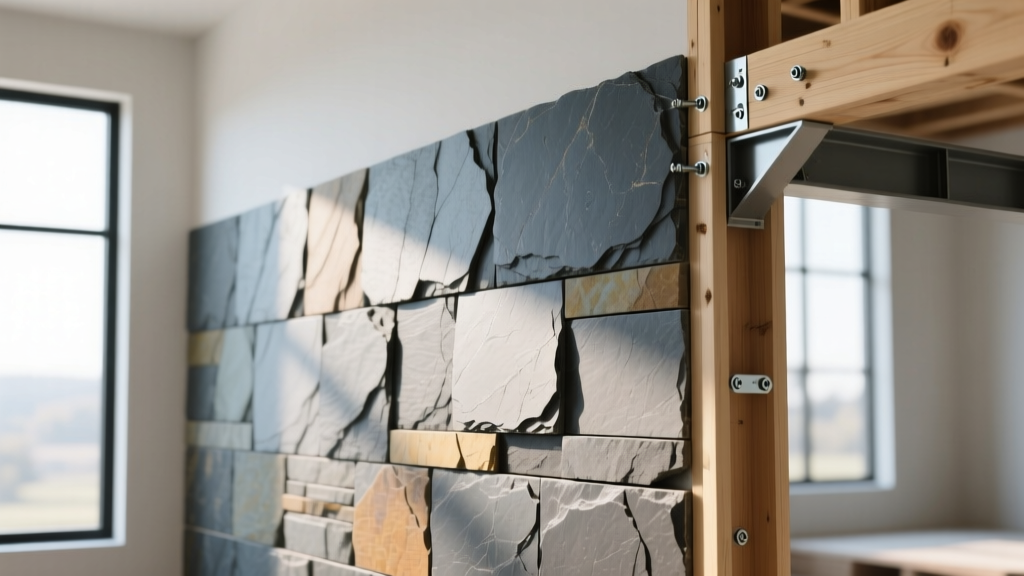
Decoding the Slate Stone Veneer Cost Matrix
Slate stone veneer offers the striking, metamorphic cleft texture of full-thickness slate at a fraction of the weight and structural cost. However, estimating the true project cost requires moving beyond basic square-foot material pricing. In 2026, supply chain stabilization has normalized natural stone freight costs, but specialized masonry labor and hidden prep materials continue to dictate the final budget. Whether you are cladding a residential exterior, designing a commercial lobby, or upgrading an interior fireplace surround, understanding the granular cost breakdown of natural thin slate versus manufactured alternatives is critical for accurate capital planning.
Material Costs: Natural Thin Slate vs. Manufactured Alternatives
The term 'slate veneer' encompasses three distinct product categories, each with vastly different price points, weight profiles, and installation requirements. Natural thin slate is quarried and diamond-cut to a 1/2-inch to 1-inch thickness, preserving the authentic foliation and color variations of regions like Vermont or Pennsylvania. Manufactured slate veneer utilizes Portland cement, lightweight aggregates, and iron oxide pigments to mimic the cleft texture, while high-density polyurethane faux panels offer a lightweight, interlocking DIY solution.
| Material Type | Cost Per Sq. Ft. (Material Only) | Weight Per Sq. Ft. | Installation Method | Expected Lifespan |
|---|---|---|---|---|
| Natural Thin Slate Veneer | $9.50 - $18.00 | 8 - 13 lbs | Mortar bed / Type S | 75 - 100+ Years |
| Manufactured Architectural Slate | $7.00 - $12.50 | 10 - 15 lbs | Mortar bed / Type S | 50 - 75 Years |
| Faux Polyurethane Slate Panels | $4.50 - $8.50 | 1 - 2 lbs | Adhesive / Screws | 25 - 40 Years |
According to the Natural Stone Institute, authentic slate possesses exceptionally low porosity and high compressive strength, making natural thin veneer the superior choice for exterior applications subject to freeze-thaw cycles. While manufactured options save roughly 20% on upfront material costs, natural slate provides unmatched UV stability and structural permanence.
Labor, Preparation, and Installation Pricing
Material costs represent only 40% to 50% of the total project budget. Professional masonry installation for natural and manufactured slate veneer typically ranges from $14.00 to $26.00 per square foot, depending on regional labor rates and site accessibility. Interior installations over cement backer board using polymer-modified thinset mortar will sit on the lower end of this spectrum, while exterior installations requiring full weather-resistive barriers (WRB) and metal lath will push costs higher.
Exterior Installation Breakdown (Per Sq. Ft.)
- Weather-Resistive Barrier (WRB): $0.75 - $1.25 (e.g., two layers of Grade D building paper or commercial fluid-applied membranes).
- Corrosion-Resistant Metal Lath: $1.10 - $1.80 (Self-furring 2.5 lb galvanized lath is mandatory for mortar adhesion).
- Scratch Coat (Portland Cement): $0.90 - $1.50 (Applied and scored to create a mechanical bond).
- Mortar and Pointing (Type S): $1.50 - $2.50 (Type S is required for exterior veneer due to its high tensile bond strength and flexibility).
- Mason Labor: $12.00 - $22.00 (Highly variable based on pattern complexity; random ashlar patterns take 30% longer to install than stacked ledger panels).
Based on national averages tracked by HomeGuide, the total installed cost for natural slate stone veneer generally falls between $28.00 and $44.00 per square foot. Complex architectural features, such as arches, tight corners, or high-elevation scaffolding requirements, can push this figure past $50.00 per square foot.
Never use standard Type N mortar for exterior slate veneer installations in climates with freeze-thaw cycles. Type N lacks the necessary bond strength and flexibility. Always specify Type S mortar or a proprietary polymer-modified veneer mortar (such as those meeting ASTM C270 standards) to prevent delamination and catastrophic failure during winter months.
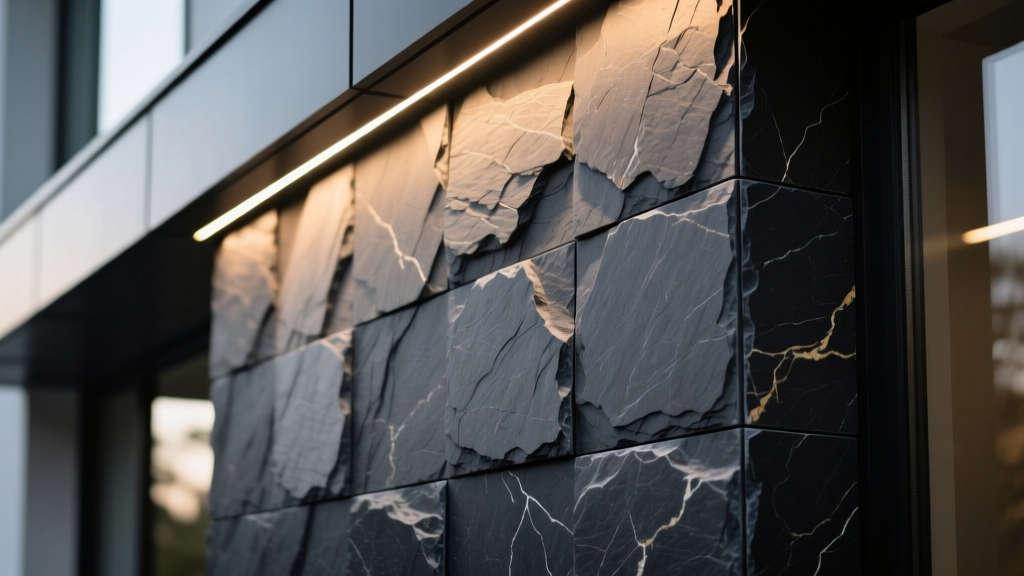
The 'Hidden' Line Items That Inflate Budgets
Estimators and DIYers frequently underbid slate veneer projects by ignoring the peripheral materials required to complete a professional-grade installation. Factor these specific line items into your 2026 budget:
1. Corner Pieces and Linear Foot Pricing
While field stone is sold by the square foot, exterior corners and return edges require specialized L-shaped corner pieces to maintain the illusion of full-thickness masonry. Corner pieces are sold by the linear foot, typically costing between $9.00 and $18.00 per linear foot. A standard 2,000 sq. ft. exterior facade may require 150 linear feet of corners, adding $1,350 to $2,700 in hidden material costs.
2. The Natural Slate Waste Factor
Natural slate fractures along its foliation planes. When cutting around electrical outlets, windows, or rooflines, even experienced masons experience breakage. While manufactured veneer carries a 5% to 8% waste factor, you must calculate a 12% to 15% waste factor for natural thin slate. Ordering exactly the measured square footage will guarantee a project stall and expensive emergency freight charges for replacement pallets.
3. Sealing and Impregnation
Although slate is dense, exterior applications require a penetrating silane/siloxane sealer to prevent efflorescence and mineral staining from mortar contact. Do not use film-forming acrylic sealers, which trap moisture behind the veneer and cause spalling. High-quality penetrating sealers (e.g., Miracle Sealants 511 or Tenax Ager) cost $0.80 to $1.50 per square foot applied.
Regional Price Variations in 2026
Geography heavily influences both material freight costs and prevailing masonry wages. Use this regional multiplier to adjust baseline estimates:
- Northeast & Mid-Atlantic: +15% to +20% (High union labor rates, but proximity to Pennsylvania/Vermont quarries reduces natural slate freight costs).
- West Coast & Pacific Northwest: +20% to +25% (Strict seismic building codes require specialized metal lath ties and engineered WRB systems, increasing prep costs).
- South & Southeast: -5% to -10% (Lower labor rates, but high humidity requires advanced weep-screed and drainage mat installations to prevent moisture entrapment).
- Midwest: Baseline (Standard national averages apply, though extreme freeze-thaw zones mandate strict Type S mortar adherence).
ROI and Long-Term Property Value Impact
From an investment perspective, slate stone veneer consistently outperforms vinyl, fiber cement, and stucco in perceived property value. Architectural stone veneer projects routinely recoup 80% to 95% of their installation cost at resale, driven by the material's association with luxury and permanence. Unlike manufactured alternatives, which may experience pigment fading or chipping over decades, natural slate's color is derived from its mineral composition (hematite for reds, chlorite for greens, carbon for blacks), ensuring it remains UV-stable indefinitely. For commercial properties, the zero-maintenance lifecycle of natural slate eliminates the recurring painting and caulking costs associated with other cladding systems, yielding a superior 20-year net present value (NPV).
Summary Checklist for Procurement
Before signing a contractor bid or placing a direct-order pallet, verify the following specifications to ensure your budget aligns with reality:
- Confirm the quote includes a 15% overage for natural slate waste.
- Verify corner pieces are itemized by linear foot, not bundled into the square footage.
- Ensure the specification calls for Type S mortar or ASTM C270 compliant veneer mortar for exterior applications.
- Check that a fluid-applied or dual-layer WRB and self-furring galvanized lath are included in the prep phase.
- Specify a penetrating silane/siloxane sealer, explicitly banning acrylic topical coatings.
Written by
James ThorntonJames Thornton is a construction industry veteran with 25 years of hands-on experience in wood framing, lumber grading, and residential building codes. He started as a framing carpenter in rural Oregon, earned his ICC Residential Building Inspector certification, and eventually became a senior plan reviewer for the City of Portland Bureau of Development Services. James holds a B.S. in Wood Science & Technology from Oregon State University and is a certified lumber grader through the West Coast Lumber Inspection Bureau (WCLIB). He has inspected over 3,000 residential construction sites and authored the city's internal guide on advanced framing techniques (2x6 at 24" O.C.). James lives in Bend, OR, where he builds custom timber-frame cabins and competes in lumberjack sports.
More from James Thornton
View all
Insulation
Best Home Insulation Materials: Complete 2026 Guide
Compare top home insulation materials for 2026. Find R-values, installed costs per square foot, and best uses for fiberglass, spray foam, and mineral wool.
Aug 4, 2026

Sustainable Building
Certify Your Green Building Material for LEED and WELL
Step-by-step guide to certifying a green building material for LEED v5 and WELL v2. Master EPDs, HPDs, and VOC limits for 2026 project specifications.
Aug 4, 2026

Stone & Masonry
Veneer Stacked Stone Panels: Interior Design & Style Showcase
Discover how veneer stacked stone panels transform interiors. Explore modern design profiles, material pairings, and technical installation specs.
Aug 4, 2026