Stone Veneer Siding Near Me: Complete Sourcing & Material Guide
Discover how to source the best stone veneer siding near you. Compare local material costs, top brands, climate specs, and installer vetting tips.
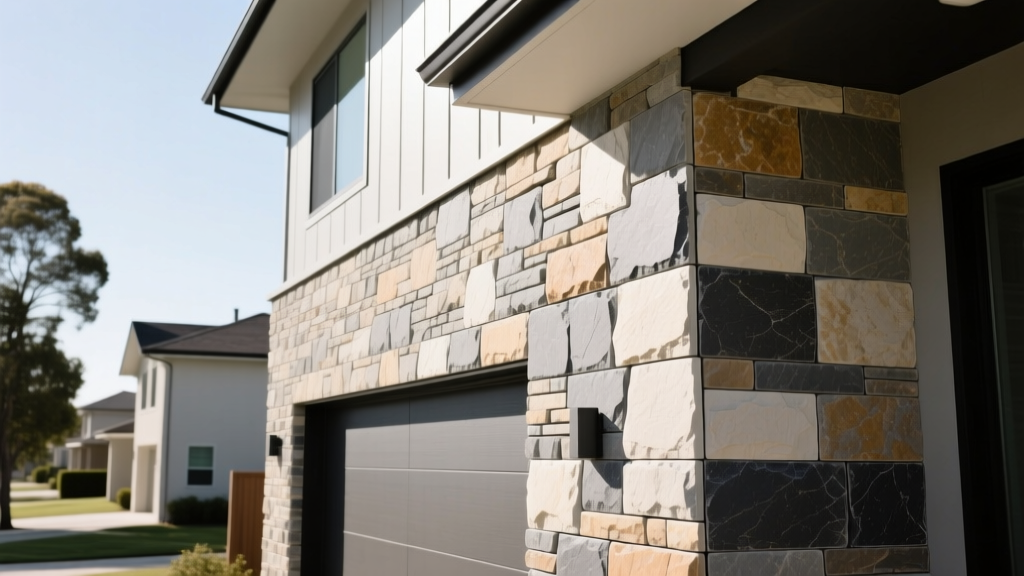
The Logistics of Local Sourcing: Why Proximity Dictates Your Material Options
When homeowners search for stone veneer siding near me, the primary motivation is usually convenience or a desire to see the material in person. However, from a construction logistics standpoint, sourcing locally is a financial and structural necessity. Stone veneer—whether natural or manufactured—is exceptionally dense. Shipping natural stone across multiple states can easily double the material cost due to freight weight surcharges. Even manufactured stone veneer (MSV), which is engineered to be lighter, averages 10 to 12 pounds per square foot for panelized systems and up to 40 pounds per square foot for traditional loose-piece profiles.
Local masonry supply yards act as the critical bottleneck for your project's feasibility. While big-box home improvement stores typically stock entry-level, panelized MSV options (such as basic AirStone or limited Cultured Stone runs), specialized local distributors carry the premium, architecturally accurate lines from brands like Eldorado Stone, Dutch Quality Stone, and Coronado Stone Products. Sourcing from a local yard within a 50-to-100-mile radius ensures that freight costs remain below 10% of your total material budget and guarantees access to region-specific color palettes that match local architectural styles.
Material Comparison Matrix: What You Will Find at Local Yards
Walking into a local masonry supply yard can be overwhelming. To make an informed decision, you must understand the fundamental differences between the three primary categories of stone veneer siding available in your region.
| Feature | Manufactured Stone Veneer (MSV) | Natural Stone Veneer (Thin Cut) | Panelized / Interlocking Systems |
|---|---|---|---|
| Weight | 10 - 15 lbs / sq. ft. | 15 - 25 lbs / sq. ft. | 6 - 9 lbs / sq. ft. |
| Material Cost | $7.50 - $14.00 / sq. ft. | $14.00 - $28.00+ / sq. ft. | $9.00 - $16.00 / sq. ft. |
| Top Regional Brands | Eldorado, Dutch Quality, Boral | Local quarries, Terra Stone | GenStone, NextStone |
| Installation Speed | Moderate (requires mortar & lath) | Slow (requires heavy cutting & sorting) | Fast (screws/adhesive to OSB) |
| Best Application | Full exterior wraps, high-end accents | Historic restorations, luxury estates | DIY skirting, quick facade updates |
Climate-Specific Material Selection: Asking the Right Questions Locally
The most critical advantage of sourcing stone veneer siding near you is the ability to select materials engineered for your exact microclimate. A product that performs flawlessly in the arid Southwest will rapidly deteriorate in the Northeast if it lacks the proper freeze-thaw ratings.
Freeze-Thaw Regions (Northeast, Midwest, Mountain West)
If you live in a climate with harsh winters, your local supplier must provide MSV that complies with ASTM C1670 (Standard Specification for Adhered Manufactured Stone Masonry Veneer). Specifically, request the manufacturer's freeze-thaw test results. The material must demonstrate less than 1% weight loss and no structural degradation after 50 cycles of freezing and thawing. For natural stone, specify high-density limestone or slate that meets ASTM C568 or ASTM C629 for low absorption rates (under 3%).
Coastal and High-Humidity Zones (Southeast, Pacific Coast)
In coastal environments, salt spray and high humidity accelerate efflorescence (the white, powdery salt deposit that migrates to the stone surface). When ordering from a coastal supply yard, ask for integral colorants that include efflorescence inhibitors. Furthermore, your installer must use a Type S mortar (minimum 1,800 psi compressive strength) rather than the standard Type N (750 psi). Type S contains a higher ratio of Portland cement to lime, providing superior resistance to wind-driven rain and saltwater intrusion.
"Never mix stone veneer batches from different production runs on the same wall elevation. Even with strict local quality control, slight variations in the iron oxide pigments used during the pouring process will result in visible color banding once the mortar cures. Always blend pieces from at least three different pallets during installation."
Evaluating Local Installers: The 4-Point Veneer Certification Check
Finding the right material is only half the battle; finding a qualified local installer is where most projects fail. Improper installation accounts for over 85% of stone veneer failures, primarily due to moisture entrapment behind the wall assembly. When vetting contractors found through local searches, mandate the following four-point verification process:
- MVIA / MVMA Affiliation: Verify that the contractor is familiar with the Masonry Veneer Manufacturers Association (MVMA) Installation Guide. While not a formal 'certification' in all states, a contractor who references the MVMA guide understands modern drainage plane requirements.
- Weather-Resistive Barrier (WRB) Protocol: Ask the contractor exactly which WRB they use. The correct answer involves two layers of Grade D building paper or a specialized rainscreen mat (like Keene DriWall) over the OSB sheathing, creating a capillary break that allows moisture to drain downward.
- Corrosion-Resistant Lath and Fasteners: The contractor must specify self-furring, galvanized welded wire lath (minimum 2.5 lbs per square yard) attached with corrosion-resistant staples or nails driven directly into the wall studs, not just the sheathing.
- Weep Screed Installation: This is the most common failure point. The installer must place a corrosion-resistant weep screed (ASTM D2287) at the base of the wall. It must be positioned a minimum of 4 inches above exposed earth or 2 inches above paved surfaces to prevent ground moisture from wicking into the stone assembly via capillary action.
2026 Pricing Breakdown: Material vs. Local Labor Costs
Understanding the financial breakdown of your project helps prevent budget overruns. The costs below reflect national averages for 2026, but local labor rates will fluctuate based on regional mason union density and local demand.
| Project Component | Low-End / DIY (Panelized) | Mid-Range (Standard MSV) | High-End (Natural / Custom) |
|---|---|---|---|
| Material Cost | $9.00 - $12.00 / sq. ft. | $8.00 - $14.00 / sq. ft. | $18.00 - $35.00 / sq. ft. |
| Prep & Substrate | $1.50 / sq. ft. | $3.50 / sq. ft. | $5.00 / sq. ft. |
| Labor & Mortar | $0.00 (DIY) / $8.00 (Pro) | $18.00 - $28.00 / sq. ft. | $35.00 - $55.00 / sq. ft. |
| Total Installed | $10.50 - $21.50 / sq. ft. | $29.50 - $45.50 / sq. ft. | $58.00 - $95.00 / sq. ft. |
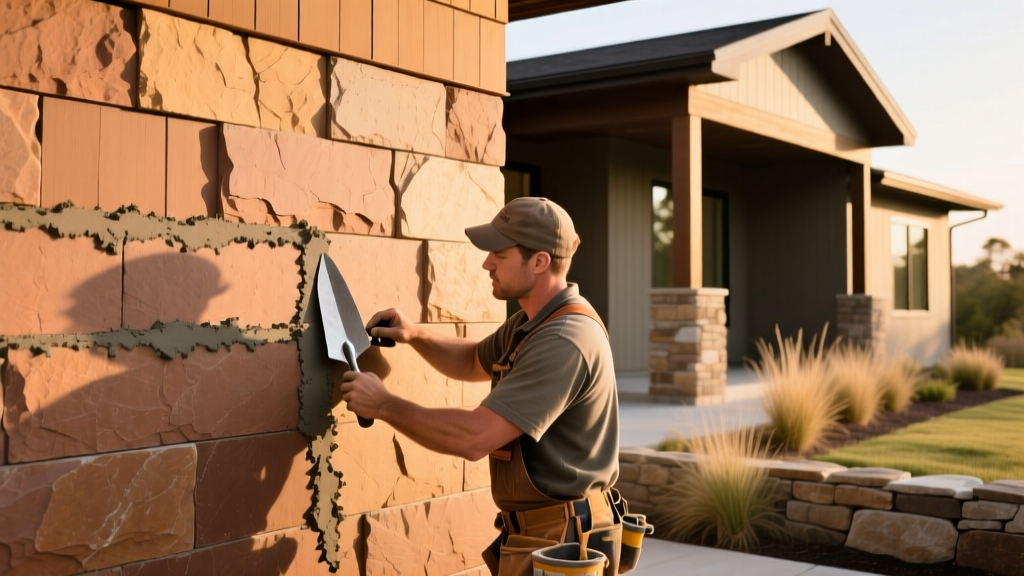
Step-by-Step: Ordering and Inspecting Your Local Delivery
Once you have selected your local supplier and finalized the material, the delivery and inspection phase dictates the success of the installation. Follow this protocol when the pallets arrive at your job site:
- Verify the Batch Numbers: Before signing the bill of lading, check the lot numbers on every pallet. If the yard had to pull from different production runs to fulfill your square footage, you must plan to blend these batches meticulously during installation.
- Inspect for Transit Breakage: Manufactured stone is brittle before it is mortared. Expect a 5% to 8% breakage rate during transit. If breakage exceeds 10%, document it with photos immediately and request a credit from the local supplier before the truck leaves.
- Check the Accessories: Ensure the delivery includes the exact matching mortar color packs, weep screeds, and casing beads. Sourcing these small components locally after the fact often results in mismatched colors or incompatible metal gauges.
- Elevate and Cover: Never store stone veneer pallets directly on bare soil. Ground moisture will wick into the bottom layers of the stone, causing premature efflorescence before the material is even installed. Place pallets on treated lumber dunnage and cover them with breathable tarps.
Frequently Asked Questions
Can I install stone veneer directly over existing wood or vinyl siding?
No. Installing adhered stone veneer directly over existing siding is a severe building code violation and guarantees moisture failure. The existing siding must be completely removed down to the structural sheathing (OSB or plywood). From there, a proper weather-resistive barrier, metal lath, and scratch coat must be applied to create a structurally sound, drainable substrate.
How do I prevent efflorescence on my new stone veneer?
Efflorescence is caused by water moving through the masonry assembly and dissolving soluble salts, depositing them on the surface as it evaporates. Prevention requires three steps: using a low-alkali Portland cement mortar, ensuring proper flashing and weep screeds to evacuate water quickly, and applying a breathable, silane/siloxane-based penetrating sealer (never a film-forming acrylic sealer, which traps moisture inside the stone).
What is the difference between Type N and Type S mortar for veneer applications?
Type N mortar is a medium-strength mix (750 psi) ideal for standard exterior applications above grade where severe weather loading is not a primary concern. Type S mortar is a high-strength mix (1,800 psi) with higher Portland cement content. Type S is required for structural load-bearing masonry, but in veneer applications, it is specifically mandated for high-wind zones, seismic regions, and coastal areas where resistance to driven rain and salt spray is critical. Always defer to the manufacturer's technical data sheet for the specific mortar requirement of your chosen stone profile.
Written by
David NakamuraDavid Nakamura is a licensed architect (AIA) and construction technology writer focused on sustainable building methods, mass timber engineering, and high-performance building envelopes. He holds a Master of Architecture from the University of Washington and is a certified Passive House Consultant (CPHC). David spent eight years at the Seattle firm Mithun, where he led the design of three LEED Platinum projects, before founding his own practice specializing in net-zero residential design. He serves on the editorial advisory board of GreenBuilder Magazine and has authored peer-reviewed papers on cross-laminated timber (CLT) connections for the Journal of Structural Engineering. In his spare time, David teaches woodworking at Pratt Fine Arts Center and kayaks the Puget Sound.
More from David Nakamura
View all
Construction Cost
Labor Cost to Build a Deck Per Sq Ft: 2026 Installation Guide
Discover the exact labor cost to build a deck per sq ft in 2026. This installation guide breaks down contractor rates, complexity factors, and hidden fees.
Aug 4, 2026

Construction Cost
How Much Does It Cost to Build a 3 Bedroom House? Financing Guide
Learn exactly how much it costs to build a 3 bedroom house and explore 2026 financing options, construction loan types, and budget frameworks for your build.
Aug 4, 2026

Construction Cost
Cost to Build a Tennis Court: 2026 Guide
How much does it cost to build a tennis court in 2026? Breakdowns for asphalt, concrete, and synthetic surfaces plus fencing and lighting.
Jul 30, 2026