Sourcing Wholesale Stone Veneer: A Contractor's Material Guide
Master wholesale stone veneer procurement. Compare natural vs. manufactured costs, calculate landed freight pricing, and vet distributors for bulk projects.
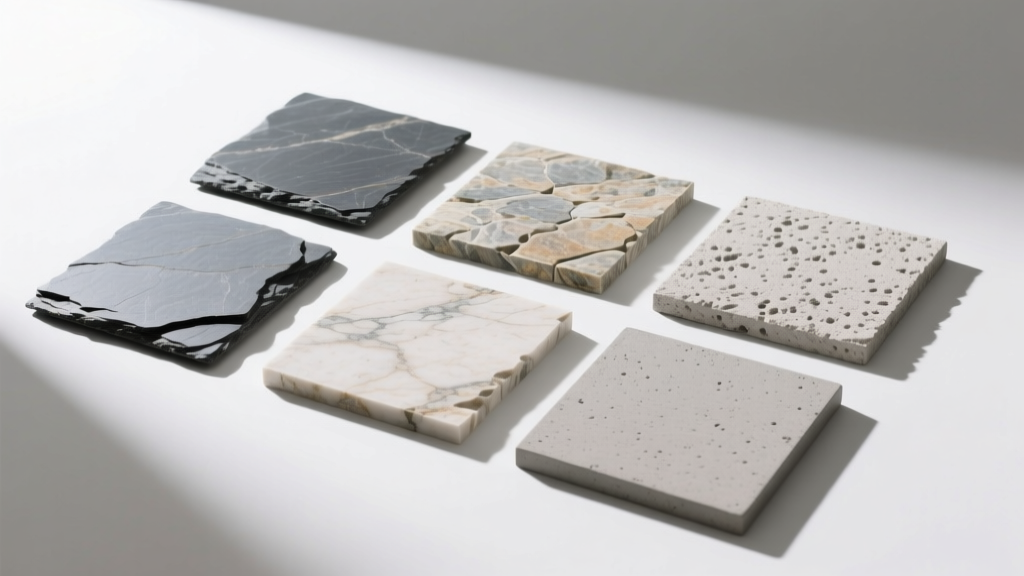
Procuring stone veneer at retail prices destroys margins on multi-unit residential, commercial facade, and large-scale landscape projects. Transitioning to wholesale stone veneer purchasing shifts the focus from simple aesthetic selection to logistics, yield optimization, and strict adherence to ASTM compliance. For general contractors and masonry subcontractors, understanding the technical and financial mechanics of bulk procurement is the difference between a profitable bid and a margin-eroding change order.
Natural vs. Manufactured Wholesale Stone Veneer
When ordering by the pallet, the physical properties of the material dictate not just the unit cost, but the structural requirements, freight expenses, and installation labor. Manufactured stone masonry veneer (MSMV) dominates the wholesale market due to its predictable dimensions and lighter weight, but natural stone remains a premium requirement for high-end commercial specifications.
| Specification | Manufactured Stone Veneer (MSMV) | Natural Stone Veneer |
|---|---|---|
| Wholesale Cost (per sq. ft.) | $2.80 – $4.50 | $5.50 – $9.00 |
| Weight | 10 – 12 lbs / sq. ft. | 13 – 15+ lbs / sq. ft. |
| Governing Standard | ASTM C1670 | ASTM C1780 |
| Typical Pallet Yield | 100 – 125 sq. ft. | 80 – 100 sq. ft. |
| Wholesale Lead Time | 2 – 4 weeks | 4 – 8 weeks (quarry dependent) |
| Corner Piece Availability | High (factory-molded returns) | Low (requires skilled field cutting) |
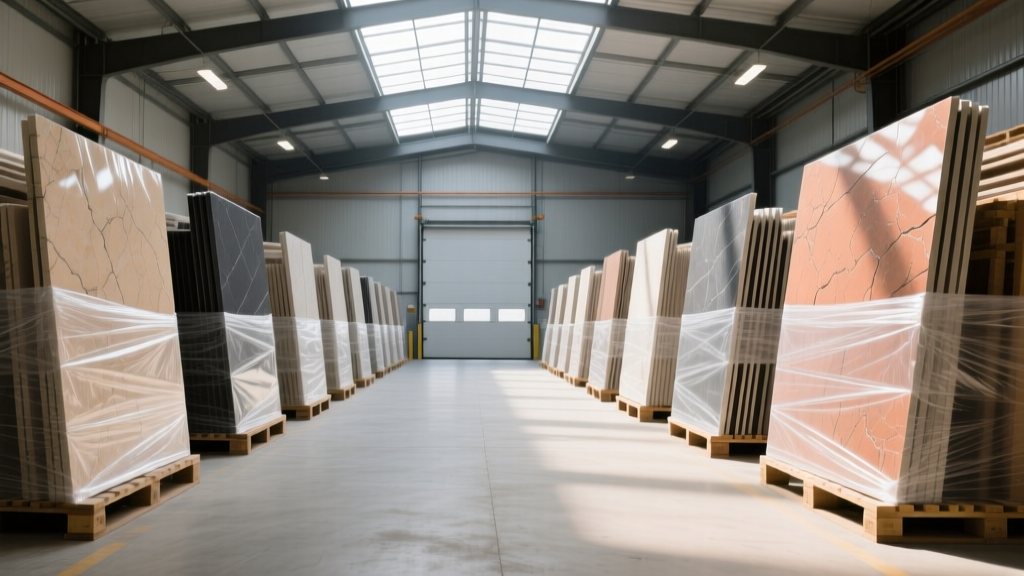
Calculating True Landed Costs: The Hidden Fees
The per-square-foot price listed in a wholesale catalog is merely the baseline. To accurately bid a project, contractors must calculate the landed cost, which incorporates freight, pallet deposits, and the unavoidable waste factor.
The 12% Waste Factor Rule
While standard flooring calculations use a 10% waste factor, wholesale stone veneer requires a 12% to 15% overage for complex elevations. This accounts for:
- Off-cuts: Trimming random-length ledgestone to fit around windows and HVAC penetrations.
- Breakage: Manufactured stone is brittle at the edges; transit and forklift handling will yield 3-5% damaged pieces per pallet.
- Color Blending: Discarding pieces that do not match the desired variegation pattern on the wall.
Top Material Profiles for Bulk Purchasing
Distributors categorize wholesale inventory by profile. Selecting the right profile impacts both the architectural intent and the mason's hourly output.
1. Ledgestone (Stacked Stone)
Characterized by thin, horizontal lines (typically 1" to 4" in height) and random lengths. Installation Speed: Fast. Because it is often dry-stacked (no visible mortar joint), masons can lay up to 40 square feet per day. Best Application: Modern commercial exteriors, elevator lobbies, and retaining wall caps.
2. Ashlar Cut
Squared, rectangular stones with heights ranging from 2" to 8". Installation Speed: Moderate. Requires a consistent 1/2" mortar joint, demanding more time for striking and tooling. Best Application: Traditional estate homes, university campuses, and civic buildings requiring a formal, structured masonry look.
3. Fieldstone / River Rock Veneer
Uncut, rounded, or irregular organic shapes. Installation Speed: Slow. The irregular geometry requires the mason to constantly puzzle-piece stones together to maintain consistent mortar joints and avoid large gaps. Best Application: Craftsman-style residential exteriors, landscape fire pits, and rustic commercial interiors.
Vetting Wholesale Distributors: Technical Compliance
Not all wholesale stone is created equal. When sourcing from regional manufacturers or importing natural stone, contractors must demand documentation proving the material will not delaminate or spall after two freeze-thaw cycles.
- ASTM C1670 / C1780 Certification: Ensure the product meets the baseline specification for adhered masonry veneer. The ASTM C1670 standard dictates strict limits on water absorption and compressive strength.
- Freeze-Thaw Testing (ASTM C666): For exterior applications in northern climates, the stone must pass 50 cycles of freezing and thawing without losing more than 1% of its mass.
- Efflorescence Potential: Ask the manufacturer for their mix design. High-quality MSMV uses lightweight aggregates and integral iron-oxide pigments, minimizing the Portland cement content that causes white, powdery efflorescence blooms.
Installation & Mortar Compatibility at Scale
Bulk purchasing means your crew will be mixing mortar continuously. Relying on pre-mixed bags is cost-prohibitive at this scale. According to guidelines published by the Masonry Veneer Manufacturers Association (MVMA), the substrate and mortar specifications are non-negotiable for warranty validation.
The Mortar Matrix
For adhered stone veneer, Type S mortar is the industry standard due to its high tensile bond strength. When mixing from bulk silos or sacks, use the following ratio by volume:
- 1 part Portland Cement
- 0.5 part Hydrated Lime
- 4.5 parts Damp, Loose Masonry Sand
Note: Never use mastic, thin-set, or construction adhesive for exterior adhered veneer. These materials lack the vapor permeability required to allow moisture to escape the wall cavity, leading to trapped water and substrate rot.
Weather Barrier and Weep Screed
Before the first stone is laid, the wall must be prepared with two layers of Grade D building paper (or a code-approved weather-resistive barrier) and a corrosion-resistant metal lath (minimum 2.5 lbs/sq yd). Crucially, a 3/4-inch weep screed must be installed at the base of the wall, terminating at least 4 inches above grade or 2 inches above paved surfaces. This screed catches moisture migrating behind the veneer and directs it out of the wall system.
FAQ: Wholesale Stone Veneer Logistics
Q: Can I return unused pallets of wholesale stone?
A: Generally, no. Wholesale agreements operate on a final-sale basis due to the high cost of reverse freight and the risk of batch contamination. Always order exact calculations plus the 12% waste factor, and plan to use excess material for landscaping accents or trash enclosure facades.
Q: How should pallets be stored on-site before installation?
A: Pallets must be stored on level ground, elevated on dunnage (scrap lumber) to prevent ground moisture wicking, and covered with breathable tarps. Never wrap stone veneer in solid plastic sheeting during storage; trapped condensation will trigger efflorescence and mold growth on the backing.
Q: Do corner pieces count toward the square footage total?
A: No. Corners are sold by the linear foot (LF). When calculating your wholesale order, measure the flat wall area in square feet, then separately measure all external corners, window returns, and door jambs in linear feet. Deduct the corner width from the flat wall square footage to avoid over-ordering.
Written by
Priya KapoorPriya Kapoor is a real estate market analyst and construction economics researcher with expertise in housing affordability, development feasibility, and infrastructure investment. She holds a Master of Regional Planning from Cornell University and previously worked as a senior analyst at CBRE's Investment Properties group, where she modeled returns for $4B in mixed-use development pipelines. Priya now runs an independent research practice advising developers, municipalities, and REITs on construction cost forecasting and market timing. She publishes the quarterly "BuildMat Market Pulse" report tracking material price indices across 12 commodity categories. Based in Austin, TX, Priya serves on the board of Habitat for Humanity Austin and is a marathon runner.
More from Priya Kapoor
View all
Construction Cost
Cost to Build a 1600 Sq Ft Home in 2026: Full Breakdown
Accurate 2026 cost to build a 1600 sq ft home—material, labor, and regional pricing breakdowns included. Plan your budget with real-time estimates.
Aug 11, 2026

Wood & Lumber
Name the Types of Wood for Pressure Treatment and Preservation
Learn how to name the types of wood best suited for pressure treatment. Compare species treatability, chemical retention levels, and 2026 preservation costs.
Aug 4, 2026

Stone & Masonry
Stone Veneer Suppliers Lindenhurst: 2026 Cost Analysis
Analyze 2026 stone veneer costs in Lindenhurst, NY. Compare local supplier pricing, delivery fees, and Suffolk County installation labor rates.
Aug 4, 2026