Stacked Stone Veneer Fireplace: Natural vs Manufactured 2026
Compare natural and manufactured stacked stone veneer fireplace options. Discover 2026 costs, heat clearances, and installation methods for your remodel.
Material Composition & Weight: The Structural Baseline
When designing a stacked stone veneer fireplace, the first critical decision is selecting between Natural Thin Stone Veneer (NTSV) and Manufactured Stone Veneer (MSV). While both deliver the coveted dry-stacked, mortarless aesthetic, their physical properties dictate structural requirements and installation workflows.
Natural Thin Stone Veneer is quarried from real rock deposits (such as limestone, slate, or fieldstone) and sawn to a thickness of 3/4-inch to 1.5-inches. Because it is genuine stone, it possesses inherent thermal mass and absolute UV/heat stability. However, its density makes it heavier. According to the Masonry Veneer Manufacturers Association (MVMA), natural thin veneer typically weighs between 8 and 14 pounds per square foot.
Manufactured Stone Veneer is cast in molds taken from real stone, using a blend of Portland cement, lightweight aggregates, and iron oxide pigments. Brands like Eldorado Stone and Cultured Stone engineer these products to mimic natural clefts and color variations. MSV is lighter, generally weighing between 6 and 10 pounds per square foot, which can reduce the need for structural reinforcement on cantilevered fireplace chases.
For a standard 50-square-foot floor-to-ceiling fireplace surround:
• Natural Stone: Adds 400 to 700 lbs of dead load.
• Manufactured Stone: Adds 300 to 500 lbs of dead load.
Always verify that the underlying wood framing and drywall can support the specific dead load before installing heavy masonry products on upper-floor fireplace chases.
2026 Cost Analysis: Material, Labor, and Prep
Pricing for stacked stone veneer fireplace projects varies significantly based on the material origin and the complexity of the corner pieces. The dry-stacked profile (which requires no mortar joint tooling) actually speeds up labor compared to traditional jointed profiles, but the material costs remain the primary budget driver.
| Cost Category | Natural Thin Veneer | Manufactured Veneer |
|---|---|---|
| Flat Panels (per sq. ft.) | $11.00 - $19.00 | $7.50 - $13.00 |
| Corner Pieces (per linear ft.) | $14.00 - $24.00 | $9.00 - $16.00 |
| Prep Materials (Lath, Scratch Coat) | $2.50 - $4.00 / sq. ft. | $2.50 - $4.00 / sq. ft. |
| Professional Installation Labor | $18.00 - $28.00 / sq. ft. | $14.00 - $22.00 / sq. ft. |
| Total Installed Cost (per sq. ft.) | $45.50 - $75.00 | $33.00 - $55.00 |
Heat Tolerance & Fireplace Clearances
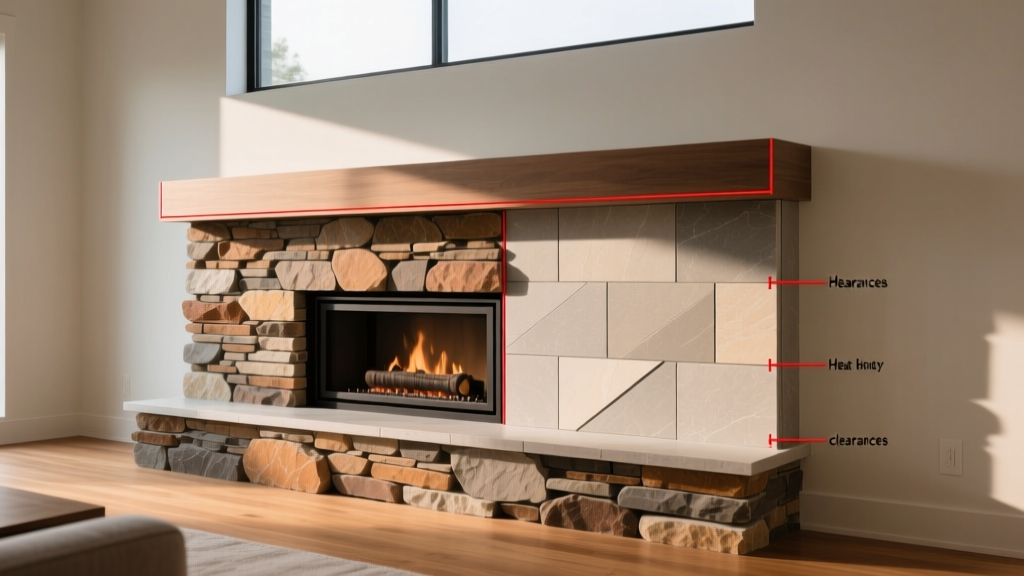
A fireplace surround is a high-heat environment. Both natural and cement-based manufactured stone veneers are classified as non-combustible when tested to ASTM E136. However, the underlying substrate and the mantel shelf require strict adherence to clearance codes.
According to guidelines referenced by the Hearth, Patio & Barbecue Association (HPBA) and NFPA 211 standards, any combustible material (such as a wood mantel or adjacent drywall) must maintain specific clearances from the firebox opening. For a standard masonry firebox, combustible mantels projecting 1.5 inches or less must be at least 12 inches from the top of the opening. For every additional 1/8 inch of projection, an extra inch of clearance is required.
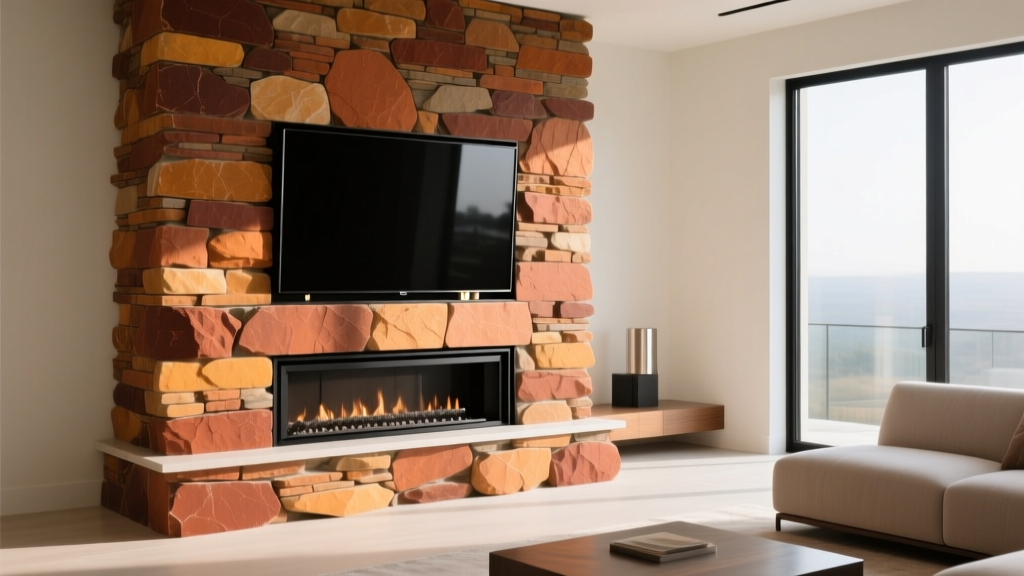
While the cement body of MSV will not burn, prolonged exposure to extreme, direct radiant heat (such as directly above an unvented gas log set without a proper hood) can cause the iron oxide pigments to fade or calcify over time. If installing MSV directly above a high-BTU gas insert, ensure the manufacturer specifies a heat-deflecting hood, or opt for Natural Thin Stone Veneer, which is entirely immune to pigment fading.
Installation Nuances: Mortared vs. Mortarless Systems
The 'stacked' look implies a dry-stacked profile with zero mortar joints between the stones. However, the method of attaching the stone to the wall has evolved significantly.
Traditional Mortar-Set Application
This requires stapling 2.5 lb galvanized diamond mesh lath to the studs, applying a 1/2-inch Portland cement scratch coat, letting it cure for 24-48 hours, and then buttering the back of each stone with Type S or Type N mortar.
- Pros: Maximum adhesion strength; allows for custom fitting and trimming; industry standard for wet areas.
- Cons: High mess factor; requires masonry trowel skills; heavy curing time before the fireplace can be used.
Modern Mortarless & Interlocking Systems
Brands like ClipStone utilize a built-in mortar ridge system, while composite brands like Evolve Stone use high-density polyurethane that can be installed with finish nails and a brad nailer directly into studs or OSB.
- Pros: Drastically reduces installation time (up to 50% faster); zero curing time; ideal for DIYers and electric fireplace inserts.
- Cons: Less forgiving on uneven walls; requires perfectly plumb framing; composite materials (like Evolve) are combustible and strictly prohibited within specific clearances of real wood-burning fireboxes.
Longevity, Maintenance, and Failure Modes
Interior fireplace surrounds generally avoid the freeze-thaw cycles that cause exterior spalling, but they are not immune to failure. Understanding these edge cases ensures your investment lasts.
Efflorescence: Both natural and manufactured stones can develop a white, powdery residue known as efflorescence. This occurs when water-soluble salts within the cement or stone migrate to the surface. In a new fireplace, this is common during the first 6 months as the scratch coat and mortar cure. It can be removed with a stiff nylon brush and a diluted masonry cleaner. Never use wire brushes, as they will leave iron particles that rust and stain the stone.
Thermal Expansion Cracking: If the stone veneer is installed tightly against a metal fireplace insert chassis without a proper expansion joint, the differential expansion rates between the hot metal and the cooler masonry can cause the mortar to crack or the stone to pop off. Always leave a 1/4-inch to 1/2-inch gap between the stone and the metal firebox surround, filling it with a high-temperature, color-matched silicone caulk rated for at least 400°F.
The Verdict: Decision Matrix for 2026
Selecting the right stacked stone veneer fireplace material depends on your specific project constraints. Use the matrix below to finalize your material choice.
| Project Scenario | Recommended Material | Why? |
|---|---|---|
| High-BTU Wood Burning Insert | Natural Thin Veneer | Absolute heat immunity; no pigment fading risk from intense radiant heat. |
| Upper Floor / Cantilevered Chase | Manufactured Veneer | Lighter weight reduces structural reinforcement requirements. |
| DIY Electric Fireplace Makeover | Mortarless / Composite | Nail-up installation eliminates the need for wet mortar and masonry skills. |
| Luxury Custom Build / Resale Value | Natural Thin Veneer | Authentic geological variations command higher appraisal values in premium markets. |
Ultimately, a stacked stone veneer fireplace remains one of the highest-ROI interior upgrades available. By matching the material's physical properties to your specific firebox type and structural capacity, you ensure a surround that is both visually striking and structurally enduring.
Written by
Priya KapoorPriya Kapoor is a real estate market analyst and construction economics researcher with expertise in housing affordability, development feasibility, and infrastructure investment. She holds a Master of Regional Planning from Cornell University and previously worked as a senior analyst at CBRE's Investment Properties group, where she modeled returns for $4B in mixed-use development pipelines. Priya now runs an independent research practice advising developers, municipalities, and REITs on construction cost forecasting and market timing. She publishes the quarterly "BuildMat Market Pulse" report tracking material price indices across 12 commodity categories. Based in Austin, TX, Priya serves on the board of Habitat for Humanity Austin and is a marathon runner.
More from Priya Kapoor
View all
Construction Cost
Cost to Build a 1600 Sq Ft Home in 2026: Full Breakdown
Accurate 2026 cost to build a 1600 sq ft home—material, labor, and regional pricing breakdowns included. Plan your budget with real-time estimates.
Aug 11, 2026

Wood & Lumber
Name the Types of Wood for Pressure Treatment and Preservation
Learn how to name the types of wood best suited for pressure treatment. Compare species treatability, chemical retention levels, and 2026 preservation costs.
Aug 4, 2026

Stone & Masonry
Stone Veneer Suppliers Lindenhurst: 2026 Cost Analysis
Analyze 2026 stone veneer costs in Lindenhurst, NY. Compare local supplier pricing, delivery fees, and Suffolk County installation labor rates.
Aug 4, 2026