Stone Veneer Cost to Install: Natural vs. Manufactured Breakdown
Compare the stone veneer cost to install for natural versus manufactured options. Get exact 2026 pricing, labor rates, and hidden expense breakdowns.
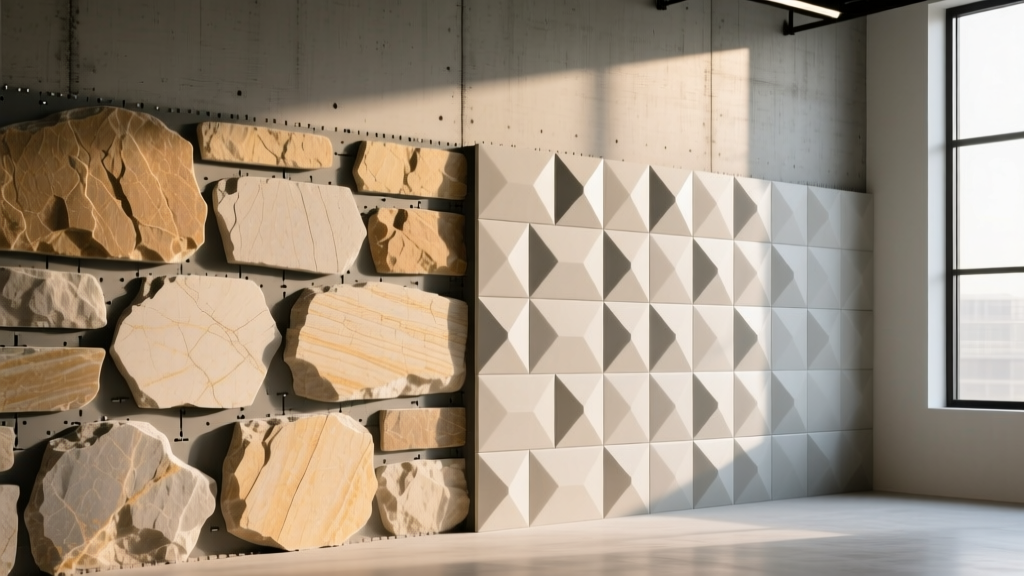
Calculating the exact stone veneer cost to install requires looking far beyond the price tag on the pallet. While natural stone offers unmatched geological authenticity, manufactured stone veneer (MSV) and modern mortarless systems have radically shifted the economics of exterior and interior masonry. In 2026, the divergence in material weight, structural prep, and specialized labor dictates whether your project will cost $14 or $38 per square foot.
This comparison review dissects the true installed costs of natural stone, traditional manufactured veneer, and mechanical mortarless systems, providing a decision framework for contractors and homeowners.
2026 Cost Snapshot (Per Square Foot)
- Manufactured Stone Veneer (MSV): $14.50 – $24.00 installed
- Natural Stone Veneer: $22.00 – $38.00+ installed
- Mortarless Mechanical Systems: $16.00 – $26.00 installed
Material Costs: Natural vs. Manufactured vs. Mortarless
The base 1670 for Manufactured Stone Veneer.
While MSV wins on base material and weight, natural stone remains the benchmark for high-end custom builds. Real quarried limestone, granite, or fieldstone costs significantly more to extract, cut, and ship. Furthermore, natural stone is sold by the ton or by highly variable square-footage pallets, leading to a 10-15% waste factor during installation due to irregular shaping.
The Mortarless Disruption
Brands like ClipStone and Evolve Stone have introduced mechanical, mortarless veneer systems. These utilize high-density polyurethane or concrete panels that nail or screw directly into the substrate. The material cost per square foot is often 20% higher than standard MSV, but the elimination of masonry labor, mortar, and lath drastically alters the total installed price.
| Material Type | Avg. Material Cost / Sq Ft | Weight / Sq Ft | Substrate Prep Required | ||||||||||||||||||
|---|---|---|---|---|---|---|---|---|---|---|---|---|---|---|---|---|---|---|---|---|---|
| Manufactured (e.g., Eldorado RoughCut) | $6.00 – $11.00 | 10 – 12 lbs | WRB, metal lath, scratch coat | ||||||||||||||||||
| Natural (e.g., Quarried Limestone) | $12.00 – $22.00 | 15 – 25+ lbs | WRB, heavy-gauge lath, structural footing | ||||||||||||||||||
| Mortarless (e.g., ClipStone) | $9.0^ and weep screeds at the base. According to the Eldorado Stone Installation Guide, failing to integrate a corrosion-resistant weep screed at the foundation line voids most manufacturer warranties and guarantees moisture entrapment. Budget $1.50 to $3.00 per linear foot for proper flashing integration.
Long-Term ROI and Maintenance MatrixThe stone veneer cost to install is only half the financial equation. Long-term maintenance, durability, and impact on property valuation separate a wise investment from a recurring expense.
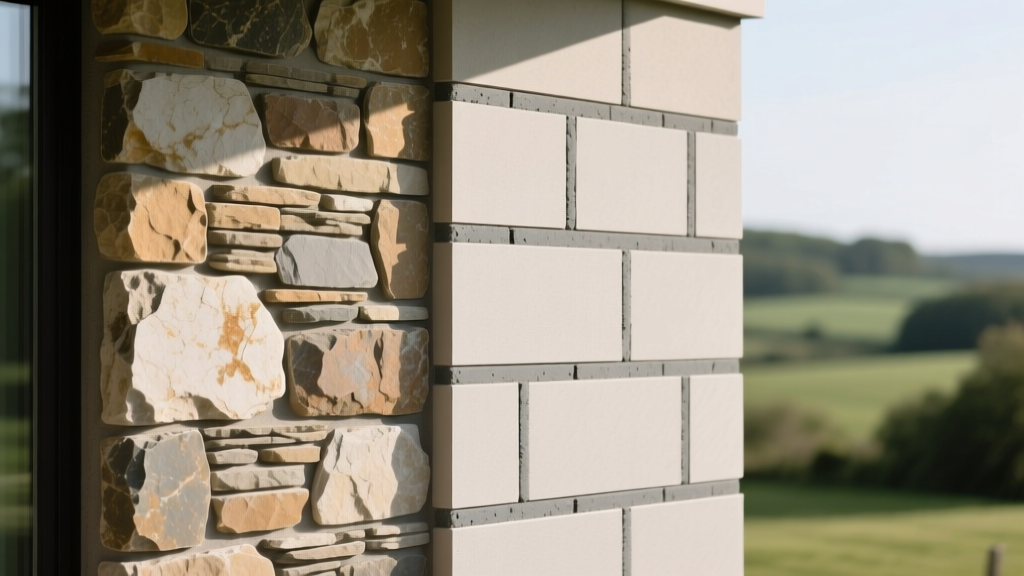
Project Estimation Framework: Fireplace vs. Exterior FacadeTo accurately forecast your budget, apply this framework based on your specific application. Data sourced from industry aggregators like HomeGuide confirms that interior applications carry a premium on labor precision, while exterior applications carry a premium on material volume and prep. Scenario A: 50 Sq Ft Interior Fireplace Surround
Scenario B: 400 Sq Ft Exterior Accent Wall
Final Procurement GuidanceWhen soliciting bids, do not accept a flat per-square-foot quote without a line-item breakdown of substrate preparation. A contractor quoting $16 per square foot for exterior manufactured stone is likely omitting the cost of the water-resistive barrier, metal lath, and flashing. Demand that bids explicitly state compliance with ASTM C1670 and local building codes regarding moisture management. For natural stone, always verify that the structural engineer has approved the foundation to bear the additional dead load before signing a contract. Written by Marcus ChenMarcus Chen is a licensed structural engineer (PE) and building materials analyst with over 12 years of experience across residential, commercial, and industrial construction. He holds a Master of Science in Civil Engineering from UC Berkeley and spent six years at Thornton Tomasetti before transitioning to independent consulting and technical writing. Marcus specializes in material selection for seismic-prone regions, concrete reinforcement strategies, and lifecycle cost analysis. His work has been cited by the American Concrete Institute (ACI) and the Structural Engineers Association of California (SEAOC). When he is not on a job site or at his desk, you will find him hiking the Sierra Nevada or restoring a 1920s craftsman bungalow in Oakland, CA. More from Marcus ChenView all Construction Cost How Much Did the Eiffel Tower Cost to Build?How much did the Eiffel Tower cost to build in 1889? We adjust for inflation and compare its budget to modern skyscraper construction. Aug 4, 2026  Fire Resistance What Is a Fire Resistant Material? Testing & Certification GuideDiscover what is a fire resistant material through ASTM and UL testing. Learn how fire ratings, certifications, and assemblies work in construction. Aug 4, 2026  Construction Cost How Much Did the Burj Khalifa Cost to Build?How much did the Burj Khalifa cost to build? We break down the $1.5B project and extract 5 money-saving strategies for your next build. Jul 30, 2026 |