Stone Veneer Exterior House Cost Guide: 2026 Pricing & ROI
Analyze 2026 costs for stone veneer exterior house installations. Compare manufactured vs. natural stone pricing, labor rates, and hidden budget factors.
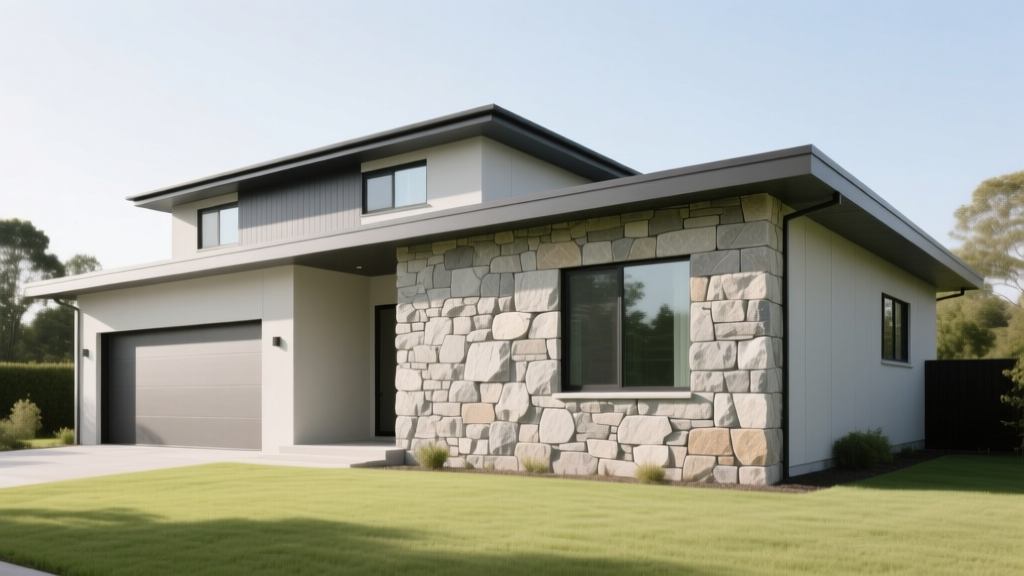
2026 Cost Baselines: Material, Labor, and Prep
Calculating the true cost of a stone veneer exterior house project requires moving beyond simple per-square-foot material quotes. In 2026, the national average for a fully installed adhered masonry veneer system ranges from $22 to $48 per square foot. This variance is driven by substrate preparation requirements, the choice between manufactured and natural stone, and regional labor markets. Below is the baseline financial breakdown for a standard 1,500-square-foot exterior wainscoting or full-facade application.
| Cost Component | Manufactured Stone (MSV) | Natural Stone (NSV) | 2026 Market Notes |
|---|---|---|---|
| Flat Material | $8.50 - $16.00 / sq.ft. | $18.00 - $35.00 / sq.ft. | NSV prices fluctuate with quarry output and freight surcharges. |
| Corner Pieces | $12.00 - $22.00 / lin.ft. | $25.00 - $45.00 / lin.ft. | Corners are sold by linear foot, not square foot. |
| Substrate Prep | $3.50 - $6.00 / sq.ft. | $3.50 - $6.00 / sq.ft. | Includes WRB, weep screed, and 2.5lb galvanized lath. |
| Mortar & Scratch Coat | $1.50 - $2.50 / sq.ft. | $1.50 - $2.50 / sq.ft. | Type S or Type N mortar; polymer-modified for exteriors. |
| Professional Labor | $14.00 - $24.00 / sq.ft. | $18.00 - $30.00 / sq.ft. | NSV requires more cutting, fitting, and sorting time. |
| Total Installed | $27.50 - $48.50 / sq.ft. | $41.00 - $73.50 / sq.ft. | Excludes scaffolding, demo, or complex architectural detailing. |
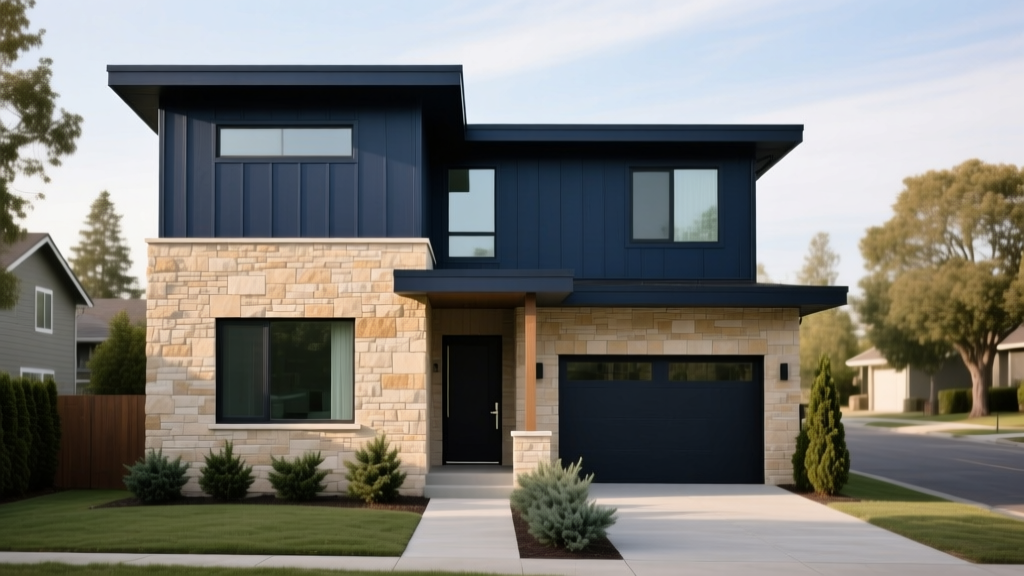
Manufactured vs. Natural Stone: Financial & Performance Matrix
When specifying a stone veneer exterior house cladding, the choice between Manufactured Stone Veneer (MSV) and Natural Stone Veneer (NSV) dictates both the immediate budget and long-term maintenance. MSV, produced by brands like Eldorado Stone and Boral Cultured Stone, utilizes Portland cement, lightweight aggregates, and iron oxide pigments. NSV is quarried and sliced to a 1-inch to 1.5-inch thickness.
Decision Framework: MSV vs. NSV
- Choose MSV if: Your budget is capped below $45/sq.ft. installed, the structure requires lightweight cladding (e.g., over wood-frame cantilevers), or you need a highly uniform color match across multiple elevations.
- Choose NSV if: You are building a legacy or luxury custom home, require authentic geological variations (like genuine Shenandoah fieldstone), and the foundation footing is engineered to handle the increased dead load of natural masonry.
From a structural perspective, MSV weighs approximately 10 to 12 pounds per square foot, while NSV ranges from 13 to 18 pounds per square foot. While both are classified as adhered veneers and do not require the massive masonry ledges needed for full-bed depth stone, NSV's heavier weight occasionally necessitates additional structural fastening or thicker scratch coats on multi-story applications.
The Hidden Line Items That Derail Exterior Budgets
Contractor estimates frequently omit the secondary materials and logistical requirements of exterior stone cladding. Homeowners and project managers must account for the following hidden costs to avoid mid-project change orders.
1. The Corner Piece Multiplier
The most common budgeting error is calculating square footage for flat wall space and forgetting the corners. Exterior corners require specialized interlocking pieces to maintain the illusion of solid masonry. A standard 2,000-square-foot facade might only require 1,600 square feet of flat stone, but could easily require 150 linear feet of corner pieces. At $18 per linear foot, corners alone add $2,700 to the material budget.
2. Scaffolding and Multi-Story Premiums
Labor rates for stone veneer installation increase by 20% to 35% when working above the first floor. Masons must work from scaffolding, which slows the mortar-setting process and requires physical lifting of heavy materials to upper decks. Expect scaffolding rental and erection to add $1.50 to $3.00 per square foot to the overall project cost for two-story homes.
3. Freight and Delivery Surcharges
Stone is exceptionally dense. A pallet of manufactured stone weighs roughly 2,500 pounds and covers about 125 square feet. For a 1,500-square-foot exterior project, you are receiving 12 pallets weighing 30,000 pounds. If your site lacks a forklift or commercial loading dock, carriers will apply a residential delivery fee and a liftgate surcharge, typically ranging from $250 to $600 per shipment.
Code Compliance and Water Management Costs
Adhered masonry veneer is highly susceptible to moisture entrapment if installed incorrectly. The International Residential Code (IRC Section R703.7) mandates strict water-resistive barrier (WRB) and drainage protocols for exterior stone veneer. Skipping these steps to save money guarantees catastrophic wood rot and mold growth within five years.
According to the Masonry Veneer Manufacturers Association (MVMA) installation guidelines, proper exterior preparation requires a dual-layer water-resistive barrier (such as Grade D paper or a specialized house wrap), a corrosion-resistant weep screed at the base, and self-furring metal lath. The weep screed must be installed a minimum of 4 inches above grade or 2 inches above paved surfaces to allow incidental moisture behind the veneer to drain out.
Never allow a contractor to apply mortar and lath directly over rigid foam insulation or unprotected OSB without a code-approved drainage mat or WRB. Building science experts at Building Science Corporation consistently document how adhered veneers act as 'reservoir claddings,' absorbing and holding rainwater. Without a capillary break and drainage plane, this moisture will migrate inward, destroying the structural sheathing.
Required Water Management Materials (Per 1,000 Sq.Ft.)
- Weep Screed (PVC or Galvanized): ~$150 - $250 (based on linear perimeter)
- Dual-Layer WRB (e.g., Fortifiber Super Jumbo Tex): ~$180 - $250
- 2.5 lb Self-Furring Galvanized Lath: ~$250 - $320
- Corrosion-Resistant Fasteners (Staples/Nails): ~$80 - $120
ROI and Appraisal Impact
Despite the premium upfront costs, a stone veneer exterior house consistently yields one of the highest returns on investment in residential exterior remodeling. Historical data and recent 2026 real estate appraisals indicate that manufactured stone veneer additions recoup between 85% and 95% of their project cost at resale. Appraisers frequently categorize stone cladding as a 'luxury exterior finish,' which elevates the property into a higher comparable sales bracket within the neighborhood.
Furthermore, unlike wood cladding (which requires painting every 7 years) or vinyl (which can crack and fade), properly installed MSV and NSV require virtually zero maintenance beyond occasional low-pressure rinsing. This lifecycle cost reduction is a major selling point for prospective buyers in regions with high UV exposure or severe freeze-thaw cycles.
Procurement Strategy: Minimizing Waste and Freight
To optimize your budget, implement the following procurement protocols when ordering materials for your exterior:
- Apply a 10% to 15% Waste Factor: Unlike interior applications where cuts can be hidden, exterior cuts on corners and around windows must be precise. Order 10% overage for simple box elevations, and 15% for homes with numerous architectural bump-outs, arches, or angled gables.
- Consolidate Dye Lots: Manufactured stone pigments vary slightly between production runs. Order the entire project's square footage at once to ensure all pallets share the same dye lot, preventing visible color banding on large exterior walls.
- Source Locally for Natural Stone: If opting for NSV, select a stone quarried within a 500-mile radius of your job site. Freight costs for natural stone can easily eclipse the material cost itself if shipped cross-country, whereas regional stone keeps the budget anchored.
Written by
James ThorntonJames Thornton is a construction industry veteran with 25 years of hands-on experience in wood framing, lumber grading, and residential building codes. He started as a framing carpenter in rural Oregon, earned his ICC Residential Building Inspector certification, and eventually became a senior plan reviewer for the City of Portland Bureau of Development Services. James holds a B.S. in Wood Science & Technology from Oregon State University and is a certified lumber grader through the West Coast Lumber Inspection Bureau (WCLIB). He has inspected over 3,000 residential construction sites and authored the city's internal guide on advanced framing techniques (2x6 at 24" O.C.). James lives in Bend, OR, where he builds custom timber-frame cabins and competes in lumberjack sports.
More from James Thornton
View all
Insulation
Best Home Insulation Materials: Complete 2026 Guide
Compare top home insulation materials for 2026. Find R-values, installed costs per square foot, and best uses for fiberglass, spray foam, and mineral wool.
Aug 4, 2026

Sustainable Building
Certify Your Green Building Material for LEED and WELL
Step-by-step guide to certifying a green building material for LEED v5 and WELL v2. Master EPDs, HPDs, and VOC limits for 2026 project specifications.
Aug 4, 2026

Stone & Masonry
Veneer Stacked Stone Panels: Interior Design & Style Showcase
Discover how veneer stacked stone panels transform interiors. Explore modern design profiles, material pairings, and technical installation specs.
Aug 4, 2026