Finding Stone Veneer Installation Near Me: Design & Hiring Guide
Discover top 2026 stone veneer design styles and learn how to vet local contractors when searching for stone veneer installation near me.
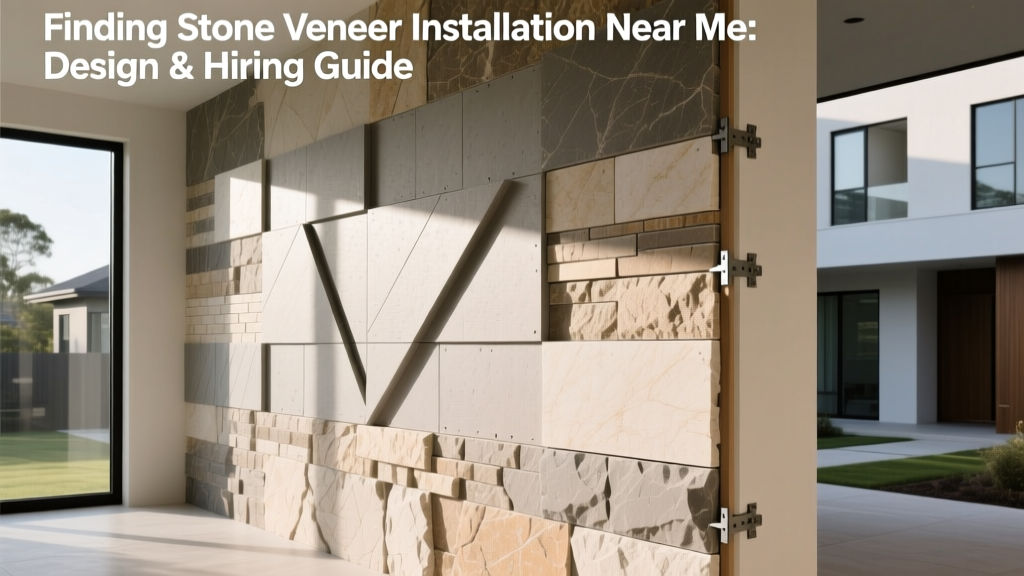
The Intersection of Local Craftsmanship and High-End Design
Typing 'stone veneer installation near me' into your search engine is usually the final step in a long design journey. You have browsed architectural magazines, pinned inspiration photos, and selected the exact aesthetic you want for your home's exterior or interior focal point. However, the gap between a stunning design concept and a flawless physical execution relies entirely on the technical expertise of your local installer. Stone veneer is not merely a cosmetic overlay; it is a complex, multi-layered cladding system that requires strict adherence to moisture management and structural tolerances.
This guide bridges the gap between high-end design aspirations and the practical realities of hiring local masonry professionals. We will showcase the dominant stone veneer styles defining residential architecture in 2026 and provide a rigorous framework for vetting the contractors in your zip code to ensure they possess the specific skills required for your chosen aesthetic.
The 2026 Design Showcase: Dominant Stone Veneer Styles
The current architectural landscape has shifted away from heavy, monochromatic, and overly rustic applications. Today's premium installations emphasize shadow lines, textural contrast, and precise mortar joint manipulation. When reviewing local contractor portfolios, look for mastery in these three specific design categories:
1. Modern Linear and Architectural Ridge
Characterized by elongated, rectangular stones with tight, raked, or completely dry-stacked joints. This style demands absolute precision. Installers must maintain continuous horizontal sightlines across multiple planes and outside corners. Material Spotlight: Eldorado Stone's Pro-Fit Modera or Cultured Stone's Cobblefield in monochromatic palettes like 'Linen' or 'Charcoal'. Installer Requirement: Look for contractors who use laser levels for every course and possess experience cutting precise 45-degree miters for corner returns without relying on bulky pre-fabricated corner pieces.
2. Transitional Dressed Fieldstone
A refined evolution of traditional country stone, this style features stones with chiseled, 'dressed' faces but organic, varied shapes. The mortar joints are typically wide and heavily tooled (concave or V-jointed) to create deep shadow lines. Material Spotlight: Coronado Stone's Dressed Fieldstone in 'Chardonnay' or 'Smoke'. Installer Requirement: The mason must understand 'pattern blending'—avoiding repetitive 'H' or 'cross' joints and ensuring no two adjacent stones share the exact same color tone. Ask to see close-up photos of their joint tooling; it should be uniform and compress the mortar tightly against the stone edges to prevent water infiltration.
3. Dark Monolithic Stacked Ledge
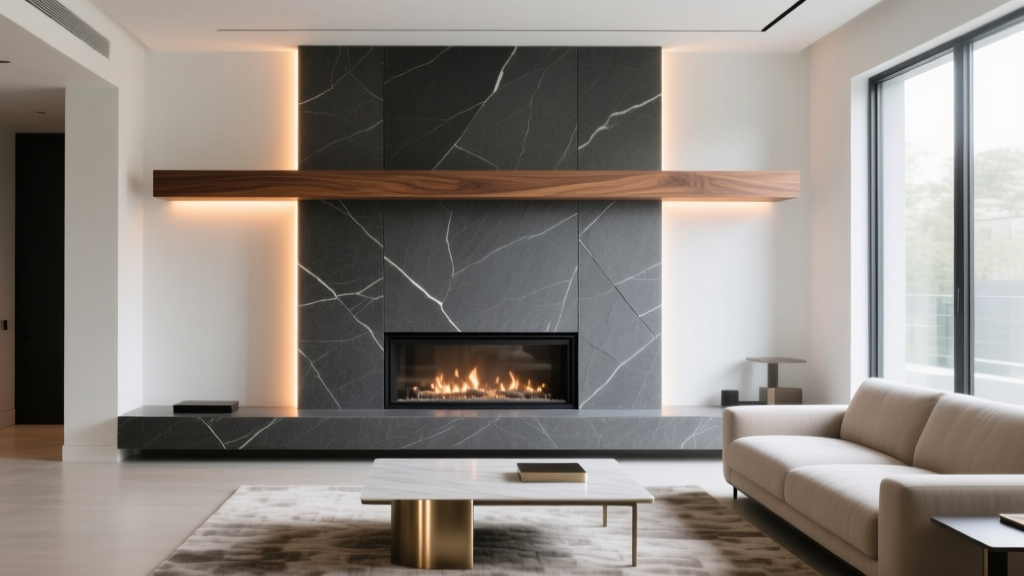
Used primarily for striking interior feature walls and modern exterior wainscoting, this style utilizes thin, split-face ledge stones installed with zero visible mortar (dry-stack illusion). Material Spotlight: Dutch Quality Stone's Weather Ledge in 'Cascade'. Installer Requirement: Because there is no mortar to hide gaps, the substrate must be perfectly plumb. Installers must back-butter every single stone and use a color-matched polymer-modified adhesive rather than standard Type S mortar to prevent efflorescence and joint failure.
Stone veneer relies heavily on directional lighting to reveal its textural depth. When planning your installation, coordinate with your electrician to install recessed LED hardscape lights or soffit downlights with a Color Rendering Index (CRI) of 90+. This ensures the natural mineral variations in stones like limestone or slate are accurately represented at night, rather than washed out by cheap, blue-tinted LEDs.
Matching Local Installers to Your Design Vision
Not every mason who can lay a brick retaining wall is qualified to execute a seamless modern linear stone veneer application. When evaluating the results of your 'stone veneer installation near me' search, use this matrix to decode their portfolio and initial consultations.
| Evaluation Metric | Red Flags (Walk Away) | Green Flags (Hire) |
|---|---|---|
| Corner Details | Alternating long and short sides on flat stones without interlocking; heavy use of caulk at outside corners. | Use of manufactured interlocking corners, or custom-mitered natural stone returns with tight, seamless joints. |
| Mortar Joints | Mortar smeared on the stone face (requires harsh acid washing later); inconsistent joint widths. | Clean stone faces; joints are struck with a specialized tool when the mortar is 'thumbprint hard' for maximum density. |
| Substrate Prep | Applying stone directly over painted drywall or existing siding without a proper moisture barrier and lath. | Detailed explanation of WRB (Weather Resistant Barrier), weep screeds, and 2.5 lb self-furring metal lath installation. |
| Material Sourcing | Suggests buying whatever is on sale at the local big-box store without considering batch color consistency. | Orders from specialized masonry supply yards; insists on blending stones from multiple pallets on-site during installation. |
Cost Expectations for Premium Stone Veneer Styles (2026 Data)
Understanding the financial commitment is critical before inviting contractors to bid. Prices have stabilized following the supply chain fluctuations of the early 2020s, but specialized labor commands a premium. According to industry data tracked by the National Association of the Remodeling Industry (NARI), specialized masonry finishes yield high returns on investment, particularly for exterior curb appeal and interior fireplace focal points.
Average Installed Cost Breakdown (Per Square Foot)
- Material (Manufactured Veneer): $8.50 – $14.00
- Material (Natural Thin Veneer): $12.00 – $22.00
- Substrate Prep (WRB, Lath, Scratch Coat): $4.50 – $7.00
- Specialized Masonry Labor: $15.00 – $28.00
- Scaffolding & Site Protection: $2.00 – $5.00
- Total Estimated Range: $30.00 – $66.00 per sq. ft.
Note: Complex geometries, walls exceeding 12 feet in height, and intricate dry-stack applications will push labor costs toward the higher end of this spectrum.
The Technical Vetting Framework: Questions to Ask Local Contractors
To separate true masonry artisans from general handymen, ask these highly specific technical questions during your initial site walk-through. Their answers will immediately reveal their depth of knowledge regarding the Masonry Veneer Manufacturers Association (MVMA) installation guidelines.
- 'How do you handle the weep screed termination at the foundation?'
The Expert Answer: They should specify installing a corrosion-resistant weep screed (like PVC or galvanized steel) minimum 4 inches above grade or 2 inches above paved surfaces, ensuring the Weather Resistant Barrier (WRB) laps over the screed's flange to direct water out and away from the framing. - 'What type of lath and fastening schedule do you use for exterior wood framing?'
The Expert Answer: They must specify minimum 2.5 lb/yd² self-furring diamond mesh metal lath, attached with corrosion-resistant staples or nails penetrating the structural studs (not just the OSB/plywood sheathing) every 6 inches on center vertically and 16 inches horizontally. - 'How do you manage efflorescence and water staining on porous stones like limestone?'
The Expert Answer: They should discuss the use of a fluid-applied or high-quality Grade D building paper WRB, proper flashing above the veneer, and the application of a breathable, silane-siloxane penetrating sealer after the mortar has fully cured (typically 28 days), avoiding cheap film-forming acrylics that trap moisture.
Material Spotlight: Manufactured vs. Natural Thin Veneer
When sourcing materials for your local project, you will face the primary decision between Architectural Manufactured Stone Veneer (AMSV) and Natural Thin Stone Veneer (NTSV). Both are excellent, but they serve different design and structural needs.
Manufactured Stone (AMSV)
Pros: Lighter weight (approx. 10-12 lbs/sq ft), consistent color batching, integrated corner pieces available, lower material cost. Excellent for interior renovations where structural load is a concern.
Cons: Can chip to reveal the concrete aggregate core, color may fade slightly under intense, direct UV exposure over decades.
Natural Thin Veneer (NTSV)
Pros: Authentic geological variations, UV-stable color that never fades, chips reveal the exact same natural stone underneath. Ideal for high-end exterior facades and luxury estates.
Cons: Heavier (13-15 lbs/sq ft), requires more skilled labor to cut and shape, natural corners are difficult to source and fit seamlessly, higher material cost.
FAQ: Navigating Local Stone Veneer Projects
Can my local general contractor install stone veneer, or do I need a specialized mason?
While a skilled GC might handle simple interior applications, exterior stone veneer requires specialized knowledge of water management, flashing integration, and mortar chemistry. Always hire a dedicated masonry contractor or a GC who subcontracts to a specialized, insured masonry crew. The Eldorado Stone certified installer network is an excellent resource for finding vetted local professionals.
How long does a typical exterior stone veneer installation take?
For an average 500-square-foot exterior facade, expect the project to take 2 to 3 weeks. This includes 2-3 days for substrate prep and lath, 1 day for the scratch coat (which requires 48 hours to cure), and 5-7 days for the actual stone setting and joint tooling. Rushing the curing times between the scratch coat and the setting bed is a primary cause of future delamination.
Is stone veneer suitable for my local climate's freeze-thaw cycles?
Yes, provided it is installed correctly. Both manufactured and natural thin veneers are rigorously tested for freeze-thaw durability. The critical factor is not the stone itself, but the mortar joints and the drainage plane behind the stone. Properly tooled, dense mortar joints and a functioning weep screed prevent water from becoming trapped in the wall cavity, eliminating the risk of freeze-thaw spalling.
Written by
Sarah WhitfieldSarah Whitfield is a chartered quantity surveyor (MRICS) and construction cost analyst with 15 years of experience in material pricing, procurement strategy, and project budgeting. She earned her degree in Construction Management from the University of Reading (UK) and has worked on projects ranging from $2M custom homes to $180M mixed-use developments across North America and Europe. Sarah currently leads cost estimating for BuildMat Insight, maintaining a proprietary database of 4,000+ material price points updated quarterly. She is a frequent contributor to RSMeans cost data panels and has presented at the International Cost Engineering Council (ICEC) congress. Based in Denver, CO, Sarah is an avid trail runner and volunteer mentor for Women in Construction.
More from Sarah Whitfield
View all
Wood & Lumber
What Are the Different Types of Wood? A Builder's Guide
Compare structural softwoods, finish hardwoods, and engineered lumber. Analyze Janka ratings, MOE values, and 2026 pricing for construction.
Aug 4, 2026

Walls & Panels
Steel Framing vs Wood Framing: Corrosion and Moisture Defense
Compare steel framing vs wood framing for moisture resistance. Learn about galvanized coatings, condensation risks, and corrosion protection strategies.
Jul 21, 2026

Stone & Masonry
How to Cut Stone Veneer: Wet Saw vs Grinder Comparison
Compare the best tools for cutting stone veneer. We review wet saws, angle grinders, and chop saws to help you achieve clean, chip-free cuts.
Jul 21, 2026