Outdoor Stacked Stone Veneer: 2026 Exterior Buyer's Guide
Compare top outdoor stacked stone veneer materials for exterior walls. Explore 2026 pricing, ASTM durability standards, and installation best practices.
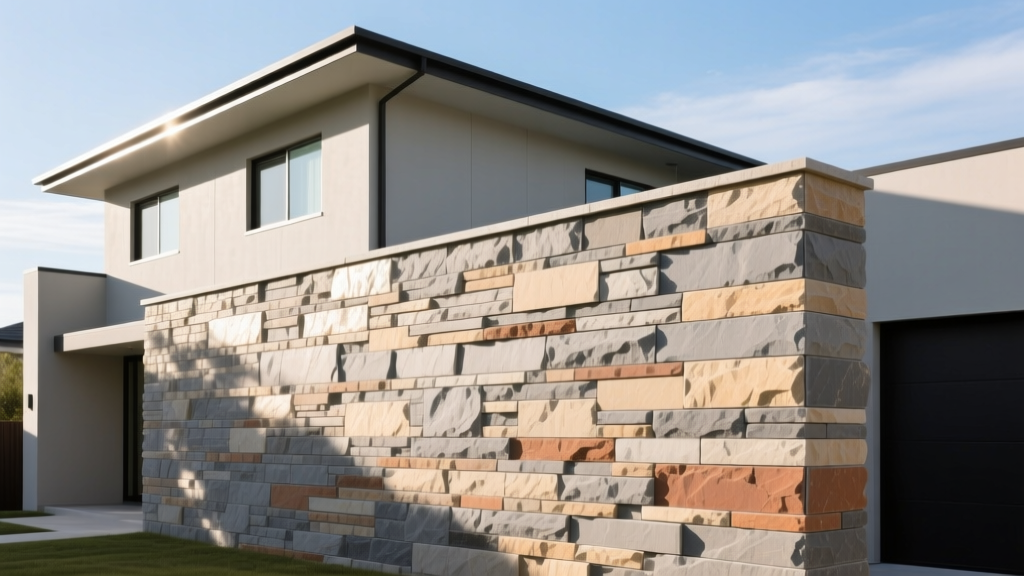
Material Composition: Natural vs. Manufactured Stone Veneer
When selecting outdoor stacked stone veneer for exterior applications, the primary decision hinges on choosing between natural stone and Manufactured Stone Veneer (MSV). Both offer distinct structural, aesthetic, and financial profiles that dictate their suitability for specific architectural environments.
Natural Stacked Stone
Natural stone veneer is quarried and sliced into thin profiles (typically 0.75 to 1.5 inches thick). Popular exterior choices include slate, limestone, and quartzite. Because it is a solid geological product, natural stone offers unmatched color permanence and UV resistance. However, its density makes it significantly heavier, often requiring additional structural reinforcement for multi-story exterior walls. Natural stone also exhibits higher porosity variations, meaning some varieties (like certain sandstones) require penetrating siloxane sealers to prevent water intrusion and subsequent spalling in freeze-thaw climates.
Manufactured Stone Veneer (MSV)
MSV is cast in molds taken from real stone using a lightweight concrete mixture (Portland cement, lightweight aggregates, and iron oxide pigments). Modern 2026 MSV manufacturing utilizes advanced integral coloring techniques that pigment the entire depth of the stone, eliminating the 'chipped paint' effect seen in older generations. MSV is the dominant choice for exterior stacked stone applications due to its uniform thickness, which drastically reduces installation time and mortar waste.
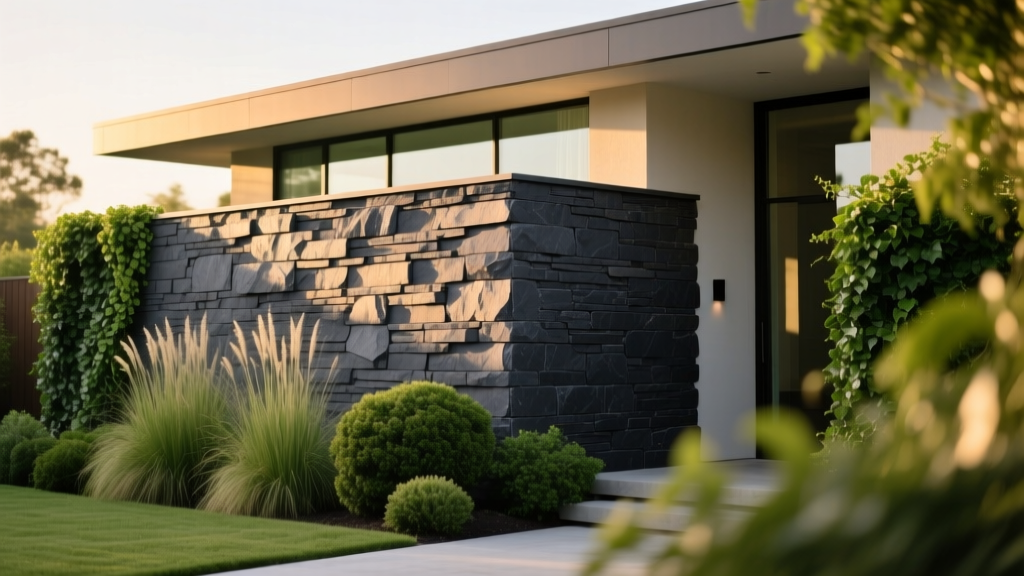
2026 Pricing & Specification Matrix
Material costs for exterior stacked stone have stabilized following the supply chain disruptions of the early 2020s. The table below outlines current market averages for material, installation, and technical specifications.
| Material Type | Material Cost (per sq. ft.) | Installed Cost (per sq. ft.) | Weight (lbs/sq. ft.) | Mortar Joint Style |
|---|---|---|---|---|
| Natural Slate Stack | $14.00 - $22.00 | $32.00 - $48.00 | 12 - 15 lbs | Dry-Stack (Tight) |
| Natural Limestone Stack | $16.00 - $26.00 | $35.00 - $52.00 | 11 - 14 lbs | Dry-Stack or 1/2" Raked |
| Premium MSV (Stack Profile) | $8.50 - $14.00 | $24.00 - $38.00 | 7 - 10 lbs | Dry-Stack (Tight) |
| Standard MSV (Stack Profile) | $6.00 - $9.00 | $20.00 - $28.00 | 6 - 8 lbs | Dry-Stack (Tight) |
Note: Installed costs include weather-resistive barriers, galvanized lath, scratch coats, and Type S mortar. Regional labor variances can shift these figures by up to 20%.
Weather Resistance & ASTM Durability Standards
Exterior stacked stone veneer is subjected to brutal environmental stressors. Specifying materials that meet rigorous ASTM International standards is non-negotiable for long-term facade integrity.
Freeze-Thaw Durability (ASTM C666 & ASTM C1670)
For MSV, compliance with ASTM C1670 (Standard Specification for Adhered Manufactured Stone Masonry Veneer) is the baseline. This standard mandates that the concrete matrix withstand rigorous freeze-thaw cycling without exhibiting scaling, spalling, or structural degradation. When reviewing product data sheets, verify that the MSV has been tested to a minimum of 50 freeze-thaw cycles with a weight loss of less than 2%. Natural stone should be evaluated for its absorption rate; stones with an absorption rate above 5% are highly susceptible to freeze-thaw spalling and must be avoided in northern climates unless chemically sealed.
Efflorescence Mitigation
Efflorescence—the white, powdery salt deposit that migrates to the stone surface—is a common aesthetic failure in exterior stacked stone. It occurs when water dissolves soluble salts within the Portland cement mortar and carries them to the surface. To mitigate this:
- Specify low-alkali Portland cement (Type I/II) for the scratch and setting beds.
- Use integral water repellents in the mortar mix.
- Ensure the veneer is installed with a minimum 4-inch clearance from grade to prevent ground moisture wicking.
Moisture Management: Preventing Catastrophic Failure
The most frequent cause of exterior stone veneer failure is not the stone itself, but improper moisture management behind the veneer. Adhered veneer is a reservoir cladding system; it absorbs and holds moisture. If that moisture cannot drain or dry, it will rot the structural sheathing and rust the metal lath.
'Over 80% of adhered masonry veneer failures we inspect are directly traceable to missing or compromised weather-resistive barriers and blocked weep systems, rather than material defects in the stone.' — Building Forensics Analysis Report
The Mandatory Drainage Assembly
When installing outdoor stacked stone veneer over wood or steel stud framing, the assembly must follow the strict guidelines outlined in ASTM C1780 and manufacturer technical bulletins. The critical layers, from interior to exterior, include:
- Structural Sheathing: OSB or plywood, properly taped.
- Weather-Resistive Barrier (WRB): Two layers of Grade D building paper or a high-performance fluid-applied membrane. The dual-layer approach creates a microscopic drainage plane.
- Corrosion-Resistant Weep Screed: Installed at the base of the wall (minimum 4 inches above grade or 2 inches above paving) to allow trapped water to escape. Must comply with ASTM C1063.
- Self-Furring Galvanized Lath: Minimum 2.5 lbs/sq. yd., ASTM C847 compliant. The self-furring dimples hold the lath away from the WRB, allowing the scratch coat to encapsulate the wire completely.
- Scratch Coat: 1/2-inch thick Type S mortar, scored horizontally to provide a mechanical key for the setting bed.
- Setting Bed & Stone: 1/2-inch to 3/4-inch buttered mortar application.
Top 2026 Brand Profiles for Exterior Applications
When procuring MSV for exterior stacked applications, relying on established manufacturers ensures access to consistent color batches, verified ASTM testing data, and comprehensive warranty support.
Eldorado Stone
Eldorado Stone remains a premium leader in the MSV market. Their Stack Stone profile offers a highly realistic, rugged shadow line. For exterior applications, their 'Mountain Stack' colorway provides exceptional UV stability. Eldorado provides a 50-year limited warranty on their manufactured products, covering structural integrity and significant fading, provided the installation strictly adheres to their published guidelines.
Cultured Stone (by Westlake Royal)
Cultured Stone's Cobblefield and Dressed Fieldstone profiles offer a slightly more refined, modular stack appearance. Backed by Westlake Royal Building Products, their manufacturing process utilizes high-density concrete formulations that yield a compressive strength exceeding 3,500 psi. Their technical resources, available via the Cultured Stone Installation Guide, provide exhaustive detailing for transitioning the veneer around exterior windows and rooflines.
Coronado Stone Products
Coronado's Stacked Stone line is highly regarded for its commercial and large-scale residential projects. They offer specialized exterior sealers and color-matched touch-up kits that are vital for maintaining the facade's integrity if stones are chipped during landscaping or final grading.
Selection Decision Framework
Use this framework to finalize your material specification based on your project's specific constraints:
Scenario A: Budget-Conscious with Complex Architectural Details
Decision: Choose Manufactured Stone Veneer (MSV). MSV is easier to cut and fit around tight corners, radii, and window bucks. The lower material and labor costs will keep the project within budget while delivering a high-fidelity aesthetic.
Scenario B: High-End Custom Build in a Severe Freeze-Thaw Climate
Decision: Choose Natural Quartzite or high-density Slate, paired with a fluid-applied WRB and a rainscreen drainage mat. Natural stone offers superior longevity and will not degrade under UV exposure or extreme thermal cycling, provided the drainage plane is flawlessly executed.
Scenario C: Coastal or High-Salt Environment
Decision: Avoid natural limestone and porous sandstones, which are highly susceptible to salt crystallization and erosion. Specify a premium, low-absorption MSV or a dense natural granite stack, and ensure all metal lath and fasteners are stainless steel rather than standard galvanized to prevent rust bleed.
Selecting the right outdoor stacked stone veneer requires balancing aesthetic vision with rigorous building science. By prioritizing proper moisture management, adhering to ASTM standards, and selecting materials suited to your specific microclimate, you ensure a facade that remains structurally sound and visually striking for decades.
Written by
David NakamuraDavid Nakamura is a licensed architect (AIA) and construction technology writer focused on sustainable building methods, mass timber engineering, and high-performance building envelopes. He holds a Master of Architecture from the University of Washington and is a certified Passive House Consultant (CPHC). David spent eight years at the Seattle firm Mithun, where he led the design of three LEED Platinum projects, before founding his own practice specializing in net-zero residential design. He serves on the editorial advisory board of GreenBuilder Magazine and has authored peer-reviewed papers on cross-laminated timber (CLT) connections for the Journal of Structural Engineering. In his spare time, David teaches woodworking at Pratt Fine Arts Center and kayaks the Puget Sound.
More from David Nakamura
View all
Construction Cost
Labor Cost to Build a Deck Per Sq Ft: 2026 Installation Guide
Discover the exact labor cost to build a deck per sq ft in 2026. This installation guide breaks down contractor rates, complexity factors, and hidden fees.
Aug 4, 2026

Construction Cost
How Much Does It Cost to Build a 3 Bedroom House? Financing Guide
Learn exactly how much it costs to build a 3 bedroom house and explore 2026 financing options, construction loan types, and budget frameworks for your build.
Aug 4, 2026

Construction Cost
Cost to Build a Tennis Court: 2026 Guide
How much does it cost to build a tennis court in 2026? Breakdowns for asphalt, concrete, and synthetic surfaces plus fencing and lighting.
Jul 30, 2026