Stone Veneer Ledgestone Cost Guide: 2026 Pricing & Installation
Detailed 2026 cost analysis for stone veneer ledgestone. Compare natural vs. manufactured pricing, installation labor, and hidden material expenses.
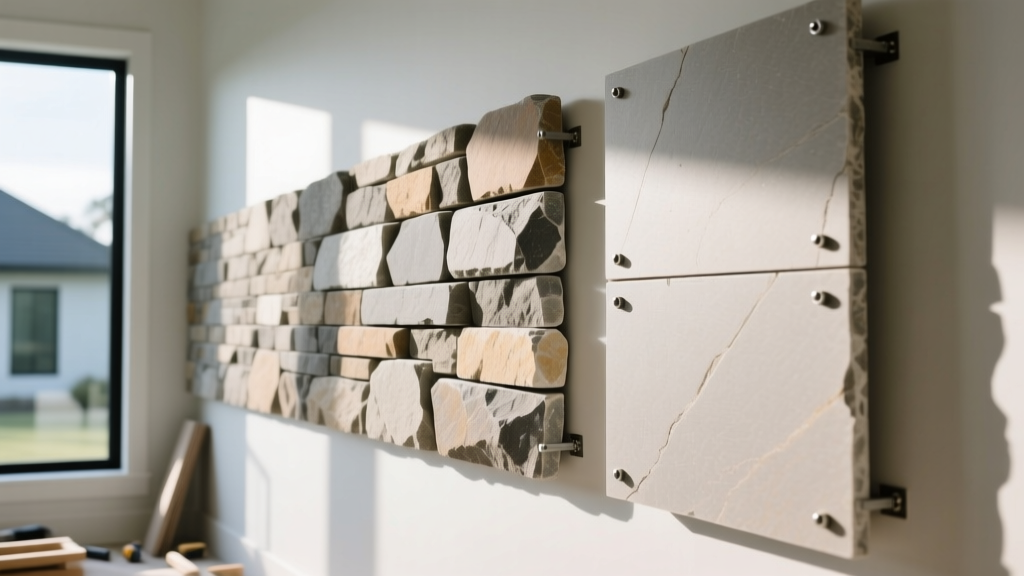
The True Cost of Stone Veneer Ledgestone in 2026
Stone veneer ledgestone is defined by its linear, stacked profile, mimicking the look of dry-stacked slate or limestone without the structural weight of full-thickness masonry. Its clean, horizontal lines make it a dominant choice for modern exterior facades, interior accent walls, and fireplace surrounds. However, budgeting for this specific profile requires more than just multiplying wall square footage by a generic material rate. The linear geometry of ledgestone creates unique waste factors, specialized corner requirements, and distinct labor patterns that drastically alter the final invoice.
This 2026 cost analysis breaks down the exact material rates, labor expectations, and hidden linear-foot expenses associated with both natural and manufactured stone veneer ledgestone, providing a precise framework for contractors and homeowners planning a build.
Material Cost Breakdown: Natural vs. Manufactured
The first major cost fork in your project is choosing between quarried natural ledgestone and manufactured stone veneer (MSV). While both offer the stacked linear aesthetic, their pricing structures, weights, and installation prerequisites differ vastly.
| Material Type | 2026 Cost per Sq. Ft. | Weight per Sq. Ft. | Best Application |
|---|---|---|---|
| Natural Quarried Ledgestone | $9.00 - $16.00 | 10 - 15 lbs | High-end exteriors, masonry substrates |
| Manufactured Ledgestone (MSV) | $5.50 - $9.50 | 2 - 4 lbs | Wood-framed exteriors, interior accents |
Manufactured options, such as Eldorado Stone Ledgestone profiles, utilize lightweight concrete aggregates and iron-oxide pigments to replicate the exact texture of quarried stone. Because MSV weighs roughly 75% less than natural stone, it can be installed on standard wood-framed walls with basic structural reinforcement, whereas natural ledgestone often requires a masonry substrate or engineered steel supports to handle the sheer dead load.
The Hidden Linear-Foot Trap: Corner Pieces
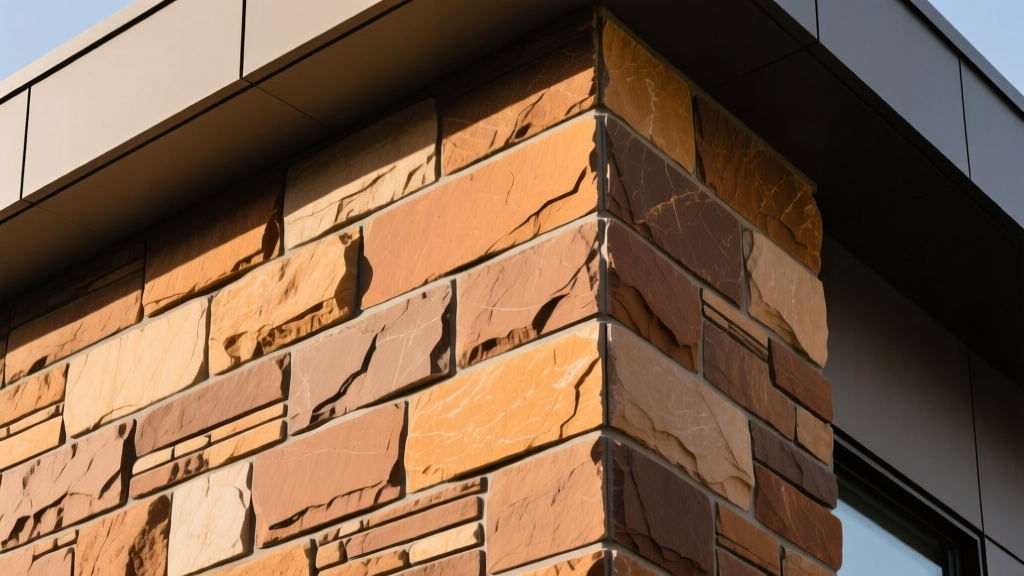
The most common budgeting error in ledgestone installations is ignoring corner pieces. Flat field stones are sold by the square foot, but exterior corners and window returns require specialized L-shaped corner units to maintain the illusion of full-thickness masonry.
Pricing the Corners
- Manufactured Corners: $6.00 to $11.00 per linear foot.
- Natural Stone Corners: $12.00 to $22.00 per linear foot.
Consider a standard 100-square-foot exterior wall with two vertical corners and a window return totaling 25 linear feet of corners. At $8.00 per linear foot for manufactured corners, you are adding $200 to the material bill before purchasing a single square foot of flat stone. Failing to measure linear footage for corners separately will result in severe material shortages mid-project.
Labor and Substrate Preparation Expenses
Installation labor for stone veneer ledgestone typically ranges from $14.00 to $24.00 per square foot in 2026, according to current masonry contractor data aggregated by HomeGuide. However, this rate assumes a properly prepared substrate. If your framing is bare, the mason must execute a multi-step prep process that adds both time and material costs.
The Mandatory Prep Sequence
- Weather-Resistant Barrier (WRB): Two layers of Grade D paper or a high-performance housewrap ($0.50 - $0.80 per sq. ft.).
- Weep Screed Installation: A metal flashing at the base of the wall to allow trapped moisture to escape. This is a critical code requirement that costs roughly $2.00 to $3.50 per linear foot.
- Self-Furring Metal Lath: 2.5 lb galvanized wire lath attached with corrosion-resistant fasteners ($1.20 - $1.80 per sq. ft.).
- Scratch Coat: A 1/2-inch layer of Type S mortar applied to the lath and scored horizontally to provide a mechanical bond for the final stone setting ($2.50 - $4.00 per sq. ft.).
2026 Regional Pricing Variations
Masonry labor rates and material shipping costs fluctuate heavily based on your geographic location. Natural stone is particularly sensitive to freight costs due to its extreme weight; sourcing quarried ledgestone from a regional distributor is vastly cheaper than shipping it cross-country.
| US Region | Average Labor Rate (per sq. ft.) | Total Installed Cost (MSV) | Market Drivers |
|---|---|---|---|
| Northeast | $20.00 - $28.00 | $28.00 - $38.00 | High union labor rates, strict freeze-thaw codes |
| Southeast | $14.00 - $19.00 | $21.00 - $29.00 | Lower labor costs, high humidity requires advanced WRB |
| Midwest | $16.00 - $22.00 | $23.00 - $32.00 | Proximity to natural quarries reduces freight costs |
| West Coast | $22.00 - $30.00 | $30.00 - $42.00 | Seismic building codes require specialized lath ties |
Water Management and Failure Modes
Ledgestone's tight, horizontal mortar joints create a unique water management challenge. Unlike fieldstone, which has irregular, wide joints that allow rapid moisture evaporation, ledgestone features dense, continuous horizontal lines. If water penetrates the face of the stone, it can become trapped in the horizontal mortar beds.
Efflorescence—the white, powdery salt deposit on masonry surfaces—is highly prevalent in ledgestone installations if the scratch coat is not allowed to cure properly before the stones are set, or if the wall lacks a continuous drainage plane behind the metal lath.
To mitigate this, specify a high-quality, breathable silane-siloxane penetrating sealer for exterior natural ledgestone. Do not use film-forming acrylic sealers, which will trap vapor inside the masonry and cause the stone faces to spall and pop off during winter freeze-thaw cycles. Budget approximately $0.75 to $1.25 per square foot for professional sealing applications.
Expert Decision Framework: Which Ledgestone Should You Buy?
Selecting the right material requires matching the stone to your structural reality and climate. Use this framework to finalize your material order:
- Choose Manufactured MSV Ledgestone if: You are cladding a wood-framed residential exterior, working on an upper-story elevation where dead-load weight is a structural concern, or trying to keep material costs under $8.00 per square foot. MSV also offers consistent coloring and uniform thickness, speeding up the mason's layout time.
- Choose Natural Quarried Ledgestone if: You are installing over an existing solid masonry or concrete block substrate, you require absolute UV and freeze-thaw permanence that only geological stone can provide, and your budget accommodates $12.00+ per square foot for materials plus heavy freight surcharges.
- Mortar Selection Rule: Always mandate Type S mortar for exterior ledgestone applications. Type S offers higher compressive strength and superior bond adhesion compared to Type N, which is strictly reserved for interior, climate-controlled fireplace surrounds.
By accounting for the linear-foot corner requirements, enforcing strict weep-screed and WRB prep protocols, and applying a 15% waste factor for linear cuts, you will generate a highly accurate budget that protects your project from the hidden overruns that plague standard stone veneer estimates.
Written by
Elena RodriguezElena Rodriguez is a civil engineer and technical writer specializing in concrete technology, masonry systems, and ASTM/ACI compliance. She earned her B.S. in Civil Engineering from Texas A&M University and spent a decade at a materials testing laboratory, performing over 2,000 concrete compressive strength tests and masonry prism evaluations. Elena is an ACI-certified Field Testing Technician (Grade I) and a member of ASTM Committee C12 on Natural Building Stone. She currently consults on forensic engineering cases involving concrete failures and moisture intrusion. Based in San Antonio, TX, Elena is a proud member of the Society of Women Engineers (SWE) and coaches her daughter's FIRST Robotics team.
More from Elena Rodriguez
View all
Walls & Panels
Cost Analysis: Light Gauge Steel Framing Advantages and Disadvantages
Evaluate light gauge steel framing advantages and disadvantages through a strict cost analysis lens, comparing material, labor, and lifecycle expenses.
Aug 4, 2026

Walls & Panels
Gypsum Board Types: Exact Specifications, Thickness & Dimensions
Compare standard, Type X, and moisture-resistant gypsum board types. Get exact specifications, thicknesses, dimensions, and ASTM standards for your project.
Aug 4, 2026

Fire Resistance
Best Fire-Resistant Outdoor Decking Materials: 2026 Buyer Guide
Discover the best fire-resistant outdoor decking materials for 2026. Compare Class A PVC, aluminum, and hardwood options for WUI compliance and safety.
Aug 4, 2026