Stone Veneer Price Per Square Foot: 2026 Design & Cost Guide
Discover how architectural styles impact the stone veneer price per square foot in 2026. Compare material and labor costs for modern and rustic designs.
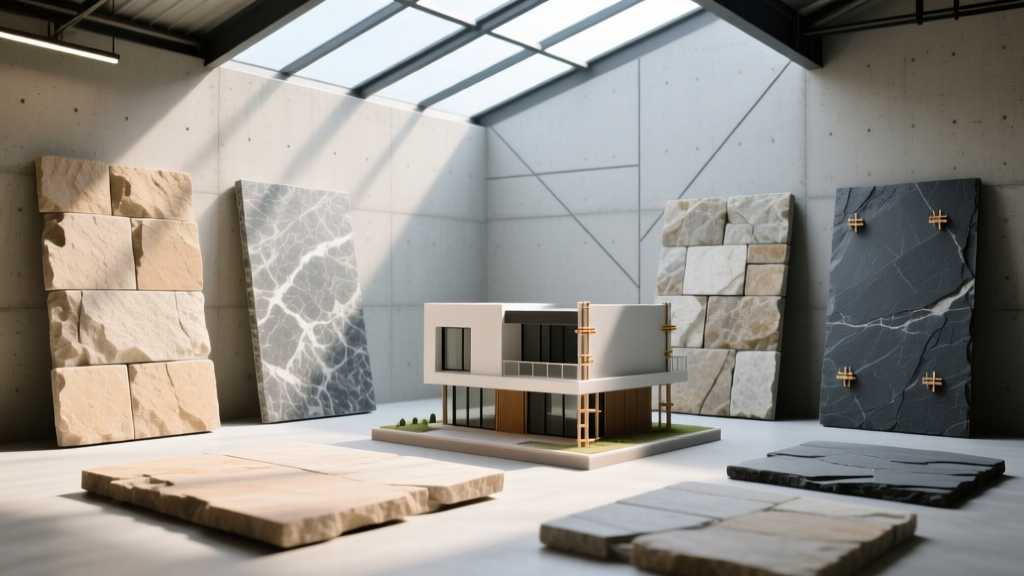
The Intersection of Aesthetics and Budget in 2026
When architects and homeowners evaluate exterior or interior cladding, the stone veneer price per square foot is rarely a static number. It is a dynamic metric heavily influenced by the chosen design style, material origin, and installation complexity. In 2026, the market has bifurcated into highly engineered panelized systems for contemporary designs and premium, irregular natural stones for organic aesthetics. Understanding how your specific design vision dictates both material selection and labor intensity is the only way to accurately forecast your project budget.
This guide deconstructs the costs associated with the three dominant architectural stone styles, revealing the hidden labor multipliers and material variables that ultimately define your final quote.
Breakdown: Stone Veneer Price Per Square Foot by Design Style
The following data reflects national averages for 2026, encompassing both material procurement and professional masonry installation. Note that these figures assume a standard wood-framed substrate requiring weather-resistive barriers, metal lath, and a scratch coat.
| Design Style | Material Profile | Material Cost (per sq ft) | Labor Cost (per sq ft) | Total Installed Price |
|---|---|---|---|---|
| Contemporary Linear | Manufactured Panelized | $6.50 - $9.00 | $8.00 - $12.00 | $14.50 - $21.00 |
| Rustic Fieldstone | Natural Irregular Stone | $11.00 - $18.00 | $16.00 - $26.00 | $27.00 - $44.00 |
| Classic Ashlar | Natural Limestone / Cast | $13.00 - $22.00 | $14.00 - $20.00 | $27.00 - $42.00 |
Style Showcase: Maximizing Visual Impact on a Budget
The Contemporary Linear Look
Modern architecture favors clean, horizontal lines and minimal mortar joints. To achieve this, designers specify linear manufactured stone veneers, such as Eldorado Stone's Panelized systems or Boral's Versetta Stone. These products are engineered with interlocking edges or pre-arranged mesh backings that allow for rapid, mortarless, or tight-joint installation.
Cost Advantage: Because the stones are uniform in height and often pre-assembled into 2x4 foot panels, masons can cover large areas quickly. This drastically reduces the labor component of the stone veneer price per square foot. Furthermore, the tight 'dry-stack' appearance eliminates the need for extensive mortar tooling and cleanup.
The Rustic & Organic Cabin Aesthetic
For mountain homes, Tuscan villas, or rustic retreats, the design calls for natural fieldstone or river rock. These materials feature highly irregular shapes, varied thicknesses, and random color palettes. According to the Natural Stone Institute, natural stone offers unparalleled longevity and unique geological variation that manufactured products struggle to replicate perfectly.
Cost Multiplier: The irregularity of fieldstone is its biggest financial drawback. A mason must individually select, shape, and fit each stone like a complex jigsaw puzzle. Additionally, achieving a structurally sound and aesthetically pleasing mortar joint (often a wide, raked, or overgrout joint) requires immense skill and time. Expect labor costs to consume up to 60% of your total budget for this style.
The Classic European Manor
The Ashlar pattern—characterized by stones of uniform height but varying lengths, laid in horizontal courses—projects timeless elegance. This style typically utilizes natural limestone, sandstone, or high-density cast stone that meets ASTM C1364 standards for structural integrity and water absorption.
Cost Dynamics: While the material itself is premium-priced due to the quarrying and precision-cutting required, the installation is more predictable than fieldstone. The uniform heights allow masons to run string lines and work efficiently, keeping labor costs moderate despite the high material expense.
Pro-Tip: The Corner Piece Multiplier
One of the most common budgeting errors in stone veneer projects is calculating square footage for flat wall areas and forgetting to account for corners. Corner pieces are manufactured to wrap seamlessly around 90-degree exterior edges, eliminating the unsightly 'butt joint' where flat stones meet. Critical pricing detail: Corners are sold by the linear foot, not the square foot. In 2026, corner pieces typically range from $9.00 to $16.00 per linear foot. Failing to calculate your linear corner footage separately can result in a 15% to 20% budget shortfall mid-project.
Hidden Cost Variables That Alter Your Final Quote
Beyond the visible stone and the mason's hourly rate, several technical requirements dictate the final stone veneer price per square foot. Ignoring these during the design phase leads to aggressive change orders.
- Substrate Preparation: Installing over CMU (concrete masonry unit) block is significantly cheaper than wood framing. CMU block often bypasses the need for weather paper, metal lath, and a scratch coat (required per ASTM C1063 for framed walls), saving $3.50 to $5.00 per square foot in preparatory labor and materials.
- Mortar Joint Profiles: A standard flush joint is the baseline. If your design requires a 'German Smear' (overgrout) or a deeply raked joint, expect labor and mortar material costs to increase by 15% to 25%. Overgrouting requires applying excess mortar and strategically wiping it away, a highly labor-intensive process.
- Weep Screeds and Flashing: Proper moisture management is non-negotiable. Incorporating PVC weep screeds at the base of the wall and corrosion-resistant flashing above windows and doors adds roughly $1.50 to $2.50 per linear foot to the project perimeter.
- Sealing and Protection: While natural limestone and sandstone are porous and often require a breathable, siloxane-based penetrating sealer to prevent efflorescence and water staining, most modern manufactured concrete veneers do not require sealing. Specifying natural stone adds $0.75 to $1.25 per square foot for high-quality sealants and application.
Decision Matrix: Matching Your Design Vision to Your Budget
Use this framework to align your architectural goals with realistic financial parameters. The matrix below categorizes design approaches based on budget tiers and visual priorities.
| Budget Tier | Target Installed Price | Recommended Veneer Type | Best Design Application |
|---|---|---|---|
| Economy / High-Impact | $14 - $22 / sq ft | Panelized Manufactured Linear | Modern fireplace surrounds, contemporary exterior accent bands, commercial facades. |
| Mid-Range / Traditional | $24 - $32 / sq ft | Manufactured Ledgestone or Ashlar | Craftsman home exteriors, interior feature walls, wainscoting. |
| Premium / Authentic | $30 - $45+ / sq ft | Natural Fieldstone or Limestone | Luxury estate exteriors, high-end wine cellars, custom masonry fireplaces. |
Sourcing and Sustainability Considerations
As building codes and consumer preferences shift toward sustainable construction, the origin of your stone veneer impacts both the environment and the bottom line. Natural stone is an inherently sustainable material, requiring minimal processing compared to fired clay or concrete products. However, the carbon footprint of transporting heavy natural stone across the country can negate its environmental benefits. Sourcing regional natural stone (e.g., Texas Limestone for southwestern projects, or Pennsylvania Bluestone for northeastern builds) reduces freight costs and supports local quarries.
Conversely, high-end manufactured stone veneers, produced regionally using lightweight aggregates and recycled materials, offer a lower transportation footprint and reduce the structural load on the building, potentially saving money on foundation engineering. When evaluating bids, request the Environmental Product Declarations (EPDs) from manufacturers to verify the lifecycle impact of the materials you are specifying.
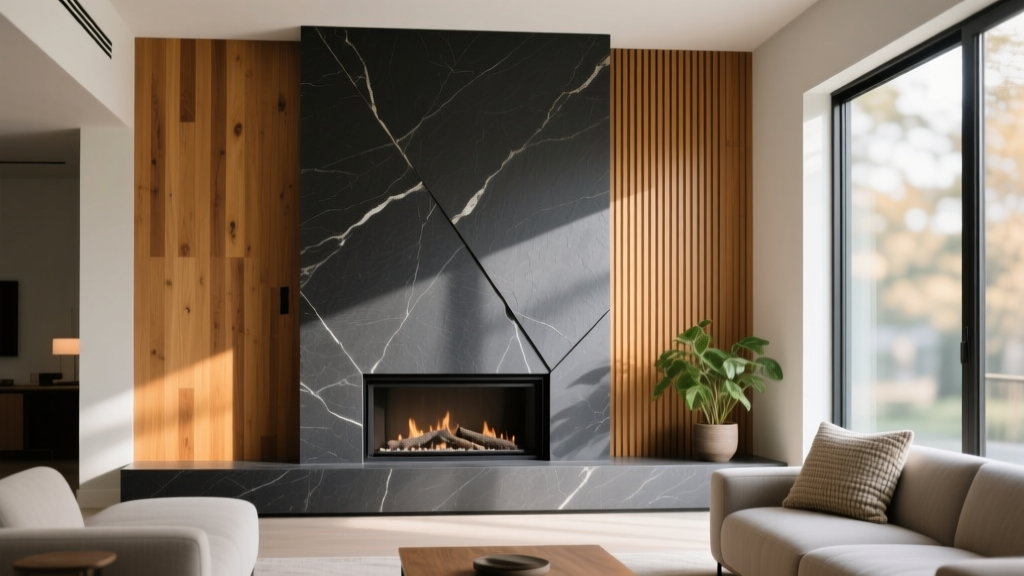
Final Estimation Strategy
To accurately lock in your stone veneer price per square foot, move beyond simple square-footage calculators. Measure your flat wall area, calculate your linear corner footage, identify your substrate type, and select your mortar joint profile. Present these four specific data points to your masonry contractor or material supplier. By understanding the intricate relationship between design style and installation methodology, you can confidently specify materials that deliver stunning architectural results without compromising your construction budget.
Written by
Sarah WhitfieldSarah Whitfield is a chartered quantity surveyor (MRICS) and construction cost analyst with 15 years of experience in material pricing, procurement strategy, and project budgeting. She earned her degree in Construction Management from the University of Reading (UK) and has worked on projects ranging from $2M custom homes to $180M mixed-use developments across North America and Europe. Sarah currently leads cost estimating for BuildMat Insight, maintaining a proprietary database of 4,000+ material price points updated quarterly. She is a frequent contributor to RSMeans cost data panels and has presented at the International Cost Engineering Council (ICEC) congress. Based in Denver, CO, Sarah is an avid trail runner and volunteer mentor for Women in Construction.
More from Sarah Whitfield
View all
Wood & Lumber
What Are the Different Types of Wood? A Builder's Guide
Compare structural softwoods, finish hardwoods, and engineered lumber. Analyze Janka ratings, MOE values, and 2026 pricing for construction.
Aug 4, 2026

Walls & Panels
Steel Framing vs Wood Framing: Corrosion and Moisture Defense
Compare steel framing vs wood framing for moisture resistance. Learn about galvanized coatings, condensation risks, and corrosion protection strategies.
Jul 21, 2026

Stone & Masonry
How to Cut Stone Veneer: Wet Saw vs Grinder Comparison
Compare the best tools for cutting stone veneer. We review wet saws, angle grinders, and chop saws to help you achieve clean, chip-free cuts.
Jul 21, 2026