Stone Veneer Siding Price: 2026 Maintenance and Repair Costs
Discover the true stone veneer siding price beyond installation. Explore 2026 maintenance schedules, repair costs, and moisture management strategies.
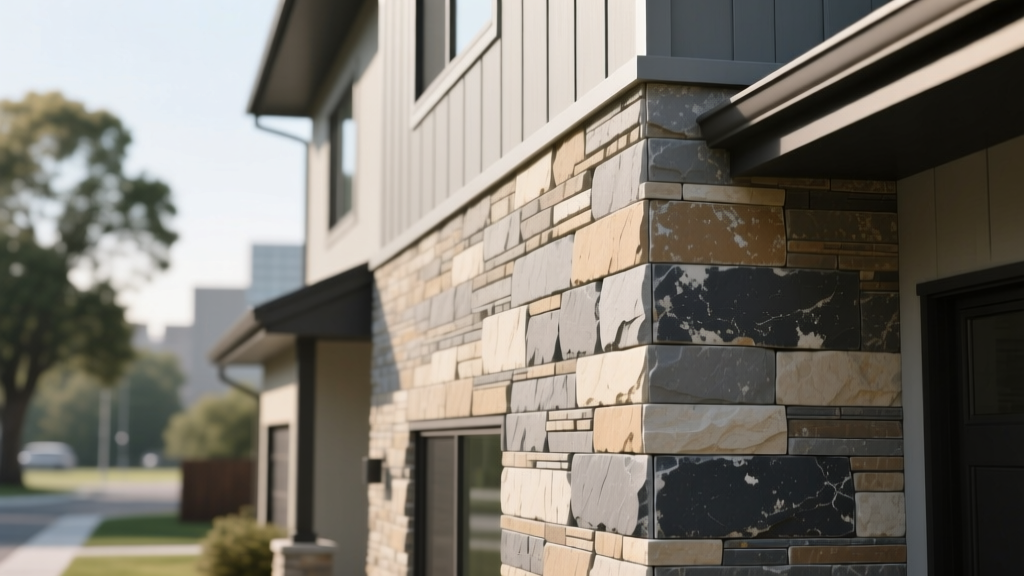
The Hidden Lifecycle Costs Behind the Initial Quote
Most homeowners and builders fixate on the initial stone veneer siding price, which in 2026 typically ranges from $9.50 to $16.00 per square foot for manufactured stone veneer (MSV) and $18.00 to $35.00 for natural stone. However, the true cost of ownership is dictated by how the facade is maintained over its 50-year lifespan. Poor maintenance doesn't just degrade aesthetics; it leads to catastrophic moisture intrusion that can multiply your initial investment in structural repairs. Understanding the long-term stone veneer siding price requires analyzing the cost of preventative care, common failure modes, and the specific materials required to keep the cladding system breathable and watertight.
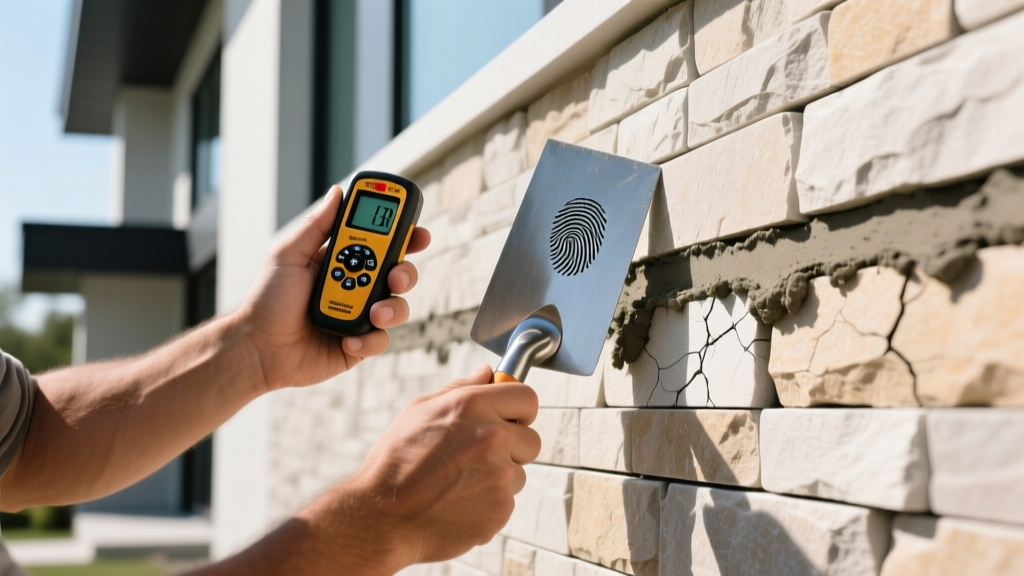
Lifecycle Cost Matrix: Manufactured vs. Natural Stone
When budgeting for a project, the initial installation is only phase one. The table below breaks down the projected 20-year maintenance and repair costs based on industry averages for residential and light-commercial applications.
| Material Type | Initial Installed Price (2026) | 20-Year Maintenance Cost | Expected Lifespan | Primary Vulnerability |
|---|---|---|---|---|
| Manufactured Stone Veneer (MSV) | $9.50 - $16.00 / sq ft | $2.50 - $4.00 / sq ft | 50+ Years | Mortar joint cracking, efflorescence |
| Natural Stone (Limestone/Sandstone) | $18.00 - $35.00 / sq ft | $1.50 - $3.00 / sq ft | 75+ Years | Spalling from freeze-thaw cycles |
| Natural Stone (Granite/Slate) | $22.00 - $40.00 / sq ft | $0.50 - $1.50 / sq ft | 100+ Years | Iron oxidation (rust staining) |
Troubleshooting & Repair Price Guide
When issues arise, the repair cost depends heavily on whether the problem is superficial or structural. Below is a detailed breakdown of the three most common maintenance issues and their associated 2026 repair prices.
1. Efflorescence and Mineral Staining
Efflorescence is the white, powdery deposit of water-soluble salts that migrates to the surface of the stone and mortar as moisture evaporates. While MSV is highly prone to this due to its Portland cement base, natural limestone can also suffer from it.
- Cause: Excess moisture moving through the masonry assembly, often due to missing cap flashing, clogged weep holes, or improper grading.
- The Fix: Dry brushing followed by a specialized masonry cleaner. Never use muriatic acid on manufactured stone; it degrades the cement binder and permanently exposes the lightweight aggregates. According to the Brick Industry Association's technical guidelines on efflorescence, cleaning should only occur when the wall is dry and the weather is above 50°F.
- Repair Price: Professional chemical cleaning costs $2.50 to $4.50 per square foot. DIY chemical cleaners (e.g., PROSOCO Sure Klean) cost about $45 per gallon, covering roughly 200 square feet.
2. Mortar Joint Deterioration (Repointing)
Mortar is designed to be the sacrificial element in a masonry assembly. It should be softer and more permeable than the stone itself. Over 15 to 20 years, freeze-thaw cycles will cause mortar joints to crumble or crack.
- Cause: Normal weathering, or the use of an overly hard mortar mix (like Type S or Type M) during initial installation, which forces moisture into the stone units rather than the joints.
- The Fix: Raking out the damaged mortar to a depth of 3/4 inch and repointing with Type N mortar (750 PSI), which offers the ideal balance of flexibility and compressive strength for veneer applications.
- Repair Price: Repointing is labor-intensive. Expect to pay $12.00 to $18.00 per square foot for professional tuckpointing, or $8.00 to $14.00 per linear foot for isolated crack repairs.
3. Moisture Intrusion and Weather Barrier Failure
This is the most severe and expensive failure mode. If water bypasses the stone and mortar, it must be managed by the weather-resistive barrier (WRB) and a proper drainage plane (minimum 1-inch air gap or a dimpled drainage mat). If the WRB fails, water rots the wood framing behind the veneer.
- Cause: Missing weep screeds at the base of the wall, improperly lapped house wrap, or mortar droppings clogging the drainage cavity during the original installation.
- The Fix: Complete tear-off of the affected stone veneer section, replacement of the rotted sheathing and WRB (e.g., Tyvek CommercialWrap), installation of a new drainage mat, and reinstallation of the stone.
- Repair Price: $35.00 to $65.00 per square foot. This high cost underscores why paying for meticulous flashing and WRB installation during the initial build is critical.
The 5-Year Preventative Maintenance Protocol
To keep the long-term stone veneer siding price as low as possible, implement this strict maintenance schedule. The National Park Service Preservation Brief on masonry cleaning emphasizes that gentle, non-abrasive methods are paramount to preserving the integrity of both natural and manufactured stone surfaces.
Annual Inspection (Spring)
- Clear all vegetation and soil so it is at least 4 inches below the weep screed.
- Use a shop-vac or compressed air to clear weep holes and drainage vents of dirt, spider webs, and debris.
- Inspect all window and door flashings where they interface with the stone to ensure sealant joints haven't failed.
Bi-Annual Washing (As Needed)
- Use a pressure washer with a maximum of 400 PSI and a 40-degree fan tip.
- Maintain a 12-inch standoff distance to prevent etching the mortar or blowing out the aggregate in MSV.
- Use a neutral pH masonry soap; avoid bleach, which can leave behind salt residues that trigger efflorescence.
5-Year Sealing Application
- Apply a breathable, penetrating silane/siloxane sealer (e.g., Prosoco Siloxane PD).
- Warning: Never use film-forming acrylic sealers. They trap moisture inside the wall assembly, leading to severe spalling when that trapped water freezes and expands.
DIY vs. Professional Service: Where to Draw the Line
Homeowners can safely handle annual inspections, clearing weep holes, and low-pressure washing. Applying a siloxane sealer is also a viable DIY project, costing roughly $1.50 to $2.50 per square foot in materials.
However, any intervention involving mortar replacement, structural cracking, or moisture management behind the veneer requires a licensed masonry contractor. Attempting to DIY repointing often results in the use of pre-mixed hardware store mortars that are far too rigid (often exceeding 2,500 PSI), which will inevitably cause the manufactured stone units to crack under thermal expansion. When evaluating the true stone veneer siding price, factoring in professional masonry assessments every 5 to 7 years (typically $250 to $400 per visit) is a minor premium that protects a massive structural investment.
"The biggest mistake homeowners make with stone veneer is treating it like a solid, waterproof barrier. It is a drainage system. If your maintenance routine doesn't prioritize keeping the weep screeds and drainage planes clear, you are inviting rot into your wall cavity." — Senior Building Enclosure Consultant
Written by
James ThorntonJames Thornton is a construction industry veteran with 25 years of hands-on experience in wood framing, lumber grading, and residential building codes. He started as a framing carpenter in rural Oregon, earned his ICC Residential Building Inspector certification, and eventually became a senior plan reviewer for the City of Portland Bureau of Development Services. James holds a B.S. in Wood Science & Technology from Oregon State University and is a certified lumber grader through the West Coast Lumber Inspection Bureau (WCLIB). He has inspected over 3,000 residential construction sites and authored the city's internal guide on advanced framing techniques (2x6 at 24" O.C.). James lives in Bend, OR, where he builds custom timber-frame cabins and competes in lumberjack sports.
More from James Thornton
View all
Insulation
Best Home Insulation Materials: Complete 2026 Guide
Compare top home insulation materials for 2026. Find R-values, installed costs per square foot, and best uses for fiberglass, spray foam, and mineral wool.
Aug 4, 2026

Sustainable Building
Certify Your Green Building Material for LEED and WELL
Step-by-step guide to certifying a green building material for LEED v5 and WELL v2. Master EPDs, HPDs, and VOC limits for 2026 project specifications.
Aug 4, 2026

Stone & Masonry
Veneer Stacked Stone Panels: Interior Design & Style Showcase
Discover how veneer stacked stone panels transform interiors. Explore modern design profiles, material pairings, and technical installation specs.
Aug 4, 2026