Top Stone Veneer Suppliers Farmingdale: 2026 Design Guide
Discover top stone veneer suppliers in Farmingdale for 2026. Compare styles, costs, and technical specs for Long Island architectural designs.
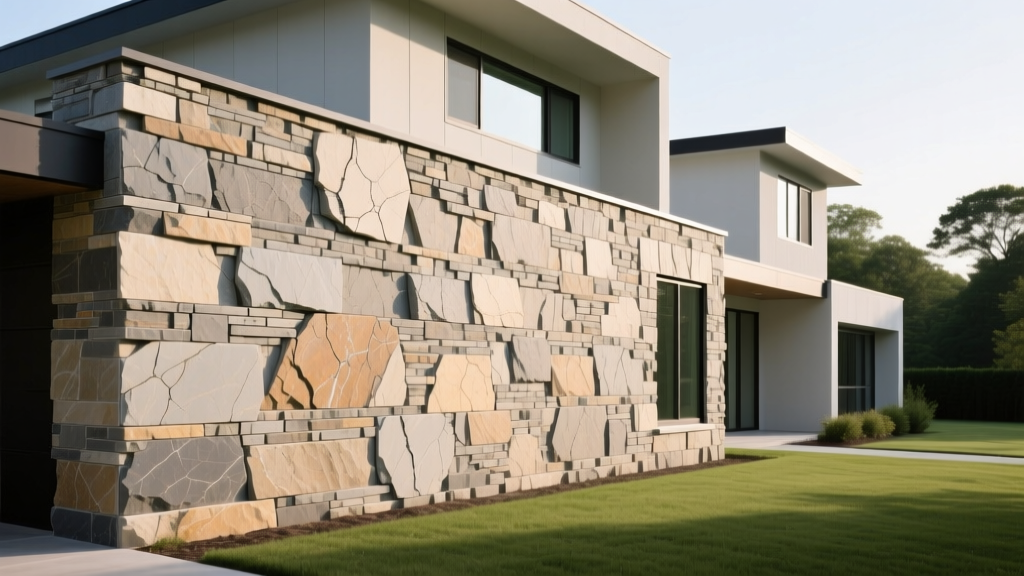
The Farmingdale Supply Landscape: Sourcing for Long Island Architecture
Farmingdale, positioned at the critical junction of Nassau and Suffolk counties, operates as a primary logistical and distribution hub for Long Island’s high-end residential and commercial masonry projects. For architects, designers, and general contractors, identifying the right stone veneer suppliers in Farmingdale requires looking beyond basic inventory. The region's architectural demands—ranging from coastal Hampton estates to modern agrarian farmhouses—require specialized manufactured and natural stone profiles that big-box retailers rarely stock in sufficient volume.
When sourcing from Farmingdale-area masonry yards and regional distributors, procurement professionals must evaluate suppliers based on three critical metrics: batch consistency, technical support for Northeast climate specifications, and lead time reliability. The local supply chain is heavily influenced by regional distributors representing premium brands like Eldorado Stone, Cultured Stone, and Coronado Stone. These yards maintain deep inventories of adhered manufactured stone masonry veneer (AMSMV) and natural thin-stone cuts, specifically curated to withstand the freeze-thaw cycles and coastal moisture inherent to the New York metropolitan area.
Supplier Tier Comparison: Where to Source Specific Profiles
| Supplier Tier | Inventory Depth | Design Services | Best For |
|---|---|---|---|
| Specialty Masonry Yards | High (Full pallets, custom blends) | On-site mockups, mortar matching | Custom residential, historic restorations |
| Regional Distributors | Medium (Standard colorways) | Architectural binders, CAD details | Commercial facades, large-scale developments |
| Landscape Supply Centers | Low (Limited to popular SKUs) | Basic installation advice | DIY projects, small garden walls, fire pits |
2026 Design Showcase: Dominant Veneer Profiles in the Region
The design language of Long Island’s built environment is shifting. While traditional brick and full-bed natural stone remain present, lightweight stone veneer has captured the majority of the accent and facade market. Based on current procurement data from Farmingdale suppliers, three distinct design profiles are dominating 2026 project specifications.
1. The Coastal Hampton: Limestone & Ledgestone Blends
For waterfront properties and traditional shingle-style homes, designers are heavily specifying light-buff and white limestone profiles. The objective is to mimic historic full-bed masonry without the structural load. Suppliers in the Farmingdale corridor frequently fulfill these requests with Cultured Stone’s Coastal series or natural thin-veneer limestone cuts from regional quarries.
- Profile Spec: 1/2-inch to 1-inch thickness, irregular rectangular shapes with pronounced horizontal shadow lines.
- Mortar Joint: Overgrouted or flush joint in a bright white Type S mortar to create a monolithic, chalky appearance.
- Application: Skirting, foundation parging replacement, and grand entryway columns.
2. Modern Agrarian: Dry-Stack & Ridgecut Profiles
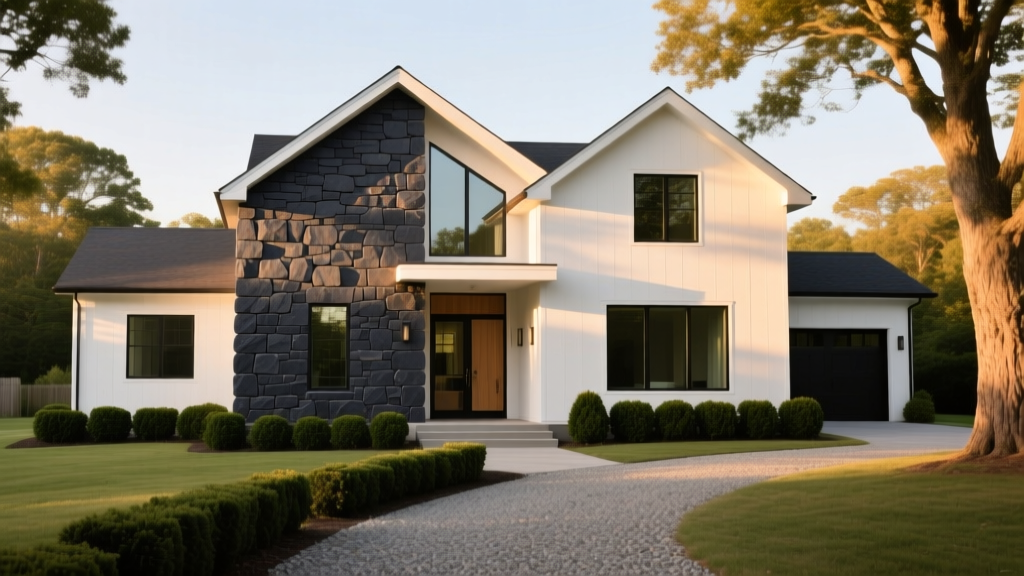
The modern farmhouse trend has evolved into a sharper, more geometric aesthetic. Designers are moving away from rounded fieldstones toward tight-fit, mortarless dry-stack profiles. Eldorado Stone’s Ridgecut and Stacked Stone lines are high-velocity SKUs at local supply yards. These profiles feature linear, ashlar-like cuts that pair seamlessly with black aluminum-clad windows and standing seam metal roofs.
- Profile Spec: 1-inch to 2.5-inch thickness, highly linear geometric cuts with zero visible mortar joints.
- Colorways: Charcoal, graphite, and weathered earth tones that provide high contrast against white siding.
- Application: Interior fireplace surrounds, exterior chimney chases, and modern privacy walls.
3. Transitional Cast Stone: Large Format Geometric Panels
For commercial mixed-use developments and contemporary residential builds, large-format architectural cast stone panels are replacing traditional hand-laid veneer. These panels, often sourced through specialized commercial distributors servicing the Farmingdale industrial parks, offer rapid installation and uniform modularity.
Technical Sourcing: Navigating Northeast Climate Specs
Sourcing aesthetically pleasing stone is only half the battle; ensuring it survives the Long Island climate is the other. The Farmingdale region experiences significant humidity, coastal salt spray, and severe winter freeze-thaw cycles. When specifying materials from local suppliers, architects must mandate compliance with rigorous testing standards.
Moisture Management and Substrate Preparation
Local suppliers will often provide the veneer, but the failure of stone installations in the Northeast is almost exclusively tied to improper moisture management behind the veneer. When procuring materials, ensure your order includes the correct accessories:
- Weather-Resistive Barrier (WRB): Two layers of Grade D building paper or a high-performance fluid-applied membrane over wood framing.
- Corrosion-Resistant Lath: Minimum 2.5 lb/yd² galvanized expanded metal lath (3.4 lb/yd² is required for coastal zones within 1,500 feet of the shoreline to prevent rust bleed-through).
- Weep Screeds: PVC or galvanized steel weep screeds with a minimum 3/4-inch vertical flange, installed at the base of all walls to allow trapped moisture to escape.
For comprehensive installation guidelines and technical data sheets, procurement teams should reference the Eldorado Stone Technical Resources library or consult the National Concrete Masonry Association (NCMA) manuals for adhered veneer best practices.
Cost Matrix: Material and Labor in the Nassau/Suffolk Market
Pricing for stone veneer in the Farmingdale area reflects the broader New York metropolitan construction economy. Labor rates are heavily influenced by prevailing wage requirements on commercial jobs and the high cost of skilled masonry labor on residential projects. Below is the 2026 cost breakdown for a standard 1,000-square-foot exterior veneer installation.
| Cost Component | Low-End (Basic Profiles) | High-End (Premium/Natural) | Notes |
|---|---|---|---|
| Material (Veneer) | $8.50 - $10.50 / sq ft | $12.00 - $18.50 / sq ft | Natural thin stone commands a 30-40% premium over manufactured. |
| Accessories (Lath, WRB, Screed) | $1.75 / sq ft | $2.50 / sq ft | Includes galvanized lath, fasteners, and corner pieces. |
| Mortar & Scratch Coat | $1.20 / sq ft | $1.80 / sq ft | Type S mortar with integral bonding agents. |
| Labor (Union/Prevailing Wage) | $22.00 / sq ft | $34.00 / sq ft | Complex profiles (dry-stack) require 20% more labor time. |
| Total Installed Cost | $33.45 / sq ft | $56.80 / sq ft | Excludes scaffolding, demolition, and structural prep. |
Specification & Procurement Checklist for Designers
To ensure a seamless procurement process when working with stone veneer suppliers in Farmingdale, integrate the following checklist into your project management workflow:
- Verify Batch Numbers: Manufactured stone is produced in runs with slight color variations. Require the supplier to pull all pallets for a single elevation from the same production batch to avoid visible color banding.
- Order 10-15% Overage: Cutting waste for corners, window returns, and complex rooflines typically consumes 8% of the material. Order a minimum 12% overage to prevent project delays waiting on backordered SKUs.
- Specify Corner Pieces: Never rely on masons to miter flat stones for outside corners. Order manufactured L-shaped corner pieces that match the fieldstone profile to maintain the illusion of full-bed depth.
- Confirm Lead Times Early: While local Farmingdale yards stock high-volume colors (like standard limestone and basic fieldstone), custom blends and premium natural thin-veneers often require 4 to 8 weeks for quarrying and fabrication.
- Request Mockup Panels: For projects exceeding 2,000 square feet, mandate that the supplier provide a 4x4 foot physical mockup panel. This allows the design team to approve the mortar color, joint tooling, and stone blend before full-scale installation begins.
By treating the procurement process with the same rigor as the design phase, architects and builders can leverage the robust supply network in Farmingdale to execute flawless, durable stone veneer installations that define the region's premier properties.
Written by
Sarah WhitfieldSarah Whitfield is a chartered quantity surveyor (MRICS) and construction cost analyst with 15 years of experience in material pricing, procurement strategy, and project budgeting. She earned her degree in Construction Management from the University of Reading (UK) and has worked on projects ranging from $2M custom homes to $180M mixed-use developments across North America and Europe. Sarah currently leads cost estimating for BuildMat Insight, maintaining a proprietary database of 4,000+ material price points updated quarterly. She is a frequent contributor to RSMeans cost data panels and has presented at the International Cost Engineering Council (ICEC) congress. Based in Denver, CO, Sarah is an avid trail runner and volunteer mentor for Women in Construction.
More from Sarah Whitfield
View all
Wood & Lumber
What Are the Different Types of Wood? A Builder's Guide
Compare structural softwoods, finish hardwoods, and engineered lumber. Analyze Janka ratings, MOE values, and 2026 pricing for construction.
Aug 4, 2026

Walls & Panels
Steel Framing vs Wood Framing: Corrosion and Moisture Defense
Compare steel framing vs wood framing for moisture resistance. Learn about galvanized coatings, condensation risks, and corrosion protection strategies.
Jul 21, 2026

Stone & Masonry
How to Cut Stone Veneer: Wet Saw vs Grinder Comparison
Compare the best tools for cutting stone veneer. We review wet saws, angle grinders, and chop saws to help you achieve clean, chip-free cuts.
Jul 21, 2026