Vinyl Siding with Stone Veneer: Cost, Durability & Design Review
Discover the true costs, pros, and cons of combining vinyl siding with stone veneer. Expert comparison of installation methods, durability, and ROI.
The Appeal of Mixed-Material Exteriors
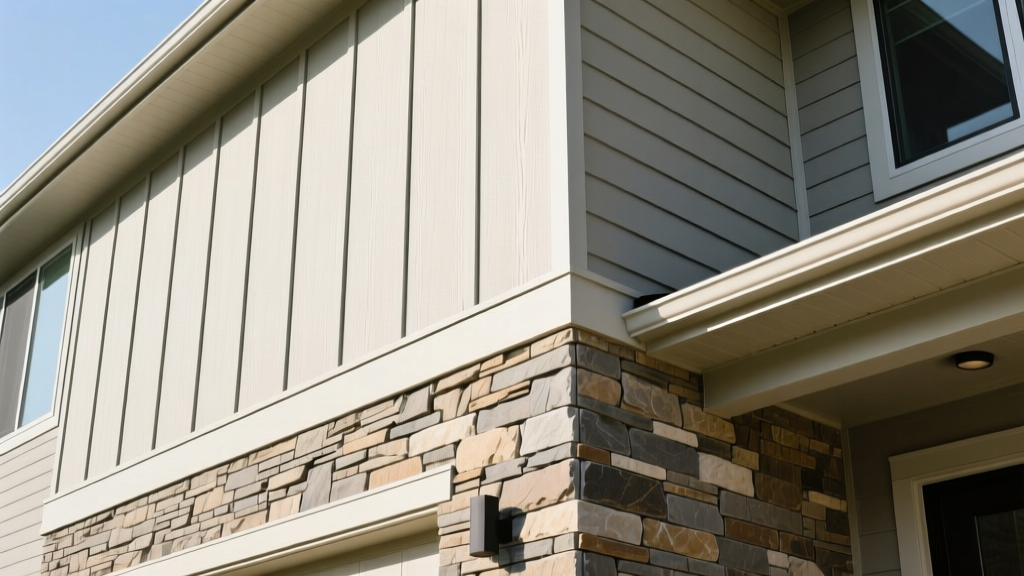
Combining vinyl siding with stone veneer has become a dominant trend in residential exterior design, bridging the gap between the low maintenance of synthetic polymers and the premium aesthetic of natural masonry. This hybrid approach typically applies manufactured stone veneer (MSV) to the lower third of the elevation, foundation walls, or as accent columns, while utilizing vinyl siding for the upper stories and primary wall fields. The result is a high-contrast, architecturally grounded facade that significantly boosts curb appeal without the structural load or extreme expense of full natural stone cladding.
However, merging a flexible, thermally expansive material like vinyl with a rigid, mortar-based system like stone veneer introduces unique structural and water-management challenges. This comparison review evaluates the technical specifications, real-world costs, and critical installation protocols required to execute this combination flawlessly in 2026.
Material Breakdown: Vinyl vs. Manufactured Stone Veneer
To understand how these materials interact, we must first isolate their physical properties. Modern vinyl siding, such as CertainTeed Cedar Impressions or Mastic Quest, is manufactured from polyvinyl chloride (PVC) engineered to withstand UV degradation and impact. It is designed to float over the weather-resistive barrier (WRB), allowing for lateral movement.
Manufactured stone veneer (MSV), like Cultured Stone Cobblefield or Boral Versetta Stone, is a Portland cement-based product cast in molds from natural stone. Unlike vinyl, MSV is a rigid, adhered or mechanically fastened system that does not expand or contract at the same rate as PVC. When you install vinyl siding with stone veneer on the same wall plane, the transition line between the two materials becomes a critical stress point.
The most common failure mode in mixed-material exteriors is water intrusion at the transition line. Vinyl siding relies on overlapping gravity drainage, while MSV relies on a mortar scratch coat and WRB. If the vinyl's J-channel or transition trim is sealed directly against the stone with caulk, it creates a dam. Trapped moisture will bypass the WRB, rot the OSB sheathing, and cause the stone's mortar base to delaminate. Always maintain a 1/4-inch weep gap at the transition joint.
Cost Analysis: Vinyl Siding with Stone Veneer Combo
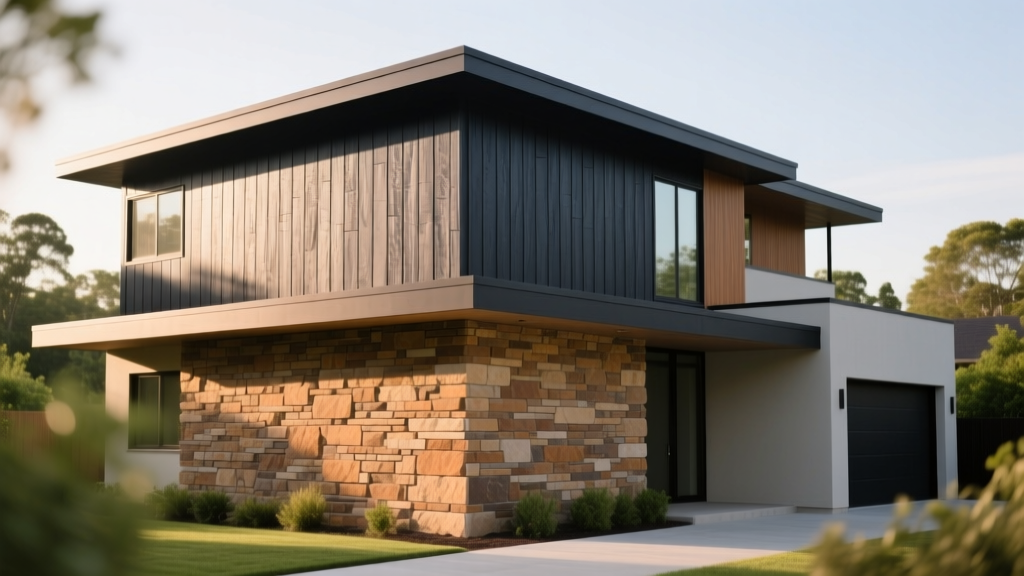
The financial advantage of this combination lies in strategic placement. By restricting the high-cost stone veneer to accent areas (typically 20% to 30% of the total facade) and utilizing vinyl for the remaining 70% to 80%, homeowners achieve a luxury look at a fraction of the cost of full masonry. Below is the 2026 pricing matrix for a standard 2,500-square-foot exterior envelope.
| Material Component | Material Cost (per sq. ft.) | Installed Cost (per sq. ft.) | Estimated Area (2,500 sq ft home) |
|---|---|---|---|
| Premium Vinyl Siding (Insulated) | $4.50 - $7.00 | $8.50 - $12.50 | 1,800 sq. ft. (72%) |
| Manufactured Stone Veneer (MSV) | $9.00 - $14.00 | $16.00 - $24.00 | 700 sq. ft. (28%) |
| Transition Trim & Flashing | N/A | $1,200 - $1,800 (Flat) | Linear perimeter |
| Total Project Average | N/A | $28,500 - $42,000 | Complete Facade |
Compared to a full natural stone exterior, which routinely exceeds $85,000 for the same footprint, integrating vinyl siding with stone veneer yields a 50% to 60% cost reduction while preserving the visual weight of masonry at the pedestrian level.
Installation Sequencing & Flashing Details
Proper installation requires strict adherence to sequencing. The Manufactured Veneer Association (MVMA) and vinyl manufacturers mandate specific clearances to prevent material degradation and moisture trapping.
Step 1: WRB and Flashing Integration
Before any material is applied, the sheathing must be covered with a high-performance weather-resistive barrier (WRB) such as Tyvek CommercialWrap or a fluid-applied membrane. At the transition line where the stone will meet the vinyl, install a Z-channel flashing integrated with the WRB. This flashing must direct any water that penetrates the stone's mortar base outward and away from the wall cavity.
Step 2: Stone Veneer Base Clearance
MSV must never be installed directly onto soil or flatwork. Maintain a minimum 4-inch clearance from grade and a 2-inch clearance above any roofline or deck surface. Install a weep screed at the base of the stone veneer application to allow hydrostatic pressure to escape. If the stone is abutting a concrete patio, use a corrosion-resistant weep screed with a minimum 3-inch vertical flange.
Step 3: J-Channel and Transition Trim
Vinyl siding expands and contracts significantly with temperature fluctuations—a 12-foot panel can expand up to 5/8 of an inch. When terminating vinyl siding into a stone veneer wall, do not butt the vinyl tightly against the mortar. Instead, use a wide J-channel or a custom brake-metal transition trim. Leave a 1/4-inch to 3/8-inch expansion gap between the vinyl and the stone, and fill the gap with a high-quality, paintable polyurethane sealant (like OSI Quad Max) that remains flexible across a wide temperature range.
Durability, Maintenance, and Lifespan Comparison
When evaluating the long-term viability of this combination, it is essential to look at the maintenance requirements and failure points of each material.
- Vinyl Siding Lifespan: 30 to 50 years. Requires zero painting and minimal maintenance beyond occasional power washing. Vulnerable to cracking from high-impact debris (e.g., hail or lawnmower projectiles) and can warp if exposed to concentrated reflected heat from low-E windows.
- Stone Veneer Lifespan: 50+ years. Highly resistant to impact and UV fading. Requires periodic inspection of mortar joints (typically every 15-20 years) and may need repointing if subjected to severe freeze-thaw cycles without proper sealing.
- The Weak Link: The transition joint. The sealant between the vinyl and the stone will degrade long before either material fails. Homeowners should plan to inspect and re-caulk the transition lines every 7 to 10 years to maintain the water management envelope.
ROI and Resale Value Impact
According to data from the National Association of Home Builders (NAHB), exterior upgrades that enhance curb appeal consistently rank among the highest-yielding remodeling investments. While pure vinyl siding replacement typically recoups about 65% to 75% of its cost at resale, introducing a masonry element alters the appraisal dynamic.
Homes featuring mixed-material facades—specifically vinyl siding with stone veneer accents—often appraise in a higher tier because the stone elevates the perceived quality of the build. In competitive 2026 housing markets, a well-executed stone accent on the front elevation or entryway can yield an 80% to 90% return on investment, effectively paying for the premium cost of the stone while the vinyl keeps the overall project budget grounded.
Final Verdict: When to Choose This Combination
Combining vinyl siding with stone veneer is the optimal choice for homeowners seeking a luxury, custom-home aesthetic without the structural reinforcement costs and extreme labor expenses associated with full natural stone or brick masonry.
For the best visual and structural results, utilize panelized stone systems like Westlake Royal's Versetta Stone for the wainscot and foundation areas. Panelized systems feature integrated metal flanges that nail directly to the studs, drastically reducing the need for traditional lath and mortar scratch coats. This creates a cleaner, more precise transition line when meeting the vinyl siding's J-channel, minimizing the risk of mortar smear and water damming.
Ensure your contractor is certified in both vinyl and MSV installation. The integration of these two distinct cladding systems requires a nuanced understanding of thermal expansion, fluid dynamics, and flashing geometry. When executed with precision, this hybrid exterior delivers decades of maintenance-free performance and enduring architectural character.
Written by
Priya KapoorPriya Kapoor is a real estate market analyst and construction economics researcher with expertise in housing affordability, development feasibility, and infrastructure investment. She holds a Master of Regional Planning from Cornell University and previously worked as a senior analyst at CBRE's Investment Properties group, where she modeled returns for $4B in mixed-use development pipelines. Priya now runs an independent research practice advising developers, municipalities, and REITs on construction cost forecasting and market timing. She publishes the quarterly "BuildMat Market Pulse" report tracking material price indices across 12 commodity categories. Based in Austin, TX, Priya serves on the board of Habitat for Humanity Austin and is a marathon runner.
More from Priya Kapoor
View all
Construction Cost
Cost to Build a 1600 Sq Ft Home in 2026: Full Breakdown
Accurate 2026 cost to build a 1600 sq ft home—material, labor, and regional pricing breakdowns included. Plan your budget with real-time estimates.
Aug 11, 2026

Wood & Lumber
Name the Types of Wood for Pressure Treatment and Preservation
Learn how to name the types of wood best suited for pressure treatment. Compare species treatability, chemical retention levels, and 2026 preservation costs.
Aug 4, 2026

Stone & Masonry
Stone Veneer Suppliers Lindenhurst: 2026 Cost Analysis
Analyze 2026 stone veneer costs in Lindenhurst, NY. Compare local supplier pricing, delivery fees, and Suffolk County installation labor rates.
Aug 4, 2026