What Is Veneer Stone? A Buyer's Guide to MSV and Natural Thin Stone
Understand what veneer stone is, comparing manufactured vs. natural thin stone. Explore 2026 costs, weight limits, ASTM standards, and installation tips.
The Definition: What Is Veneer Stone Exactly?
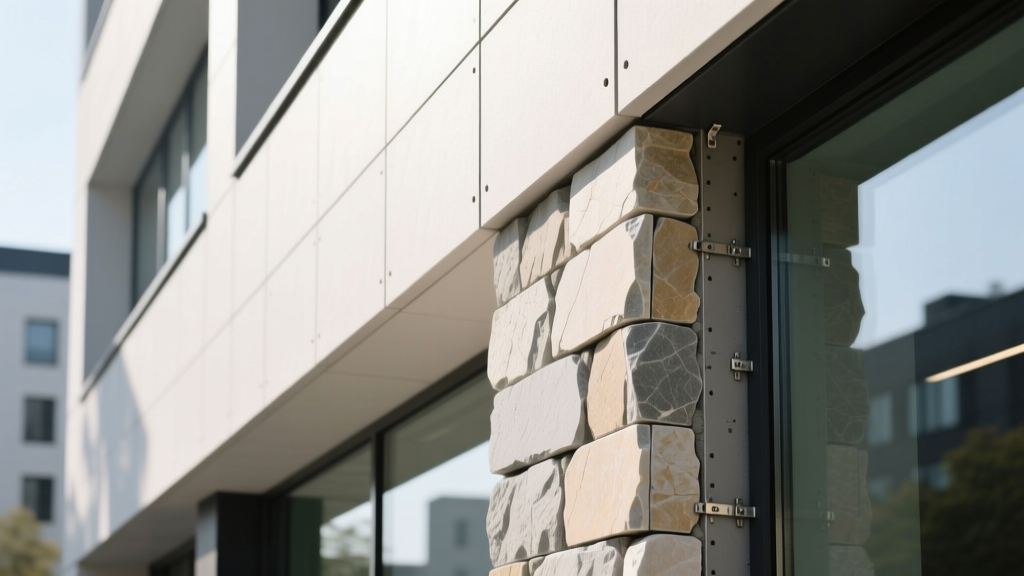
When buyers ask, 'what is veneer stone,' they are usually referring to a non-load-bearing stone cladding used for interior and exterior facades. Unlike full-bed dimensional stone, which is structurally integrated and often weighs over 40 pounds per square foot, stone veneer is a decorative facing material anchored to a structural substrate. It provides the exact aesthetic of solid masonry without requiring reinforced concrete footings or heavy structural steel framing.
In the modern building materials market, veneer stone is divided into two primary categories: Manufactured Stone Veneer (MSV) and Natural Thin Stone Veneer (NTSV). While both serve the same architectural purpose, their composition, weight profiles, and installation requirements differ significantly.
Quick Spec Sheet: Veneer Stone at a Glance
- Typical Thickness: 0.75 inches (NTSV) to 2.5 inches (MSV)
- Weight Load: 10 to 15 lbs per square foot (psf)
- Primary Substrates: Cement backer board, concrete masonry units (CMU), or approved wood framing with weather barriers
- Structural Role: Strictly decorative (non-load-bearing)
Manufactured (MSV) vs. Natural Thin Stone (NTSV)
Choosing between manufactured and natural stone requires understanding how each material is produced and how it behaves over decades of weather exposure. Manufactured stone is a Portland cement-based product cast in molds taken from real stone, colored with iron oxide pigments. Natural thin stone is real quarried stone (such as limestone, slate, or fieldstone) that has been mechanically sliced to a thin profile.
| Feature | Manufactured Stone Veneer (MSV) | Natural Thin Stone Veneer (NTSV) |
|---|---|---|
| Material Composition | Portland cement, lightweight aggregates, iron oxide pigments | Quarried natural rock (granite, limestone, slate, sandstone) |
| Average Weight | 10 - 12 lbs / sq ft | 13 - 15 lbs / sq ft |
| Color Consistency | Highly consistent; color runs through the entire cast | Natural variations; may fade or oxidize over decades |
| Edge Detailing | Requires specific corner pieces to hide the cement core | Can be mitered or chiseled on-site; solid stone throughout |
| UV & Weathering | Resistant, but extreme freeze-thaw can cause spalling if unsealed | Extremely durable; weathers naturally like full-bed stone |
Installation Methods: Traditional Mortar vs. Panelized Systems
A critical factor when determining what veneer stone is right for your project is the installation methodology. The industry has evolved beyond just trowel-applied mortar.
Traditional Mortar-Set Systems
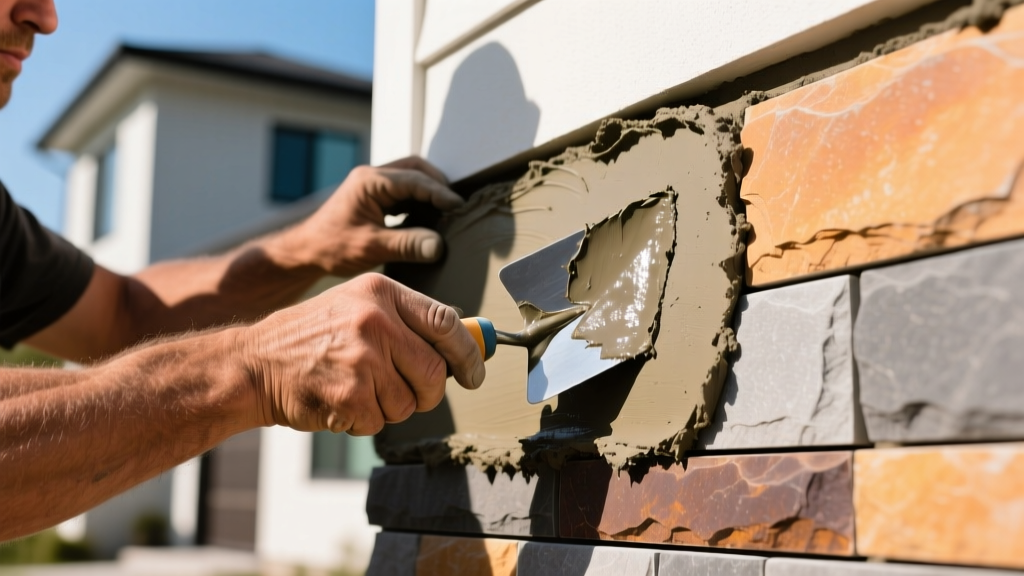
This is the legacy method requiring a weather-resistive barrier (WRB), self-furring metal lath, a 1/2-inch Portland cement scratch coat, and a 1/2-inch mortar bed. It demands skilled masons and is highly labor-intensive. According to the Masonry Veneer Manufacturers Association (MVMA), proper curing times between the scratch coat and the final stone setting are non-negotiable to prevent delamination and efflorescence.
Mechanical Panelized Systems
Products like Versetta Stone or Evolve Stone represent a massive shift in the market. These systems feature stones pre-attached to OSB, plywood, or high-density polyurethane backings. They are fastened directly to structural studs or approved sheathing using corrosion-resistant screws and hidden metal clips. Panelized systems weigh between 3.5 and 11 lbs per square foot and eliminate the need for metal lath, scratch coats, and specialized masonry labor, allowing carpenters or siding contractors to execute the installation.
The True Cost of Veneer Stone in 2026
Budgeting for stone veneer requires looking beyond the per-box material cost. The substrate preparation and labor often eclipse the stone itself.
| Cost Component | Manufactured (MSV) | Natural Thin Stone (NTSV) | Panelized Mechanical |
|---|---|---|---|
| Material Cost | $4.50 - $8.50 / sq ft | $7.00 - $15.00 / sq ft | $9.00 - $14.00 / sq ft |
| Substrate & Prep | $2.50 - $4.00 / sq ft | $2.50 - $4.00 / sq ft | $0.50 - $1.50 / sq ft |
| Labor (Installation) | $14.00 - $22.00 / sq ft | $16.00 - $25.00 / sq ft | $6.00 - $10.00 / sq ft |
| Total Installed Cost | $21.00 - $34.50 / sq ft | $25.50 - $44.00 / sq ft | $15.50 - $25.50 / sq ft |
Note: Costs reflect national averages for 2026. High-cost-of-living metropolitan areas may see labor rates 20-30% higher.
Substrate Requirements and ASTM Standards
A common and catastrophic buyer mistake is assuming veneer stone can be adhered directly to drywall, painted wood, or standard exterior house wrap. Veneer stone is heavy and porous. The Brick Industry Association (BIA) Technical Notes explicitly mandate that masonry veneer must be supported by non-combustible, moisture-resistant substrates or properly engineered mechanical framing.
For manufactured stone, compliance with ASTM C1670 / C1670M is critical. This standard dictates the compressive strength, absorption rates, and freeze-thaw durability of the cement-based veneer. If a manufacturer cannot provide an ASTM C1670 compliance sheet, do not purchase the product for exterior applications; it will likely spall and crack within three winter cycles.
Warning: The Efflorescence Trap
Efflorescence (the white, powdery salt deposit on stone surfaces) is the number one aesthetic complaint with MSV. It occurs when water migrates through the Portland cement, bringing soluble salts to the surface. To prevent this, buyers must ensure their contractor installs a weep screed at the base of the wall and uses a polymer-modified mortar mix rather than standard Type S masonry cement. Never install veneer stone directly down to the soil or concrete patio; maintain a minimum 4-inch clearance to prevent ground moisture wicking.
Buyer’s Decision Framework: Which Veneer Should You Choose?
Use this practical framework to select the exact veneer stone type that matches your project constraints.
- Scenario A: You are remodeling an interior fireplace or non-load-bearing partition wall.
Recommendation: Choose Manufactured Stone Veneer (MSV). The lower weight (10 lbs/sq ft) is easily supported by standard 2x4 wood framing with cement backer board. The cost is lower, and interior conditions eliminate freeze-thaw risks. - Scenario B: You are building a high-end custom exterior home in a wet, freeze-thaw climate.
Recommendation: Choose Natural Thin Stone Veneer (NTSV) like slate or dense limestone. Natural stone has vastly superior freeze-thaw resistance compared to cast cement and will weather beautifully over 50+ years without spalling. - Scenario C: You are a DIYer or a general contractor lacking specialized masonry labor.
Recommendation: Choose a Panelized Mechanical System. By utilizing screw-mounted clips and pre-assembled panels, you bypass the need for metal lath, scratch coats, and masonry troweling skills, saving thousands in specialized labor costs while maintaining a realistic stone aesthetic.
Understanding what veneer stone is goes far beyond the surface aesthetic. By evaluating the substrate requirements, ASTM material standards, and the true installed costs of mortar versus mechanical systems, buyers can select a cladding material that delivers lasting architectural value without structural compromise.
Written by
David NakamuraDavid Nakamura is a licensed architect (AIA) and construction technology writer focused on sustainable building methods, mass timber engineering, and high-performance building envelopes. He holds a Master of Architecture from the University of Washington and is a certified Passive House Consultant (CPHC). David spent eight years at the Seattle firm Mithun, where he led the design of three LEED Platinum projects, before founding his own practice specializing in net-zero residential design. He serves on the editorial advisory board of GreenBuilder Magazine and has authored peer-reviewed papers on cross-laminated timber (CLT) connections for the Journal of Structural Engineering. In his spare time, David teaches woodworking at Pratt Fine Arts Center and kayaks the Puget Sound.
More from David Nakamura
View all
Construction Cost
Labor Cost to Build a Deck Per Sq Ft: 2026 Installation Guide
Discover the exact labor cost to build a deck per sq ft in 2026. This installation guide breaks down contractor rates, complexity factors, and hidden fees.
Aug 4, 2026

Construction Cost
How Much Does It Cost to Build a 3 Bedroom House? Financing Guide
Learn exactly how much it costs to build a 3 bedroom house and explore 2026 financing options, construction loan types, and budget frameworks for your build.
Aug 4, 2026

Construction Cost
Cost to Build a Tennis Court: 2026 Guide
How much does it cost to build a tennis court in 2026? Breakdowns for asphalt, concrete, and synthetic surfaces plus fencing and lighting.
Jul 30, 2026