Choosing Vinyl Siding Hooks: Application Fit & Weight Limits
Match the right vinyl siding hooks to your specific application. Learn weight limits, profile compatibility, and installation scenarios for damage-free hanging.
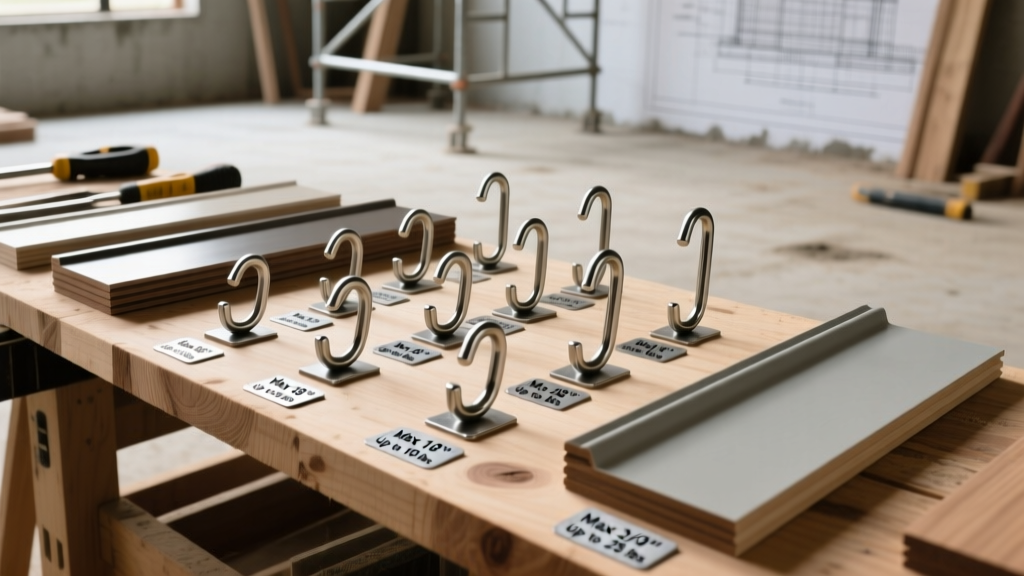
The Anatomy of a Siding Course: How Hooks Actually Engage
To select the correct vinyl siding hooks for any scenario, you must first understand the mechanical interlock of the siding itself. Vinyl siding is not a solid structural wall; it is a floating, interlocking cladding system designed to shed water while accommodating extreme thermal expansion. According to the Vinyl Siding Institute (VSI), a standard siding course consists of four distinct anatomical features: the nailing hem (slotted for lateral movement), the top lock (which curls forward), the exposed face, and the bottom lock (which curls backward to catch the top lock of the course below).
A properly engineered siding hook slides behind the bottom lock of the upper course and rests securely on the top lock of the lower course. The critical failure point in most DIY hanging scenarios occurs when the hook's thickness forces the top and bottom locks apart, breaking the water-resistive seal and creating a channel for wind-driven rain to reach the weather-resistive barrier (WRB) beneath.
Scenario Matching Matrix: Which Hook for Which Application?
Not all vinyl siding hooks are created equal. The market is saturated with generic S-hooks that fail under specific environmental or load-bearing conditions. Use the matrix below to match your specific 2026 application to the correct hardware.
| Hook Type | Best Application Scenario | Max Weight Capacity | Compatible Profiles | Primary Failure Risk |
|---|---|---|---|---|
| Standard Metal S-Hook (Stainless) | Seasonal wreaths, lightweight string lights, small bird feeders | 12–15 lbs (single point) | Dutchlap, Traditional Clapboard | Pulling the interlocking lip apart under dynamic wind loads |
| Rolling Siding Clip (Wheel Hook) | Heavy hanging baskets, large holiday light displays, patio umbrellas | 25–30 lbs (distributed) | Dutchlap, Clapboard, Beaded | Track jamming if debris accumulates in the rolling mechanism |
| Heavy-Duty J-Hook (Angled) | Security cameras, motion-sensor floodlights, address plaques | 8–10 lbs (cantilevered) | Clapboard, Half-Round | Torque leverage snapping the vinyl face in freezing temperatures |
| UV-Stabilized Polymer Clip | Temporary event signage, lightweight seasonal decor | 5–7 lbs | All horizontal profiles | UV degradation and brittle snapping after 2+ years of direct sun |
Profile Compatibility: Matching the Hook to the Siding Geometry
The geometry of your siding profile dictates which hook design will achieve a flush, secure fit without stressing the vinyl extrusion.
Dutchlap and Beaded Profiles
Dutchlap siding features a distinct beveled face and a deep shadow line. This pronounced bevel creates a natural "shelf" at the bottom lock, making it the most forgiving profile for standard metal S-hooks. The bevel allows the hook to sit flush against the face without bowing the vinyl outward. For heavy planters on Dutchlap, use a rolling clip with a wide wheel base (minimum 1.5 inches) to distribute the point load across the bevel.
Traditional Clapboard (Flat Face)
Clapboard presents a flat, exposed face with a shallower locking mechanism. Standard S-hooks often sit at an awkward angle on clapboard, causing the bottom of the hook to press into the vinyl face. This creates a stress concentration point. When hanging items on clapboard, you must use hooks with a built-in rubberized back-pad or a flattened spine to prevent denting the flat face under load.
Board and Batten (Vertical Siding)
Standard S-hooks are entirely useless on vertical board and batten siding. The interlocking mechanism runs vertically, meaning gravity will simply pull a standard hook straight down and out of the seam. For vertical siding, you must use specialized horizontal J-hooks that grip the raised "batten" edge, or adhesive-backed outdoor hooks rated for textured PVC surfaces.
As noted by InterNACHI, vinyl siding can expand and contract up to 1/2 inch per 12-foot panel depending on the seasonal temperature delta. If your hook assembly binds the siding panel—either by pinching the interlocking lip too tightly or by driving a secondary screw through the hook into the sheathing—you will restrict this lateral movement. In peak summer heat, this restricted panel will buckle and warp. In deep winter freezes, the restricted tension will cause the vinyl to shatter. Always ensure your hook allows the siding to slide laterally behind it.
Weight Distribution and Structural Reality
A common mistake is calculating weight limits based solely on the hook's metallurgy. A stainless steel S-hook might be rated for 50 lbs before bending, but the vinyl siding itself will fail long before the metal does. The true weight limit is dictated by the vinyl's structural integrity and the nailing hem's attachment to the sheathing.
- Single-Point Loads: Hanging a 15 lb object on a single hook concentrates all the downward shear force on a 2-inch section of the vinyl's bottom lock. This will cause the vinyl to creep, deform, and eventually tear out of the lock over a period of weeks.
- Distributed Loads: To hang items weighing between 15 and 30 lbs (such as a large soil-filled planter), you must use a hanging rail or a wire spreader that engages two hooks spaced exactly 16 inches apart. This aligns the hooks with the underlying wall studs, transferring the load through the siding and directly into the structural framing via the nailing hem.
Step-by-Step: Installing and Removing Siding Hooks Safely
Proper installation prevents the "zipper effect," where pulling one course out of lock causes the entire wall section to unzip. Follow this exact sequence for damage-free engagement.
- Locate the Seam: Identify the horizontal seam where the upper course overlaps the lower course. Clean the seam with a soft brush to remove dirt, wasp nests, or spider webs that could interfere with the hook's seating.
- Angle the Insertion: Do not pull the siding outward to force the hook in. Instead, tilt the top of the hook at a 45-degree angle and slide it upward behind the bottom lock of the upper course.
- Seat the Hook: Once the top curve of the hook clears the bottom lock, push the hook flat against the siding face and slide it downward until it rests firmly on the top lock of the lower course.
- Test Lateral Play: Gently push the siding panel left and right. You should feel the standard 1/4-inch of lateral play. If the panel is locked tight and cannot slide, the hook is too thick or is pinching the seam. Remove it and select a thinner gauge hook.
- Removal: To remove, lift the hook straight up and out at a 45-degree angle. Never pull the hook straight outward away from the wall, as this will pry the interlocking lips apart.
Material Degradation: Plastic vs. Stainless Steel in Modern Climates
When sourcing hooks for long-term applications (like security cameras or permanent address numbers), material selection is paramount. While clear polycarbonate and UV-stabilized nylon hooks are popular for their low visibility, they suffer from micro-fracturing after prolonged exposure to UV radiation and thermal cycling. In regions with high solar exposure, plastic hooks typically become brittle and snap under load after 18 to 24 months.
For permanent or semi-permanent scenarios, always specify 304 or 316 stainless steel hooks. Powder-coated carbon steel hooks will eventually chip at the friction points where they rub against the vinyl during wind sway, leading to rust streaks that will permanently stain the siding face. According to exterior maintenance guidelines detailed by This Old House, preventing rust bleed is critical, as iron oxide stains on vinyl are notoriously difficult to remove without damaging the PVC surface.
By matching the specific hook geometry to your siding profile, respecting the thermal expansion requirements of the cladding system, and distributing heavy loads across stud-aligned anchor points, you can safely utilize vinyl siding hooks without compromising the weather-resistive integrity of your home's exterior.