Marine Timber Preservation for Different Types of Wooden Ships
Explore wood treatment and preservation protocols for various types of wooden ships and marine structures, from epoxy encapsulation to UC5 ratings.
The Intersection of Naval Architecture and Marine Construction
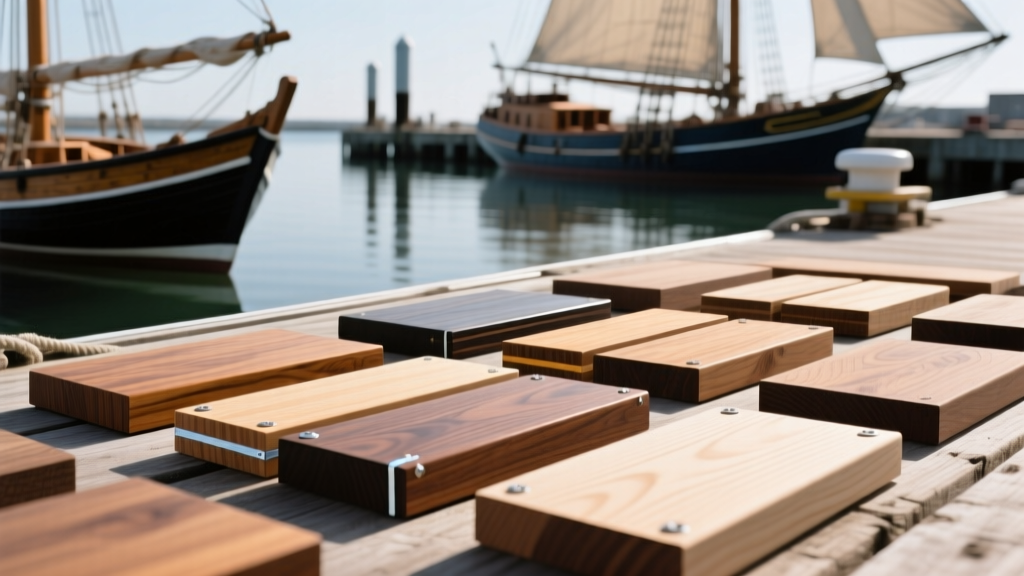
While modern waterfront construction relies heavily on steel, concrete, and composite materials, the foundational science of marine timber preservation was pioneered through the engineering of various types of wooden ships. From traditional carvel-built schooners to modern cold-molded yacht hulls, the survival of timber in highly corrosive, biologically active saltwater environments requires precise chemical and physical interventions. For building material specifiers and marine contractors, understanding how preservation techniques vary across different hull types and marine structures is critical for designing durable docks, piers, seawalls, and boat houses.
Marine environments present a tri-fold threat to timber: continuous moisture saturation, UV degradation in the atmospheric zone, and biological attack from marine borers like Teredo navalis (naval shipworm) and Limnoria tripunctata (gribble). The treatment protocol must be matched not only to the geographic exposure zone but also to the specific construction methodology of the vessel or structure.
Wood Species Selection by Hull and Structure Type
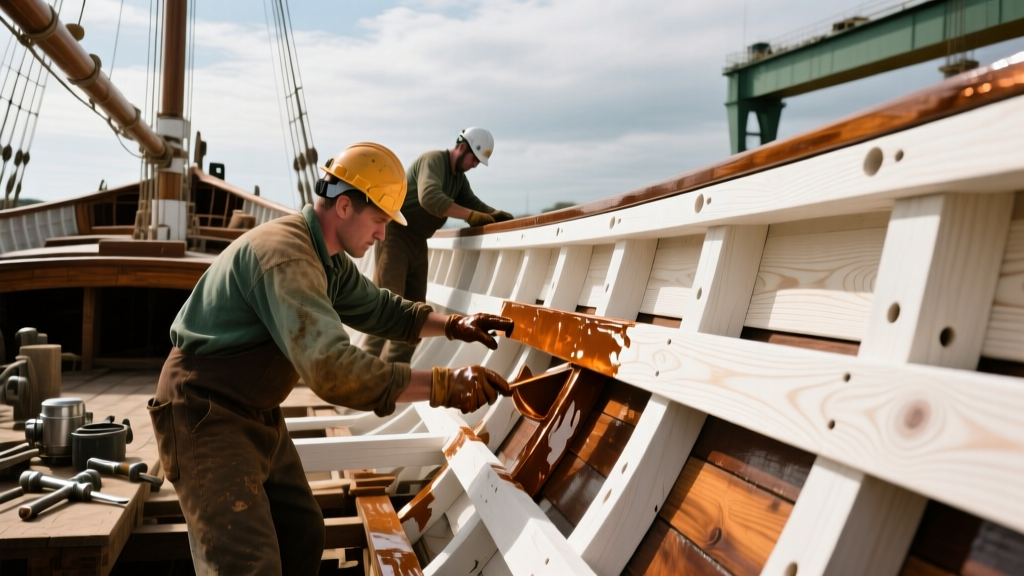
The baseline of any marine preservation strategy begins with species selection. Different types of wooden ships demand distinct mechanical properties, which in turn dictate how well the wood accepts chemical preservatives. Dense, heartwood-heavy species resist borers naturally but are notoriously difficult to pressure-treat, whereas softer sapwoods accept deep chemical penetration but lack inherent structural rigidity.
| Ship / Structure Type | Primary Timber Species | Janka Hardness (lbf) | Natural Rot / Borer Resistance | Preservative Penetration |
|---|---|---|---|---|
| Carvel-Built Hulls & Heavy Piling | White Oak (Quercus alba) | 1,360 | High (Heartwood) | Poor (Requires incising) |
| Cold-Molded Hulls & Marine Decking | Douglas Fir (Pseudotsuga menziesii) | 660 | Moderate | Excellent (Sapwood) |
| Superstructures & Brightwork | Teak (Tectona grandis) | 1,070 | Exceptional | Unnecessary |
| Modern Docks & Seawalls (2026 Std) | Acetylated Radiata Pine (Accoya) | 850 (Modified) | Exceptional (Class 1) | Factory Pre-Modified |
Modern Treatment Protocols for Marine Environments
Preserving timber for marine use requires moving beyond standard ground-contact treatments. The American Wood Protection Association (AWPA) categorizes marine exposure under Use Category 5 (UC5), which is further subdivided by water temperature and borer severity. Specifying the correct chemical retention rate is non-negotiable for structural longevity.
Copper Naphthenate and Creosote (Heavy Marine Piling)
For heavy structural timbers used in traditional ship framing and modern marine piling, Creosote and Copper Naphthenate remain the industry standards. According to the American Wood Protection Association (AWPA), timbers deployed in UC5C (Southern waters, high borer risk) require a minimum creosote retention of 0.15 pounds per cubic foot (pcf) in the outer 2.5 inches of sapwood. Copper naphthenate, often specified for its lower environmental toxicity profile compared to creosote, requires a retention of 0.10 pcf (copper metal basis) for UC5A and UC5B zones. As of 2026, industrial pressure treatment with copper naphthenate adds approximately $18 to $25 per cubic foot to raw lumber costs.
Epoxy Encapsulation (Cold-Molded and Composite Hulls)
Cold-molded construction—a method where multiple thin layers of wood veneer are laminated diagonally with epoxy resin—relies on physical encapsulation rather than chemical toxicity. Systems like WEST SYSTEM 105 Resin paired with 206 Slow Hardener penetrate the wood cellular structure, creating a moisture-impermeable barrier that starves fungal spores and prevents borer ingress.
Acetylation and Borate Diffusion (Emerging Technologies)
For marine superstructures and above-waterline ship decking, acetylated wood (commercially known as Accoya) has revolutionized preservation. The acetylation process modifies the wood's free hydroxyl groups into acetyl groups, reducing equilibrium moisture content by up to 50%. The USDA Forest Products Laboratory notes that this chemical modification yields a material with a 50-year above-water marine warranty, entirely without heavy metal biocides. Conversely, for interior ship timbers and enclosed structural cavities, borate diffusion (using disodium octaborate tetrahydrate) provides excellent fungal protection, though it is strictly limited to areas not subject to continuous saltwater leaching.
Decision Framework: Matching Treatment to Exposure Zone
When specifying materials for marine structures or restoring historic types of wooden ships, engineers must segment the structure into distinct exposure zones. A single preservation strategy will fail if applied uniformly across the entire hull or pier.
- Atmospheric Zone (Above Splash): Exposed to UV and rain, but not continuous saturation. Protocol: Acetylated wood, naturally durable heartwood (Teak/White Oak), or epoxy encapsulation with UV-blocking marine varnish (e.g., Epifanes High Gloss). Re-coating required every 3-5 years.
- Splash / Intertidal Zone: The most destructive zone. Subject to wet/dry cycling, oxygen availability, and mechanical wave impact. Protocol: Heavy pressure-treated Creosote (UC5C) or thick-section cold-molded epoxy laminates. Avoid borates here due to rapid leaching.
- Submerged Zone (Below Mudline): Continuous saturation, low oxygen. Protocol: Untreated heartwood often survives indefinitely here due to anaerobic conditions, but Copper Naphthenate (UC5A/B) is specified to protect against localized oxygen pockets and anaerobic sulfate-reducing bacteria.
Troubleshooting Marine Timber Failure Modes
Even with rigorous treatment, marine timber can fail if edge cases are ignored. Recognizing these failure modes early prevents catastrophic structural compromise.
Diagnostic Guide: Common Preservation Failures
Symptom: Soft, spongy wood just above the waterline with visible bore holes (1-2mm diameter).
Cause: Limnoria (gribble) attack. Gribbles require oxygen and attack the intertidal zone where creosote penetration was insufficient or the outer treated shell was abraded by ice/debris.
Fix: Excavate damaged timber. Wrap the affected piling in a HDPE (High-Density Polyethylene) marine piling sleeve and inject a marine-grade epoxy grout to seal the remaining core.
Symptom: Internal wood rot in epoxy-encapsulated cold-molded hulls, despite an intact outer gelcoat.
Cause: Osmotic blistering and moisture trapping. The wood was encapsulated at >18% MC, or micro-fractures in the gelcoat allowed water ingress that could not escape through the impermeable epoxy barrier.
Fix: Core the affected area. Use a localized heat lamp to drive internal MC below 12%, treat the cavity with a penetrating epoxy consolidant (e.g., Git-Rot), and seal with a breathable polyurethane topcoat rather than re-encapsulating with rigid epoxy.
Frequently Asked Questions
Can I use standard ground-contact (UC4A) treated lumber for a saltwater dock?
No. UC4A treatments (typically 0.25 pcf Alkaline Copper Quaternary - ACQ) are formulated for soil fungi and terrestrial termites. They lack the retention rates and specific biocides required to deter marine borers like Teredo navalis. Using UC4A lumber in saltwater will result in structural failure within 18 to 24 months. You must specify UC5A, UC5B, or UC5C depending on your geographic latitude and water temperature.
How does the preservation of a historic carvel ship differ from a modern cold-molded vessel?
Historic carvel ships rely on the natural swelling of untreated or lightly treated plank edges (often White Oak or Douglas Fir) against caulking materials like oakum and pine pitch to maintain watertight integrity. Modern cold-molded vessels rely on chemical stabilization and epoxy adhesives to prevent wood movement entirely. Applying modern epoxy encapsulation to a traditional carvel hull will restrict natural timber movement, causing planks to split when the hull flexes under wave loads.
What is the most cost-effective marine timber for 2026 waterfront construction?
For structural pilings, Southern Yellow Pine pressure-treated with Creosote or Copper Naphthenate to UC5C standards remains the most cost-effective, averaging $12 to $18 per linear foot for standard 12-inch diameter piles. For decking and superstructures where human contact and environmental leaching are concerns, Acetylated wood (Accoya) offers the best lifecycle cost, eliminating the need for chemical re-treatments and lasting up to 50 years in marine environments.
Written by
David NakamuraDavid Nakamura is a licensed architect (AIA) and construction technology writer focused on sustainable building methods, mass timber engineering, and high-performance building envelopes. He holds a Master of Architecture from the University of Washington and is a certified Passive House Consultant (CPHC). David spent eight years at the Seattle firm Mithun, where he led the design of three LEED Platinum projects, before founding his own practice specializing in net-zero residential design. He serves on the editorial advisory board of GreenBuilder Magazine and has authored peer-reviewed papers on cross-laminated timber (CLT) connections for the Journal of Structural Engineering. In his spare time, David teaches woodworking at Pratt Fine Arts Center and kayaks the Puget Sound.
More from David Nakamura
View all
Construction Cost
Labor Cost to Build a Deck Per Sq Ft: 2026 Installation Guide
Discover the exact labor cost to build a deck per sq ft in 2026. This installation guide breaks down contractor rates, complexity factors, and hidden fees.
Aug 4, 2026

Construction Cost
How Much Does It Cost to Build a 3 Bedroom House? Financing Guide
Learn exactly how much it costs to build a 3 bedroom house and explore 2026 financing options, construction loan types, and budget frameworks for your build.
Aug 4, 2026

Construction Cost
Cost to Build a Tennis Court: 2026 Guide
How much does it cost to build a tennis court in 2026? Breakdowns for asphalt, concrete, and synthetic surfaces plus fencing and lighting.
Jul 30, 2026