Best Type of Wood for Raised Garden Bed Rot Resistance and Soil Safety
Discover the safest type of wood for raised garden bed construction. Compare natural rot resistance, non-toxic preservatives, and soil leaching risks.
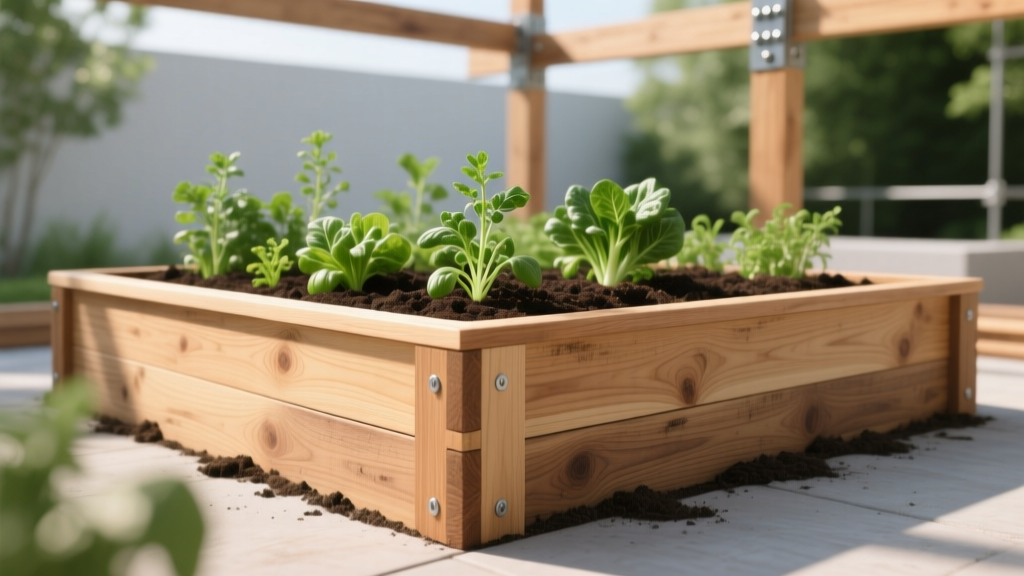
The Chemical Leaching Dilemma in Modern Treated Lumber
Selecting the right type of wood for raised garden bed construction requires balancing structural longevity with soil toxicity. For decades, Chromated Copper Arsenate (CCA) was the default preservative, but its 2003 residential phase-out left a vacuum filled by Alkaline Copper Quaternary (ACQ) and Micronized Copper Azole (MCA). While these modern treatments eliminate arsenic, they rely heavily on copper as the primary fungicide.
Soil Chemistry Warning: Copper leaching accelerates exponentially in acidic soils (pH below 6.0). According to research published by Penn State Extension, copper accumulation in the immediate 2-inch soil boundary of treated lumber can reach levels that inhibit root growth in sensitive crops like carrots and radishes, even if it remains below EPA human toxicity thresholds.
If your priority is organic certification or growing root vegetables directly against the bed walls, chemically treated pine and fir are suboptimal. The solution lies in either selecting naturally rot-resistant heartwood or applying non-toxic, physical preservation methods to budget-friendly dimensional lumber.
Naturally Rot-Resistant Species: The Baseline Data
When evaluating naturally durable species, the distinction between heartwood and sapwood is critical. Sapwood—the living outer layer of the tree—contains starches that attract fungi and insects, rotting within 2 to 3 years in ground contact. Heartwood is infused with natural extractives (like thujaplicins in cedar) that act as biological preservatives. Always specify "100% Heartwood" or "Clear Heart" grades when ordering.
| Wood Species | Janka Hardness (lbf) | Ground-Contact Lifespan | 2026 Avg. Cost (2x8 LF) | Primary Extractive / Defense |
|---|---|---|---|---|
| Black Locust | 1,700 | 25+ Years | $6.50 - $9.00 | Robinetin / Flavonoids |
| Western Red Cedar | 350 | 10 - 15 Years | $3.80 - $5.20 | Thujaplicins |
| Coast Redwood | 420 | 12 - 18 Years | $5.00 - $7.50 | Tannins / Polyphenols |
| Bald Cypress (Old Growth) | 510 | 10 - 15 Years | $4.50 - $6.00 | Cypressene |
| Douglas Fir (Untreated) | 660 | 3 - 5 Years | $1.60 - $2.40 | None (Requires Treatment) |
Non-Toxic Preservation Methods for Budget Lumber
If Black Locust or Clear Heart Redwood exceeds your budget, you can extend the lifespan of cheap, untreated Douglas Fir or Southern Yellow Pine from 4 years to over 12 years using specialized preservation techniques. The American Wood Protection Association (AWPA) recognizes several non-biocidal methods for altering wood's cellular structure to resist moisture ingress.
Before applying any surface preservative to untreated pine or fir, verify the internal moisture content is below 15% using a pin-type moisture meter. Sealing wood with higher moisture content traps water inside, accelerating internal rot from the core outward.
1. Yakisugi (Shou Sugi Ban) Charring
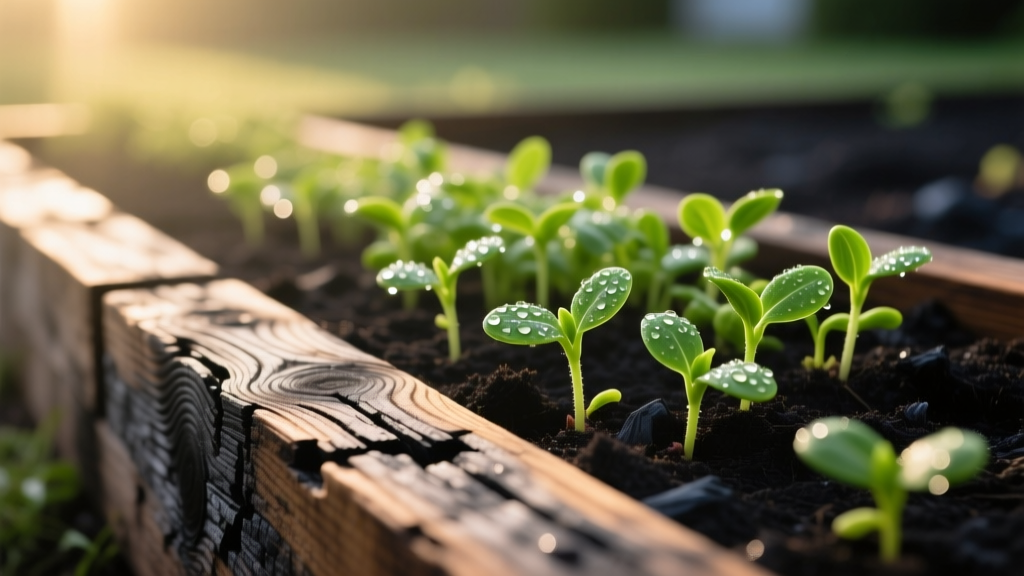
This traditional Japanese technique involves combusting the surface of the wood to create a carbonized layer. Carbon is highly stable, hydrophobic, and indigestible to fungi and termites.
- Execution: Use a MAP gas or propane roofing torch. Apply the flame until the surface develops a deep, alligator-skin char pattern (approximately 2-3mm deep).
- Preparation: Brush off loose soot with a stiff wire brush, moving strictly with the grain.
- Sealing: The charred surface is porous. You must seal it with a heavy coat of raw linseed oil or specialized tung oil to bind the carbon to the cellulose and prevent it from rubbing off onto soil or clothing.
2. Polymerized Tung or Raw Linseed Oil
Avoid commercial "boiled" linseed oil from big-box hardware stores, which contains cobalt and manganese metallic driers that are toxic to soil biology. Instead, use raw, cold-pressed linseed oil or polymerized tung oil. These oils penetrate the wood's end-grain and lateral pores, polymerizing (hardening) upon exposure to oxygen to create a water-resistant internal matrix. Apply three coats, allowing 48 hours of curing between each application.
The Physical Barrier Strategy: Isolating Wood from Soil
The most effective way to preserve any type of wood for raised garden bed setups is to eliminate the wood-to-soil interface entirely. Fungi require moisture, oxygen, and a food source; a physical barrier removes the moisture vector.
Approved Liner Materials:
- 45-Mil EPDM Rubber: Sourced from pond liner suppliers. It is UV-stable, highly puncture-resistant, and chemically inert. It will not leach plasticizers into the soil.
- 20-Mil HDPE (High-Density Polyethylene): A rigid, food-safe plastic often used in commercial agriculture. Excellent for lining the interior walls.
Materials to Avoid: Never use PVC (polyvinyl chloride) or standard polyethylene construction sheeting (6-mil visqueen). PVC contains phthalate plasticizers that leach into warm, moist soil, while thin polyethylene degrades into microplastics within two seasons due to UV exposure and soil friction.
Installation Protocol: Line only the interior vertical walls of the bed, allowing the bottom to remain open to the native earth for drainage and earthworm access. Secure the liner to the wood using stainless steel broad-head staples, ensuring the liner overlaps the top rim and is capped by the bed's trim board.
Fastener Corrosion: The Hidden Failure Point
A raised bed will fail at the joints long before the boards rot if the wrong fasteners are used. Western Red Cedar and Coast Redwood contain high levels of tannic acid. When tannic acid combines with the moisture from garden soil, it creates a highly corrosive electrolyte that rapidly destroys standard zinc-plated or hot-dipped galvanized screws.
According to Simpson Strong-Tie Corrosion Guidelines, standard zinc coatings (ASTM A153) are insufficient for continuous contact with tannin-rich woods in damp environments. You must upgrade your metallurgy:
- 304 Stainless Steel: Acceptable for the upper trim boards and exterior faces that do not contact soil.
- 316 Stainless Steel: Mandatory for all structural corner joints, bottom courses, and any fastener penetrating the soil-side liner. The addition of molybdenum in 316 SS provides superior resistance to pitting from tannic and organic acids.
- Fastener Type: Use structural wood screws (e.g., #10 x 3.5" or #10 x 4") with aggressive T-25 Torx drives and self-drilling points. Avoid lag bolts, which require pre-drilling and offer less withdrawal resistance in dimensional softwoods compared to modern structural screws with shank threads.
Decision Framework: Matching Wood to Your Scenario
Use this matrix to finalize your material selection based on your specific budget, climate, and gardening goals.
| Your Priority | Recommended Material | Required Preservation / Hardware |
|---|---|---|
| Maximum Lifespan & Zero Toxins | Black Locust (Rough Sawn) | None required. Use 316 SS structural screws. |
| Organic Root Veggies on a Budget | Untreated Douglas Fir + 45-Mil EPDM Wall Liner | Coat exterior with raw linseed oil. Use 304 SS screws. |
| Aesthetics & Moderate Durability | Clear Heart Western Red Cedar | Yakisugi charring on exterior. 316 SS screws for bottom courses. |
| Lowest Upfront Cost (Non-Edibles) | MCA-Treated Southern Yellow Pine | Safe for ornamental flowers. Do not use for food crops. |
By prioritizing heartwood extractives, utilizing physical moisture barriers, and specifying 316 stainless steel hardware, you can construct a raised garden bed that remains structurally sound and biologically safe for over a decade, regardless of the initial lumber grade selected.
Written by
James ThorntonJames Thornton is a construction industry veteran with 25 years of hands-on experience in wood framing, lumber grading, and residential building codes. He started as a framing carpenter in rural Oregon, earned his ICC Residential Building Inspector certification, and eventually became a senior plan reviewer for the City of Portland Bureau of Development Services. James holds a B.S. in Wood Science & Technology from Oregon State University and is a certified lumber grader through the West Coast Lumber Inspection Bureau (WCLIB). He has inspected over 3,000 residential construction sites and authored the city's internal guide on advanced framing techniques (2x6 at 24" O.C.). James lives in Bend, OR, where he builds custom timber-frame cabins and competes in lumberjack sports.
More from James Thornton
View all
Insulation
Best Home Insulation Materials: Complete 2026 Guide
Compare top home insulation materials for 2026. Find R-values, installed costs per square foot, and best uses for fiberglass, spray foam, and mineral wool.
Aug 4, 2026

Sustainable Building
Certify Your Green Building Material for LEED and WELL
Step-by-step guide to certifying a green building material for LEED v5 and WELL v2. Master EPDs, HPDs, and VOC limits for 2026 project specifications.
Aug 4, 2026

Stone & Masonry
Veneer Stacked Stone Panels: Interior Design & Style Showcase
Discover how veneer stacked stone panels transform interiors. Explore modern design profiles, material pairings, and technical installation specs.
Aug 4, 2026