Types of Joints of Wood: A Cost and Structural Value Analysis
Compare the cost, labor, and structural value of different types of joints of wood. Learn which woodworking joints offer the best ROI for construction.
The Economics of Wood Joinery: Labor vs. Material Costs
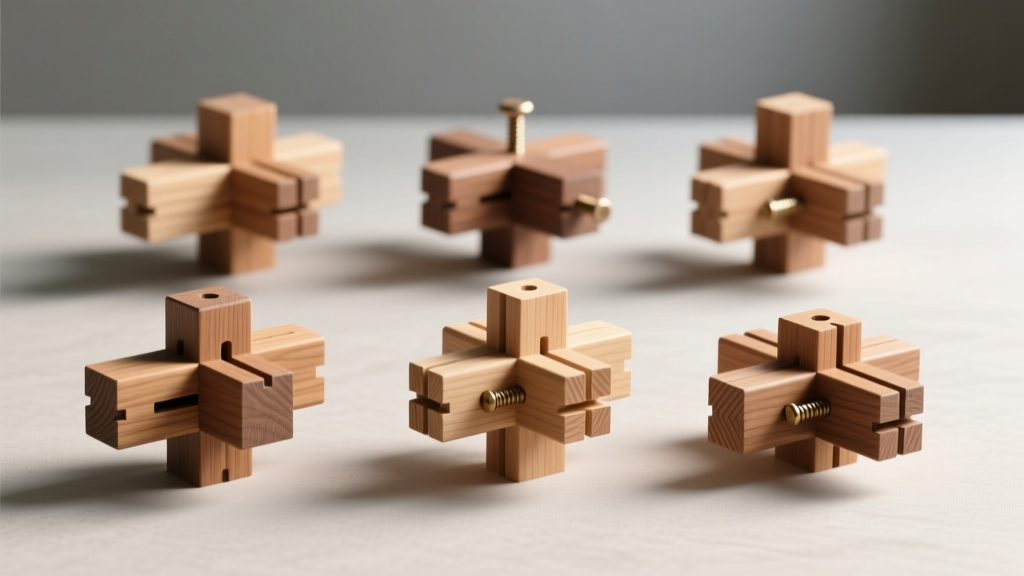
The selection of wood joinery dictates both the immediate budget and the long-term structural lifecycle of a build. When evaluating the types of joints of wood, contractors and millworkers must balance material waste, machining time, and structural longevity. A joint that costs $4.50 in fasteners and takes three minutes to assemble may seem economical until seasonal wood movement compromises its shear strength, leading to warranty callbacks that cost hundreds of dollars in labor.
Labor remains the highest variable in joinery economics. Skilled custom millworkers charge between $85 and $150 per hour. Therefore, a hand-cut dovetail joint requiring 45 minutes adds roughly $80 to the cost of a single drawer box. Conversely, a CNC-machined mortise and tenon joint, programmed in batches, reduces the per-unit labor cost to under $12, while maintaining superior structural integrity compared to mechanical fasteners.
Cost & Value Matrix: Comparing Types of Joints of Wood
The following matrix breaks down the real-world economics of standard woodworking joints, factoring in 2026 material costs, average labor times per joint for a mid-level technician, and structural performance metrics based on USDA Forest Products Laboratory guidelines.
| Joint Type | Material/Fastener Cost | Labor Time (per joint) | Shear Strength | Best Application | Long-Term ROI |
|---|---|---|---|---|---|
| Butt Joint (Glue + Pocket Screw) | $0.45 | 2 minutes | Low (relies on fastener) | Hidden cabinet boxes, temporary framing | Low |
| Dado / Rabbet | $0.10 (Glue only) | 5 minutes | Medium-High | Shelving, drawer bottoms, casegoods | High |
| Mortise & Tenon (CNC) | $0.15 (Glue only) | 8 minutes | Extremely High | Timber framing, high-end doors, chairs | Very High |
| Mortise & Tenon (Hand-Cut) | $0.15 (Glue only) | 35+ minutes | Extremely High | Heritage restoration, bespoke furniture | Medium (Labor heavy) |
| Half-Blind Dovetail (Machine) | $0.10 (Glue only) | 12 minutes | High (Withdrawal resist.) | Production drawer boxes | High |
| Floating Tenon (Domino/Biscuit) | $0.60 (Tenon + Glue) | 4 minutes | Medium-High | Panel glue-ups, frame assembly | Very High |
Deep Dive: High-Value Joints for Structural and Millwork Applications
The Mortise and Tenon: Traditional vs. CNC Economics
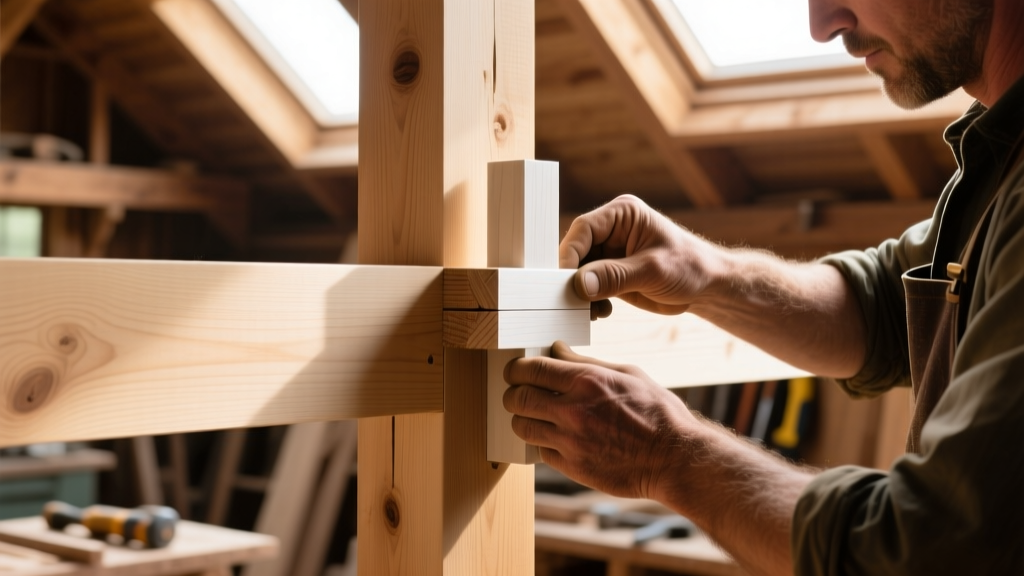
The mortise and tenon remains the gold standard for structural wood framing and high-stress furniture. According to the American Wood Council National Design Specification (NDS), properly glued mortise and tenon joints in dense hardwoods like white oak can achieve shear strengths exceeding 1,500 psi, effectively making the joint stronger than the surrounding timber.
From a cost perspective, the method of execution drastically alters the value proposition. Hand-chopping a 1-inch mortise in 8x8 timber framing takes an experienced joiner 20 to 30 minutes. At $100/hour, that is $40+ per joint. Investing in a 5-axis CNC timber processor (such as a Hundegger K2i, which leases for roughly $15,000/month) reduces the cutting time to 90 seconds. For production timber framers, the CNC pays for itself after approximately 800 joints, making it the undisputed choice for commercial and high-volume residential timber frames.
Dovetail Joints: Cabinet Millwork ROI
Dovetails offer unparalleled withdrawal resistance, preventing drawer fronts from pulling away from the sides under heavy loads. However, specifying hand-cut dovetails for a 30-unit multifamily kitchen millwork package will destroy the project budget. The optimal value play is utilizing a pneumatic or CNC dovetail machine. A machine-cut half-blind dovetail drawer box in 5/8-inch prefinished maple plywood costs roughly $18 to $22 to produce in-house (including material and machine time), compared to $45+ for a hand-cut equivalent or $35 for outsourced premium drawer boxes.
Warning: The Hidden Costs of Pocket Screws in Solid Wood
Pocket hole joinery (using systems like the Kreg K5) is heavily marketed for its speed and low barrier to entry. While excellent for plywood casework, using pocket screws to join solid wood rails and stiles is a critical error in value engineering. Solid wood expands and contracts tangentially with seasonal humidity changes. Pocket screws rigidly lock the joint, preventing natural movement. This frequently results in cracked stiles or stripped screw threads within 18 to 24 months in environments with fluctuating HVAC humidity. The short-term labor savings of $15 per door are entirely negated by warranty replacement costs.
Fastener-Assisted vs. Pure Wood Joinery: Long-Term Value
A common misconception in value engineering is that mechanical fasteners (screws, nails, dowels) add structural value to a wood joint. In reality, modern aliphatic resin wood glues (like Titebond III) create a bond that is stronger than the wood fibers themselves. When evaluating types of joints of wood for interior millwork, the highest value approach relies on maximum glue surface area rather than metal fasteners.
- Glue Surface Area: A standard butt joint offers only end-grain to long-grain contact, which absorbs glue and results in a weak bond. A floating tenon (using a tool like the Festool Domino DF 500) introduces 4 to 6 square inches of long-grain to long-grain glue surface, yielding a joint that will outlast the hardware it supports.
- Corrosion and Staining: In exterior applications or high-moisture interiors (like spa enclosures), steel fasteners can react with tannins in woods like cedar, white oak, and walnut, causing unsightly black staining. Pure wood joinery, secured with waterproof resorcinol or marine-grade epoxy, eliminates the risk of fastener corrosion and subsequent structural failure.
- Acoustic Performance: In high-end residential and commercial builds, metal fasteners can act as acoustic bridges, transmitting sound vibrations through timber frames. Traditional pegged mortise and tenon joints using dense hardwood dowels (like osage orange or hickory) provide superior acoustic dampening compared to steel lag bolts.
Decision Framework: Selecting the Right Joint for Your Budget
To optimize both budget and structural integrity, project managers and lead carpenters should apply the following decision matrix when specifying joinery:
- Assess the Load Vector: Is the joint primarily resisting shear (sliding), withdrawal (pulling apart), or racking (diagonal distortion)? Use dados and rabbets for shear loads in shelving; use dovetails or wedged through-tenons for withdrawal loads in suspended elements.
- Evaluate Wood Movement: If joining cross-grain solid wood (e.g., a solid wood tabletop to an apron), rigid joints will fail. You must specify elongated mortises with figure-8 fasteners or wooden buttons to allow for tangential expansion, prioritizing long-term survival over rigid assembly.
- Calculate the Batch Size: For runs of fewer than 15 identical components, manual routing with precision jigs (like the Leigh Dovetail Jig) offers the best ROI. For batches exceeding 50 components, the setup time for CNC machining or dedicated pneumatic tooling is justified by the per-unit labor reduction.
- Factor in Finish Visibility: If the joint will be painted (e.g., MDF or poplar trim), mechanical fasteners combined with two-part wood filler offer the highest value, as the fasteners can be concealed. If the joint will receive a clear stain or oil finish on hardwood, the joint must be entirely self-concealing (blind dovetails, miters with splines) to maintain aesthetic value without expensive putty-matching labor.
Ultimately, the true cost of wood joinery is not measured at the time of assembly, but over the decades of service. Investing in geometry and glue surface area over cheap metal fasteners consistently yields the highest structural and financial return in both timber construction and custom millwork.
Written by
David NakamuraDavid Nakamura is a licensed architect (AIA) and construction technology writer focused on sustainable building methods, mass timber engineering, and high-performance building envelopes. He holds a Master of Architecture from the University of Washington and is a certified Passive House Consultant (CPHC). David spent eight years at the Seattle firm Mithun, where he led the design of three LEED Platinum projects, before founding his own practice specializing in net-zero residential design. He serves on the editorial advisory board of GreenBuilder Magazine and has authored peer-reviewed papers on cross-laminated timber (CLT) connections for the Journal of Structural Engineering. In his spare time, David teaches woodworking at Pratt Fine Arts Center and kayaks the Puget Sound.
More from David Nakamura
View all
Construction Cost
Labor Cost to Build a Deck Per Sq Ft: 2026 Installation Guide
Discover the exact labor cost to build a deck per sq ft in 2026. This installation guide breaks down contractor rates, complexity factors, and hidden fees.
Aug 4, 2026

Construction Cost
How Much Does It Cost to Build a 3 Bedroom House? Financing Guide
Learn exactly how much it costs to build a 3 bedroom house and explore 2026 financing options, construction loan types, and budget frameworks for your build.
Aug 4, 2026

Construction Cost
Cost to Build a Tennis Court: 2026 Guide
How much does it cost to build a tennis court in 2026? Breakdowns for asphalt, concrete, and synthetic surfaces plus fencing and lighting.
Jul 30, 2026