Types of Wood Boards: 2026 Cost & Value Analysis
Compare the cost and value of various wood board types for construction. Get 2026 pricing data, ROI insights, and material selection frameworks.
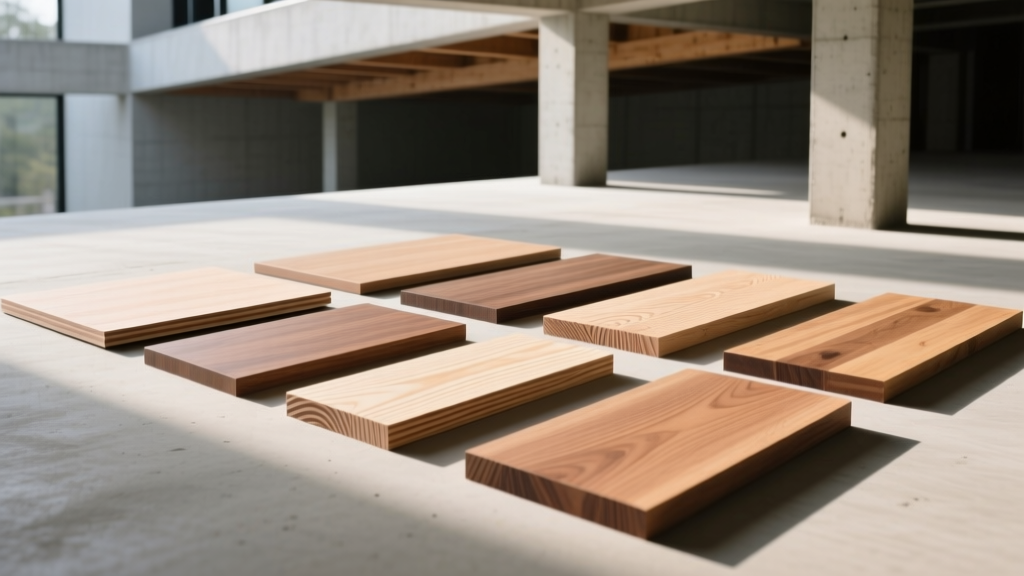
The True Cost of Wood Boards: Beyond the Price Tag
When evaluating the various types of wood boards for construction and millwork, relying solely on the initial purchase price is a critical error. The true value of a wood board is calculated by its installed cost, troubleshooting, or replacement cost over its lifespan. In 2026, material costs have stabilized compared to the volatile pandemic years, but supply chain nuances and tariff adjustments on Canadian softwood continue to create pricing disparities between engineered panels and solid lumber. This analysis breaks down the real-world cost and long-term value of the most common wood boards used in residential and commercial building.
Comparative Cost & Value Matrix
The following matrix outlines baseline 2026 market pricing for standard sheet goods and dimensional lumber. Note that 'Value Rating' reflects the material's longevity and structural reliability relative to its cost, not just its cheapness.
| Board Type | Avg. Cost (2026) | Primary Application | Value Rating | Primary Failure Mode |
|---|---|---|---|---|
| OSB (7/16" Exposure 1) | $38 - $45 / sheet | Wall & Roof Sheathing | 3.5 / 5 | Edge swelling, fungal decay |
| CDX Plywood (1/2") | $62 - $75 / sheet | Subfloor, High-Moisture Sheathing | 4.5 / 5 | Delamination (if poorly stored) |
| MDF (3/4" Ultra-Lite) | $50 - $60 / sheet | Painted Cabinetry, Interior Trim | 4.0 / 5 | Moisture absorption, screw blowout |
| SPF Dimensional (2x4) | $4.25 - $5.10 / 8ft | Interior Framing, Non-load Walls | 3.0 / 5 | Warping, twisting, knot blowout |
| Douglas Fir (2x6 #2) | $9.50 - $11.00 / 8ft | Load-bearing Walls, Joists, Beams | 4.8 / 5 | Surface checking (cosmetic) |
| Red Oak Hardwood (4/4) | $6.50 - $8.50 / bd ft | Flooring, Stained Millwork | 5.0 / 5 | Thermal expansion, UV fading |
Structural Sheathing: OSB vs. Plywood
The debate between Oriented Strand Board (OSB) and Plywood for structural sheathing is the most common cost-value dilemma in framing. OSB typically costs 30% to 40% less than CDX plywood per 4x8 sheet. For a standard 2,500 sq. ft. home requiring roughly 250 sheets of wall and roof sheathing, choosing OSB yields an upfront savings of $6,000 to $8,000.
The Moisture Variable
While OSB meets the same APA structural performance standards as plywood, its value proposition degrades rapidly in high-moisture environments. OSB edges are highly susceptible to 'edge swell' when exposed to rain during the framing stage before the weather-resistant barrier (WRB) is installed. Once OSB swells, it does not shrink back to its original dimensions, leading to visible ridges under siding or asphalt shingles (telegraphing).
Expert Insight: If your build is in a high-precipitation climate (e.g., the Pacific Northwest) or your framing schedule is prone to weather delays, the $8,000 savings on OSB will be entirely erased by the labor cost of sanding down swollen edges or replacing compromised sheets. In these scenarios, CDX plywood or advanced edge-sealed OSB (like AdvanTech) offers superior ROI.
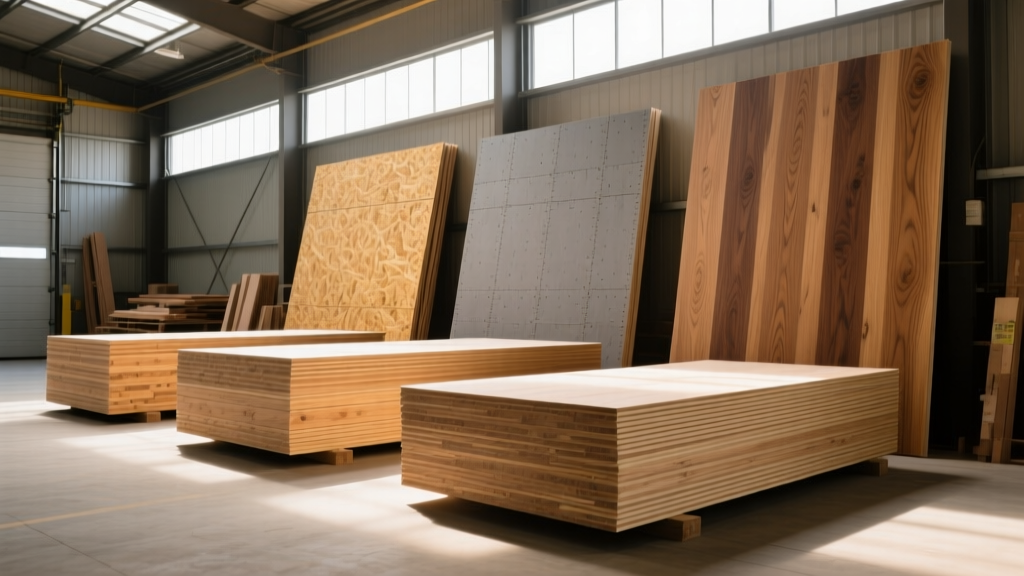
Interior Millwork: MDF vs. Solid Hardwood
For interior applications like cabinetry, wainscoting, and painted trim, the choice between Medium Density Fiberboard (MDF) and solid hardwood (like Poplar or Maple) dictates both the budget and the lifespan of the finish.
- MDF (Medium Density Fiberboard): Priced around $55 per 3/4" sheet, MDF is an engineered composite of wood fibers and resin. Its primary value lies in its perfectly smooth, grain-free surface, which requires significantly less primer and sanding to achieve a flawless painted finish. However, MDF has near-zero screw withdrawal strength. Joints must be secured using specialized fasteners like Confirmat screws or pocket holes with structural adhesive, and it will catastrophically fail if exposed to standing water (e.g., under a leaky kitchen sink).
- Solid Poplar (Paint Grade): Costing roughly $3.50 to $4.50 per board foot, Poplar is the traditional choice for painted millwork. It holds screws exceptionally well and can be routed for complex profiles. However, solid wood expands and contracts across the grain with seasonal humidity changes, which can cause hairline cracks in the paint at the joints over time.
The Hybrid Value Strategy
High-end custom cabinetmakers in 2026 maximize value by using a hybrid approach: MDF for the large, flat cabinet doors and drawer fronts (preventing warping and ensuring a smooth painted finish), paired with solid Poplar or Maple for the face frames and structural cabinet boxes (providing the necessary screw-holding strength for hinges and drawer slides).
Dimensional Lumber: SPF vs. Douglas Fir
When purchasing dimensional boards for framing, buyers typically choose between SPF (Spruce-Pine-Fir) and Douglas Fir-Larch. SPF is the budget standard, but understanding the mechanical properties reveals where Douglas Fir provides necessary structural value.
According to the Forest Products Laboratory, Douglas Fir possesses a significantly higher Modulus of Elasticity (MOE) and bending strength (Fb) compared to SPF. For standard interior, non-load-bearing partition walls, SPF 2x4s are perfectly adequate and represent the highest value. However, for long-span floor joists, heavily loaded headers, or exposed structural beams, the 15% to 20% premium for Douglas Fir prevents costly structural deflection (bouncing floors) and reduces the need for intermediate support beams, saving on overall foundation and labor costs.
Hidden Costs: Fasteners, Waste, and Mitigation
A true cost analysis must account for the secondary materials required to make the wood board perform correctly.
- Fastener Compatibility: The resins and chemical treatments in certain engineered boards dictate fastener choices. For example, using standard zinc-plated nails on pressure-treated plywood or certain fire-rated OSB can lead to rapid galvanic corrosion. Upgrading to hot-dipped galvanized or Type 316 stainless steel fasteners adds $0.05 to $0.15 per fastener, a necessary cost that impacts the total installed price.
- Waste Factors: Solid lumber boards (especially lower grades like #3 Common) carry a waste factor of 10% to 15% due to wane, knots, and warping that must be cut away. Engineered sheet goods like MDF and OSB have a near-zero waste factor, as they are manufactured to exact 4x8 dimensions with uniform consistency.
- Edge Sealing: When cutting OSB or MDF on-site, the exposed core is vulnerable. Failing to apply a polyurethane edge sealer or primer to cut edges of MDF in a bathroom environment will result in moisture wicking, leading to swollen, crumbling joints within 24 months.
2026 Market Variables Impacting Wood Pricing
Several macroeconomic factors are currently influencing the cost and availability of wood boards. The ongoing renegotiation of the US-Canada Softwood Lumber Agreement continues to cause tariff-driven price fluctuations on SPF dimensional lumber and plywood. Conversely, the domestic production capacity for OSB and MDF has expanded, keeping engineered panel prices relatively insulated from cross-border tariff disputes. Additionally, the rise of mass timber construction has increased the commercial demand for high-grade Douglas Fir and Glulam, slightly squeezing the supply and raising prices for premium residential framing lumber.
Frequently Asked Questions
Is it cheaper to buy wood boards at a big box store or a local lumberyard?
For small quantities of dimensional SPF and standard OSB, big box stores (Home Depot, Lowe's) are highly competitive due to bulk purchasing power. However, for specialty sheet goods (like high-density MDF, marine-grade plywood, or pre-finished hardwoods), local lumberyards often offer better pricing, significantly higher grading quality, and lower moisture content, which reduces acclimation time and warping.
What is the most cost-effective wood board for exterior siding?
While solid cedar or redwood boards offer excellent natural rot resistance, their 2026 pricing is prohibitive for most budgets. Engineered wood siding boards (like LP SmartSide, which is an OSB-based composite treated with zinc borate) offer the highest value. They cost roughly 30% less than solid cedar, install faster due to longer board lengths (16ft vs 12ft), and carry extensive 50-year warranties against fungal decay.
How do I calculate the board footage for hardwood purchases?
Hardwood is sold by the board foot,, not by linear foot. The formula is: (Thickness in inches × Width in inches × Length in inches) ÷ 144. For example, a 1" × 6" × 96" (8ft) board equals 4 board feet. Always add 15% to your total board footage calculation to account for defects and off-cuts when milling rough-sawn hardwood.
Written by
James ThorntonJames Thornton is a construction industry veteran with 25 years of hands-on experience in wood framing, lumber grading, and residential building codes. He started as a framing carpenter in rural Oregon, earned his ICC Residential Building Inspector certification, and eventually became a senior plan reviewer for the City of Portland Bureau of Development Services. James holds a B.S. in Wood Science & Technology from Oregon State University and is a certified lumber grader through the West Coast Lumber Inspection Bureau (WCLIB). He has inspected over 3,000 residential construction sites and authored the city's internal guide on advanced framing techniques (2x6 at 24" O.C.). James lives in Bend, OR, where he builds custom timber-frame cabins and competes in lumberjack sports.
More from James Thornton
View all
Insulation
Best Home Insulation Materials: Complete 2026 Guide
Compare top home insulation materials for 2026. Find R-values, installed costs per square foot, and best uses for fiberglass, spray foam, and mineral wool.
Aug 4, 2026

Sustainable Building
Certify Your Green Building Material for LEED and WELL
Step-by-step guide to certifying a green building material for LEED v5 and WELL v2. Master EPDs, HPDs, and VOC limits for 2026 project specifications.
Aug 4, 2026

Stone & Masonry
Veneer Stacked Stone Panels: Interior Design & Style Showcase
Discover how veneer stacked stone panels transform interiors. Explore modern design profiles, material pairings, and technical installation specs.
Aug 4, 2026