2026 Regional Cost to Build a 10x12 Shed: Price Analysis
Discover the true cost to build a 10x12 shed in 2026. We break down regional material and labor prices across the US to help you budget accurately.
The 120 Square Foot Threshold: Why 10x12 Matters
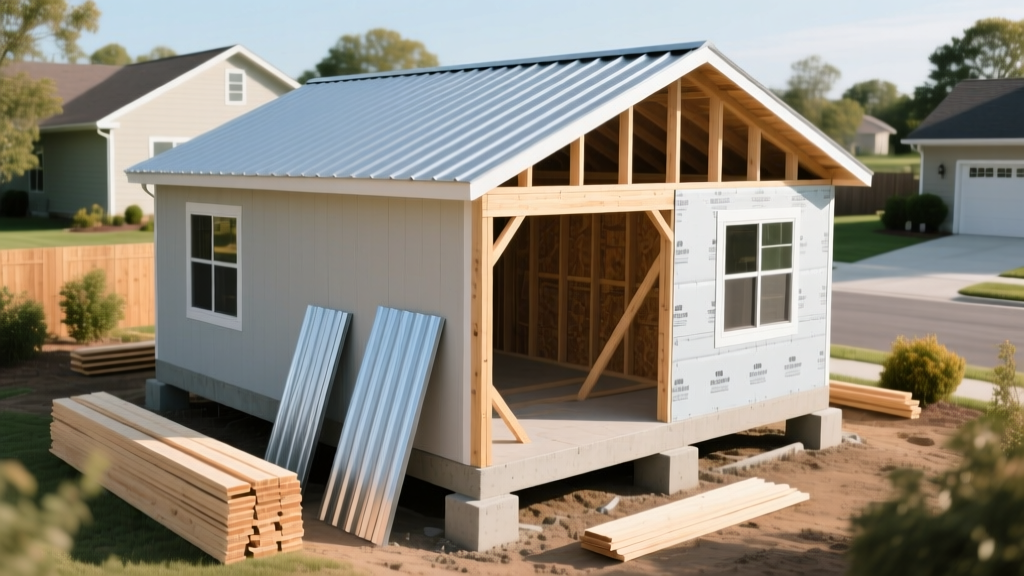
When calculating the cost to build a 10x12 shed, you are working with exactly 120 square feet of footprint. This is not an arbitrary dimension; it is a critical regulatory threshold. Under the International Residential Code (IRC) Section R105.2, accessory structures with a floor area of 120 square feet or less are frequently exempt from full building permit requirements, provided they do not contain plumbing or habitable space. Pushing your dimensions to 10x13 (130 sq ft) instantly triggers mandatory permitting, engineered foundation plans, and municipal inspections, which can add $600 to $1,500 to your baseline budget and delay construction by 4 to 8 weeks.
Regional Price Matrix: 2026 Material & Labor Variations
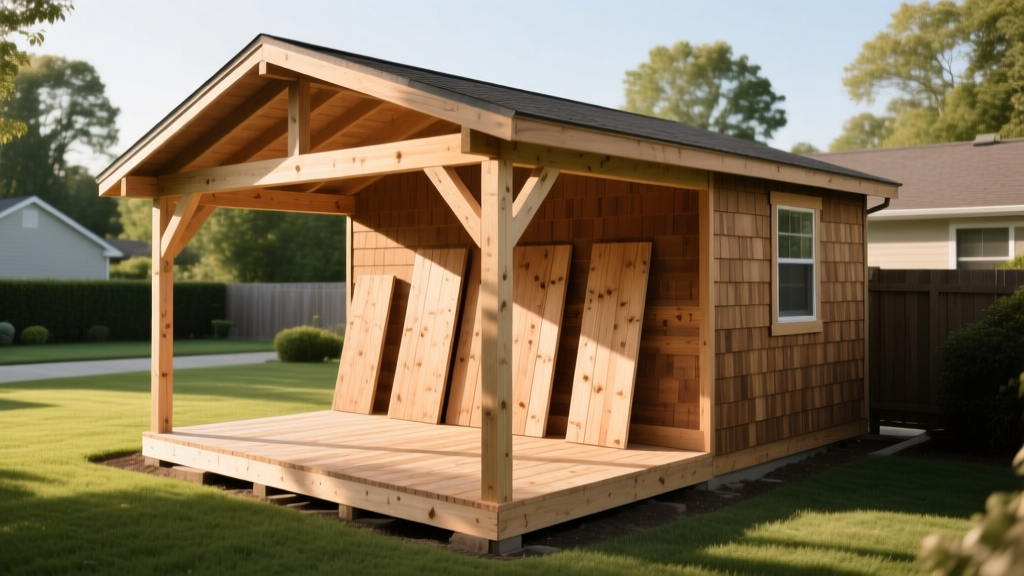
The national average cost to build a 10x12 shed ranges from $4,800 to $7,200 for a stick-built, architecturally finished structure. However, regional disparities in labor rates, frost-line depths, and wind/snow engineering drastically alter the final invoice. Below is the 2026 regional breakdown for a fully finished 10x12 shed built on-site.
| Region | Avg. Labor Rate | Foundation Req. | Total Cost Range |
|---|---|---|---|
| Northeast | $75 - $115 / hr | 48" Frost Piers | $6,800 - $9,400 |
| South | $55 - $85 / hr | Surface Skids / 12" Piers | $4,200 - $6,100 |
| Midwest | $60 - $95 / hr | 42" Frost Piers | $5,400 - $7,800 |
| West / Coastal | $85 - $130 / hr | Seismic / Helical Piers | $7,100 - $10,500 |
Deconstructing the 10x12 Budget: Exact Material Takeoffs
To understand where regional price variances originate, you must look at the raw material takeoff. A standard 10x12 shed framed with 2x4 walls at 16 inches on-center (OC) and 2x6 floor joists requires specific volumes of lumber. Price fluctuations in dimensional lumber and engineered wood directly impact your bottom line.
Floor System & Foundation
- Skids: Three 4x4x12' pressure-treated (PT) Southern Yellow Pine runners. In the South, ground-contact rated (UC4A) PT lumber is mandatory due to high moisture and termite pressure, adding roughly 15% to the lumber cost compared to above-ground rated wood used in drier climates.
- Joists: Ten 2x6x12' PT joists spaced at 16" OC.
- Subfloor: Four sheets of 3/4-inch tongue-and-groove plywood. For high-humidity regions, upgrade to AdvanTech or similar moisture-resistant OSB to prevent edge swelling, which adds approximately $140 to the material total.
Wall Framing & Siding
- Studs: Approximately 45 2x4x8' studs for walls, including top and bottom plates.
- Siding: LP SmartSide lap siding requires roughly 14-16 16-foot lengths for a 10x12 footprint (accounting for overlaps and waste). In the West and South, fiber cement (like James Hardie) is often mandated or preferred for its wildfire resistance (WUI compliance) and rot resistance, increasing siding costs by $800 to $1,200 over engineered wood.
A standard 4/12 roof pitch requires standard rafter spans. However, if you are building in the Midwest or Northeast where ground snow loads exceed 30 psf, the American Wood Council (AWC) span tables dictate upgrading from 2x4 rafters to 2x6 rafters, or reducing rafter spacing from 24" OC to 16" OC. This structural upgrade adds roughly $350 in lumber and $200 in labor.
Hidden Regional Variables That Skew Costs
Generic shed cost calculators fail to account for localized geotechnical and meteorological requirements. These three factors cause the widest budget overruns in 10x12 shed construction.
1. Frost Line Depth and Concrete Volume
If you opt for a permanent pier foundation instead of surface skids, the local frost line dictates your concrete budget. In Texas (South), a 12-inch pier requires roughly 1 cubic foot of concrete per hole. In upstate New York (Northeast), a 48-inch frost depth requires 4 cubic feet per hole. For a 10x12 shed requiring 6 piers, the Northeast builder must excavate and pour 24 cubic feet of concrete compared to the Southern builder's 6 cubic feet. This quadruples the foundation material and labor costs, adding $600 to $900 to the project.
2. High-Velocity Hurricane Zones (HVHZ) Engineering
Building within 50 miles of the Gulf or Atlantic coast subjects your shed to HVHZ wind codes. A standard 10x12 shed uses simple toe-nailing for roof connections. Coastal builds require Simpson Strong-Tie H2.5A hurricane ties on every rafter, structural screws instead of standard nails, and impact-rated or shuttered windows. These hardware and fenestration upgrades typically add $900 to $1,400 to the total cost.
3. Flood Zone Elevation Requirements
According to the FEMA Flood Map Service Center, structures in Special Flood Hazard Areas (SFHA) must be elevated above the Base Flood Elevation (BFE). If your 10x12 shed is in an AE zone, you cannot use simple ground skids. You must build an elevated platform supported by breakaway walls or deep-driven helical piers, which can instantly double the foundation budget from $800 to over $2,500.
Site Preparation & Access Surcharges
The physical location of the build site within your property heavily influences labor hours. A 10x12 shed generates approximately 1,500 pounds of lumber and roofing materials. If the build site is accessible by a flat, wide path, contractors will use motorized wheelbarrows or small skid steers to move materials, keeping site-prep labor under $400.
However, if the site requires navigating narrow side-yards (under 36 inches wide), steep grades (over 15% incline), or carrying materials through finished landscaping, contractors will apply an 'access surcharge.' Expect to pay an additional $3 to $6 per square foot of shed footprint in manual material handling fees. For a 10x12 shed, difficult site access adds $360 to $720 in pure labor costs before a single nail is driven.
Actionable Framework: Adjusting Your Local Quote
When evaluating contractor bids or planning a DIY build for a 10x12 shed, apply this adjustment matrix to ensure your budget reflects reality:
- Verify the Footprint: Measure exactly 120 sq ft (including overhangs if your municipality counts them). Do not let a contractor talk you into a 10x13 'for just a bit more space' without calculating the permit cost delta.
- Check the Span Tables: Look up your county's specific snow and wind load requirements. Cross-reference these with the AWC span tables to ensure the contractor isn't under-engineering the roof or over-billing for unnecessary steel beams.
- Itemize the Concrete: Demand that foundation quotes specify the depth of the piers. Compare this depth to your county's published frost line to ensure you aren't paying for 48-inch holes in a 12-inch frost zone, or risking frost heave with shallow holes in the North.
Written by
Priya KapoorPriya Kapoor is a real estate market analyst and construction economics researcher with expertise in housing affordability, development feasibility, and infrastructure investment. She holds a Master of Regional Planning from Cornell University and previously worked as a senior analyst at CBRE's Investment Properties group, where she modeled returns for $4B in mixed-use development pipelines. Priya now runs an independent research practice advising developers, municipalities, and REITs on construction cost forecasting and market timing. She publishes the quarterly "BuildMat Market Pulse" report tracking material price indices across 12 commodity categories. Based in Austin, TX, Priya serves on the board of Habitat for Humanity Austin and is a marathon runner.
More from Priya Kapoor
View all
Construction Cost
Cost to Build a 1600 Sq Ft Home in 2026: Full Breakdown
Accurate 2026 cost to build a 1600 sq ft home—material, labor, and regional pricing breakdowns included. Plan your budget with real-time estimates.
Aug 11, 2026

Wood & Lumber
Name the Types of Wood for Pressure Treatment and Preservation
Learn how to name the types of wood best suited for pressure treatment. Compare species treatability, chemical retention levels, and 2026 preservation costs.
Aug 4, 2026

Stone & Masonry
Stone Veneer Suppliers Lindenhurst: 2026 Cost Analysis
Analyze 2026 stone veneer costs in Lindenhurst, NY. Compare local supplier pricing, delivery fees, and Suffolk County installation labor rates.
Aug 4, 2026