Calculate the Cost to Build a Chatbot: Size & Scope Guide
Estimate the cost to build a chatbot using our size and scope calculator. Break down pricing by AI complexity, integrations, and development phases.

The Chatbot Size & Scope Estimation Framework
Estimating the cost to build a chatbot requires moving beyond flat-rate agency quotes and adopting a structural sizing methodology. Just as physical construction relies on square footage and material grades, software construction relies on conversational volume, intent complexity, and integration depth. As of 2026, the proliferation of Retrieval-Augmented Generation (RAG) and multi-modal AI has fundamentally shifted pricing models from simple per-seat licensing to compute-heavy, token-based architectures. This guide provides a rigorous size and scope calculator framework to accurately forecast your chatbot development budget.
Defining 'Size' in Conversational AI
In chatbot development, 'size' is not measured in lines of code, but in conversational parameters. To calculate your baseline size, tally the following metrics:
- Intents: The distinct user goals the bot must recognize (e.g., 'reset password', 'check order status'). A mid-sized enterprise bot typically requires 80-120 distinct intents.
- Utterances: The training phrases per intent. Robust Natural Language Understanding (NLU) requires a minimum of 20-30 diverse utterances per intent to prevent false positives.
- Entities: The specific data points to extract (e.g., dates, account numbers, product SKUs).
- Dialog Turns: The average number of back-and-forth interactions required to resolve a query. Complex troubleshooting flows often exceed 12 turns.
Defining 'Scope' and Architectural Complexity
Scope dictates the underlying engine. A rule-based decision tree requires minimal machine learning but high manual maintenance. Conversely, a Generative AI agent with RAG integration requires sophisticated vector database management, prompt engineering, and strict guardrail implementation to prevent hallucinations.
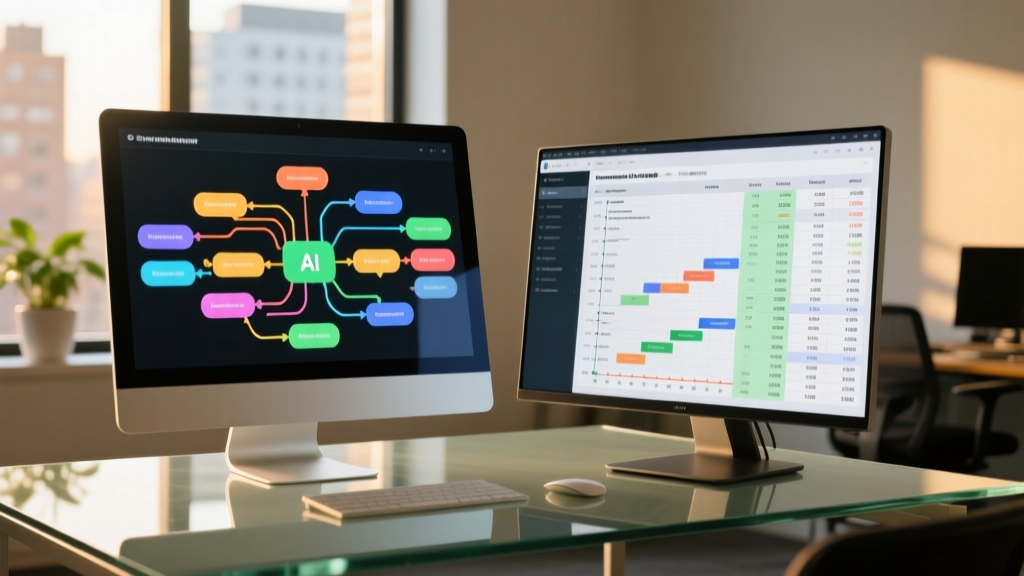
Cost Breakdown by Chatbot Tier
Use this matrix to identify where your project falls on the complexity spectrum. These estimates reflect 2026 agency and enterprise development rates.
| Tier | Architecture | Typical Size (Intents/APIs) | Development Cost | Monthly Run Cost |
|---|---|---|---|---|
| Tier 1: Rule-Based | Decision Tree / Button Driven | 20-40 Intents / 1 API | $8,000 - $18,000 | $150 - $500 |
| Tier 2: NLP Intent-Driven | Discriminative AI (e.g., Dialogflow CX) | 80-150 Intents / 3-5 APIs | $35,000 - $85,000 | $800 - $2,500 |
| Tier 3: Generative RAG | LLM + Vector Database + Guardrails | Dynamic / 10+ APIs / Knowledge Base | $90,000 - $250,000+ | $3,000 - $10,000+ |
Phase-by-Phase Development Cost Calculator
To build a precise budget, allocate your total estimated cost across the software development lifecycle (SDLC). The percentages below represent industry standards for Tier 2 and Tier 3 enterprise chatbots.
1. Discovery and VUI Design (15% of budget)
Voice and User Interface (VUI) design involves mapping conversation flows, defining the bot's persona, and creating fallback strategies. This phase costs between $5,000 and $15,000. Skipping this phase inevitably leads to 'spaghetti code' dialog trees that require expensive refactoring post-launch.
2. NLU Training and Backend Development (40% of budget)
This is the core framing stage. Developers configure the NLU engine, write system prompts for LLMs, and build the dialog management state machine. For Generative AI bots, this includes setting up the RAG pipeline, chunking enterprise documents, and generating vector embeddings. According to Google Cloud Dialogflow CX pricing structures, text requests and audio processing scale linearly, meaning backend optimization directly impacts long-term operational costs.
3. API Integrations and Middleware (25% of budget)
A chatbot is only as valuable as the data it can access. Integrating with Salesforce, Zendesk, or custom ERP systems requires building secure middleware. Each API integration typically adds $4,000 to $8,000 to the development cost, factoring in OAuth2 authentication, rate limiting, and error handling.
4. QA, Security, and Red-Teaming (20% of budget)
Testing conversational AI is non-deterministic. QA must include adversarial 'red-teaming' to ensure the bot cannot be manipulated into revealing PII or generating toxic content. This phase is critical for enterprise compliance (SOC2, HIPAA) and typically requires specialized AI QA engineers.
When building Tier 3 RAG chatbots, budget an additional 10-15% specifically for guardrail implementation. Tools like NeMo Guardrails or custom LLM-as-a-judge evaluators are mandatory to prevent the bot from fabricating policies or financial data. Never deploy an unguarded LLM directly to a customer-facing endpoint.
Hidden Cost Variables: LLMs and Token Usage
Unlike traditional software where hosting costs are predictable, Generative AI chatbots incur variable compute costs based on token usage. When calculating the cost to build a chatbot, you must model the ongoing inference costs.
- Embedding Costs: Processing a 10,000-page knowledge base into vector embeddings using models like OpenAI's text-embedding-3-large is a one-time cost (usually under $100), but requires re-processing whenever source documents update.
- Inference Costs: Every user prompt and bot response consumes tokens. A verbose RAG bot might consume 4,000 tokens per interaction. At enterprise LLM pricing rates, 1 million monthly interactions can yield $2,000 to $6,000 in raw API compute costs alone.
- Vector Database Hosting: Managed services like Pinecone or Milvus charge based on storage and read/write units. Expect $500 to $1,500 monthly for enterprise-grade, highly available vector storage.
Ongoing Maintenance and Continuous Training
Chatbots degrade over time as user behavior shifts and business policies change. Allocate 15% to 20% of your initial development cost for annual maintenance. This covers:
- Intent Tuning: Reviewing unrecognized utterances weekly and adding them to the training corpus.
- Knowledge Base Syncing: Updating the vector database when company documentation changes.
- Platform Updates: Adapting to deprecations in underlying APIs, such as shifts in IBM watsonx Assistant pricing tiers or Azure Bot Service architecture updates.
'The most common failure mode in enterprise chatbot deployments is not technical; it is financial. Teams budget for the build but fail to model the token-compute costs and the ongoing conversational design required to maintain accuracy over a 24-month lifecycle.' — Enterprise AI Architecture Review, 2025.
Actionable Decision Matrix: Build vs. Buy vs. Assemble
Use this framework to determine your execution strategy based on your calculated scope.
| Strategy | Best For | Time to Market | Customization Limit |
|---|---|---|---|
| Buy (SaaS) | Tier 1 & basic Tier 2 (FAQ, simple routing) | 2 - 4 Weeks | Low (restricted to vendor UI) |
| Assemble (Low-Code) | Tier 2 (CRM integration, standard NLP) | 1 - 3 Months | Medium (API limits apply) |
| Build (Custom Code) | Tier 3 (Proprietary RAG, complex logic) | 4 - 8 Months | High (full architectural control) |
By rigorously defining your intent volume, integration depth, and AI architecture tier, you can accurately calculate the cost to build a chatbot that aligns with your operational realities. Avoid fixed-bid traps by tying your budget directly to these measurable scope parameters, ensuring your investment yields a resilient, scalable conversational asset.
Written by
James ThorntonJames Thornton is a construction industry veteran with 25 years of hands-on experience in wood framing, lumber grading, and residential building codes. He started as a framing carpenter in rural Oregon, earned his ICC Residential Building Inspector certification, and eventually became a senior plan reviewer for the City of Portland Bureau of Development Services. James holds a B.S. in Wood Science & Technology from Oregon State University and is a certified lumber grader through the West Coast Lumber Inspection Bureau (WCLIB). He has inspected over 3,000 residential construction sites and authored the city's internal guide on advanced framing techniques (2x6 at 24" O.C.). James lives in Bend, OR, where he builds custom timber-frame cabins and competes in lumberjack sports.
More from James Thornton
View all
Insulation
Best Home Insulation Materials: Complete 2026 Guide
Compare top home insulation materials for 2026. Find R-values, installed costs per square foot, and best uses for fiberglass, spray foam, and mineral wool.
Aug 4, 2026

Sustainable Building
Certify Your Green Building Material for LEED and WELL
Step-by-step guide to certifying a green building material for LEED v5 and WELL v2. Master EPDs, HPDs, and VOC limits for 2026 project specifications.
Aug 4, 2026

Stone & Masonry
Veneer Stacked Stone Panels: Interior Design & Style Showcase
Discover how veneer stacked stone panels transform interiors. Explore modern design profiles, material pairings, and technical installation specs.
Aug 4, 2026