Cheapest Building Materials by Region: 2026 Cost Analysis
Discover the cheapest building materials by region in 2026. Compare localized lumber, concrete, and steel costs to optimize your construction budget.
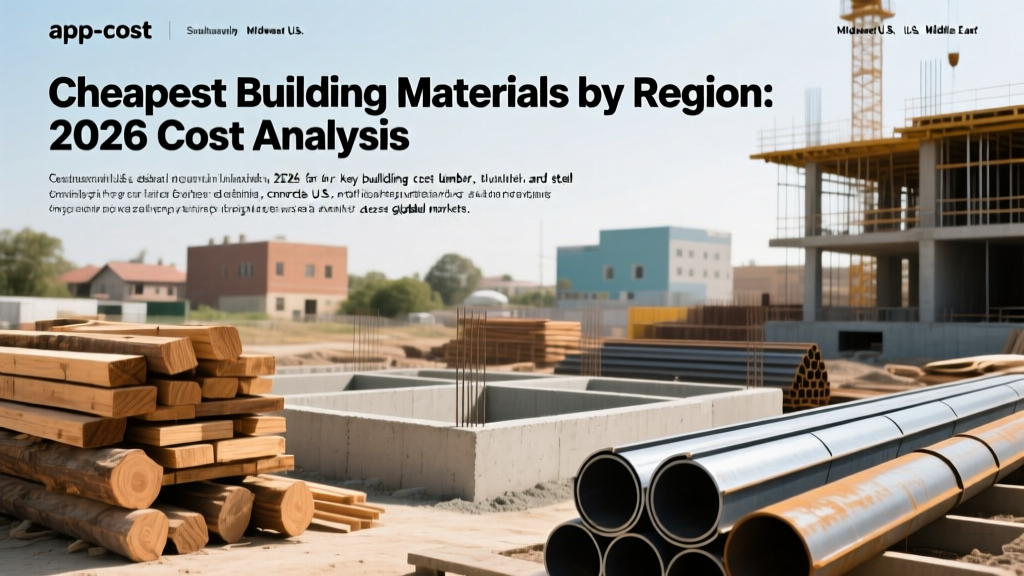
The Geography of Construction Costs: Why Location Dictates Material Prices
National averages are virtually useless for precise construction estimating. When evaluating the cheapest building materials for a project, the geographic location of the build site dictates up to 40% of the final material cost variance. This discrepancy is driven by three primary factors: proximity to raw material extraction, regional manufacturing density, and last-mile freight surcharges. In 2026, supply chain stabilization has normalized baseline production costs, but localized logistical bottlenecks and regional tariff impacts continue to create distinct pricing zones across the country.
According to data tracked by the Bureau of Labor Statistics Producer Price Index for construction industries, the cost of identical structural materials can fluctuate wildly depending on whether the project is situated near a primary manufacturing hub or at the end of a complex distribution network. To build cost-effectively, estimators must abandon national price books and adopt a hyper-local sourcing strategy.
Regional Price Matrix: The Cheapest Building Materials in 2026
The following matrix outlines the most cost-effective structural materials by major U.S. region, factoring in both base unit costs and localized delivery premiums.
| Region | Most Cost-Effective Framing | Most Cost-Effective Foundation | Avg. Freight Surcharge |
|---|---|---|---|
| Pacific Northwest | Douglas Fir / Mass Timber (CLT) | Poured Concrete (3000 PSI) | 8% - 12% |
| Southeast | Southern Yellow Pine (SYP) | CMU Block (8x8x16) | 4% - 7% |
| Midwest | Cold-Formed Steel (CFS) Studs | Poured Concrete (4000 PSI) | 3% - 5% |
| Northeast | Hybrid Wood/Steel Framing | Insulated Concrete Forms (ICF) | 12% - 18% |
Deep Dive: Sourcing the Cheapest Building Materials by Zone
Pacific Northwest & West Coast: Engineered Wood and Mass Timber
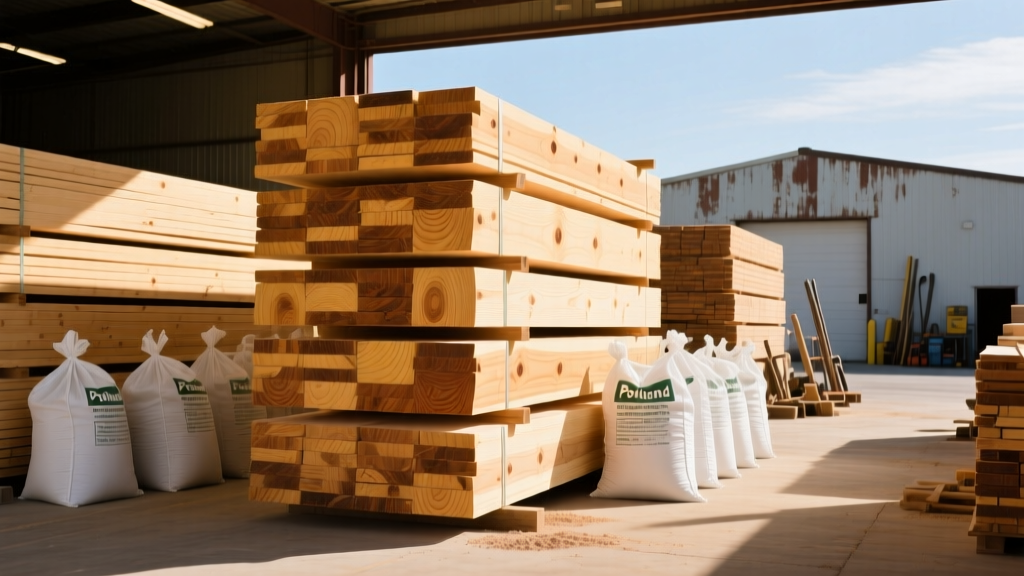
In the Pacific Northwest, the cheapest building materials for structural framing are native softwoods and engineered timber products. With major mills operated by companies like Weyerhaeuser and Boise Cascade located within a 200-mile radius of most regional build sites, dimensional Douglas Fir avoids the cross-country rail fees that inflate prices in the East. In 2026, Cross-Laminated Timber (CLT) and Glulam beams have reached price parity with traditional steel joists for multi-family and commercial structures in this zone. Estimators should specify #2 grade or better Douglas Fir-Larch (DF-L) for standard framing, which currently averages $620 to $710 per thousand board feet (MBF) at regional yards, significantly undercutting imported Spruce-Pine-Fir (SPF).
The Southeast: CMU and Southern Yellow Pine
The Southeast boasts the lowest framing costs in the nation due to the abundance of Southern Yellow Pine (SYP). SYP is naturally denser and possesses a higher load-bearing capacity than northern softwoods, allowing for wider joist spacing (e.g., 24 inches on-center instead of 16 inches), which reduces the total linear footage required. For foundations and low-rise commercial walls, Concrete Masonry Units (CMU) manufactured to ASTM C90 standards are the cheapest building materials in this region. Local block plants utilize abundant regional limestone and sand aggregates, keeping 8x8x16 heavyweight blocks between $1.85 and $2.20 each, compared to $3.50+ in the Northeast where aggregate must be imported.
The Midwest: Cold-Formed Steel and Poured Concrete
Proximity to major steel producers like Nucor and Steel Dynamics makes the Midwest the most economical region for Cold-Formed Steel (CFS) framing. For commercial interiors and exterior load-bearing walls in multi-story builds, 20-gauge and 25-gauge CFS studs (compliant with ASTM A1003) are highly cost-competitive with wood. Furthermore, the Midwest's vast limestone quarries make ready-mix concrete exceptionally cheap. A standard 4000 PSI ready-mix pour with 3/4-inch aggregate averages $125 to $140 per cubic yard in states like Ohio and Indiana, whereas the same mix exceeds $175 per cubic yard on the coasts. Utilizing tilt-up concrete panels or insulated precast foundations leverages these localized material advantages.
The Northeast: ICF and Hybrid Framing
The Northeast presents the highest baseline material costs due to dense urban logistics, unionized delivery constraints, and a lack of heavy manufacturing. Here, the cheapest building materials are those that reduce on-site labor time, as labor rates often eclipse material savings. Insulated Concrete Forms (ICF) represent a highly cost-effective foundation and wall system in this region. While the EPS foam and concrete material cost is roughly 5% to 8% higher than traditional poured walls, ICF eliminates the need for separate framing, sheathing, and exterior insulation steps. According to the National Association of Home Builders economics division, reducing framing and insulation labor cycles in high-cost states like New York and Massachusetts yields a net project savings of 12% to 15% compared to conventional stick-built assemblies.
The Hidden Cost: Freight and Last-Mile Delivery Impacts
When calculating the cost of heavy, low-value materials like concrete block, crushed stone, and ready-mix concrete, prices increase by approximately 1.5% to 2.5% for every mile traveled beyond a 50-mile radius from the batch plant or manufacturing yard. Sourcing 'cheap' CMU blocks from a plant three counties away will almost always result in a higher net cost than buying from a slightly more expensive plant located 15 miles from the job site.
Freight surcharges are the silent budget killers in construction estimating. In 2026, diesel fuel stabilization has curbed extreme volatility, but driver shortages in rural areas keep last-mile delivery premiums high. Bulk materials like structural steel and dimensional lumber are subject to 'breakbulk' shipping rates. If a project requires less than a full flatbed load (typically 45,000 lbs for lumber), estimators must factor in Less-Than-Truckload (LTL) consolidation fees, which can add 20% to the base material invoice. Always group heavy material orders to maximize payload efficiency per delivery.
Actionable Sourcing Strategies for Regional Savings
- Mill-Direct Purchasing for Trusses: For projects requiring over 50 roof trusses, bypass the local lumber yard and purchase directly from regional component manufacturers (CMs). This eliminates the middleman markup, which typically ranges from 15% to 22% on engineered wood products.
- Off-Season Concrete Scheduling: In northern climates, ready-mix plants operate at reduced capacity in Q4 and Q1. Scheduling foundation pours during these off-peak months can secure a 5% to 10% discount on the per-yard rate, provided you budget for cold-weather concreting admixtures (like calcium chloride accelerators) and thermal curing blankets.
- Utilize Secondary Aggregate Markets: For site grading, driveway bases, and backfill, specify Recycled Concrete Aggregate (RCA) instead of virgin crushed stone. RCA is processed from demolished infrastructure and is typically 30% to 40% cheaper than virgin limestone, while meeting the same ASTM D2940 compaction standards for sub-base applications.
- Leverage Regional Co-ops: Independent builders in the Southeast and Midwest should join regional purchasing cooperatives. These co-ops pool volume to negotiate direct pricing with manufacturers like Owens Corning for insulation or USG for drywall, bypassing distributor markups entirely.
Frequently Asked Questions
What is the cheapest framing material for a residential house in 2026?
In the Southern and Midwestern United States, Southern Yellow Pine (SYP) and Cold-Formed Steel (CFS) remain the cheapest framing materials. However, in the Pacific Northwest and Northeast, engineered wood products like I-joists and LVL beams often provide a lower total installed cost than traditional dimensional lumber due to reduced waste and faster assembly times.
How do tariffs affect the cost of imported building materials?
Tariffs significantly impact materials not produced domestically at scale. For example, Canadian softwood lumber tariffs add a persistent premium to SPF framing in the Northern U.S. Conversely, materials like ceramic tile, quartz countertops, and specialized architectural glass are heavily reliant on overseas shipping, making them subject to fluctuating import duties and ocean freight rates. Sourcing domestically manufactured alternatives (like porcelain slabs cast in Ohio or Georgia) mitigates these risks.
Where can I find accurate, localized material pricing for my estimates?
Estimators should utilize the U.S. Census Bureau Construction Materials data for macro-level pricing trends, but for job-specific estimates, direct quotes from local suppliers are mandatory. Subscribing to regional pricing indexes like the Dodge Construction Network or utilizing localized RSMeans data adjusted for the specific city's cost index will provide the most accurate baseline for 2026 estimating.
Written by
James ThorntonJames Thornton is a construction industry veteran with 25 years of hands-on experience in wood framing, lumber grading, and residential building codes. He started as a framing carpenter in rural Oregon, earned his ICC Residential Building Inspector certification, and eventually became a senior plan reviewer for the City of Portland Bureau of Development Services. James holds a B.S. in Wood Science & Technology from Oregon State University and is a certified lumber grader through the West Coast Lumber Inspection Bureau (WCLIB). He has inspected over 3,000 residential construction sites and authored the city's internal guide on advanced framing techniques (2x6 at 24" O.C.). James lives in Bend, OR, where he builds custom timber-frame cabins and competes in lumberjack sports.
More from James Thornton
View all
Insulation
Best Home Insulation Materials: Complete 2026 Guide
Compare top home insulation materials for 2026. Find R-values, installed costs per square foot, and best uses for fiberglass, spray foam, and mineral wool.
Aug 4, 2026

Sustainable Building
Certify Your Green Building Material for LEED and WELL
Step-by-step guide to certifying a green building material for LEED v5 and WELL v2. Master EPDs, HPDs, and VOC limits for 2026 project specifications.
Aug 4, 2026

Stone & Masonry
Veneer Stacked Stone Panels: Interior Design & Style Showcase
Discover how veneer stacked stone panels transform interiors. Explore modern design profiles, material pairings, and technical installation specs.
Aug 4, 2026