2026 Cost to Build a Home in Oklahoma: Detailed Breakdown
Discover the 2026 cost to build a home in Oklahoma. Get a detailed line-item breakdown, regional pricing, and expert tips on soil and wind codes.
The Baseline: Average Cost to Build a Home in Oklahoma
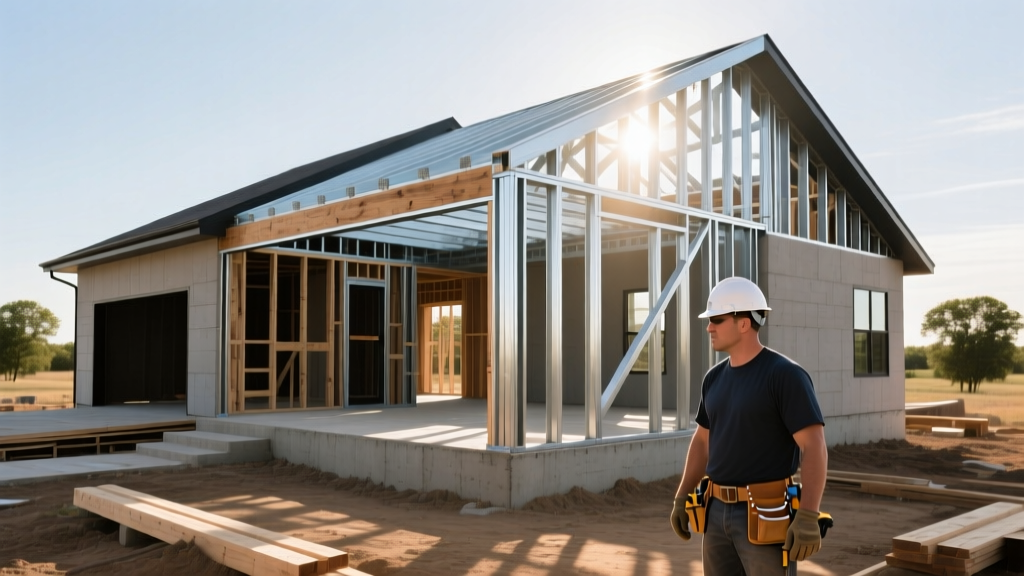
Calculating the true cost to build a home in Oklahoma requires moving beyond national averages. While the U.S. average for new construction hovers around $150 to $200 per square foot, Oklahoma's labor markets, material availability, and specific environmental building codes create a unique pricing ecosystem. As of 2026, the base construction cost (excluding land) for a standard production home in Oklahoma ranges from $125 to $155 per square foot. For semi-custom or fully custom builds, expect to pay between $165 and $225+ per square foot.
2026 Quick Data Snapshot
- Average Home Size: 2,100 sq. ft.
- Total Average Build Cost: $262,500 – $325,500 (Standard)
- Custom Build Cost: $346,500 – $472,500+
- Land Preparation Adder: $4,500 – $12,000
According to recent construction cost surveys by the National Association of Home Builders (NAHB), regional variations in material logistics and local labor shortages heavily influence final pricing. In Oklahoma, the primary cost drivers are not just lumber and concrete, but the specialized engineering required to withstand extreme wind events and expansive clay soils.
Regional Cost Variations Across the Sooner State
Oklahoma is not a monolith. Building in the metropolitan corridors involves different permitting fees, labor rates, and code strictness compared to rural counties. Below is a regional breakdown of estimated hard construction costs per square foot for a standard 2,000-square-foot single-family home in 2026.
| Region / City | Cost per Sq. Ft. | Primary Cost Drivers |
|---|---|---|
| Oklahoma City Metro | $135 – $180 | High demand, strict municipal wind codes, impact fees. |
| Tulsa Metro | $130 – $170 | Moderate labor rates, river-proximity soil mitigation. |
| Norman / Moore | $145 – $190 | Enhanced tornado-resistant building codes, engineering. |
| Rural / Panhandle | $115 – $145 | Lower permit costs, but higher material delivery fees. |
Detailed Line-Item Cost Breakdown
To understand where your budget goes, we must dissect the build into its core phases. The following estimates are based on a 2,100 sq. ft. home in the Oklahoma City metro area.
1. Site Preparation and Earthwork ($3,500 – $9,000)
Oklahoma's terrain ranges from flat plains to rolling, rocky hills. Site prep includes clearing, grading, and trenching for utilities. If your lot is heavily wooded with native post oak or features exposed sandstone bedrock, expect excavation costs to push toward the higher end of this spectrum due to the need for heavy rock-breaking equipment.
2. Foundation Engineering for Expansive Soils ($14,000 – $24,000)
This is where many out-of-state builders miscalculate. Central and Eastern Oklahoma are notorious for highly expansive red clay soils that swell significantly when wet and shrink during droughts. A standard slab-on-grade will crack and fail. You must invest in an engineered foundation.
- Post-Tension Slab: Uses high-strength steel cables tensioned after the concrete cures to compress the slab and resist soil movement. Adds $4,000 – $7,000 over a standard slab.
- Drilled Concrete Piers: Drilled 15 to 25 feet deep into stable bedrock or non-expansive soil to support the foundation grade beam. Required in areas with severe soil plasticity. Costs $12,000 – $18,000+.
3. Framing and Structural Shell ($32,000 – $48,000)
While lumber prices have stabilized compared to the early 2020s, the cost of specialized framing labor has increased. To meet modern wind codes, framers must execute a continuous load path, utilizing heavy-duty hurricane ties, structural screws, and engineered lumber (LVL) for wide spans.
4. Exterior Finishes and Roofing ($35,000 – $55,000)
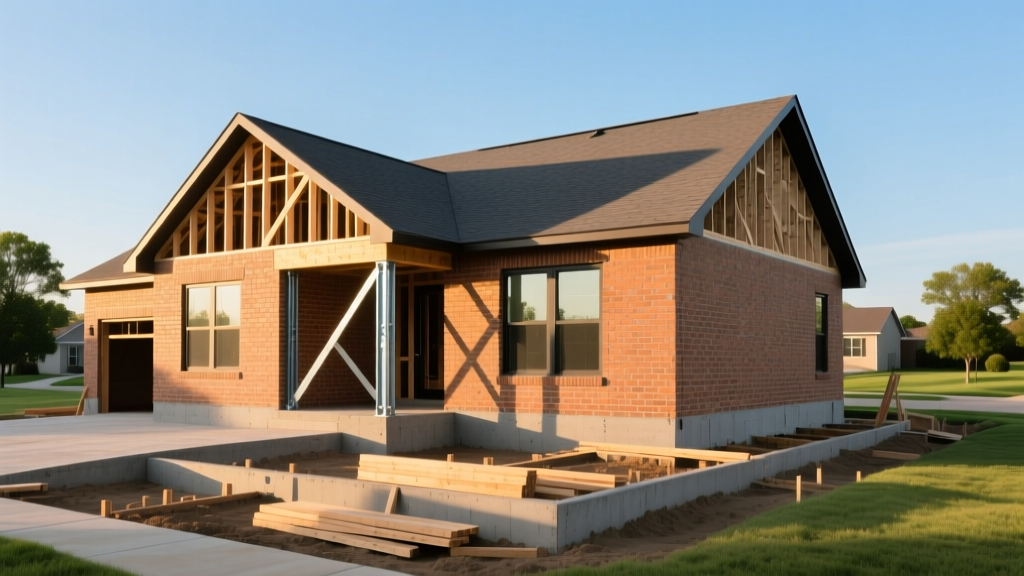
Brick masonry remains the dominant exterior cladding in Oklahoma due to its durability and low maintenance. A full brick veneer costs roughly $11 to $16 per square foot of wall area. For roofing, architectural asphalt shingles are standard, but upgrading to impact-resistant materials is highly recommended (detailed below).
Oklahoma-Specific Construction Challenges & Hidden Costs
Building in Tornado Alley requires a defensive approach to construction. Ignoring these localized challenges will result in catastrophic structural failures or uninsurable properties.
⚠️ Warning: The FORTIFIED Home Standard
In high-wind zones like Moore, Norman, and OKC suburbs, building to standard IRC (International Residential Code) minimums is no longer sufficient. The Insurance Institute for Business & Home Safety (IBHS) FORTIFIED Home standard is becoming the benchmark. Achieving a FORTIFIED Roof or FORTIFIED Home designation requires:
- Sealed Roof Deck: Taping all roof sheathing seams with specialized membrane to prevent water intrusion if shingles are lost.
- Ring-Shank Nails: Using 2.5-inch ring-shank nails in a 6-inch nailing pattern at the edges and 12-inch in the field to secure the roof deck.
- Class 4 Impact Shingles: Shingles tested to withstand a 2-inch steel ball dropped from 20 feet (simulating large hail).
Cost Adder: $6,000 – $11,000. However, this often yields a 15% to 30% discount on annual homeowners insurance premiums, paying for itself within 3 to 5 years.
Standard vs. Upgraded Material Matrix
When estimating the cost to build a home in Oklahoma, your material selections dictate the final variance. Below is a comparison matrix for common interior and exterior choices in 2026.
| Category | Standard / Builder Grade | Premium / Custom Upgrade | Cost Variance |
|---|---|---|---|
| Countertops | Level 2 Laminate or basic 3cm Granite | Quartzite or ultra-compact Dekton surfaces | +$6,500 – $12,000 |
| Flooring | LVP (Luxury Vinyl Plank) 12-mil wear layer | Site-finished 5-inch White Oak Hardwood | +$9,000 – $14,000 |
| Windows | Double-pane Low-E vinyl with argon gas | Triple-pane fiberglass frames with impact glass | +$8,000 – $15,000 |
| HVAC System | 14 SEER2 Standard Gas/Electric Split | 18+ SEER2 Variable-Speed Heat Pump w/ ERV | +$5,500 – $9,500 |
Soft Costs: Permits, Fees, and Design
Hard construction costs only tell part of the story. Soft costs in Oklahoma typically account for 10% to 15% of the total project budget. Data from the U.S. Census Bureau Building Permits Survey indicates that metropolitan areas are increasingly utilizing impact fees to fund infrastructure expansion.
- Architectural & Engineering Fees: $4,000 – $12,000. (Includes structural engineering for wind loads and geotechnical soil reports).
- Building Permits: $1,500 – $3,500 depending on municipality and home valuation.
- Utility Tap Fees: $2,500 – $6,000. Water and sewer tap fees in developing OKC suburbs like Edmond or Yukon have risen sharply to fund new treatment plants.
- Land Survey & Soil Boring: $1,200 – $2,500. Never skip the soil boring test; it dictates your foundation engineering requirements.
Expert Framework for Budget Allocation
To keep your Oklahoma build financially viable without sacrificing structural integrity, apply the following decision framework during the design phase:
- Prioritize the Envelope: Allocate your premium budget to the roof, windows, and foundation. A FORTIFIED roof and engineered post-tension slab are non-negotiable for long-term durability in Oklahoma's climate.
- Defer Cosmetic Upgrades: Items like cabinet hardware, lighting fixtures, and landscaping can be upgraded post-closing. Focus your construction loan on items that are difficult or expensive to retrofit later.
- Optimize the Floor Plan: Reduce complex rooflines. Every dormer, valley, and offset in a roof increases labor costs, material waste, and potential leak points during severe wind-driven rain events. A simple hip roof is vastly superior for wind resistance and cost-efficiency.
Pro-Tip for 2026 Builders: When interviewing general contractors, specifically ask for their experience with "continuous load path framing" and "post-tension slab tensioning protocols." If they cannot explain how they verify the tensioning of the cables after the concrete pour, they lack the specialized expertise required for Oklahoma's unique soil and wind conditions.
Building a home in Oklahoma offers exceptional value compared to coastal or mountain states, provided you respect the local environmental forces. By budgeting accurately for expansive soil mitigation, high-wind structural reinforcements, and realistic regional labor rates, you can execute a build that is both financially sound and built to withstand the elements for generations.
Written by
Sarah WhitfieldSarah Whitfield is a chartered quantity surveyor (MRICS) and construction cost analyst with 15 years of experience in material pricing, procurement strategy, and project budgeting. She earned her degree in Construction Management from the University of Reading (UK) and has worked on projects ranging from $2M custom homes to $180M mixed-use developments across North America and Europe. Sarah currently leads cost estimating for BuildMat Insight, maintaining a proprietary database of 4,000+ material price points updated quarterly. She is a frequent contributor to RSMeans cost data panels and has presented at the International Cost Engineering Council (ICEC) congress. Based in Denver, CO, Sarah is an avid trail runner and volunteer mentor for Women in Construction.
More from Sarah Whitfield
View all
Wood & Lumber
What Are the Different Types of Wood? A Builder's Guide
Compare structural softwoods, finish hardwoods, and engineered lumber. Analyze Janka ratings, MOE values, and 2026 pricing for construction.
Aug 4, 2026

Walls & Panels
Steel Framing vs Wood Framing: Corrosion and Moisture Defense
Compare steel framing vs wood framing for moisture resistance. Learn about galvanized coatings, condensation risks, and corrosion protection strategies.
Jul 21, 2026

Stone & Masonry
How to Cut Stone Veneer: Wet Saw vs Grinder Comparison
Compare the best tools for cutting stone veneer. We review wet saws, angle grinders, and chop saws to help you achieve clean, chip-free cuts.
Jul 21, 2026