How Much Does It Cost to Build an Underground Pool by Size and Scope?
Discover how much does it cost to build an underground pool by size and scope. Get exact pricing breakdowns, material costs, and calculator formulas.
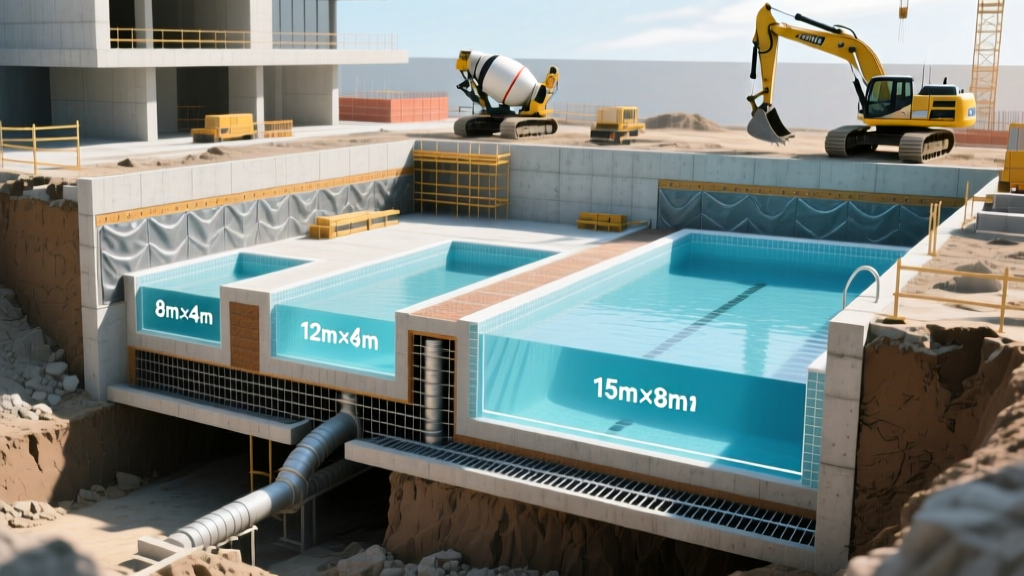
The Core Formula: Calculating Underground Pool Costs
When homeowners ask how much does it cost to build an underground pool, the answer is never a single flat rate. Pool construction is a complex assembly of volumetric excavation, structural engineering, and mechanical integration. To generate an accurate estimate, professionals use a size and scope calculator model that breaks the project into three distinct cost centers: base shell volume, dimensional size multipliers, and mechanical scope variables.
According to Angi’s inground pool cost guide, the national average for a standard underground pool ranges from $35,000 to $65,000, but luxury scopes easily exceed $100,000. By understanding the underlying math, you can manipulate the size and scope variables to fit your exact budget without sacrificing structural integrity.
Base Excavation and Shell Costs by Volume
The foundation of your calculator starts with dirt and concrete. Excavation is priced by the cubic yard, not the square foot. A standard 16x32-foot pool with an average depth of 5.5 feet requires moving roughly 105 cubic yards of soil. At current 2026 rates of $12 to $22 per cubic yard for standard soil removal, excavation alone costs between $1,260 and $2,310. However, if your site requires rock blasting or heavy clay remediation, this metric can spike to $75+ per cubic yard.
For concrete (shotcrete or gunite) shells, the industry standard is a 6-inch to 8-inch thick wall reinforced with an 8-inch on-center #3 steel rebar grid. Shotcrete costs approximately $110 to $140 per cubic yard installed. A 16x32 pool requires about 45 to 55 cubic yards of shotcrete, placing the structural shell cost between $4,950 and $7,700 before finishing materials like plaster or pebble aggregate are applied.
Size Multipliers: How Dimensions Dictate the Budget
Pool size does not scale linearly; it scales geometrically. As you increase the footprint, the perimeter (which dictates coping, tile, and decking costs) and the surface area (which dictates plaster, water volume, and heating loads) expand at different rates. Use the matrix below to understand how standard dimensions impact the baseline budget.
| Pool Size (Feet) | Surface Area (Sq Ft) | Avg. Water Volume (Gallons) | Base Cost Multiplier | Estimated Base Cost (Concrete) |
|---|---|---|---|---|
| 10x20 (Small) | 200 | 8,500 | 1.0x | $40,000 - $50,000 |
| 14x28 (Medium) | 392 | 15,500 | 1.4x | $55,000 - $70,000 |
| 16x32 (Standard) | 512 | 21,000 | 1.8x | $70,000 - $90,000 |
| 20x40 (Large) | 800 | 32,000 | 2.6x | $95,000 - $125,000 |
| Custom Freeform | Varies | Varies | 2.2x - 3.0x | $85,000+ |
Data sourced from HomeGuide’s pool building cost data indicates that freeform pools carry a 15% to 25% premium over geometric shapes due to the increased labor required for custom forming, complex rebar bending, and non-standard coping cuts.
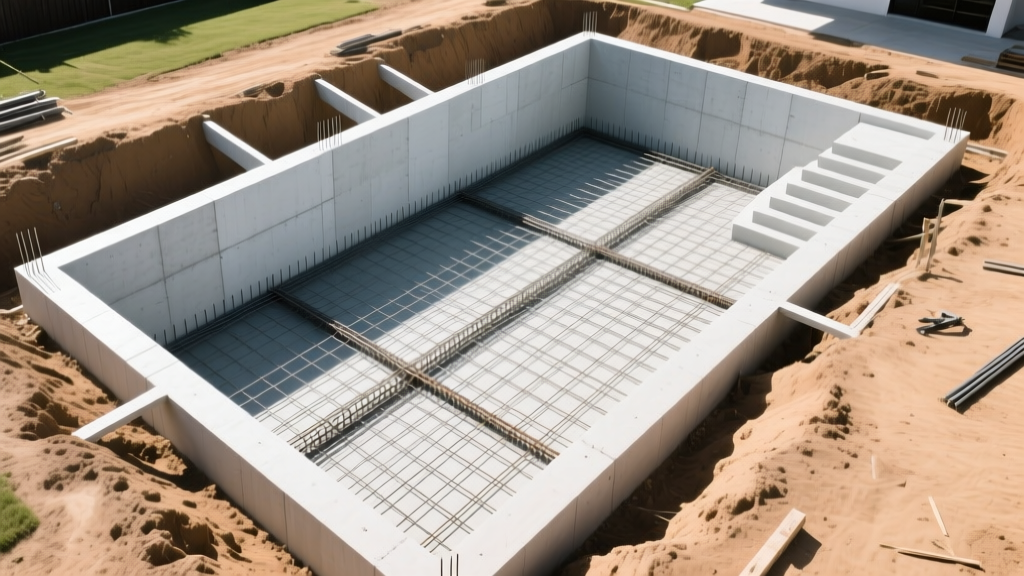
Scope Variables: Upgrades and Feature Multipliers
Once the size is locked, the “scope” dictates the final price. Scope encompasses the mechanical, electrical, and aesthetic systems that bring the pool to life. This is where budgets are most frequently blown due to “scope creep.”
Warning: The Scope Creep Trap
Adding features mid-construction is exponentially more expensive than including them in the initial scope. Trenching for additional gas lines, upgrading electrical panels, or adding automation after the concrete deck is poured can increase change-order costs by 40% to 60% compared to day-one integration.
Here are the specific scope multipliers and their 2026 installed costs:
- Heating Systems: A high-efficiency gas heater (e.g., Pentair MasterTemp 400k BTU) adds $3,800 to $4,500. An electric heat pump (e.g., Pentair UltraTemp) adds $4,500 to $6,000 but offers 70% lower monthly operating costs.
- Sanitation: Upgrading from standard chlorine to a saltwater chlorine generator (e.g., Hayward AquaRite T-15) adds $1,800 to $2,500. UV or Ozone secondary sanitation systems add another $1,200 to $1,800.
- Pumps and Plumbing: Replacing standard 1.5-inch Schedule 40 PVC plumbing with 2.5-inch or 3-inch plumbing reduces friction loss and allows for smaller, more efficient variable-speed pumps. Upgrading to a 3HP variable-speed pump (e.g., Pentair IntelliFlo3) adds $2,200 to $2,800 over a basic single-speed model.
- Automation: Full smart-home integration (e.g., Jandy iAqualink or Pentair IntelliCenter) adds $3,500 to $5,500, requiring dedicated low-voltage wiring and a specialized sub-panel.
- Interior Finishes: Standard white marcite plaster is the baseline. Upgrading to a quartz aggregate adds $2,500 to $4,000, while premium pebble finishes (e.g., PebbleTec) add $5,000 to $8,000.
Material Shell Options and Their Cost Impact
The structural material you choose fundamentally alters the calculator’s baseline. The Pool & Hot Tub Alliance (PHTA) recognizes three primary inground construction methods, each with distinct lifecycle costs and installation timelines.
Concrete (Shotcrete/Gunite) vs. Fiberglass vs. Vinyl Liner
| Feature | Concrete (Shotcrete) | Fiberglass Shell | Vinyl Liner |
|---|---|---|---|
| Initial Cost | Highest ($70k - $120k+) | Medium ($50k - $85k) | Lowest ($35k - $60k) |
| Installation Time | 3 to 6 months | 4 to 8 weeks | 4 to 8 weeks |
| Design Flexibility | Unlimited (Custom shapes/depths) | Limited (Pre-molded shapes) | Moderate (Custom wall panels) |
| Lifespan | 50+ years (Resurface every 10-15 yrs) | 30+ years (Gelcoat maintenance) | Structure 30+ yrs (Liner replaced every 7-10 yrs) |
| Hidden Costs | High acid washing, higher chemical use | Crane rental ($1,200+), wide access needed | Liner replacements ($4,500+ every decade) |
Pro Tip for Fiberglass: If you choose fiberglass, your site must have a minimum 12-foot wide clear path for a massive crane to lift the shell. If overhead power lines or tight property boundaries block access, you may need to pay for road closures or specialized articulating cranes, which can add $2,000 to $5,000 to the scope.
Site-Specific Variables That Break the Calculator
Even the most precise size and scope calculator will fail if it ignores site-specific geotechnical variables. Before finalizing your budget, account for these edge cases:
- Water Table and Dewatering: If you live in a coastal area or a region with a high water table, excavating a deep end (6+ feet) may cause the hole to fill with groundwater before the shell is poured. Contractors must install a wellpoint dewatering system, adding $2,500 to $5,000 to the project.
- Soil Expansiveness: Highly expansive clay soils require over-excavation and backfilling with crushed gravel or installing structural void forms beneath the pool deck to prevent heaving. This geotechnical remediation adds $3,000 to $7,000.
- Utility Relocation: If your planned pool footprint intersects with existing sewer laterals, gas lines, or main electrical conduits, rerouting these utilities can cost $1,500 to $4,000 per line.
- Access and Spoil Removal: If a standard backhoe cannot fit through your side yard (minimum 8-foot gate width required), contractors must use micro-excavators and manually wheelbarrow the dirt to the street, tripling the excavation labor cost.
Step-by-Step: Running Your Own Size & Scope Estimate
To generate a highly accurate ballpark figure before calling contractors, follow this calculation sequence:
- Calculate Base Volume: Multiply Length x Width x Average Depth. Divide by 27 to get cubic yards. Multiply by $18 (avg excavation rate) for dirt removal costs.
- Apply the Size Multiplier: Take your surface area (Length x Width) and multiply by $140 (the national average cost per square foot for a basic concrete pool build in 2026).
- Add Hardscaping Scope: Calculate the perimeter of the pool. Multiply by $45 per linear foot for standard cantilever coping, and add $12 to $18 per square foot for a basic broom-finished concrete deck (assuming a 4-foot wide deck perimeter).
- Tally Mechanical Upgrades: Add flat rates for your chosen scope variables: +$4,500 for a heat pump, +$2,000 for saltwater, +$2,500 for a variable speed pump, and +$4,000 for automation.
- Apply the Contingency Buffer: Multiply your final subtotal by 1.15. A 15% contingency is mandatory in underground construction to cover unseen subterranean obstacles like bedrock, buried boulders, or undocumented utility lines.
By utilizing this size and scope calculator methodology, you transition from a passive consumer accepting vague bids to an informed project manager who understands exactly where every dollar is allocated in your underground pool construction.
Written by
Marcus ChenMarcus Chen is a licensed structural engineer (PE) and building materials analyst with over 12 years of experience across residential, commercial, and industrial construction. He holds a Master of Science in Civil Engineering from UC Berkeley and spent six years at Thornton Tomasetti before transitioning to independent consulting and technical writing. Marcus specializes in material selection for seismic-prone regions, concrete reinforcement strategies, and lifecycle cost analysis. His work has been cited by the American Concrete Institute (ACI) and the Structural Engineers Association of California (SEAOC). When he is not on a job site or at his desk, you will find him hiking the Sierra Nevada or restoring a 1920s craftsman bungalow in Oakland, CA.
More from Marcus Chen
View all
Construction Cost
How Much Did the Eiffel Tower Cost to Build?
How much did the Eiffel Tower cost to build in 1889? We adjust for inflation and compare its budget to modern skyscraper construction.
Aug 4, 2026

Fire Resistance
What Is a Fire Resistant Material? Testing & Certification Guide
Discover what is a fire resistant material through ASTM and UL testing. Learn how fire ratings, certifications, and assemblies work in construction.
Aug 4, 2026

Construction Cost
How Much Did the Burj Khalifa Cost to Build?
How much did the Burj Khalifa cost to build? We break down the $1.5B project and extract 5 money-saving strategies for your next build.
Jul 30, 2026