How Much Did the White House Cost to Build? Original vs Modern Rebuild
Discover how much the White House cost to build in 1792 and compare the original ledger to the estimated modern historical reconstruction cost.
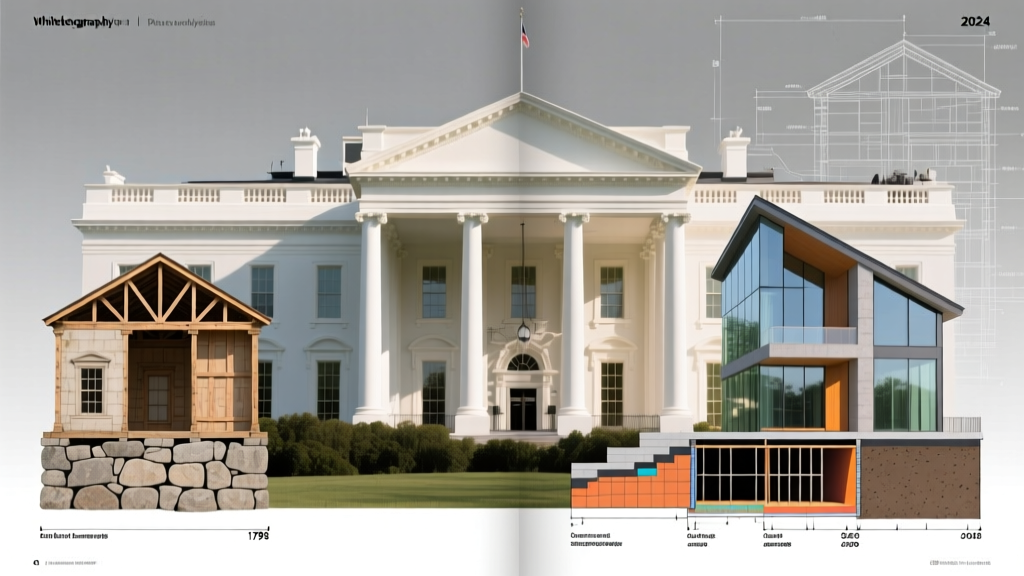
The 1792 Construction Ledger: Breaking Down the Original Budget
When evaluating historical architecture, the question of how much did the white house cost to build requires separating 18th-century accounting from 21st-century construction economics. The original ledger and the modern replacement value tell two vastly different stories about material scarcity, labor shifts, and federal security requirements.
Irish-born architect James Hoban won the design competition for the executive mansion in 1792. Construction began that October and was largely completed by 1800. According to the White House Historical Association, the original construction cost was precisely $232,371.83. Adjusted for standard consumer inflation, that equates to roughly $7.5 million today. However, applying a basic Consumer Price Index (CPI) multiplier to construction costs is a fundamental estimating error. Building trades, material extraction, and regulatory environments have shifted exponentially.
Original Line-Item Cost Distribution
| Cost Category | 1792-1800 Estimated Spend | Primary Source / Method |
|---|---|---|
| Masonry & Stone | $85,000 | Aquia Creek sandstone, enslaved & immigrant labor |
| Timber & Carpentry | $52,000 | Old-growth regional pine and oak framing |
| Labor (Wages) | $65,000 | Scottish stonemasons, local apprentices, enslaved workers |
| Hardware & Ironwork | $15,000 | Hand-forged nails, hinges, and locks |
| Roofing & Slate | $15,371 | Regional slate, copper flashing |
Calculating the Modern Rebuild Cost: A 2026 Perspective
To estimate the true cost to rebuild the White House today, estimators must look at the structure's physical dimensions and the premium required for historical replication. The executive mansion spans approximately 55,000 square feet across six levels, containing 132 rooms and 35 bathrooms.
Standard institutional construction in Washington D.C. currently ranges from $650 to $900 per square foot. However, the White House is not a standard federal office building; it is a protected historical monument. According to guidelines from the Whole Building Design Guide (WBDG), historical replication and preservation-grade masonry work routinely push costs between $1,800 and $2,500 per square foot due to the need for artisan labor and custom material sourcing.
The original facade utilized Aquia Creek sandstone from Stafford County, Virginia. This specific quarry is now a historical park and the stone is commercially extinct. Replicating the facade requires sourcing custom-matched sandstone from alternative regional quarries (such as Seneca or Manassas) or utilizing high-grade Indiana limestone with custom tooling to mimic the original ashlar blocks. This material substitution alone increases the masonry envelope budget by 280% compared to standard cut-stone veneers.
Material Cost Shifts: 18th Century vs. 21st Century
A granular cost comparison reveals how specific building materials have transitioned from cheap, abundant local resources to expensive, specialized architectural products.
| Material Component | 18th Century Reality | Modern Replication Cost (2026) |
|---|---|---|
| Facade Masonry | Locally quarried, transported via river barge. Low extraction cost. | $65 - $95 per sq. ft. (Custom tooled limestone/sandstone) |
| Structural Timber | Hand-hewn old-growth oak and pine. Abundant and unmilled. | $28 - $42 per board foot (Engineered or heavy timber framing) |
| Roofing Slate | Regional slate, irregular cuts, installed over wood sheathing. | $45 - $65 per sq. ft. (Buckingham architectural slate, copper flashing) |
| Windows (147 units) | Single-pane wood sash, hand-blown crown glass. | $14,000 - $18,000 per unit (Blast-resistant, thermally broken mahogany-clad) |
| Interior Plaster | Three-coat lime plaster over wood lath. Labor-intensive but cheap materials. | $35 - $55 per sq. ft. (Historic lime plaster replication by specialized artisans) |
The Hidden Costs of Federal Replication and Security
Pure construction costs only tell half the story. Rebuilding the White House requires integrating modern federal security standards into an 18th-century architectural envelope. The National Park Service guidelines on historic masonry emphasize the difficulty of retrofitting structural reinforcements without destroying historic fabric.
Security and MEP Integration Premiums
- Blast-Resistant Glazing: The 147 exterior windows must meet Department of Defense anti-terrorism/force protection (AT/FP) standards for blast overpressure, requiring laminated polycarbonate-glass composites hidden within historically accurate wood sashes.
- SCIF Construction: Sensitive Compartmented Information Facilities (SCIFs) require specialized acoustic dampening, RF shielding, and independent HVAC systems. Building a SCIF within a historic masonry shell adds roughly $1,200 per square foot to the interior fit-out costs.
- Subterranean Bunkers: The modern White House includes the Presidential Emergency Operations Center (PEOC). Excavating and pouring reinforced, blast-proof concrete bunkers beneath an active, historic urban site requires micro-piling and underpinning, costing upwards of $3,500 per square foot of subterranean space.
- MEP Concealment: Routing modern commercial HVAC, fire suppression, and fiber-optic data lines through solid masonry and historic plaster without dropping ceilings or surface-mounted conduit requires specialized core drilling and artisan patching.
Total Estimated Replacement Value
Aggregating the base historical replication costs with federal security mandates yields the true replacement value.
Cost Estimator Summary Matrix
- Base Historical Shell & Core (55,000 sq ft @ $2,200/sq ft): $121,000,000
- Interior Artisan Finishes & Plasterwork: $38,500,000
- Security Glazing & Blast Mitigation: $14,200,000
- Subterranean Excavation & PEOC Bunker: $45,000,000
- MEP Systems & SCIF Integration: $28,000,000
- Site Work, Landscaping & Perimeter Fencing: $12,500,000
- Total Estimated Rebuild Cost: $259,200,000
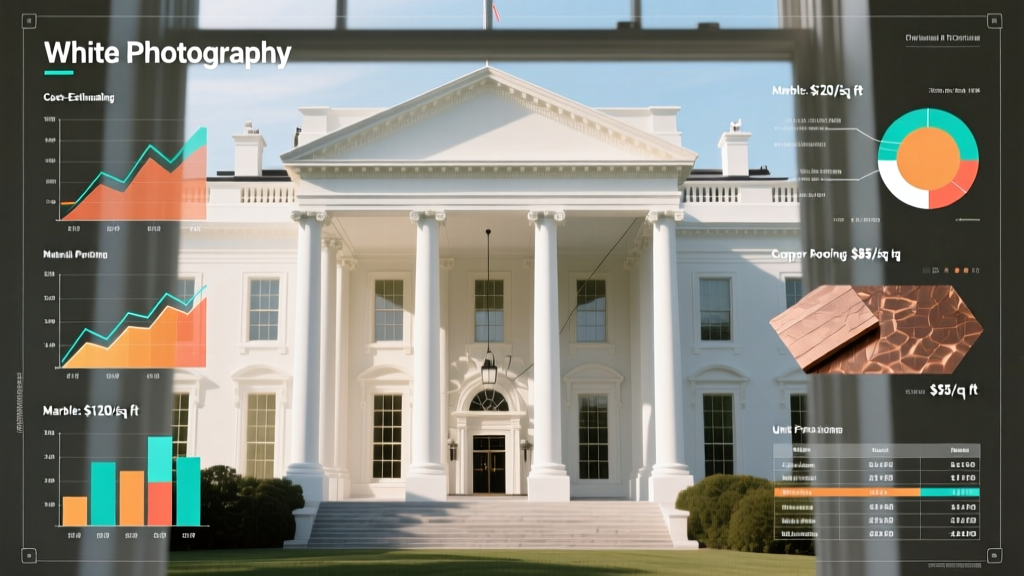
While the original $232,371.83 ledger reflects the agrarian economy of the 1790s, a modern rebuild requires a budget exceeding a quarter-billion dollars. This massive discrepancy highlights the premium placed on historical accuracy, artisan labor scarcity, and modern federal security mandates in contemporary construction estimating.
Frequently Asked Questions
Was the White House built by enslaved labor?
Yes. The original construction heavily relied on the labor of enslaved African Americans, who were rented from their owners by the federal government. They worked alongside free white artisans, immigrant stonemasons, and local apprentices to quarry the stone, clear the land, and lay the masonry. The government paid the enslavers, not the workers themselves.
How much did it cost to rebuild after the 1814 fire?
After British troops burned the White House during the War of 1812, the reconstruction and expansion (which included adding the iconic North and South Porticos) cost approximately $334,000. James Hoban was rehired to oversee the rebuilding, which utilized the surviving charred sandstone walls, painting them white to cover the scorch marks—solidifying the building's famous moniker.
What is the most expensive room to maintain in the White House?
The East Room and the State Dining Room require the highest maintenance budgets due to their sheer scale, historic plasterwork, and the constant wear from state dinners and public tours. Maintaining the original 19th-century plaster rosettes and gilding requires specialized conservationists rather than standard commercial painters, driving routine maintenance costs to roughly $150 to $250 per square foot annually for these specific zones.
Written by
Priya KapoorPriya Kapoor is a real estate market analyst and construction economics researcher with expertise in housing affordability, development feasibility, and infrastructure investment. She holds a Master of Regional Planning from Cornell University and previously worked as a senior analyst at CBRE's Investment Properties group, where she modeled returns for $4B in mixed-use development pipelines. Priya now runs an independent research practice advising developers, municipalities, and REITs on construction cost forecasting and market timing. She publishes the quarterly "BuildMat Market Pulse" report tracking material price indices across 12 commodity categories. Based in Austin, TX, Priya serves on the board of Habitat for Humanity Austin and is a marathon runner.
More from Priya Kapoor
View all
Construction Cost
Cost to Build a 1600 Sq Ft Home in 2026: Full Breakdown
Accurate 2026 cost to build a 1600 sq ft home—material, labor, and regional pricing breakdowns included. Plan your budget with real-time estimates.
Aug 11, 2026

Wood & Lumber
Name the Types of Wood for Pressure Treatment and Preservation
Learn how to name the types of wood best suited for pressure treatment. Compare species treatability, chemical retention levels, and 2026 preservation costs.
Aug 4, 2026

Stone & Masonry
Stone Veneer Suppliers Lindenhurst: 2026 Cost Analysis
Analyze 2026 stone veneer costs in Lindenhurst, NY. Compare local supplier pricing, delivery fees, and Suffolk County installation labor rates.
Aug 4, 2026