Comparing the Top Types of Stone Veneer: Manufactured vs. Natural
Compare the top types of stone veneer for your project. We break down manufactured vs natural stone costs, weight, durability, and installation.
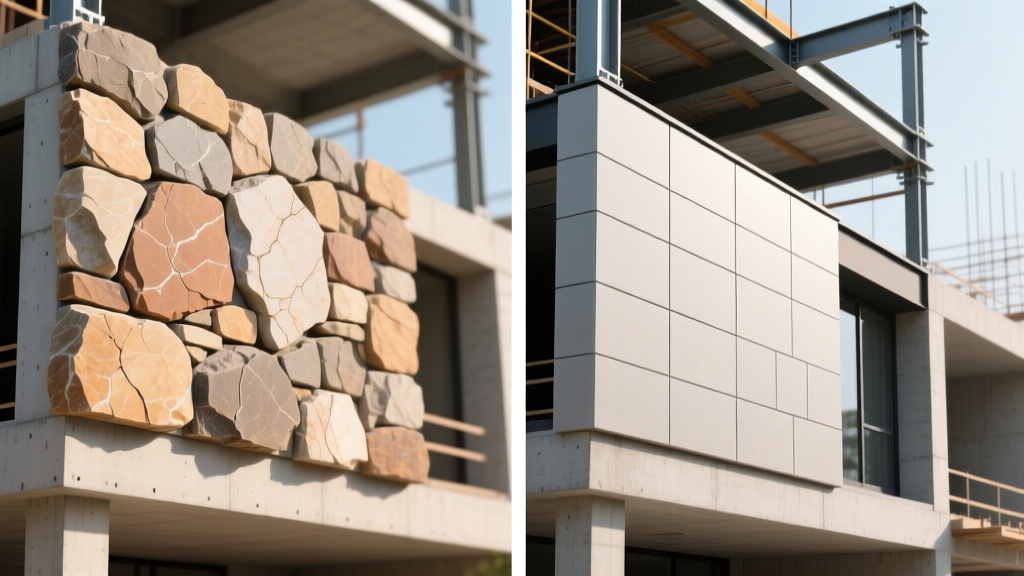
The Core Divide: Manufactured vs. Natural Stone Veneer
When evaluating the various types of stone veneer for residential or commercial facades, the market fundamentally splits into two distinct material categories: natural quarried stone and manufactured stone veneer (MSV). While both deliver the aesthetic of solid masonry, their structural properties, installation requirements, and long-term aging characteristics diverge significantly. Choosing between them requires moving beyond visual preferences to analyze weight loads, substrate preparation, and regional climate performance.
| Specification | Natural Thin Stone Veneer | Manufactured Stone Veneer (MSV) | Polyurethane Faux Stone |
|---|---|---|---|
| Weight per Sq. Ft. | 7 – 13 lbs | 8 – 12 lbs | 1 – 2 lbs |
| Thickness | 0.75" – 1.5" | 0.5" – 2.5" (varies by profile) | 1.5" – 2.5" |
| Material Cost (2026) | $14.00 – $24.00 | $8.00 – $15.00 | $9.00 – $13.00 |
| Substrate Requirement | Metal lath + scratch coat | Metal lath + scratch coat | Direct to OSB/Plywood/Concrete |
| UV Fade Resistance | Exceptional (geological pigments) | Good to Excellent (iron oxide pigments) | Excellent (UV-inhibited paints) |
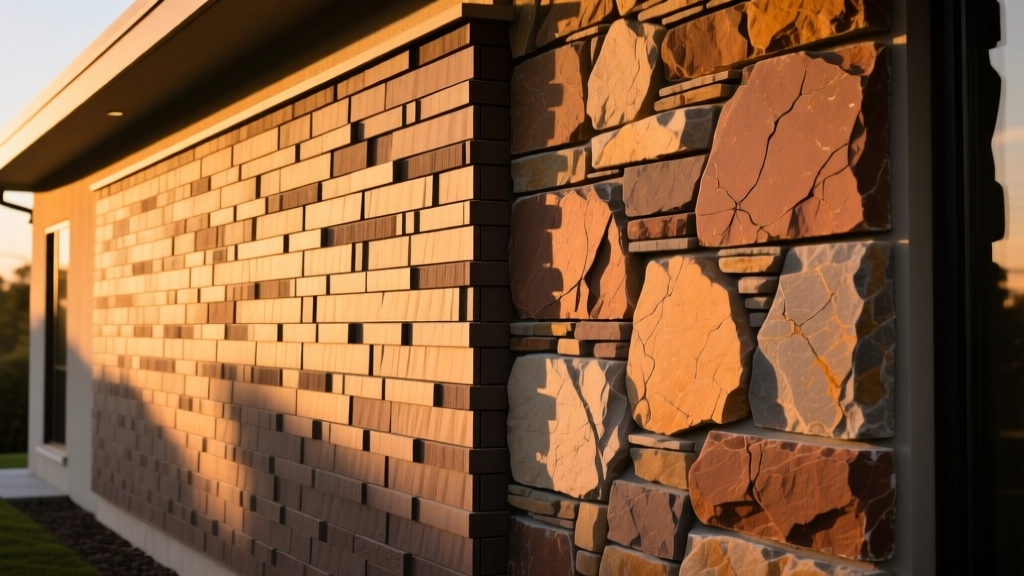
Natural Stone Veneer: Authenticity at a Premium
Natural stone veneer is sliced from full-bed quarried stone using heavy-duty diamond gang saws. This process creates a flat back for mortar adhesion while preserving the natural, weathered face of the stone. According to technical guidelines from the Natural Stone Institute, thin natural veneer must maintain a minimum thickness of 3/4 inch to ensure structural integrity during the cutting and installation phases.
Limestone and Sandstone Profiles
Sedimentary stones like limestone (governed by ASTM C568) and sandstone are highly popular for their warm, earthy tones and workability. Limestone veneer is relatively soft, allowing masons to easily trim pieces on-site with a standard masonry blade. However, its porous nature requires the application of a breathable, silane/siloxane penetrating sealer in freeze-thaw climates to prevent spalling. Sandstone offers higher compressive strength but features pronounced bedding planes; installers must always orient sandstone veneer horizontally, matching its natural geological formation, to prevent water infiltration and delamination.
Granite and Slate: High-Density Options
For high-impact zones or regions with severe freeze-thaw cycles, igneous and metamorphic stones provide superior durability. Granite veneer boasts near-zero water absorption (typically less than 0.4%), making it virtually impervious to frost damage. Slate offers striking visual clefting and natural cleavage planes, ideal for dry-stacked ledger profiles. The trade-off is weight and workability: granite and slate thin veneers often push the upper limits of the 13 lbs/sq ft threshold, requiring heavy-duty galvanized steel lath and potentially supplemental mechanical wall ties for installations exceeding 10 feet in height.
When installing natural stone, never use standard gray Portland cement mortar straight from the bag. The high alkalinity of unmodified cement can cause efflorescence (white salt deposits) on the stone face. Always use a polymer-modified, low-alkali masonry mortar specifically formulated for natural stone, and tool the joints to a concave profile to compress the mortar against the stone edges, creating a watertight seal.
Manufactured Stone Veneer (MSV): The Engineered Alternative
Manufactured stone veneer is cast in molds taken from real stone, using a mixture of Portland cement, lightweight aggregates (like pumice or expanded shale), and iron oxide pigments. To be classified as high-quality MSV, the product must comply with ASTM C1670/C1670M standards, which dictate strict limits on water absorption, compressive strength, and freeze-thaw durability.
The Pigment and Aggregate Matrix
The visual authenticity of MSV relies on the integration of iron oxide pigments throughout the concrete matrix, not just painted on the surface. Premium brands utilize multi-layered casting techniques where base colors are poured into the mold first, followed by the structural concrete mix. This ensures that if a piece chips during installation or years later, the underlying material matches the surface color. The lightweight aggregates reduce the overall density, bringing the weight down to an average of 9 lbs/sq ft, which is light enough to be supported by standard wood-framed walls without requiring structural reinforcement or concrete footings.
Polyurethane Faux Stone: The Non-Masonry Contender
While often merchandised alongside MSV, polyurethane stone panels (such as those from GenStone or NextStone) are not masonry products. Cast from high-density polyurethane foam, these panels weigh roughly 1.5 lbs/sq ft and interlock via a shiplap system. They screw directly into OSB, plywood, or concrete substrates without the need for metal lath, scratch coats, or mortar. While they offer the fastest installation time and eliminate the need for skilled masons, they lack the thermal mass, acoustic dampening, and fire-resistance ratings of cementitious or natural stone products.
Full-Bed vs. Thin Veneer: A Structural Decision
Historically, stone cladding required full-bed masonry, where stones are 3 to 5 inches thick and weigh 35 to 45 lbs per square foot. Full-bed stone requires a continuous concrete or block masonry ledge (shelf angle) at the foundation to bear the immense dead load.
Thin veneer—whether natural or manufactured—has largely displaced full-bed stone in modern residential construction. Because thin veneer weighs under 15 lbs/sq ft, the International Residential Code (IRC) allows it to be supported entirely by the wall sheathing and studs, provided the fastening schedule for the metal lath is followed.
"The shift to thin stone veneer has revolutionized masonry retrofits. We can now apply a stone facade to an existing 1970s ranch home without having to pour new continuous footings or underpin the existing foundation to handle the dead load of full-bed stone."
— Structural Masonry Guidelines, The Masonry Society
2026 Installed Cost and Labor Breakdown
Material costs only tell half the story. Masonry labor rates in 2026 average between $85 and $130 per hour depending on the region, and stone veneer installation is highly labor-intensive. The table below outlines the total installed cost per square foot for a standard 1,000 sq. ft. exterior facade project, including substrate prep, materials, and skilled labor.
| Cost Component | Natural Thin Veneer | Manufactured Stone (MSV) | Polyurethane Panels |
|---|---|---|---|
| Substrate Prep (Lath, Paper, Scratch Coat) | $3.50 – $5.00 / sq ft | $3.50 – $5.00 / sq ft | $0.50 (Weather barrier only) |
| Material (Stone/Panels & Corner Pieces) | $16.00 – $24.00 / sq ft | $8.50 – $14.00 / sq ft | $9.00 – $13.00 / sq ft |
| Mortar & Consumables | $1.50 – $2.50 / sq ft | $1.50 – $2.50 / sq ft | $0.25 (Screws/Adhesive) |
| Skilled Masonry Labor | $18.00 – $26.00 / sq ft | $15.00 – $22.00 / sq ft | $4.00 – $7.00 (Carpenter/DIY) |
| Total Estimated Installed Cost | $39.00 – $57.50 / sq ft | $28.50 – $43.50 / sq ft | $13.75 – $20.25 / sq ft |
Expert Decision Framework: Which Type Should You Choose?
Selecting the right type of stone veneer requires aligning your project constraints with material capabilities. Use this decision matrix to finalize your specification:
- Choose Natural Thin Stone Veneer IF: You are building a high-end custom home, a historic restoration project, or a commercial facade where absolute authenticity and geological permanence are paramount. It is also the mandatory choice if local zoning or HOA architectural review boards strictly prohibit synthetic or cast-concrete exterior materials.
- Choose Manufactured Stone Veneer (MSV) IF: You want the look of dry-stacked ledgestone or fieldstone but need to reduce material costs by 30-40% compared to natural stone. MSV is also superior for complex architectural details, as manufacturers produce specialized transition pieces, hearth stones, and precise corner wraps that are difficult or prohibitively expensive to cut from natural stone.
- Choose Polyurethane Faux Stone IF: You are executing a DIY interior accent wall, a basement renovation with strict weight limitations, or an exterior wainscoting project where hiring a skilled mason is outside the budget. It is also the optimal choice for covering existing ugly brick or cinderblock without the mess of mixing mortar.
Regardless of whether you choose natural or manufactured stone, the most common cause of veneer failure is water trapping at the base of the wall. You must install a weep screed (minimum 3.5 inches above grade or 2 inches above paved surfaces) at the bottom of the wall assembly. The weather-resistive barrier (WRB) must lap over the weep screed flange, allowing any moisture that penetrates the stone and mortar to drain out freely, preventing rot in the underlying wood framing.
Written by
Marcus ChenMarcus Chen is a licensed structural engineer (PE) and building materials analyst with over 12 years of experience across residential, commercial, and industrial construction. He holds a Master of Science in Civil Engineering from UC Berkeley and spent six years at Thornton Tomasetti before transitioning to independent consulting and technical writing. Marcus specializes in material selection for seismic-prone regions, concrete reinforcement strategies, and lifecycle cost analysis. His work has been cited by the American Concrete Institute (ACI) and the Structural Engineers Association of California (SEAOC). When he is not on a job site or at his desk, you will find him hiking the Sierra Nevada or restoring a 1920s craftsman bungalow in Oakland, CA.
More from Marcus Chen
View all
Construction Cost
How Much Did the Eiffel Tower Cost to Build?
How much did the Eiffel Tower cost to build in 1889? We adjust for inflation and compare its budget to modern skyscraper construction.
Aug 4, 2026

Fire Resistance
What Is a Fire Resistant Material? Testing & Certification Guide
Discover what is a fire resistant material through ASTM and UL testing. Learn how fire ratings, certifications, and assemblies work in construction.
Aug 4, 2026

Construction Cost
How Much Did the Burj Khalifa Cost to Build?
How much did the Burj Khalifa cost to build? We break down the $1.5B project and extract 5 money-saving strategies for your next build.
Jul 30, 2026