Stone Veneer Installers Near Me: 2026 Hiring & Cost Guide
Learn how to find, vet, and hire the best stone veneer installers near you. Includes 2026 labor costs, red flags, and material-specific questions.
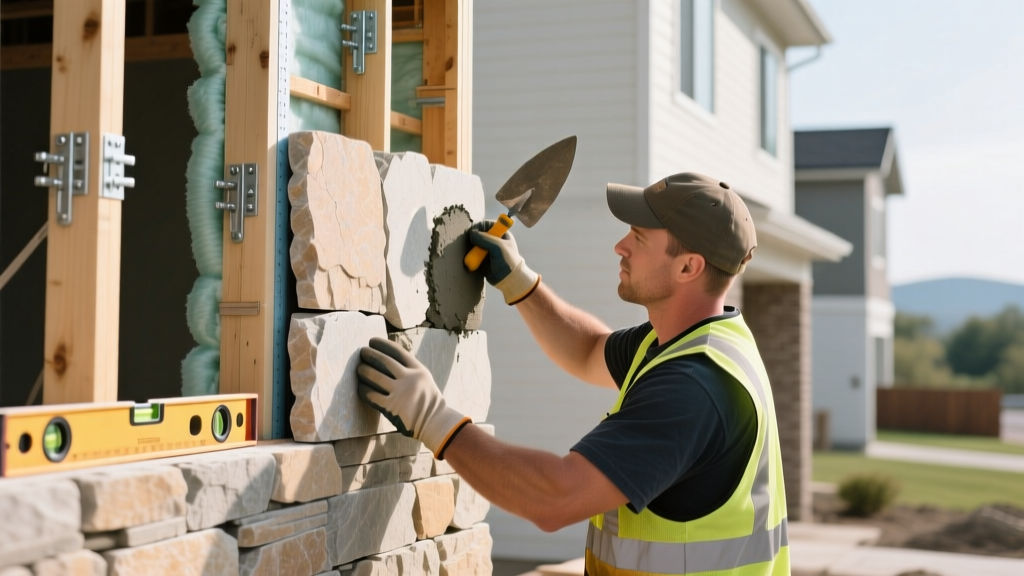
The Hidden Complexity of Stone Veneer Installation
When homeowners begin searching for 'stone veneer installers near me,' they are frequently met with a confusing mix of general landscapers, siding contractors, and specialized masons. While a general contractor might offer a lower bid, stone veneer installation is a highly specialized trade that bridges structural masonry and delicate finish carpentry. The wrong installer can turn a beautiful exterior upgrade into a moisture-trapping liability that rots your wall sheathing within three years.
According to the U.S. Bureau of Labor Statistics, the demand for skilled masonry workers continues to outpace supply, meaning the most qualified artisans are often booked months in advance. Finding a true specialist requires looking past flashy portfolio photos and drilling down into their understanding of building science, specifically moisture management and substrate preparation. This guide provides the exact framework, 2026 pricing data, and technical vetting questions you need to hire the right professional for your project.
2026 Labor Cost Breakdown: What to Expect
Labor costs for stone veneer vary wildly based on the material weight, the complexity of the substrate, and regional masonry union rates. In 2026, specialized masonry labor has seen a 6% to 9% increase over previous years due to material handling insurance requirements and a shrinking skilled workforce. Below is the current national average for labor-only costs, excluding the stone materials themselves.
| Material Type | Labor Cost (per sq.ft.) | Total Installed Cost (per sq.ft.) | Typical Timeline (1,000 sq.ft.) |
|---|---|---|---|
| Manufactured Stone Veneer (MSV) | $14.00 - $22.00 | $26.00 - $42.00 | 5 - 8 Days |
| Natural Thin Stone Veneer | $22.00 - $35.00 | $40.00 - $65.00 | 7 - 12 Days |
| Panelized Stone Systems | $9.00 - $14.00 | $20.00 - $32.00 | 2 - 4 Days |
| Full-Bed Natural Stone | $35.00 - $55.00+ | $75.00 - $120.00+ | 14 - 21+ Days |
Note: Total installed costs assume mid-tier material selections. Scaffolding erection, substrate repair, and demolition of existing siding will add $2.50 to $5.00 per square foot to the labor total.
The Moisture Management Test: How to Vet Installers
The single most common cause of stone veneer failure is trapped moisture. Manufactured and natural thin veneers are 'absorptive' claddings; they wick water and hold it against the wall. If the installer does not build a proper drainage plane, that water will migrate into your wood framing. To separate true professionals from amateurs, ask them to explain their moisture management strategy. They should explicitly reference the standards outlined in the Masonry Veneer Manufacturers Association (MVMA) Installation Guide.
The 4-Point Substrate Questionnaire
During your initial consultation, ask the installer these four technical questions. Their answers will immediately reveal their expertise level:
- 'How do you handle the weep screed at the base of the wall?'
The Right Answer: They must install a corrosion-resistant weep screed (minimum 0.019-inch thick) that extends at least 4 inches above soil grade or 2 inches above paved surfaces. This allows trapped water to escape the wall cavity. - 'What weight of metal lath do you use, and how do you fasten it?'
The Right Answer: Minimum 2.5 lb/sq.yd galvanized or stainless-steel expanded metal lath, fastened directly into the wall studs (not just the sheathing) using corrosion-resistant nails or screws every 6 inches on center. - 'Do you use a scratch coat, and how long do you let it cure?'
The Right Answer: A half-inch scratch coat of Portland cement-based mortar (Type N or S) must be applied and scored horizontally. It requires a minimum 24 to 48 hours of moist curing before the stones are set. - 'How do you flash the windows and roof transitions?'
The Right Answer: The water-resistive barrier (WRB) must be integrated with flexible flashing tape at all penetrations, and kick-out flashing must be installed where the stone veneer meets a roofline to divert water into the gutters.
⚠️ Immediate Red Flags: Walk Away If...
- They suggest using mastic, polyurethane construction adhesive, or 'glue' to attach the stones directly to the wall.
- They claim a scratch coat is 'optional' or 'unnecessary' for modern manufactured stones.
- They plan to install the veneer directly over painted brick, vinyl siding, or unsealed drywall without stripping it to the sheathing first.
- They cannot provide a certificate of insurance showing at least $1,000,000 in general liability coverage.
Material-Specific Installer Requirements
Not all stone veneer materials require the exact same installation technique. The installer you hire must have specific, verifiable experience with the exact product category you intend to purchase.
Manufactured Stone Veneer (MSV)
MSV is a Portland cement-based product cast in molds from real stone. Because it is highly porous, it requires strict adherence to the MVMA guidelines mentioned above. Installers must 'back-butter' every single stone—applying a minimum half-inch of mortar to the back of the unit before pressing it into the setting bed. Dry-stacking (pushing stones into a mortar joint without back-buttering) creates microscopic voids where water will freeze, expand, and pop the stones off the wall in cold climates.
Natural Thin Stone Veneer
Natural thin veneer is sliced from real quarried stone (like slate, limestone, or fieldstone). It is significantly heavier than MSV and has a lower absorption rate. Installers must account for the extra structural load. Furthermore, because natural stones have irregular thicknesses, the mason must be skilled in 'sorting and blending' the stones on the ground before applying them, ensuring a consistent mortar joint depth and a natural, randomized color distribution.
Panelized and Interlocking Systems
Brands like ClipStone or Evolve Stone offer panelized or mechanically fastened systems that bypass traditional mortar. While labor costs are lower, you still need an installer who understands structural fastening. These systems require driving screws directly into studs or masonry substrates. An installer who merely attaches these panels to OSB sheathing using drywall screws risks catastrophic pull-out failure under wind load or seismic activity.
Contract & Warranty Essentials
A verbal agreement is never sufficient for a project of this scale. The Federal Trade Commission (FTC) strongly advises homeowners to secure detailed, written contracts for all home improvement projects. Your stone veneer contract must include:
- Scope of Substrate Prep: Explicitly stating that the installer is responsible for removing existing cladding, inspecting the sheathing for rot, and replacing damaged wood up to a specified dollar limit.
- Material Specifications: The exact brand, color blend, and profile name of the stone, plus the specific type of mortar mix (e.g., Type S masonry cement with integral colorant).
- Cleanup and Disposal: Masonry generates immense amounts of heavy debris. The contract must state that the installer will provide a dumpster and haul away all old siding, mortar bags, and stone offcuts.
- Warranty Terms: A minimum 2-year labor warranty against stone detachment, efflorescence caused by improper mixing, and moisture intrusion due to faulty flashing. Note that this is separate from the manufacturer's 50-year warranty on the stone itself, which is voided if the MVMA installation guide is not followed.
Frequently Asked Questions
Can a general siding contractor install stone veneer?
While some high-end siding contractors employ in-house masons, most do not. Vinyl and fiber-cement siding rely on mechanical overlapping for water shedding, whereas stone veneer relies on a cementitious drainage plane. A siding contractor who attempts to install stone veneer using siding principles (like wrapping the stone in Tyvek on the outside) will cause severe structural rot. Always hire a dedicated masonry contractor.
Do I need a building permit for exterior stone veneer?
Yes, in almost all municipalities. Because stone veneer adds significant dead load to the wall and alters the exterior moisture management system, local building departments require a permit. Your installer should pull this permit, not the homeowner. If an installer suggests skipping the permit to 'save you money,' they are likely planning to cut corners on the weep screed and flashing, which the building inspector would catch.
How long does the mortar need to cure before it rains?
Freshly applied mortar is highly vulnerable to washout and rapid drying. If rain is forecasted within 24 hours of the scratch coat or setting bed application, the installer must cover the work area with breathable tarps. If the mortar freezes before it cures (in late fall or winter installations), the chemical hydration process stops, resulting in a weak bond that will crumble within a year. Professional installers will use heated enclosures and anti-freeze admixtures (not salt) for cold-weather masonry work.
Written by
James ThorntonJames Thornton is a construction industry veteran with 25 years of hands-on experience in wood framing, lumber grading, and residential building codes. He started as a framing carpenter in rural Oregon, earned his ICC Residential Building Inspector certification, and eventually became a senior plan reviewer for the City of Portland Bureau of Development Services. James holds a B.S. in Wood Science & Technology from Oregon State University and is a certified lumber grader through the West Coast Lumber Inspection Bureau (WCLIB). He has inspected over 3,000 residential construction sites and authored the city's internal guide on advanced framing techniques (2x6 at 24" O.C.). James lives in Bend, OR, where he builds custom timber-frame cabins and competes in lumberjack sports.
More from James Thornton
View all
Insulation
Best Home Insulation Materials: Complete 2026 Guide
Compare top home insulation materials for 2026. Find R-values, installed costs per square foot, and best uses for fiberglass, spray foam, and mineral wool.
Aug 4, 2026

Sustainable Building
Certify Your Green Building Material for LEED and WELL
Step-by-step guide to certifying a green building material for LEED v5 and WELL v2. Master EPDs, HPDs, and VOC limits for 2026 project specifications.
Aug 4, 2026

Stone & Masonry
Veneer Stacked Stone Panels: Interior Design & Style Showcase
Discover how veneer stacked stone panels transform interiors. Explore modern design profiles, material pairings, and technical installation specs.
Aug 4, 2026