Veneer Stone for Fireplace Surrounds: Design & Profiles
Discover the best veneer stone for fireplace surrounds. Explore top design profiles, material costs, and expert styling tips to elevate your home.
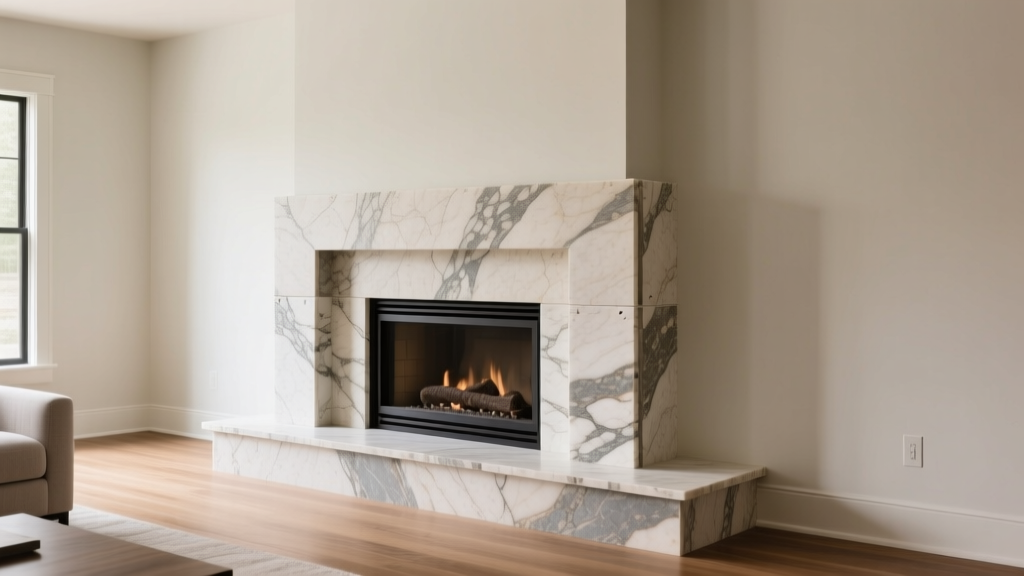
The Anatomy of a Perfect Fireplace Surround
Selecting the right veneer stone for fireplace applications requires balancing aesthetic vision with strict thermal and structural realities. Unlike full-thickness masonry, stone veneer weighs between 8 and 15 pounds per square foot, allowing it to be installed over standard wood-framed chase walls without requiring reinforced concrete footings. However, the proximity to extreme heat dictates that every layer—from the moisture barrier to the mortar—must be specified for high-temperature resilience.
A successful fireplace surround relies on three core design pillars: the stone profile (the physical shape and texture), the color palette (which dictates light absorption and room contrast), and the grout joint technique (which controls shadow lines). Below, we break down the dominant profiles used in contemporary and traditional hearth designs, followed by the technical specifications required for a safe, lasting installation.
4 Dominant Veneer Stone Profiles for Fireplaces
1. Ledgestone: Linear & Modern
Ledgestone features long, horizontal rectangular cuts, typically ranging from 2 to 6 inches in height and up to 24 inches in length. This profile is the undisputed leader for modern, transitional, and mid-century modern interiors. The continuous horizontal lines draw the eye outward, making narrow fireplace chases appear wider.
- Top Product Lines: Eldorado Stone Ridgecut or Cultured Stone Country Ledgestone.
- Best Installation Method: Dry-stack (no visible grout). This requires precise cutting and a perfectly plumb substrate to avoid shadow gaps.
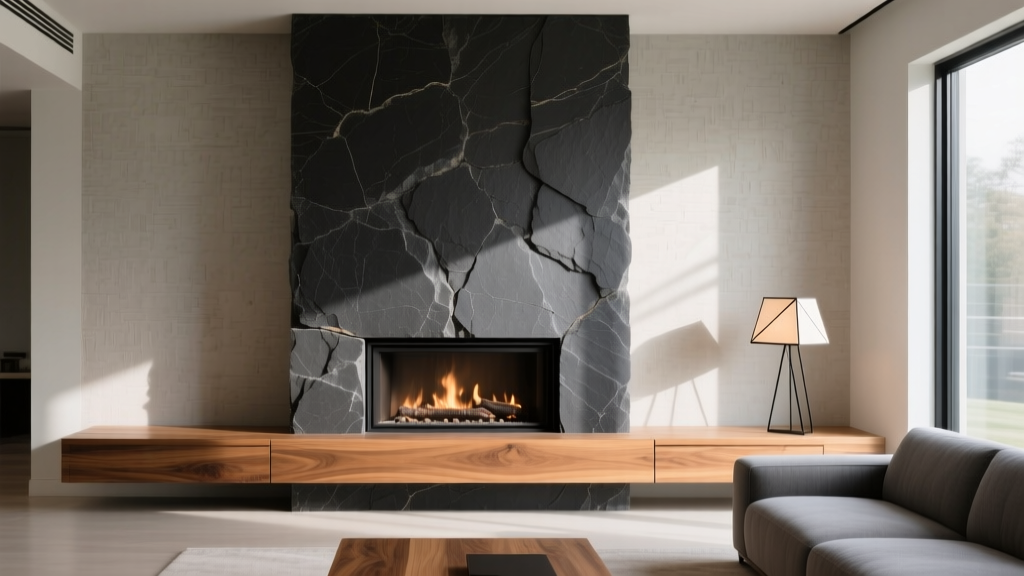
- Design Pairing: Matte black steel firebox inserts and thick, live-edge wood mantels.
2. Fieldstone: Organic & Rustic
Fieldstone mimics naturally rounded, uncut stones gathered from riverbeds or fields. The irregular shapes and varied thicknesses create deep, dramatic shadow lines. This profile is heavily utilized in craftsman, cabin, and traditional rustic designs.
- Top Product Lines: Cultured Stone Dressed Fieldstone or Coronado Stone River Rock.
- Best Installation Method: Over-grouted or flush joints. The mortar becomes a visible design element, often tinted to match or contrast the stone.
- Design Pairing: Heavy timber mantels, wrought iron accessories, and warm, earth-tone interior palettes.
3. Ashlar: Tailored & Transitional
Ashlar veneer consists of cleanly cut, rectangular stones of varying sizes laid in a staggered, brick-like pattern. It bridges the gap between the rustic texture of natural stone and the clean geometry of modern architecture.
- Top Product Lines: Eldorado Stone European Ledge (Ashlar blend) or Dutch Quality Stone Ashlar.
- Best Installation Method: Recessed joints (raked back 1/4 to 1/2 inch) to highlight the precise geometry of each stone.
- Design Pairing: Painted wood surrounds, minimalist linear gas fireplaces, and brass or brushed gold hardware.
4. Brick Veneer: Industrial & Classic
While technically a subset of masonry veneer, thin brick is frequently used as an alternative to natural stone for fireplace surrounds. It offers a predictable, modular grid that suits both industrial lofts and classic colonial homes.
- Top Product Lines: General Shale Origins thin brick or Glen-Gery Handmade series.
- Best Installation Method: Standard 3/8-inch mortar joints, often using a contrasting white or dark gray Type N mortar.
Grout Joint Techniques: The Hidden Design Variable
The mortar joint accounts for up to 20% of the visible surface area on a grouted fireplace surround. Choosing the wrong joint technique can completely alter the intended design profile.
| Joint Technique | Visual Effect | Best Suited Profiles | Technical Consideration |
|---|---|---|---|
| Dry-Stack | Seamless, continuous texture with deep natural shadows. | Ledgestone, Limestone | Requires a waterproofing membrane behind the stone, as water can penetrate the unsealed joints if used outdoors (not an issue for interior fireplaces). |
| Flush | Flat, uniform surface. Mortar is wiped level with the stone face. | Fieldstone, Ashlar | High risk of mortar smearing on the stone face. Requires meticulous cleaning and stones with a high-density sealer. |
| Recessed (Raked) | Highlights the individual geometry of each stone piece. | Ashlar, Brick, Cut Stone | Creates horizontal ledges that collect dust on interior fireplace surrounds. Requires regular maintenance. |
| Over-Grouted | Mortar is pushed over the edges of the stone, creating an aged, antiqued look. | Fieldstone, Cobblestone | Obscures the edges of the stone. Best used when the stone color palette is highly varied to prevent a monotonous, muddy appearance. |
Material Showdown: Manufactured vs. Natural Stone Veneer
When specifying veneer stone for fireplace surrounds, the choice between manufactured (architectural) stone and quarried natural stone impacts both the budget and the installation timeline.
Manufactured Stone Veneer (MSV)
Cast from Portland cement, lightweight aggregates, and iron oxide pigments in molds taken from real stone. MSV weighs roughly 8-12 lbs/sq ft. The color is baked throughout the entire thickness of the stone, meaning chips and cuts do not reveal a different core color. It is highly consistent, reducing waste and installation time.
Natural Stone Veneer
Sawn or split from quarried granite, limestone, slate, or fieldstone. It weighs 12-15+ lbs/sq ft. Natural stone offers unmatched geological variation and a cooler thermal mass. However, it requires more skill to layout, as no two pieces are identical, and cutting natural stone on-site generates significant silica dust and requires specialized wet saws.
Critical Installation Clearances & Heat Tolerances
A fireplace surround is not merely a decorative wall; it is a high-heat zone governed by strict building codes. The National Fire Protection Association (NFPA 211) outlines the standard for chimneys, fireplaces, and vents, which local building codes universally adopt.
Combustible Clearances
While the stone veneer itself is non-combustible, the materials behind and adjacent to it are not. According to NFPA 211 and the International Residential Code (IRC):
- Mantels and Trim: Combustible mantels or wood trim must be placed at least 12 inches from the top of the firebox opening. If the mantel projects more than 1.5 inches from the wall face, the 12-inch clearance must be measured from the top of the firebox opening to the bottom of the mantel.
- Side Clearances: Combustible materials must be kept at least 6 inches away from the sides of the firebox opening.
- Non-Combustible Zones: The stone veneer, cement board, and metal lath can extend directly to the edges of the firebox opening, provided the firebox itself is a listed, UL-rated insert or a properly constructed masonry firebox.
Substrate and Mortar Specifications
Never install stone veneer directly over drywall or painted surfaces near a heat source. The thermal expansion and contraction will cause the drywall paper to delaminate, pulling the stone off the wall.
Expert Specification: Frame the fireplace chase with standard 2x4s, cover with a minimum of 1/2-inch cement backer board (e.g., Durock or HardieBacker), and apply two layers of Grade D moisture barrier or a single layer of heavy-duty house wrap. Fasten 2.5 lb self-furring galvanized metal lath over the barrier using corrosion-resistant staples or screws that penetrate the studs by at least 1 inch. Apply a 1/2-inch scratch coat of Type S mortar before laying the stone.
For the setting bed, use a polymer-modified thin-set mortar meeting ANSI A118.11 standards for manufactured stone, or a standard ASTM C270 Type S mortar for natural stone. Type S mortar contains a higher ratio of Portland cement to lime, providing the compressive strength and heat resistance required for fireplace applications.
Design Framework: Matching Stone to Architecture
To ensure the veneer stone for your fireplace enhances rather than clashes with the room, use this architectural matching framework:
| Architectural Style | Recommended Profile | Color Palette | Grout Technique |
|---|---|---|---|
| Modern / Minimalist | Ledgestone or Large-Format Ashlar | Monochromatic (Charcoal, Pure White, Basalt) | Dry-Stack |
| Transitional | Ashlar or Cut Fieldstone | Neutral Blends (Greige, Taupe, Warm Gray) | Recessed or Flush |
| Craftsman / Rustic | Fieldstone, Cobble, or River Rock | Earth Tones (Moss, Rust, Brown, Ochre) | Over-Grouted or Flush |
| Industrial / Loft | Thin Brick or Limestone Ledge | Weathered (Aged Red, Whitewash, Slate) | Recessed (Wide Joints) |
Cost Breakdown by Profile and Material
Pricing for veneer stone for fireplace surrounds varies significantly based on the material origin and the complexity of the profile. The costs below reflect 2026 market averages for materials and professional installation, excluding the cost of the firebox insert or structural framing.
| Material Type | Profile | Material Cost (per sq. ft.) | Labor Cost (per sq. ft.) | Total Installed Cost (per sq. ft.) |
|---|---|---|---|---|
| Manufactured Stone | Ledgestone | $8.50 - $12.00 | $14.00 - $18.00 | $22.50 - $30.00 |
| Manufactured Stone | Fieldstone | $9.00 - $14.00 | $16.00 - $22.00 | $25.00 - $36.00 |
| Natural Stone | Limestone / Slate Veneer | $16.00 - $24.00 | $18.00 - $25.00 | $34.00 - $49.00 |
| Natural Stone | Granite / Quartzite | $22.00 - $35.00+ | $22.00 - $30.00 | $44.00 - $65.00+ |
| Thin Brick | Modular Brick Veneer | $6.00 - $11.00 | $12.00 - $16.00 | $18.00 - $27.00 |
Note: Fireplace surrounds often require specialized corner pieces, which are sold by the linear foot rather than the square foot. Manufactured stone corners typically cost $12 to $18 per linear foot, while natural stone corners can exceed $25 per linear foot. Always calculate corner requirements before finalizing material orders to avoid project delays.
For detailed installation tolerances and substrate preparation guidelines, always consult the specific manufacturer's technical manual for the exact product line you select, as mortar formulations and curing times can vary between brands.
Written by
Priya KapoorPriya Kapoor is a real estate market analyst and construction economics researcher with expertise in housing affordability, development feasibility, and infrastructure investment. She holds a Master of Regional Planning from Cornell University and previously worked as a senior analyst at CBRE's Investment Properties group, where she modeled returns for $4B in mixed-use development pipelines. Priya now runs an independent research practice advising developers, municipalities, and REITs on construction cost forecasting and market timing. She publishes the quarterly "BuildMat Market Pulse" report tracking material price indices across 12 commodity categories. Based in Austin, TX, Priya serves on the board of Habitat for Humanity Austin and is a marathon runner.
More from Priya Kapoor
View all
Construction Cost
Cost to Build a 1600 Sq Ft Home in 2026: Full Breakdown
Accurate 2026 cost to build a 1600 sq ft home—material, labor, and regional pricing breakdowns included. Plan your budget with real-time estimates.
Aug 11, 2026

Wood & Lumber
Name the Types of Wood for Pressure Treatment and Preservation
Learn how to name the types of wood best suited for pressure treatment. Compare species treatability, chemical retention levels, and 2026 preservation costs.
Aug 4, 2026

Stone & Masonry
Stone Veneer Suppliers Lindenhurst: 2026 Cost Analysis
Analyze 2026 stone veneer costs in Lindenhurst, NY. Compare local supplier pricing, delivery fees, and Suffolk County installation labor rates.
Aug 4, 2026